How to Buy Jeans That Fit: The Technical Denim Blueprint
A size 28 waist tag from four different clothing brands can vary by up to two full inches in actual physical width. Relying on an arbitrary manufacturing label is why the dressing room often feels like an exercise in frustration. True garment fit depends on structural measurements rather than the number stamped on a paper tag.
To build a reliable wardrobe, you need to understand the physical metrics of denim construction. When you know how to read fabric compositions, rise geometry, and pattern cuts, you can bypass the trial-and-error cycle of buying and returning jeans.
To buy jeans that fit reliably, ignore the retail size tag and measure three structural parameters: rise geometry matching your torso length, linear inseam tailored to your footwear height, and a wide crotch saddle curve. Additionally, check the interior fabric label to keep synthetic elastane blends under 3% to prevent permanent sagging.
Why Does Retail Denim Sizing Fail You?
The lack of standardization in commercial apparel means sizes are largely used as marketing metrics rather than precise technical dimensions. Over the past few decades, apparel brands have engaged in vanity sizing—gradually shifting measurement parameters so that a historical size 30 now measures as a size 28 or 26. This practice creates systematic inconsistency across different brands and even within different production runs from the same manufacturer.
Denim garments undergo rigorous chemical treatments, stone washing, and heat stabilization processes after assembly. These finishing choices change the final dimensions of the textile unpredictably. Two pairs of jeans cut from the same factory pattern will shrink at entirely different rates depending on whether they are finished with a dark raw wash or a highly distressed light indigo treatment.
The Myth of the Standard Size Chart
Retailers often encourage customers to find their “standard size” using static charts based solely on a singular waist measurement. This is a technical misdirection. A size tag completely hides the three-dimensional realities of a garment: the tilt of the waistband, the slope of the hip curve, and the spatial volume of the thighs. To secure a suitable fit, you must evaluate the physical architecture of the pant rather than tracking a moving target on a label.
How to Buy Jeans That Fit Using 3 Core Structural Metrics
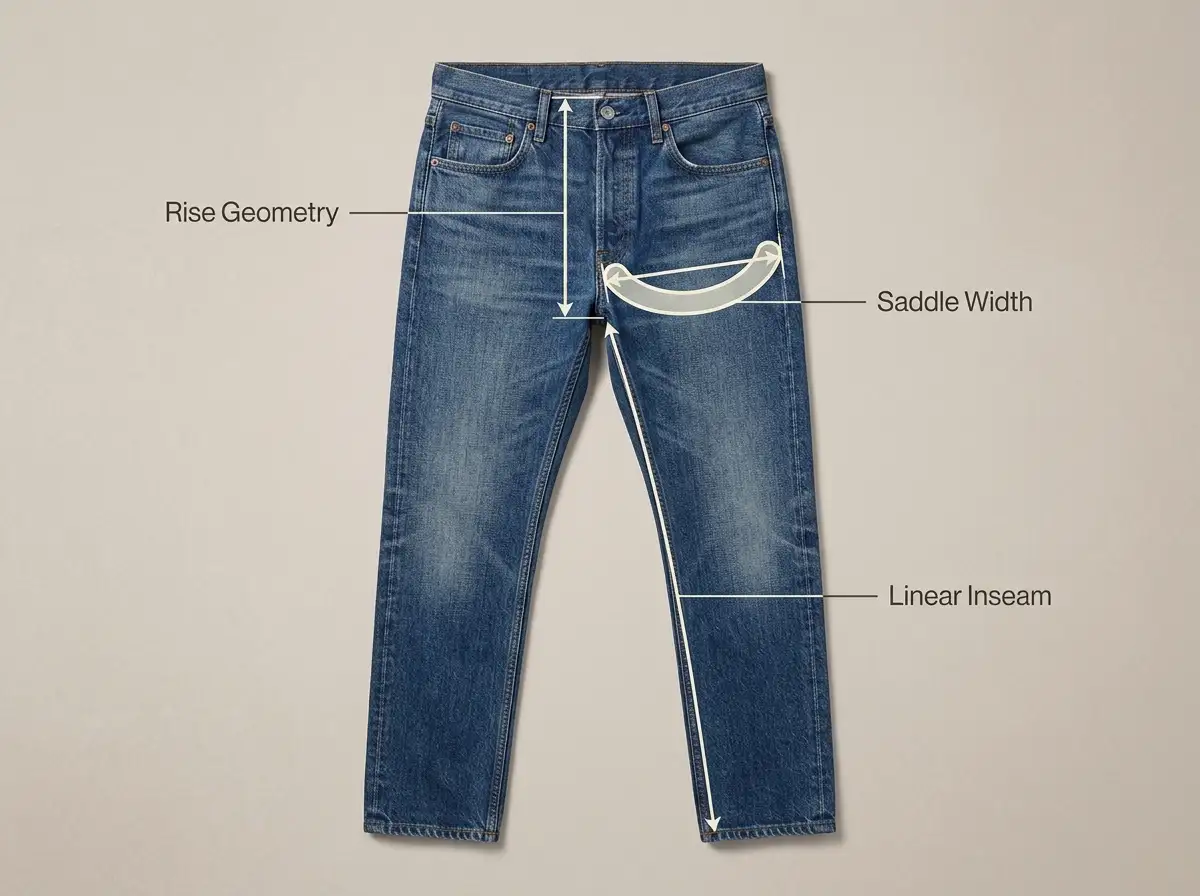
To assess how a garment will sit on your body, view it as an architectural blueprint built along three precise coordinate axes.
Quick Summary of Core Dimensions
Before heading to the checkout, look past the size label and evaluate these three physical parameters:
- The Rise Geometry: This is the absolute vertical distance from the crotch seam up to the top rim of the waistband.
- Inseam Length: Measured along the inner leg seam running from the crotch junction down to the ankle hem.
- Saddle Width: The total surface area allowed through the lowest curve of the seat. It determines whether you can actually sit down comfortably.
Decoding Rise Geometry for Your Torso Proportions
The rise of a pair of jeans dictates where the horizontal waistband rests on your skeletal frame. This dimension controls both the functional comfort of the pant and the visual proportions of your silhouette. A high-rise style typically measures between 10 and 12 inches, a mid-rise runs between 8.5 and 9.5 inches, and a low-rise drops below 8 inches. According to reporting from Harper’s Bazaar, mid- and low-rise cuts have seen increased manufacturing adoption, complicating the buying landscape for those accustomed to high-waisted options.
To measure your true waist line for a high-rise fit, locate your natural waist by bending your torso slightly to one side to find the exact point where your skin creases just beneath the ribs.
Skeletal Proportions Framework:
├── Short Torso (Ribs close to pelvic crest) ──> Prioritize Mid-Rise (8.5" - 9.5")
└── Long Torso (Extended space below ribs) ───> Prioritize High-Rise (10" - 12")
If you apply a high rise to a short torso, the fabric will often ride up to your ribcage and cause binding when you sit. Aligning garment proportions with your natural body shape ensures the waistband rests flat against your anatomy without pinching or digging. This measurement technique allows a Regular Fit or Slim Fit silhouette to balance your frame without sliding down.
Measuring Inseam Length for Varied Footwear Profiles
The inseam metric regulates where the fabric terminates relative to your foot structure. Across standard US retail manufacturing, an average or regular inseam is systematically set at 30 inches, long variants extend to 32 or 34 inches, and cropped styles hover near 27 inches.
An accurate inseam measurement requires stepping flat-footed against a wall and tracking the distance from your interior crotch junction down to the ankle bone. Here is the catch: a single fixed inseam number will not work for every style in your closet. The necessary hem length shifts significantly depending on the leg opening width.
- Tapered and Slim Silhouettes: These styles need a shorter inseam—resting right at or just above the ankle bone—to prevent the fabric from pooling or bunching uncomfortably over the top of your foot.
- Straight and Wide Leg Silhouettes: You will need an extended inseam length here to allow the wider fabric volume to drape cleanly past the ankle without catching on your heel.
This length variation is distinct from traditional Midi or Maxi skirt lengths, as denim breaks across a moving shoe line. If you plan to pair your jeans with flats, the hem should clear the floor by a half-inch; when wearing heels, the inseam must extend to sit mid-way down the shoe heel to maintain a fluid, unbroken line.
The Forgotten Metric: Crotch Saddle Width and Blowout Prevention
The crotch saddle is the continuous U-shaped seam line that runs from the front button fly down under the pelvis and up to the rear yolk. Patternmakers refer to the flat, straight portion of this curve as the saddle width. To maximize material yields and reduce manufacturing costs, mass-market apparel producers often shave down this extension, straight-lining the pattern to fit more pieces onto a standard fabric roll.
When a manufacturer restricts this saddle curve, the jeans suffer from a defect known as “scissoring”. Because there is insufficient spatial depth to clear the pelvic floor, the fabric is pulled tight horizontally across the inner thighs.
Every time you walk or climb stairs, the textile experiences severe tensile stress. This persistent structural strain is the direct cause of early fabric blowouts and crotch tears, even in heavy-duty Relaxed Fit or Straight Fit styles. Inspecting the angle of this junction before buying can save you from premature fabric failure.
Rigid vs. Stretch Denim: Which Fabric Type Suits Your Lifestyle?
Modern denim construction splits into two distinct material philosophies. Your choice between them dictates how the pants will look after six months of regular wear.
| Fabric Attribute | 100% Cotton Rigid Denim | Performance Stretch Denim |
| Fiber Blend | 100% Raw or Sanforized Cotton | 92%–98% Cotton / 2%–8% Elastane |
| Initial Sensation | Stiff, structural, unyielding | Soft, pliable, immediate flexibility |
| Shape Retention | High molding capacity; stretches only to body width | Prone to fiber fatigue and shifting tension |
| Material Longevity | Decades of wear; high abrasion resistance | 1-3 year lifespan before synthetic elasticity drops |
| Sizing Guideline | Size up by 0.5 to 1 full inch | Buy true-to-size or snug to allow fabric growth |
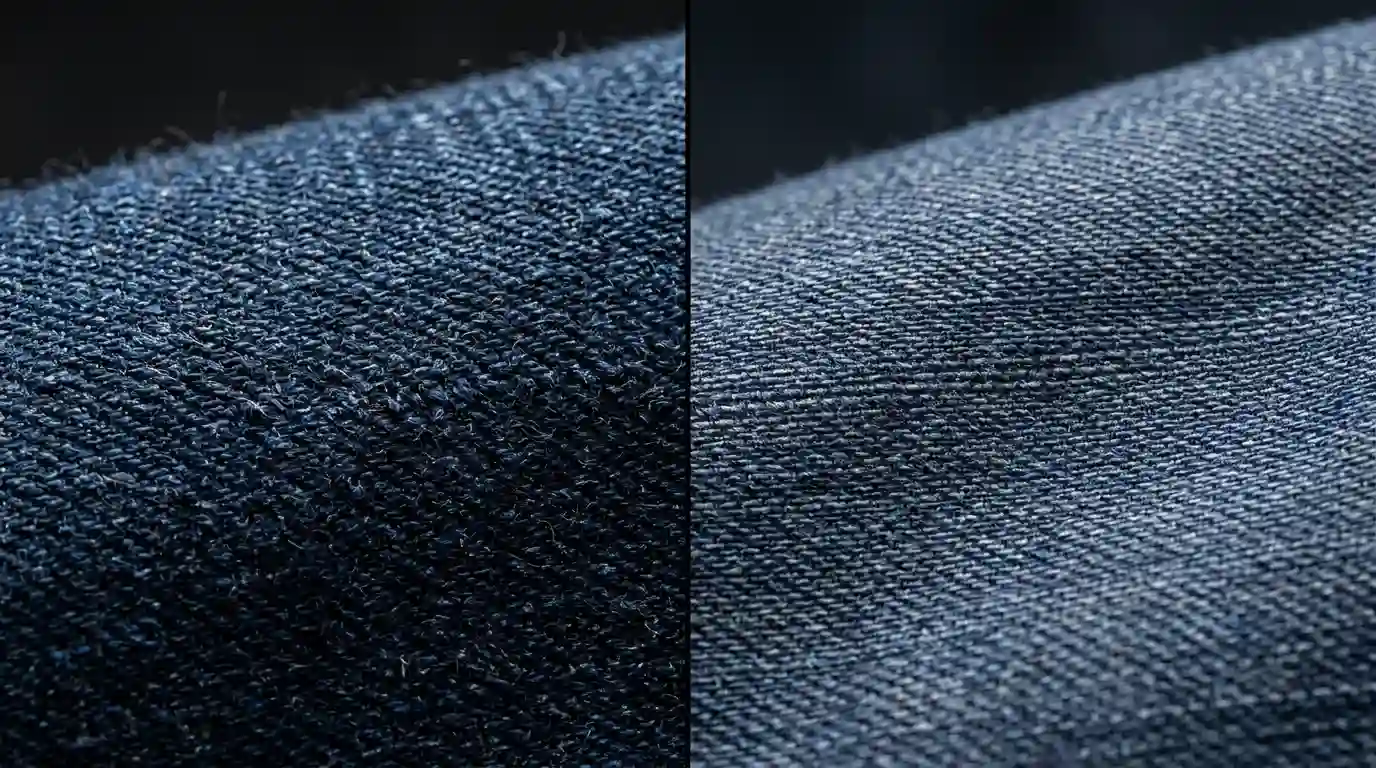
While some summer variations incorporate a lightweight Linen Blend for breathability, or a fluid Satin weave for evening wear, the primary decision for daily wear rests between rigid and stretch bases.
100% Cotton Rigid Denim: Longevity and Fabric Mold
Rigid denim is woven entirely from raw or sanforized cotton yarns. It is a dense, heavy textile measured by weight in ounces per square yard: lightweight denim sits at 8–12 ounces, midweight everyday denim ranges from 12–14 ounces, and heavyweight industrial fabric exceeds 14 ounces.
Because 100% cotton lacks synthetic give, it requires a deliberate sizing adjustment. Industry fitting data confirms that sizing up a half-inch to an inch in rigid styles provides the necessary physical clearance for your hips and thighs when sitting.
Raw, unwashed cotton denim naturally shrinks between 7% and 10% during its initial laundering cycles. It takes some commitment. For the first twenty hours of wear, heavy rigid denim can feel like moving in stiff cardboard, and deep indigo dyes are prone to transferring onto light leather sneakers or car upholstery.
Gradually, the heavy yarns absorb your natural body heat and localized friction, causing the cotton fibers to permanently relax and contour to your physical geometry. This custom molding process results in a personalized fit that stretch fabrics cannot replicate.
Performance Stretch Denim: Fiber Fatigue and Recovery Percentages
Stretch denim integrates synthetic elastane (commonly branded as Lycra or Spandex) into the cotton warp yarns. While this addition provides immediate comfort out of the box, it introduces a structural vulnerability known as elastic tensile fatigue.
Textile engineering research published by MedCrave demonstrates that high percentages of synthetic stretch components increase the initial elasticity but cause a severe reduction in fabric recovery over time. When you bend your knees or sit down, the synthetic core fibers stretch to their maximum capacity. If the polymer chains lack high recovery performance, they suffer from permanent structural elongation.
Tensile Fatigue Cycle:
Elastane Blend > 5% ──> Initial High Stretch ──> Fiber Fatigue ──> Fabric Growth (Saggy Knees/Seat)
This structural breakdown explains why stretch jeans often fit perfectly at 8:00 AM but develop a saggy seat and bagging knees by midday. It is an engineering reality, not a personal wear issue. To minimize this distortion, check the interior care label and ensure the synthetic elastomer component stays below 3% to preserve structural integrity.
What Are the Red Flags to Watch for in the Fitting Room?
Evaluating a pair of jeans requires assessing how the garment reacts to movement. Stand completely still in front of a mirror and you will miss the warning signs. Use these three checks to diagnose flaws before buying:
- Check the Waistband Balance: Look at your profile in the mirror to verify that the rear waistband sits parallel to the floor rather than dipping down toward the spine.
- Scan the Back Pocket Placement: The pockets should center directly over the widest part of your seat. Wide-set or oversized pockets will visually flatten the silhouette.
- Track the Side Seams: The outer stitched seams should drop in a straight, plumb line directly to the floor. If the seam twists across your shin toward the front of your foot, the fabric panels were cut off-grain to save manufacturing costs.
The Two-Finger Waistband Check and the Sit Test
To test the physical tension of a waistband, apply the industry-standard two-finger clearance metric. Slide your index and middle fingers vertically into the rear center of the waistband above your spine. The fingers should slide in with moderate physical resistance. If you can fit your entire hand into the space, the waistband is too loose and will gap when belted; if you cannot insert two fingers, the garment will restrict blood flow when your abdomen expands naturally during dinner.
Next, execute the behavioral sit test. Find a flat dressing room stool and sit down completely with your knees bent at a 90-degree angle.
Sit Test Diagnostic Outcomes:
├── Waistband pulls down / gaps at spine ──> Crotch saddle curve is too shallow
└── Fabric cuts into the lower abdomen ────> Front rise is insufficient for your frame
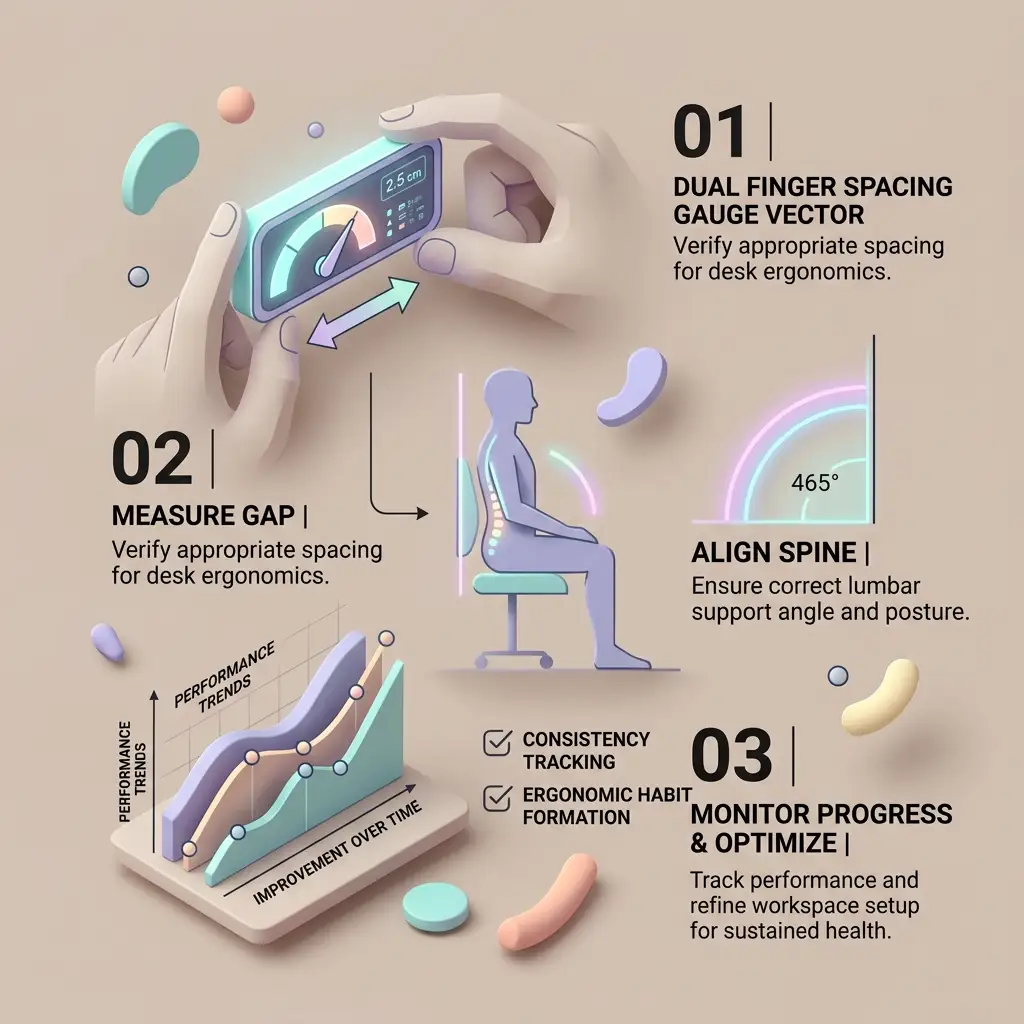
If the denim pulls away from your lower back, creating a wide opening, the pattern lacks a contoured yoke cut. Bypassing this posture check is why many people buy jeans that look fine standing in front of a mirror but become unwearable in daily life.
Signs of Synthetic Stretch Fatigue and Fabric Sagging
You can test a stretch denim’s longevity before purchasing by checking its structural memory. Grip a section of the fabric across the knee panel with both hands and pull it outward horizontally for five seconds. Release the tension quickly and watch the textile return to its resting position.
High-quality performance denim will snap back into alignment immediately without leaving a visible shadow or pouch in the weave. If the fabric hesitates, leaves a loose ripple, or shows small white elastic threads breaking through the indigo surface yarns, the elastane core is weak. This material failure guarantees the pants will permanently bag out after a few hours of real-world wear.
How to Choose Your Suitable Jeans: Scenario-Based Recommendations
Denim selection should align with your specific daily requirements and environment.
The Daily Professional Capsule: Polished Smart Casual Utility
For a modern workplace, denim should function as a tailored foundational layer rather than casual sportswear. Integrating denim into your core wardrobe essentials requires selecting clean, minimalist construction parameters.
- The Silhouette Blueprint: Choose a mid-to-high rise paired with an un-distressed Straight Fit cut. This geometry elongates your visual line and pairs cleanly with flats, loafers, or blazers.
- The Material Composition: Look for a midweight fabric (11–13 ounces) finished in a uniform dark indigo or rich black wash. Avoid any contrast stitching, whiskers, or factory fading.
Professional Denim Blueprint:
Mid/High Rise + Straight Fit + Dark Wash + Midweight Yarn = Office Suitable Drape
This clean profile coordinates smoothly with traditional office pieces to establish a reliable Business Casual or Smart Casual foundation. Selecting a balanced, durable fabric composition protects your investment from looking worn out after a single season of office laundering.
The Durable Weekend Staple: Uncompromised Rigidity
Off-duty dressing allows you to lean into the long-term durability and heritage character of traditional denim.
- The Silhouette Blueprint: A mid-rise Relaxed Fit or authentic straight leg provides maximum utility. The shape should leave breathing room through the thighs and calves to support unrestricted movement.
- The Material Composition: Prioritize 100% raw or one-wash cotton denim weighing between 13 and 14 ounces per yard.
While a heavy raw cotton option requires a breaking-in period, it provides the structural substance needed for a Capsule Wardrobe. This durable fabric protects against early fabric blowouts and organically develops individualized creases and fades that reflect your lifestyle. It delivers a grounded, timeless look that outlasts passing micro-trends.
FAQs
What is the two-finger rule for evaluating a jeans waistband?
Slide your index and middle fingers vertically into the rear waistband above your spine; they should pass with moderate physical resistance. If a hand fits, it will gap; if two fingers cannot slide in, it will pinch.
Why do stretch jeans get loose at the knees and seat by midday?
This occurs due to elastic tensile fatigue. When cotton is mixed with high percentages of synthetic elastomers, the polymer fibers lose shape memory under natural joint movement, resulting in permanent fabric growth.
Should I size up in 100% cotton rigid denim?
Yes. Because all-cotton weaves contain no synthetic elastomers, they feature zero immediate stretch and shrink by 7%–10% during initial washes. Sizing up a half-inch to an inch ensures functional sitting room.
Sources
Official Sources
- MedCrave Journal of Textile Engineering | An Investigation into the Stretch and Recovery Properties of Denim Fabrics | https://medcraveonline.com/JTEFT/JTEFT-04-00119 | July 18, 2026 | Source Tier: Tier 4
Industry Sources
- Harper’s Bazaar | How to Style High-Waisted Jeans | https://www.harpersbazaar.com/uk/fashion/shopping/a69709817/how-to-style-high-waisted-jeans/ | July 18, 2026 | Source Tier: Tier 5
- Who What Wear | How to Measure Your Waist for Jeans | https://www.whowhatwear.com/how-to-measure-waist-for-jeans | July 18, 2026 | Source Tier: Tier 5
- Who What Wear | The Complete Levi’s Denim Fit and Care Guide | https://www.whowhatwear.com/levis-fit-guide | July 18, 2026 | Source Tier: Tier 5
- WIES Made | The Science Behind Denim Weight: Choosing the Right Ounce for Your Lifestyle | https://wiesmade.com/blogs/denim/the-science-behind-denim-weight-choosing-the-right-ounce-for-your-lifestyle-1 | July 18, 2026 | Source Tier: Tier 6