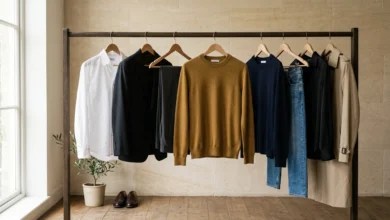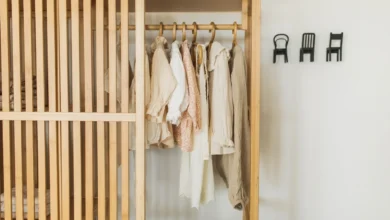
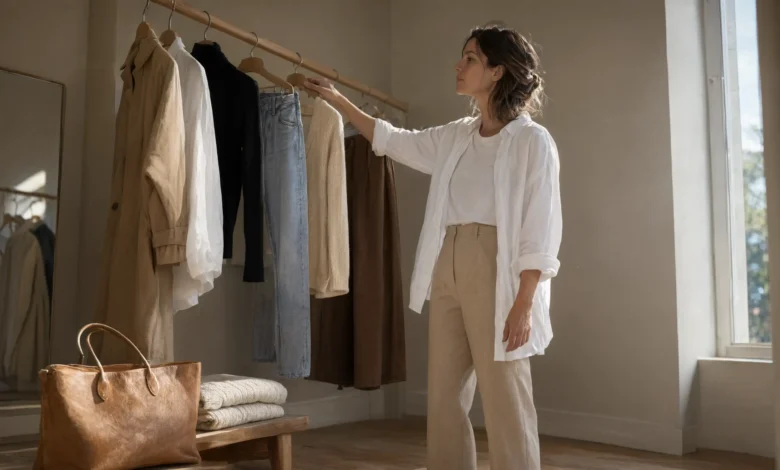
Count the hangers in your closet. Now count the outfits you actually wore in the last thirty days. The gap between those two numbers is where the money went. Most closets do not fail from a shortage of clothing. They fail from a shortage of cooperation between the clothing.
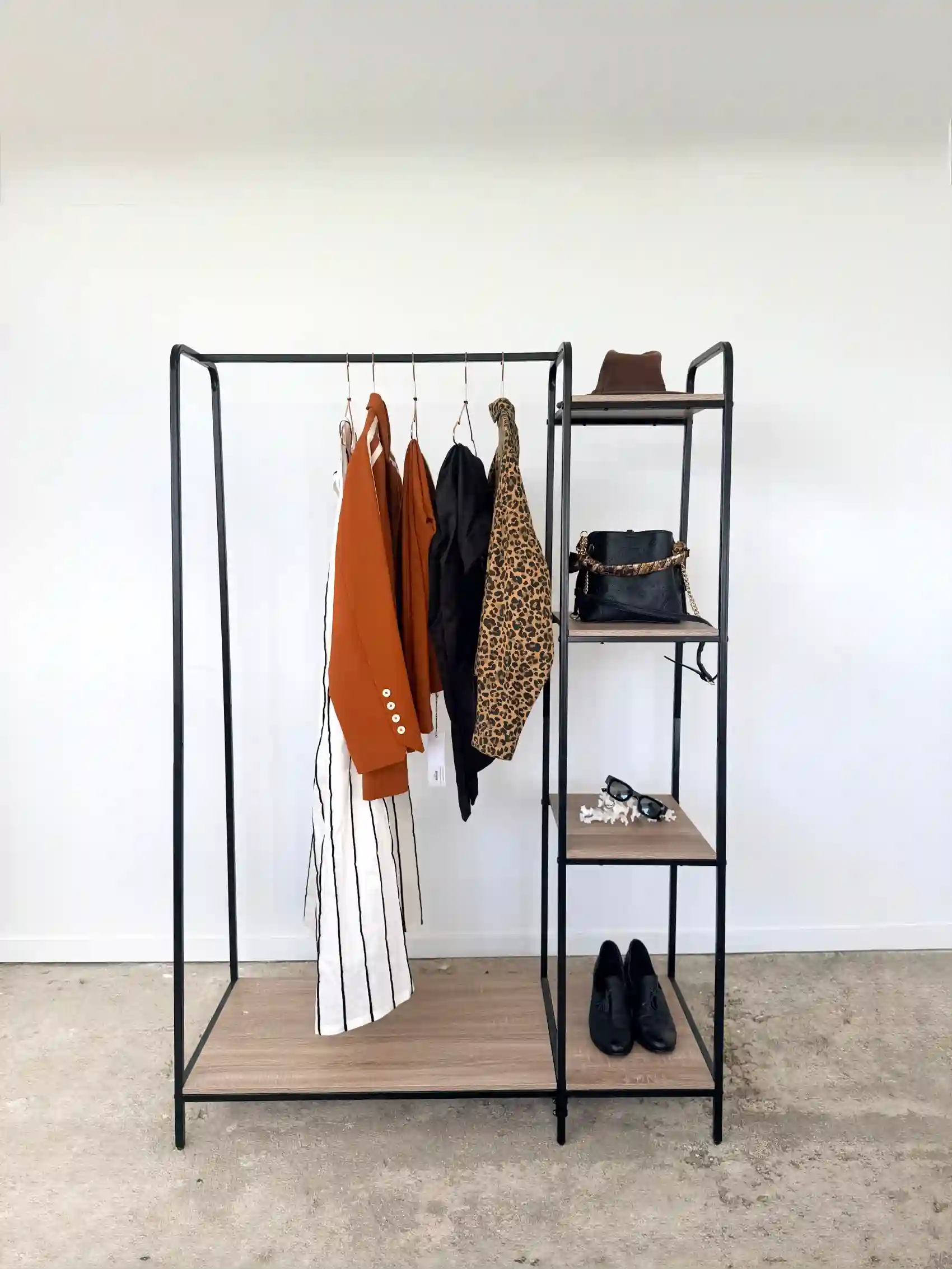
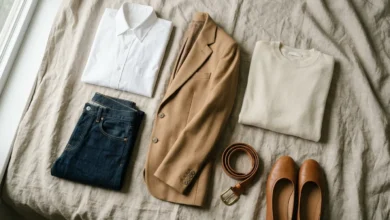
The five wardrobe essentials every woman needs, in order of structural importance: (1) a cotton poplin button-down at 110 to 140 grams per square meter, (2) a blazer in mid-weight wool or high-twist crepe, (3) a straight-leg jean at 11 to 14 ounces with 1 percent elastane or less, (4) a tailored trouser in a stable mid-weight weave, and (5) a two-ply merino or cashmere crew-neck knit. Each one must pass the same three tests before it earns a hanger: it holds its shape after repeated wears, it pairs with at least four garments you already own, and its cost per wear falls below two dollars inside the first year.
What Actually Makes a Garment Essential (It Is Not the Fiber List)
The old advice says to read the composition tag and walk away from anything synthetic. That rule sounds expert and behaves like a coin flip. A 90 grams per square meter poplin in pure cotton will sheer out, collapse, and lose its collar line inside one season, while the same weave at 140 grams per square meter with 2 percent elastane holds a crisp placket for years. Fiber content tells you how a garment feels and how to wash it. Weight and weave density tell you whether it keeps its shape. Read the weight first.
The stakes show up in the data. The Ellen MacArthur Foundation found that the average garment is now worn 36 percent fewer times than it was fifteen years ago, and McKinsey analysts cite the same figure when describing how fast clothing rotates out of closets. We buy more and wear each piece less, which turns the average impulse purchase into a bad bet twice over.
Buy less. Choose well. Make it last.
Vivienne Westwood, as published on the brand’s sustainability page
Run the arithmetic once and it rewires how you shop. A 180 dollar blazer worn twice a week for eighteen months lands near 1.20 dollars per wear. A 60 dollar blazer that pills and slumps by month three gives you perhaps fifteen wears, which is four dollars per wear. The cheap one costs triple per use. Cost per wear is the only price tag that matters, and the care label belongs in that math, which is exactly why the FTC Care Labeling Rule (16 CFR Part 423) requires those instructions to be attached to the garment at sale.
The Audit Comes Before the Shopping List
Before any list, open the closet. Pull everything that failed last season and sort it by why it failed: lost shape, never matched, ruined in the wash, or never fit right. That failure log is your real buying list, and it is the same audit-first logic behind our personal style framework and the four-step capsule wardrobe method. Counts follow decisions. A staple earns its place by passing tests, not by appearing on a list.
The Core Staple Assessment Matrix
| Evaluation Pillar | Direct Metric Check | Structural Goal |
|---|---|---|
| Material integrity | Fabric weight in grams per square meter or ounces; opacity held to indoor light; natural yarn irregularities present. | Resist stretching, bagging, and sheering out across repeated wear cycles. |
| Tailoring geometry | Shoulder seams aligned to your shoulder point; balanced hang on a wooden hanger; no twisting at the side seams. | Hold a clean silhouette without pulling, gaping, or spiraling after washing. |
| Pairing range | Visual compatibility with at least four garments already in your closet, across two dress codes. | Maximize modular utility so five pieces behave like twenty outfits. |
| Care cost | Read the care tag before the price tag; count every dry-clean-only cycle into the purchase. | Keep lifetime cost low enough that the cost-per-wear math still works in year two. |
The 5 Wardrobe Essentials Every Woman Needs, Tested by Weight and Fit
1. The Cotton Poplin Button-Down
A white or light blue structured button-down is the spine of the whole closet. The spec that matters is weave density: long-staple cotton poplin in the 110 to 140 grams per square meter range, opaque under indoor lighting, with a placket that stands away from the chest. Harper’s Bazaar’s capsule editors still open their seasonal lists at this exact piece, because the dense weave is what keeps a collar crisp through a day of sitting, commuting, and sitting again.
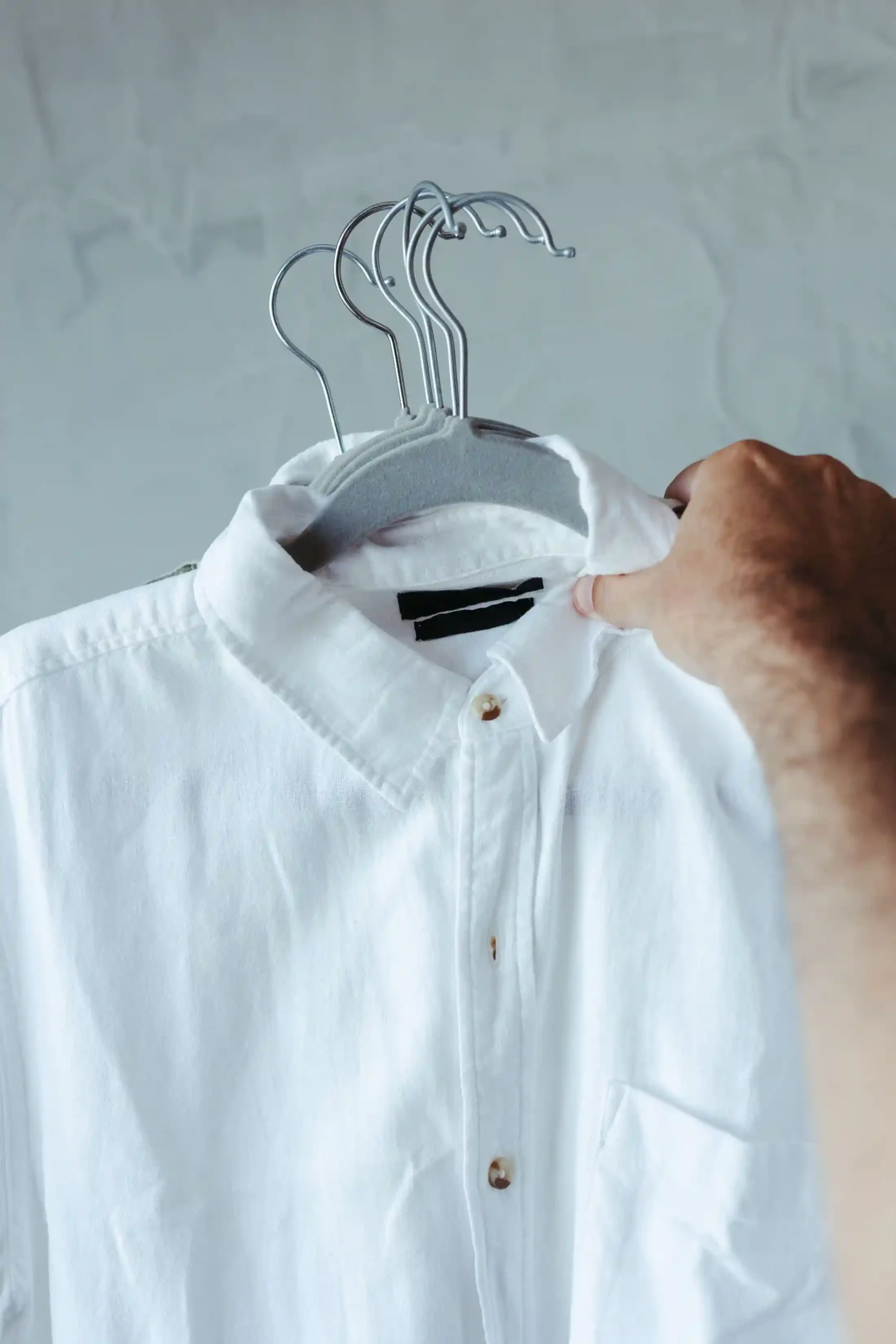
Fit it relaxed, not oversized. The shoulder seam should land a hair outside your natural shoulder point so the fabric drops straight instead of pulling across the chest. Yes, real poplin creases within an hour of wear. That is the fiber telling the truth, and a quick steam restores the line. The failure case is not the wrinkle. It is the limp, shiny blend that never wrinkles and never looks pressed.
If you teach, this is the difference between a collar that still reads crisp at the three o’clock parent conference and one that went translucent by lunch. Dense poplin holds its architecture in a humid room. A thin blend documents your entire morning on its surface.
| Fabric Blueprint | Weave Density | Crease Behavior | Structural Profile |
|---|---|---|---|
| Heavy cotton poplin | 120 to 140 grams per square meter; opaque held to light. | Wrinkles naturally; presses back sharp in minutes. | Stands away from the skin; holds a collar line all day. |
| Featherweight pure cotton | Under 100 grams per square meter; sheers under indoor light. | Crumple-prone; creases set and stay. | Clings and collapses; reads undone by midday. |
| Cotton with 2 to 3 percent elastane | 120 to 140 grams per square meter; near opaque. | Resists day creasing; softens after a steam. | Keeps the placket line through desk hours and travel. |
- The collar closes with one finger of ease, with no gap at the back neck when you sit.
- The cuff buttons at the wrist bone and clears a watch without straining.
- The hem covers your waistband fully when tucked and stays tucked when you reach overhead.
2. The Tailored Blazer
A sharp blazer is the piece that converts everything else. Over a white tee and straight denim it closes a weekend meeting; over tailored trousers it carries a formal afternoon presentation, and the structural line stays identical while the context shifts. It satisfies traditional Business Casual parameters while remaining comfortable enough to anchor a Smart Casual weekend uniform. That range is the whole point, and the mechanism is construction, not formality.
Look for mid-weight wool or a high-twist crepe with a fluid lining and a soft, subtly padded shoulder that slips over a light sweater without adding bulk. Avoid fused jackets that feel like cardboard. The shoulder is the one point a tailor cannot rebuild, so buy it right off the rack and budget the alterations for the waist and sleeves instead.
3. The Straight-Leg Denim
Trend cuts come and go. The classic Straight Fit stays, because it balances your natural proportions without leaning on synthetic stretch. Look for 11 to 14 ounces, 99 percent cotton, and 1 percent elastane or less. That sliver of stretch supplies comfort for a day of sitting, and the cotton still snaps back by evening. Anything beyond 2 percent elastane turns denim into a knit that bags at the knee and never fully recovers.
- The weight test: hold the jean by the waistband. Real mid-weight denim drops straight down instead of crumpling limp.
- The pocket geometry: rear pockets centered and scaled to your frame; low or oversized pockets read as sag.
- The stitching: turn a hem inside out and check for clean dual-stitch overlocks along the inseam.
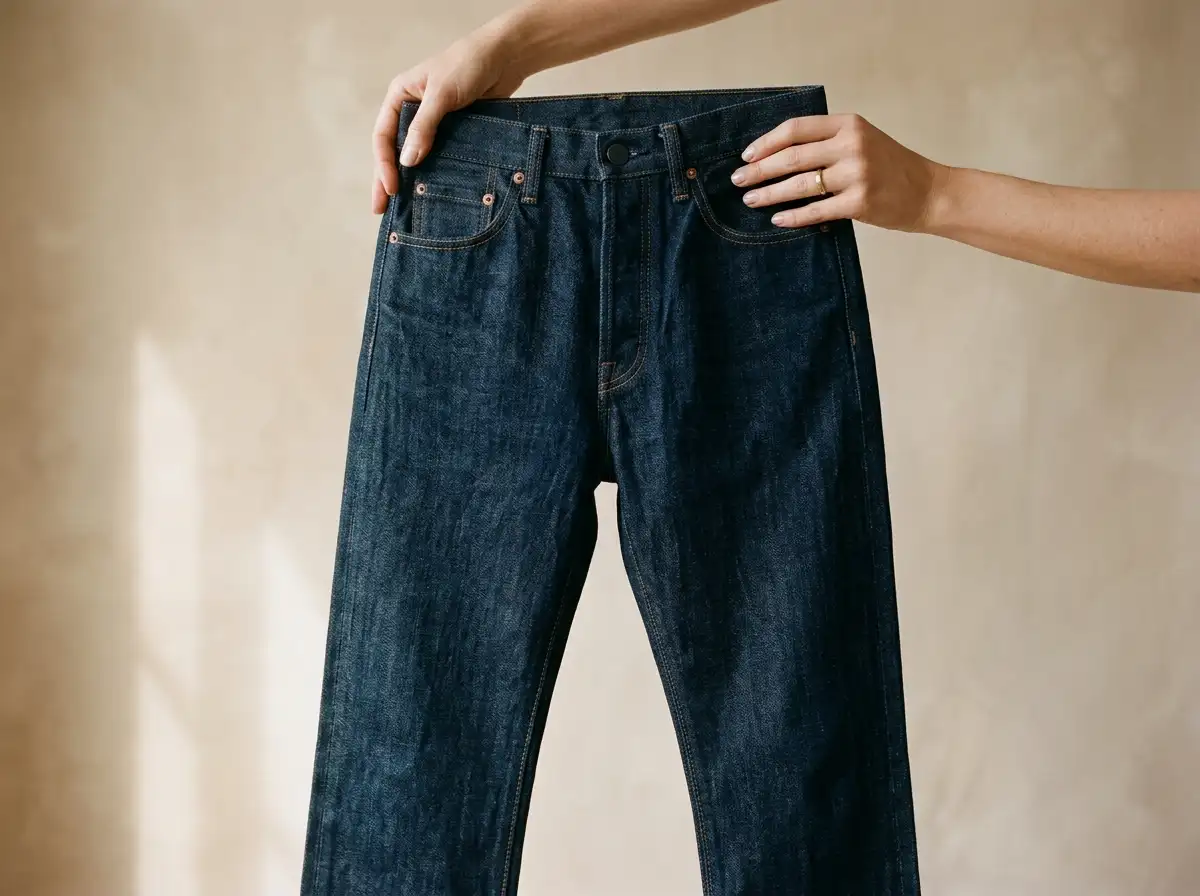
The jean should skim the hip and fall straight from thigh to ankle. If the hem pools, that is a proportion question, not a failure. Matching the rise and inseam to your body shape proportions, plus an inexpensive hem, solves it permanently.
4. The Tailored Trouser
For decades, style guides insisted a formal evening dress was a non-negotiable staple. Fitting rooms tell a different story: a dress that suits three events a year is luggage, not infrastructure. The tailored trouser works forty weeks a year. Choose a Regular Fit through the leg in a stable mid-weight weave such as wool gabardine or a dense viscose blend, with a waistband that closes without pinching and a cascade into a subtle break at the shoe. A cropped hem at the Midi line flatters flats; a full-length hem pairs with loafers and low heels.
| Silhouette Profile | Internal Rise | Optimal Shoe Match | Best Lifestyle Scenario |
|---|---|---|---|
| Flat-front straight | Mid-to-high rise | Classic penny loafers | Active workspaces with regular movement. |
| Single-pleat wide | High rise | Pointed-toe flats | Creative corporate offices or evening dinner settings. |
| Cropped slim | Mid rise | Leather ballet flats | Casual environments and transitional weather commuting. |
5. The Crew-Neck Knit
The mid-layer knit bridges cold months and transitional weeks. The spec is ply and fiber: two-ply merino or cashmere, where two threads twist together before knitting, which doubles the garment’s resistance to warping. Choose a Slim Fit for wearing under blazers and a regular cut for standing alone over a button-down.
- The stretch test: pull the knit sideways and release. Quality wool snaps back to its original dimensions instantly.
- The ribbing test: if the neck or cuff ribbing feels loose on the shelf, it will sag after the first wash.
- The ply check: hold the fabric to the light. A two-ply yarn reads dense and even, with no see-through gaps.
The Neutral Palette That Makes Five Pieces Behave Like Twenty
Five essentials only multiply if every top meets every bottom. That is the quiet engine behind Quiet Luxury and Old Money styling: an intentional, restrained color story that reads polished without a logo in sight. Build the palette on a 70 to 30 dominant-to-accent split, using three pillars.
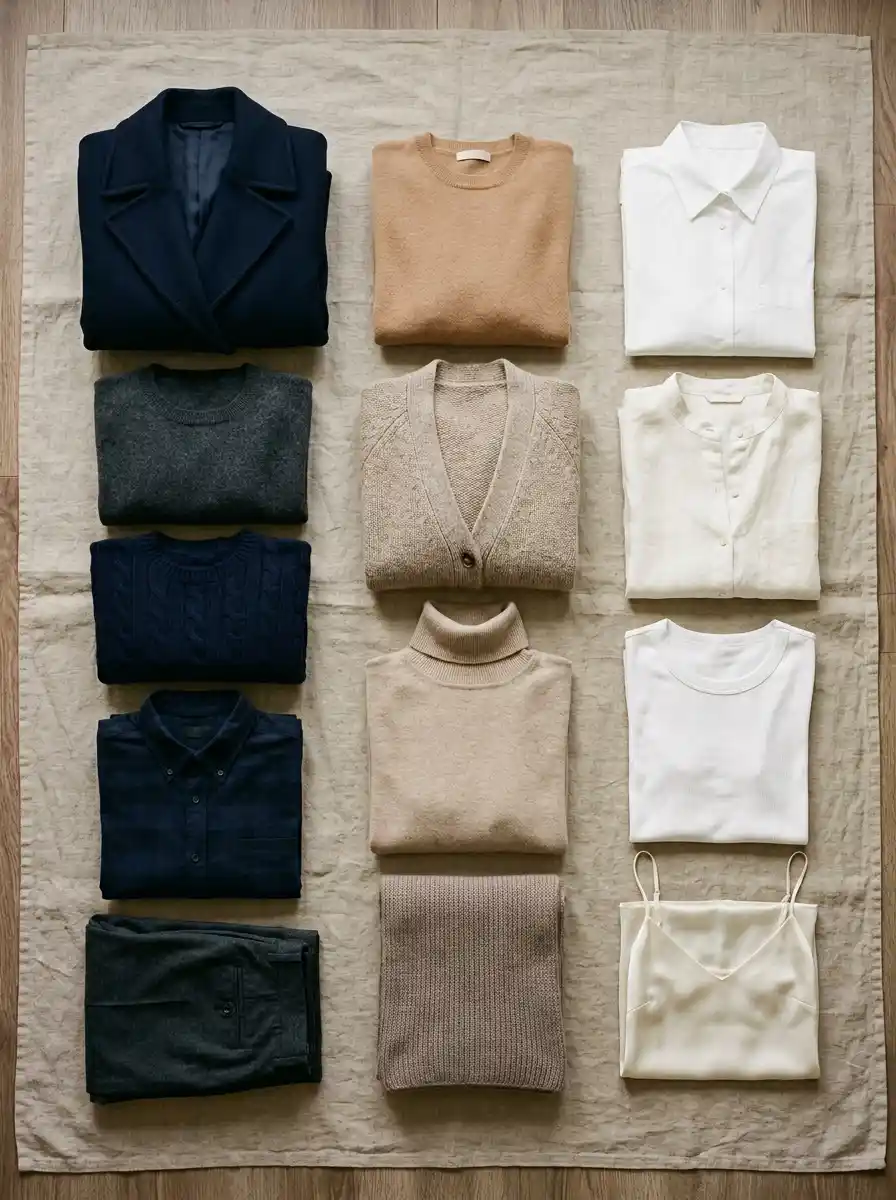
- Identify your primary anchor: ink black or charcoal navy, chosen by what you already own. It takes the big investments, the blazer and the trousers.
- Add one mid-tone bridge: camel, taupe, or warm stone, to break up monochrome and add depth when layering.
- Bring in light balancing elements: soft ivory and crisp white for shirts and knits, giving the deeper base pieces contrast to play against.
Care Is a Buying Decision: The Maintenance Routine
A foundational wardrobe should last years, not seasons, and the FTC Care Labeling Rule (16 CFR Part 423) exists so you can price that lifespan at the shelf: the label must state the regular care the garment needs, so read it before you buy, not after you ruin it. A dry-clean-only trouser carries a recurring cost that a machine-washable twin does not, and that difference belongs in the cost-per-wear math.
| Textile | Routine | Why It Works |
|---|---|---|
| Denim | Wash inside out in cold water after every 5 to 10 wears; air dry flat. | Protects the indigo and the elastane from heat and friction. |
| Knitwear | Hand wash with gentle soap; reshape on a dry towel; never hang by the shoulders. | Prevents the gravity stretch that ruins shoulders and hems. |
| Tailored wool | Wide wooden hangers; steam instead of iron; rest a day between wears. | Preserves shoulder shape and lets the fiber recover its crease line. |
| Leather footwear | Condition every six months; cedar shoe trees between wears. | Keeps loafers and flats in the decade-long lifespan category. |
Wardrobe Essentials FAQs
How many foundational items do I actually need to start?
A core wardrobe runs well on 8 to 12 structural staples that interlock, which produces three weeks of distinct combinations. The number is a byproduct of the audit, not a target to hit.
Can I build a reliable wardrobe if my life is entirely casual or remote?
Yes. Swap the structured blazer for an unstructured one and lean on dense knitwear, but keep the clean lines of straight-leg denim and tailored separates. Camera days reward the same poplin collar, just pressed.
Why is a low elastane percentage critical for denim longevity?
Elastane fibers stretch and break under body heat and friction. Keeping elastane at or below 1 percent lets the cotton yarns recover their shape after daily wear, while higher blends bag at the knee and never fully return.
Is a little polyester or elastane actually a problem?
Not by itself. The failure case is low weight and loose weave, not the presence of a synthetic fiber. A dense cotton blend that passes the weight, opacity, and pairing tests earns its hanger; a featherweight pure cotton that fails them does not.
Shift the focus from volume to structure and the closet starts cooperating. Natural fibers where they matter, weight first on every label, a palette that agrees with itself, and care that respects the fabric. That is the entire list. True style was never constant consumption. It is a small set of deliberate choices that stand the test of time.
Source
Official Sources
- U.S. Federal Trade Commission: Care Labeling of Textile Wearing Apparel and Certain Piece Goods (16 CFR Part 423), Access Date: August 2026.
- eCFR, U.S. Government Publishing Office: 16 CFR Part 423: Care Labeling of Textile Wearing Apparel and Certain Piece Goods, Access Date: August 2026.
Industry Sources
- Vivienne Westwood: Sustainability: Buy Less, Choose Well, Make It Last, Access Date: August 2026.
- Harper’s Bazaar: The 24 Pieces Every Spring Capsule Wardrobe Needs, Access Date: August 2026.
- Who What Wear: Straight-Leg Jeans Outfits for Spring 2026, Access Date: August 2026.
Research Sources
- Ellen MacArthur Foundation: A New Textiles Economy: Redesigning Fashion’s Future, Access Date: August 2026.
- McKinsey and Company: Refashioning Clothing’s Environmental Impact, Access Date: August 2026.
Additional Reading
- TrendTome: How to Build a Capsule Wardrobe: 4 Steps to Stop Overbuying, Access Date: August 2026.
- TrendTome: How to Read Clothing Labels: 4 Steps to Decode Care Tags, Access Date: August 2026.
- TrendTome: A Complete Women’s Wardrobe Essentials Guide Worth Keeping, Access Date: August 2026.