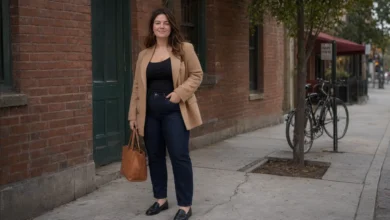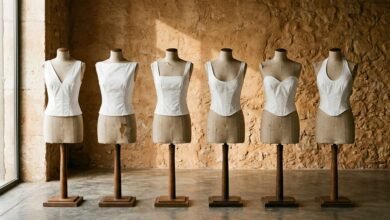

A closet full of clothes and nothing to wear is a specific problem if you have an apple body shape. The cut that worked on a friend, or on the mannequin, sits wrong through the middle and somehow makes the shoulders look bigger instead of the waist look smaller. That’s not a shopping failure. It’s a mismatch between how a garment is built and where this shape actually carries its weight.
An apple body shape carries fullness through the midsection, with a waist that’s close to the same width as the bust or hips rather than sharply narrower. Shoulders tend to be part of the story too, often the widest point on the frame, while arms and legs stay comparatively lean. None of that is a flaw to disguise. It’s just a proportion, and proportions respond to specific fit decisions.
The rest of this guide covers what those decisions actually are, where they come from, and where the usual advice oversimplifies things.
The short version: dress an apple body shape by moving attention up and out, not in. Open the neckline with a V-neck or a boat neck, add structure at the shoulder instead of the waist, choose wrap or empire silhouettes that suggest a waistline rather than cinch one, and balance the frame with straight-leg or bootcut bottoms instead of skinny styles. Save belts for pieces already cut with some ease, not for holding in a stiff waistband.
What “Apple Shaped” Actually Means
A widely cited North Carolina State University study of more than 6,000 women found that roughly 14% measure as an apple, or oval, shape, using bust, waist, and hip ratios. The same research put rectangle at around 46%, which makes apple one of the less common categories rather than a rare outlier, and a useful reminder that most bodies don’t sort neatly into any single bucket.
The classification itself is a garment-industry tool, not a verdict. It was built so that patternmakers could grade clothes more accurately across a size range, and it works best used that way: as a starting point for where a garment needs ease, not a fixed identity. Plenty of people sit between apple and its neighboring shapes, leaning toward inverted triangle if the shoulders are the most dominant line, or toward rectangle if the waist has only slightly less definition than the hips.
At a Glance: Apple vs. the Look-Alikes
- Apple: fullest through the midsection, waist close in measurement to bust and hips, legs and arms often the leanest part of the frame.
- Inverted triangle: broadest at the shoulders, waist can be nearly as narrow as the hips, without the same midsection fullness.
- Rectangle: bust, waist, and hips sit within a few inches of each other, and it’s the most common shape of the group by a wide margin.
The Fit Moves That Actually Balance an Apple Shape
Necklines That Pull the Eye Up
A V-neck does one simple thing well: it draws a line upward, toward the collarbone and face, before anyone’s eye has a chance to travel down. A boat neck or a wide, structured off-the-shoulder line works on a different axis, widening the frame at the shoulder so the midsection reads as proportionally smaller by comparison. Crew necks and high, tight turtlenecks tend to work against an apple shape, since they stop the eye right at the fullest part of the chest with nowhere else to go.
Structure at the Shoulder, Not the Waist
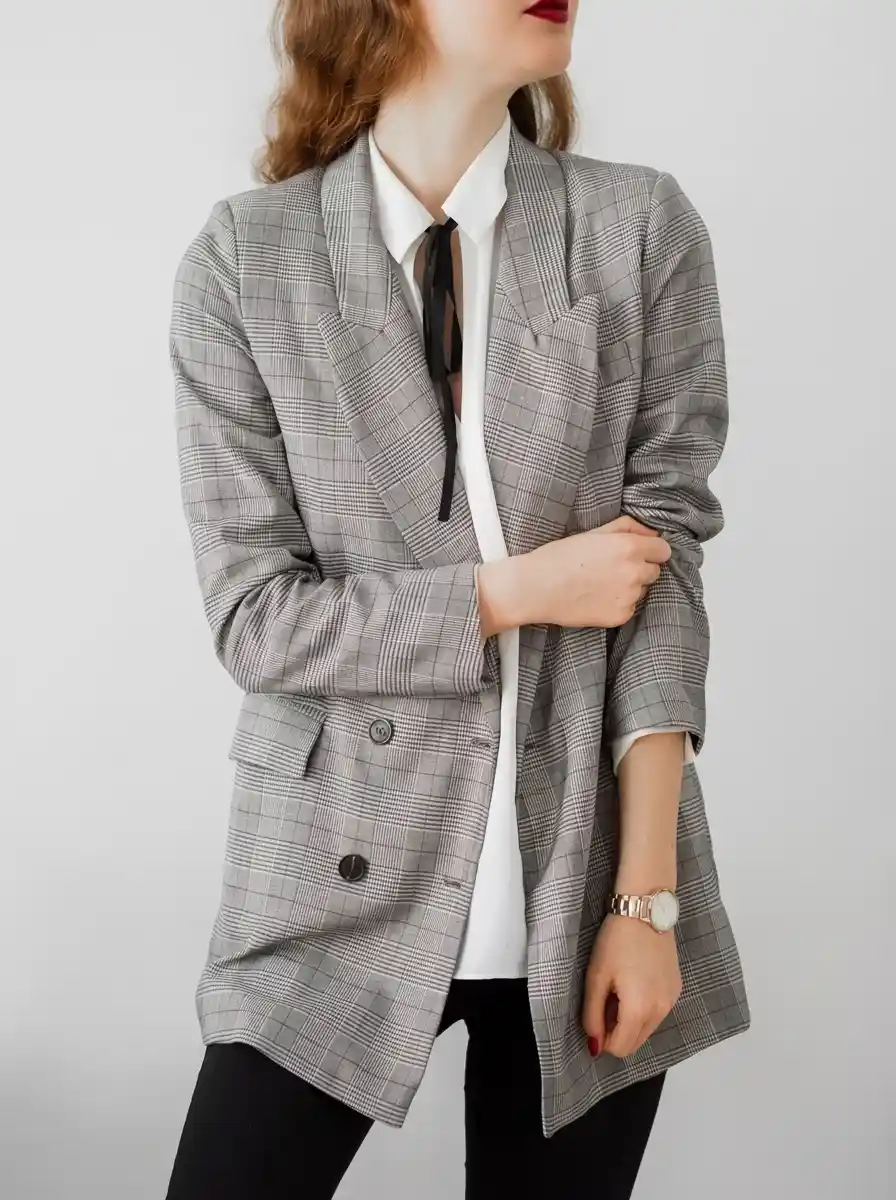
A tailored jacket with a defined shoulder line does more for an apple shape than almost any other single piece in a closet. It gives the frame an anchor point above the waist, so the rest of the outfit has something to balance against. Look for a notch lapel and a shoulder seam that sits at, not past, the natural shoulder bone. Drop-shoulder blazers, however trend-driven, tend to add width in the wrong direction for this particular shape.
Let a Silhouette Suggest a Waist
This is where wrap and empire silhouettes earn their reputation. Diane von Furstenberg, who introduced the modern wrap dress in 1974, has described how the jersey fabric and wrap construction “moulds your body and makes you look ‘proper’ but at the same time sexy,” and that’s really the mechanism at work here: a wrap crosses at an angle rather than a straight horizontal line, which reads as a waistline without physically cinching one.

Empire seams do a version of the same thing by cutting in just under the bust, so everything below flows rather than clings. A structured belt cinched at the natural waist can undercut both of these, since it forces attention onto the exact measurement the rest of the outfit is working to soften.
Bottoms That Balance Rather Than Compete
Straight-leg and bootcut trousers or jeans do the most reliable work here, because they keep a clean, continuous line from hip to hem instead of narrowing sharply at the ankle. That contrast, a fuller top half against a tapered bottom, tends to make the midsection look proportionally larger, which is the opposite of the goal. High-rise waistbands sit above the fullest part of the stomach rather than cutting across it, and a slight flare or wide leg adds visual weight low on the body to help balance a top-heavy frame.
Fabric Choices That Do the Shaping Work For You
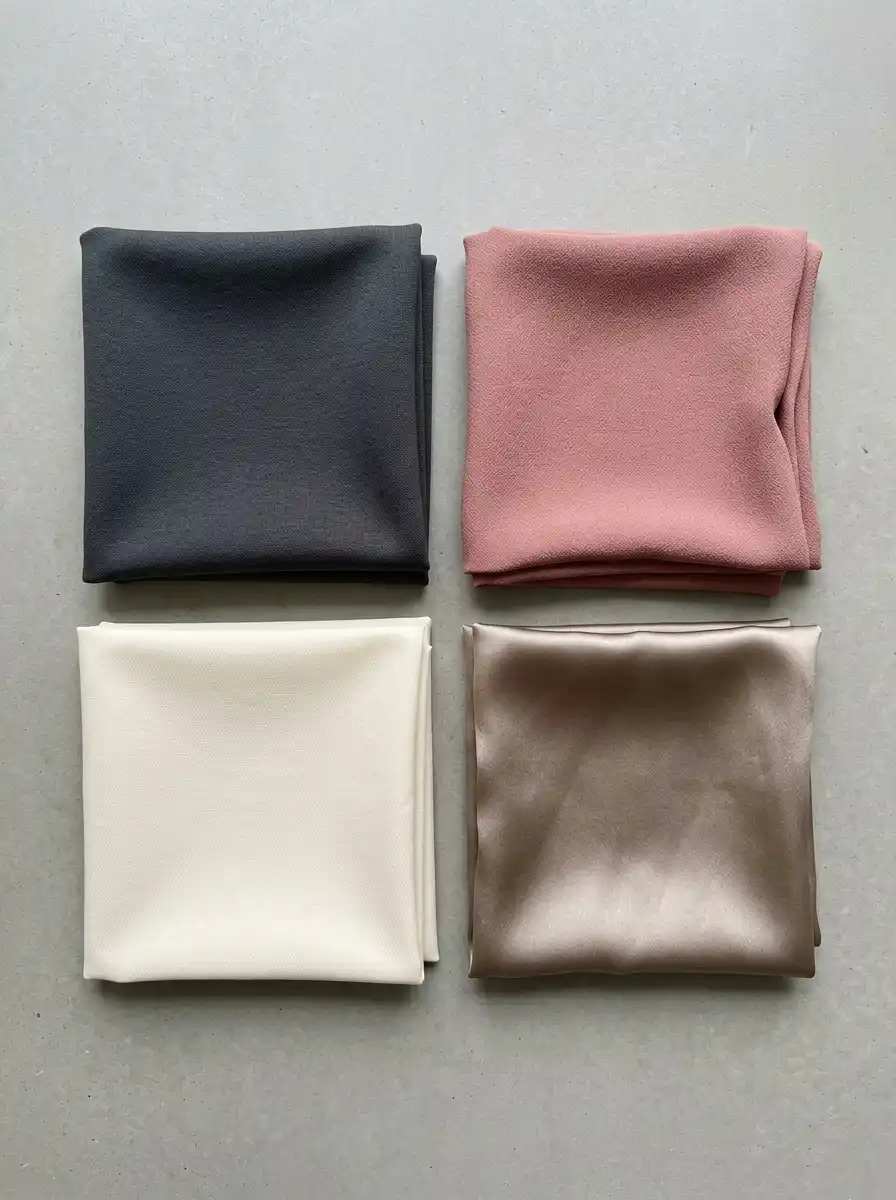
Cut matters more than fabric for an apple shape, but fabric decides whether that cut actually holds its line on the body or collapses into it. A few materials come up again and again in well-reviewed pieces built for this shape.
| Fabric | Drape | What it does for an apple shape | Typical price range |
|---|---|---|---|
| Ponte knit | Firm, matte, holds its shape without going stiff | Skims the middle in wrap tops and sheath dresses instead of clinging to it | $40 to $90 at most contemporary retailers |
| Crepe | Fluid, matte finish, moves without clinging | Works best in trousers and midi skirts, where it drapes over the stomach rather than outlining it | $60 to $200 depending on brand |
| Cotton poplin | Crisp, holds a defined shape | Best reserved for shoulders and sleeves, a blazer or a shirt with structure, since it can read stiff directly against a waistband | $50 to $150 for a tailored blazer |
| Silk satin | Fluid and reflective, drapes more like crepe than it looks | Works for eveningwear if the cut is loose through the middle; a stiffer, synthetic satin construction generally doesn’t, since it holds its own shape regardless of the body under it | Wide range, quality varies significantly by price |
What Doesn’t Work, and Why
Low-rise pants and skirts cut across the fullest part of the stomach, which is the one line an apple shape usually wants to avoid. Skinny jeans paired with a fuller top create the exact top-heavy contrast this shape is generally trying to soften, even when the top itself is doing everything right. Boxy, oversized tops remove the shoulder structure that gives the rest of the outfit something to balance against, so the whole silhouette reads as one undefined block instead of two proportioned halves.
None of this is absolute. Shapewear is a personal choice, not a requirement, and plenty of women with an apple shape skip it entirely without their outfits reading as unfinished. Height changes the math too: on a petite frame, a longer wrap dress or an empire silhouette can shorten the leg line more than it flatters the middle, so hem length sometimes matters more than the silhouette rule itself. And for anyone who’s simply not interested in dressing “for” their shape at all, that’s a perfectly reasonable position. This is a set of tools, not an obligation.
Building From Here
If You’re Starting Over
After a body change, whether from pregnancy, medication, menopause, or anything else, rebuilding a whole closet at once is rarely realistic. Start with three pieces: one structured blazer, one wrap or faux-wrap top, and one pair of straight-leg or bootcut trousers. Those three cover the shoulder, the waist, and the leg line, and most other purchases can build outward from them.
If You’re Short on Time
A five-piece rotation covers most weeks: one blazer, two wrap or faux-wrap tops in different fabrics, one pair of straight-leg trousers, and one pair of dark, higher-rise bootcut jeans. Mixed and matched, that’s close to two weeks of outfits without a single additional decision.
If You Already Know Your Aesthetic
Shape guidance is a starting point, not a rulebook, and it shouldn’t override a personal style that already works. A minimalist can apply the shoulder-and-waist logic here in solid, quiet colors. Someone who loves print and volume can do the same in a bolder wrap dress. The proportion principles hold; the taste on top of them is still entirely the reader’s own.
FAQs
What actually makes a body shape “apple” instead of “inverted triangle”?
Both shapes carry more visual weight up top than at the hips, but an apple shape has real fullness through the stomach and midsection, while an inverted triangle is defined mainly by broad shoulders with comparatively little midsection fullness to work around.
Is it true that belts are off-limits for an apple body shape?
Not entirely. A belt on a piece with some ease, like a wrap dress or an unstructured cardigan, can add shape without a problem. A belt cinched tight over a stiff, structured waistband is where it tends to work against this shape.
What’s the quickest way to dress an apple body shape for the office?
A structured blazer over a V-neck top, straight-leg trousers, and a low block heel covers most professional settings without any single piece doing too much work.
Do empire waistlines work for every apple shape, or just some?
They work for most, but height matters. On a petite frame, a floor-length empire dress can shorten the leg line more than it flatters the middle, so a knee-length or midi cut is often the safer starting point.
Does shapewear matter for this body shape, or is it optional?
Optional. It can smooth a specific fabric or silhouette if that’s the effect someone wants, but a well-cut piece in the right fabric does most of the same work without it.
None of this requires an overhaul. One wrap top and one structured blazer, added to whatever’s already working, will tell you more about how an apple body shape wants to be dressed than any amount of reading. The proportions are consistent enough to plan around, but the actual styling is still a matter of taste, and taste is the one part no fit guide can standardize.
SOURCES
Research Sources
- BodySpec: A Guide to Female Body Types: Shapes, Health, and Composition, Accessed July 27, 2026, Source Tier: Secondary summary of academic research (North Carolina State University body-scan study)
Industry Sources
- ELOQUII: Best Plus-Size Clothing Brands of 2026, Accessed July 27, 2026, Source Tier: Retailer/brand primary source (pricing)
Additional Reading
- BBC News: Diane von Furstenberg on ‘magic’ wrap dress and fearlessness, Accessed July 27, 2026, Source Tier: Direct interview, named designer
- Roberta Lee, The Sustainable Stylist: Apple Body Shape Guide, Accessed July 27, 2026, Source Tier: Named professional stylist, informed background reading