
When an outfit feels awkward in front of the mirror, the instinct is often to blame your body shape. In reality, your body is rarely the problem. Most visual imbalance comes down to misplaced seam lines, competing fabric volumes, or hemlines that cut across limbs at awkward swell points. Understanding these common body shape styling mistakes allows you to adjust how garments drape across your frame without resorting to strict clothing bans.
Common body shape styling mistakes occur when seam placements, waist rises, and fabric weights cut the silhouette awkwardly. Bisecting the torso into equal halves shortens the leg line, while unanchored oversized fits drown the frame. Applying the 1/3 to 2/3 proportion rule, choosing fluid fabric drapes, and exposing narrow skeletal points quickly restore visual balance.
Why Your Outfits Feel Off: The Mechanics of Visual Proportion
Clothing creates optical lines across your frame. When an outfit looks balanced, those lines guide the eye smoothly down your silhouette. When an outfit feels clunky, it is usually because two or more seam placements are competing for attention or cutting your torso into awkward fractions.
Many traditional styling guides claim that bust size or overall height dictates your horizontal body frame. That assumption is inaccurate. Experienced image consultants and garment fit specialists note that bust size and height do not define your structural silhouette. Attempting to dress strictly to conceal a bust or hide hips often leads to boxy, shapeless fits that ignore how your skeleton actually holds fabric.
Before adjusting specific garments, it helps to understand your foundational proportions. If you are still determining your baseline silhouette, review our guide on identifying your natural body shape framework to see how shoulder, waist, and hip widths interact.
Pattern Grading Realities: Why Standard Sizing Off the Rack Distorts Fits
Off-the-rack garments are manufactured using standard pattern grading. In commercial clothing production, factory patterns scale upward or downward uniformly across standard dimensions. The pattern maker assumes that as a garment grows wider, the torso length, rise height, and armhole depth increase at a predictable linear rate.
Human bodies rarely scale in perfect linear proportions. A person wearing a size 12 may have the exact same vertical torso length as a person wearing a size 4, yet the size 12 garment will feature a deeper rise and lower natural waist placement. This manufacturing reality explains why a pair of trousers might fit your hips comfortably while sitting two inches below your actual waistline, shifting your visual center of gravity downward.
5 Common Body Shape Styling Mistakes and How to Correct Them
Adjusting how clothes sit on your body requires looking at seam placement, fabric weight, and hemline drop points. Here are five frequent proportion traps and the practical adjustments that restore balance.
Mistake 1: Bisecting Your Silhouette in Half (The 50/50 Split)
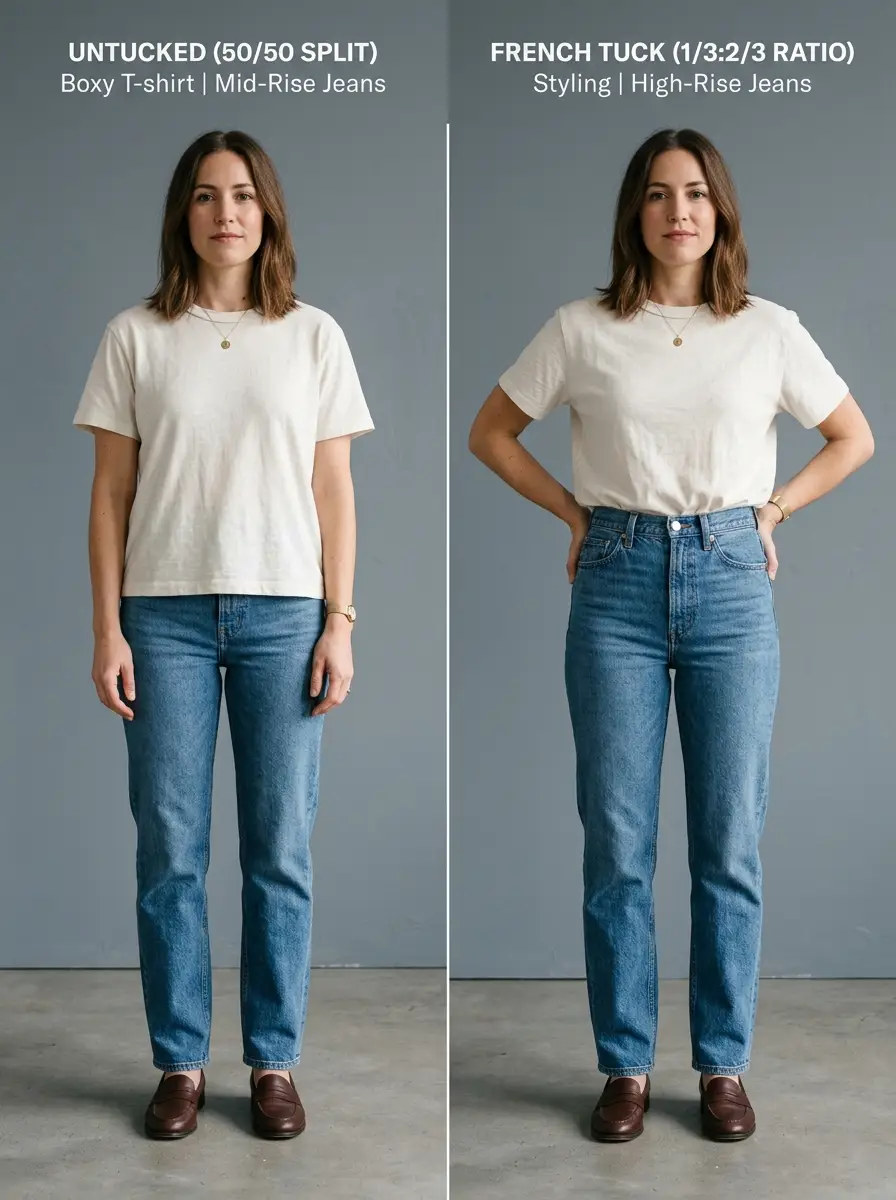
Letting an untucked top hit directly at the middle of your hips while wearing mid-rise bottoms divides your body into two equal halves. This 50/50 visual split cuts your silhouette squarely down the center, making your legs appear shorter and your torso appear blocky regardless of your actual height.
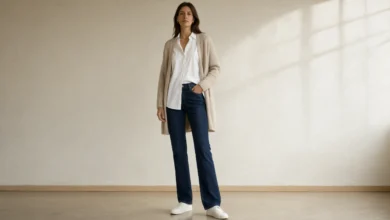
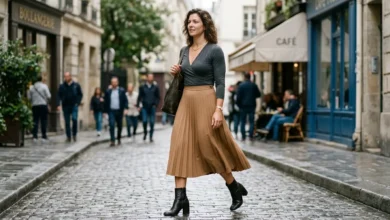
Styling research consistently highlights the Rule of Thirds as an effective alternative. By dividing your outfit into a 1/3 upper section and a 2/3 lower section, you extend the visual line of your legs. You can achieve this 1/3 to 2/3 proportion by choosing high-rise trousers, tucking your shirt into the waistband, or pairing a cropped knit with a long A-line skirt. A-line skirts, which fit cleanly at the waist and flare gradually toward the hem, naturally reinforce this extended lower-body ratio.
Mistake 2: Wearing Unanchored Oversized Volumes
Oversized tailoring, Relaxed Fit sweaters, and Drop Shoulder coats offer great comfort, but wearing multiple loose pieces together without a structural anchor can overwhelm your frame. A drop shoulder top features a shoulder seam sitting below your natural shoulder point, adding soft volume across the upper body. When paired with wide, unshaped trousers, the fabric pools around your limbs without defining where your body sits underneath.
To wear loose shapes successfully, create visual anchors at narrow points of the frame. Exposing your wrists by rolling up a sleeve, unbuttoning a collar to show the collarbone, or selecting a sweater with a structured ribbed cuff anchors the surrounding volume. The loose fabric then drapes intentionally rather than appearing ill-fitting.
Mistake 3: Cutting Off Hemlines at the Widest Point of a Limb
Horizontal seam lines draw the eye sideways. When a skirt, dress, or trouser hem stops directly across the fullest swell of your calf or mid-thigh, it creates a wide horizontal break across that limb. This placement makes calves look stockier and shortens the vertical sweep of your legs.
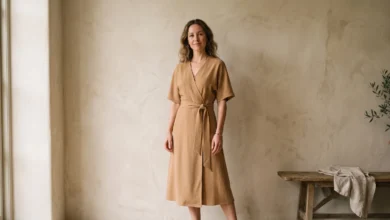
A Midi skirt hemline should land just above or just below the widest part of the calf, where the lower leg begins to taper toward the ankle. Similarly, trousers with a Straight Fit cut, which maintain a consistent width from waist to hem without tapering, should clear the top of your shoe cleanly. If you have a Pear frame and want to balance lower-body volume, see our guide on balancing lower body volume on a pear frame for specific hemline placement strategies.
Mistake 4: Choosing the Wrong Rise for Your Torso-to-Leg Ratio
Waistline rise height dictates where your lower body visually begins. Wearing low-rise waistlines drops your center of gravity, extending the visual torso while shortening the lower body line. On a frame with a longer torso and shorter legs, low-rise trousers can make the upper body look disproportionately long.
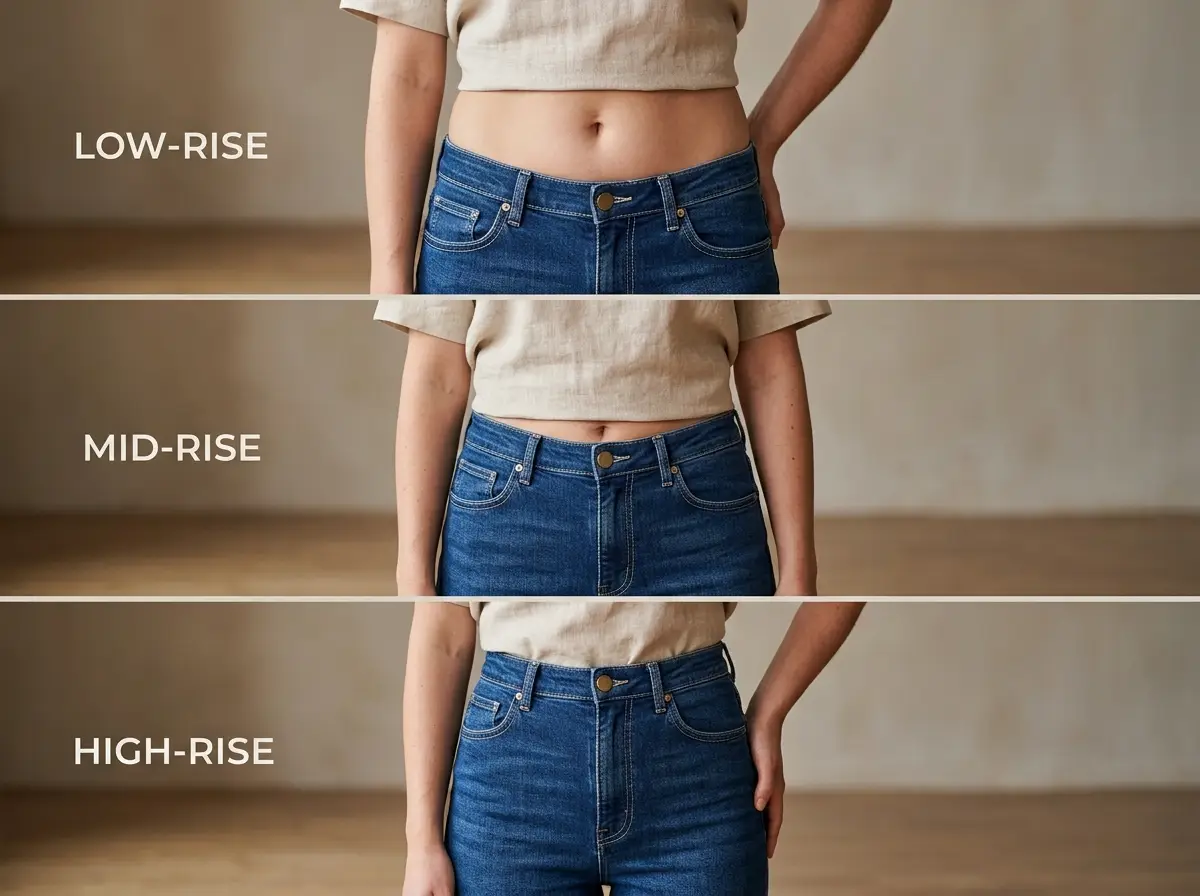
Matching your rise height to your natural waist position corrects this balance. High-rise trousers anchor at or just above your belly button, aligning with your narrowest waist point. If you want to refine where your trousers sit, read our guide on adjusting waistline proportions with belts to see how belt width influences torso length. For denim lovers, pairing a high-rise waist with a kick-flare hem that opens slightly above the knee offers a reliable way to balance hip width with lower-leg width.
Mistake 5: Relying on Stiff, Heavy Fabrics Across Voluminous Cuts
Fabric texture and weight alter how garments hold shape. Stiff, unyielding fabrics like heavy unwashed denim or thick canvas hold their own rigid structure away from the body. When used in high-volume cuts, stiff materials create stiff angles that add visual weight.
Fluid materials interact differently with movement. Fabrics like Modal, a soft semi-synthetic fiber made from beech tree pulp, and Rayon, a breathable cellulose fiber with a fluid drape, fall smoothly along curves without adding rigid bulk. Lightweight Crepe, known for its matte surface texture, allows wide leg trousers or draped blouses to move naturally. Choosing fluid drapes for voluminous garments keeps the silhouette soft and balanced.

Proportions Adjustment Matrix
| Proportion Mistake | Visual Effect on Frame | Practical Styling Adjustment |
| 50/50 Torso Split | Bisects the silhouette, shortening leg length | Use a French tuck or high-rise bottom to establish a 1/3 to 2/3 ratio. |
| Unanchored Volume | Drowns frame in shapeless fabric | Expose narrow points like wrists, ankles, or collarbones as anchors. |
| Mid-Swell Hem Cutoff | Widens calves or thighs horizontally | Shift hemline two inches higher or lower to land at a narrower taper. |
| Dropped Waistline Rise | Lowers visual center of gravity | Align rise height with your natural narrowest waist position. |
| Stiff Heavy Fabric | Creates rigid, boxy bulk over curves | Swap stiff materials for fluid drapes like modal, rayon, or crepe. |
How to Rebalance Your Outfits: 3 Simple Proportion Fixes
Restoring balance to an outfit does not require replacing your wardrobe. These three quick techniques work with clothes you already own.
- Use the French Tuck: Tuck only the center front of your shirt into your waistband while letting the back drape loosely. This simple move defines your waistline without creating a rigid tucked ring around your midsection.
- Expose Your Wrist and Ankle Bones: Push up long sleeves to your forearms or roll trouser cuffs slightly to show your ankles. Exposing these narrow skeletal points gives the eye an anchor when you wear relaxed, boxy garments.
- Continue Color Down to the Shoe: Matching your footwear color closely to your trousers or skin tone eliminates harsh horizontal breaks at the ankle, extending the vertical line of your lower body.
Frequently Asked Questions About Body Shape Styling
What is the 1/3 to 2/3 rule in fashion styling?
The 1/3 to 2/3 rule divides an outfit visually so the upper section occupies one-third of the total height and the lower section occupies two-thirds. This proportion elongates the leg line, avoiding the boxy appearance created by a 50/50 split.
Why do my outfits look boxy even when clothes fit my size?
Outfits look boxy when stiff fabrics hold shape away from your body or when untucked tops bisect your torso squarely in half. Switching to fluid fabrics like rayon or anchoring loose fits at your natural waist restores visual shape.
Where should skirt and trouser hemlines end to avoid shortening legs?
Hemlines should land where your limbs taper, such as just below the knee, right below the calf swell, or cleanly at the ankle bone. Avoid ending hemlines directly across the widest point of your calf or mid-thigh.
Perspective Over Rules: Body Shape as a Guide, Not a Verdict
Dressing well is not about memorizing strict prohibitions or attempting to hide your natural frame. Body shape guidelines are simple analytical tools designed to help you understand how garment lines, fabric weights, and seam placements interact with human geometry.
When an outfit feels off in front of the mirror, review the proportions instead of criticizing your body. Adjusting a hemline by an inch, swapping a stiff fabric for a fluid drape, or raising a waistline rise gives you full control over how your clothes fit and feel. Use these principles as flexible techniques, choosing the options that make dressing simple, practical, and comfortable every day.
Sources
Industry Sources
- Who What Wear, Petite Style Advice and Denim Fit Guides (Access Date: July 2026 | Source Tier: Tier 5)
- Inside Out Style, Body Proportions and Vertical Line Mechanics (Access Date: July 2026 | Source Tier: Tier 5)
- Infini Style, Achieving Balanced Proportions in Garment Selection (Access Date: July 2026 | Source Tier: Tier 5)