There is a half-second hesitation almost everyone has when picking up a watch. The piece sits in your right hand, your left wrist offers itself out of pure habit, and then a small voice asks whether that is actually correct. Which hand do you wear a watch on, and is the left wrist a rule or just a reflex?
It is a reflex with a reason behind it. The convention grew out of handedness, crown placement, and the daily violence a working hand absorbs, not out of etiquette or gender. Once you know the mechanics, the decision takes about ten seconds and you never have to relitigate it again.
Here is the full answer, including what changes for left-handed wearers, smartwatch owners, and anyone whose job is rough on a wrist.
which hand do you wear a watch on
Wear the watch on your non-dominant wrist, the left if you are right-handed and the right if you are left-handed. 2) The reason is mechanical, because your dominant hand winds and sets the crown while the quieter wrist takes fewer knocks. 3) Smartwatches work on either wrist once you flip the orientation setting in the companion app. 4) No etiquette rule, gender rule, or cultural rule overrides comfort, so if the other wrist feels better after a fair two-week trial, keep it.
Why the Non-Dominant Wrist Became the Default
Roughly 85 to 90 percent of people in Western countries are right-handed, according to the U.S. National Library of Medicine’s genetics overview, and a 2019 large-scale population study published in PubMed Central put the global figure at about 90 percent. A convention built by that majority was always going to settle on the left wrist, and three mechanical reasons keep it there.
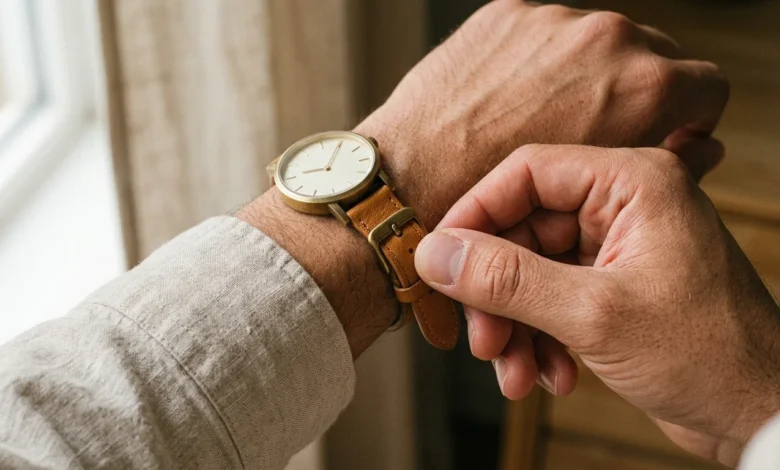
First, the crown. Most watches place the winding crown at 3 o’clock, an arrangement that assumes the watch lives on the left wrist so the right hand can wind and set it without ever removing it. Longines states the point plainly in its wrist guide: the 3 o’clock crown exists to make adjustment easier with the dominant hand while the watch stays put.
Second, protection. Your dominant hand is the one reaching, lifting, typing, and finding doorframes all day. Parking the watch on the other wrist keeps the crystal and case out of that traffic, the same reasoning Timex gives in its own guide to wrist choice.
Third, comfort. Wear a standard watch on the wrist that matches your dominant hand and the crown tends to press into the back of the hand every time the wrist flexes. One day of typing makes that small pressure very easy to notice.
At a Glance
- Mechanical watch, right-handed wearer: left wrist, with the 3 o’clock crown staying reachable.
- Mechanical watch, left-handed wearer: right wrist, or a left-crown destro model.
- Smartwatch or tracker: either wrist, then set orientation and handedness in the app.
How a War Handed the Left Wrist Its Reputation
The wristwatch did not begin as a man’s tool at all. Patek Philippe made what is widely credited as the first Swiss wristwatch in 1868, a diamond-set piece sold to the Hungarian Countess Koscowicz, and for decades wristwatches remained jewelry for women while men carried pocket watches.
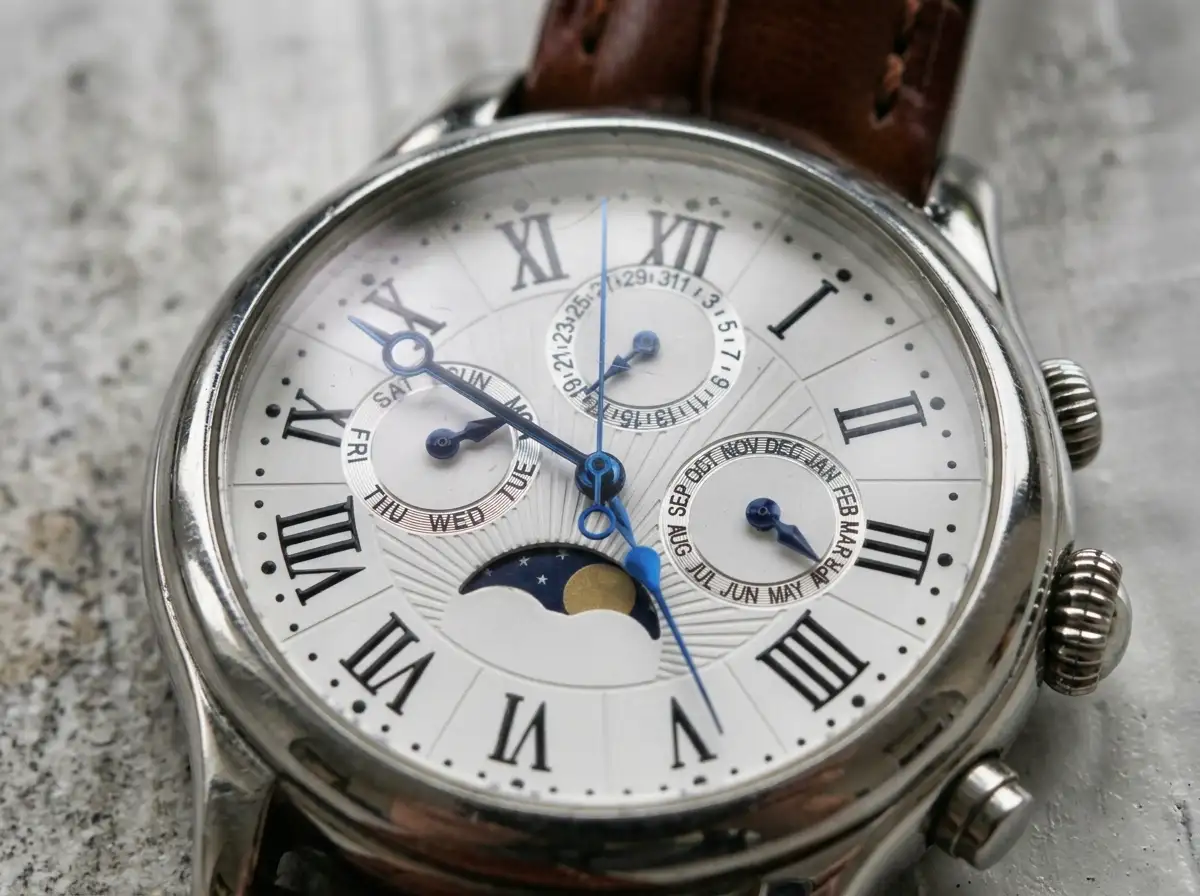
The military changed that. British officers had been strapping watches to their wrists since the 1880s because a pocket watch is useless on horseback, and the First World War turned that field habit into a mass convention. Stan Czubernat, author of “Elgin Trench Watches of the Great War” and founder of LRF Antique Watches, told Task & Purpose that “a wristwatch, aka the ‘trench watch’, was far more convenient for a soldier in the trenches.” By the time the United States entered the war in spring 1917, he notes, almost all military watch advertising had switched to wristwatches.
Demand ran ahead of supply almost immediately. At the 1916 annual meeting of H. Williamson Ltd., a major watch manufacturer, the company told shareholders that one soldier in four already wore a wristlet watch and the other three meant to get one as soon as they could. The following December, the Horological Journal of the British Horological Institute recorded the shift in a single sentence: “The wristlet watch was little used by the sterner sex before the war, but now is seen on the wrist of nearly every man in uniform and of many men in civilian attire.”
Notice which wrist those officers chose. A right-handed soldier wanted his sword hand, revolver hand, and reins hand free, and he wanted to read the dial without letting go of anything. The left wrist was the only sensible address, and the 3 o’clock crown that followed cemented it. By 1930, wristwatch sales had overtaken pocket watch sales, and the left wrist had become the default so thoroughly that most wearers today cannot say why they park a watch there.
What Changes if You Are Left-Handed
Flip the rule, not the logic. If your left hand does the work, your right wrist is the quieter one, and a watch worn there keeps all three advantages. The only snag is that a standard 3 o’clock crown now points into the back of the hand, and winding without removing the watch becomes a two-handed puzzle.
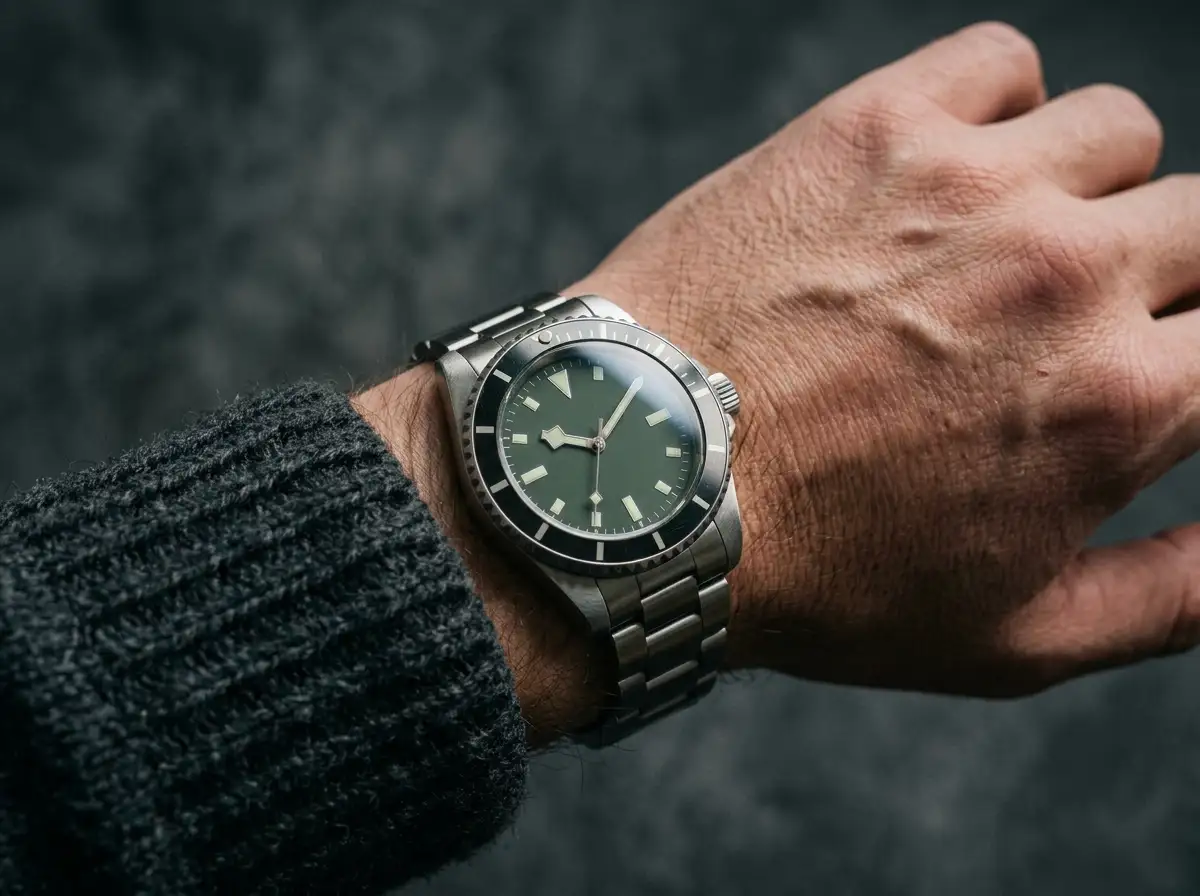
The industry eventually answered with left-crown models, called destro pieces from the Italian word for right, because they are built to be worn on the right wrist. Panerai traces its first left-handed Luminor variant, the reference 6152/1, to the 1960s, built for divers whose left wrist already carried another instrument. Tudor’s Pelagos LHD moves the crown to the left side of a 42 millimeter titanium case for the same reason, and Rolex joined the modern destro list in 2022 with the GMT-Master II reference 126720VTNR, crown and date on the left, listed at 12,300 dollars.
None of this is obligatory. Plenty of left-handed people wear a standard watch on the left wrist out of pure habit and never find it bothersome, and plenty of right-handed people enjoy a destro watch on the left wrist because the crown stops digging into the hand. The convention serves the hand, not the other way around.
Smartwatches Loosen the Rule Considerably
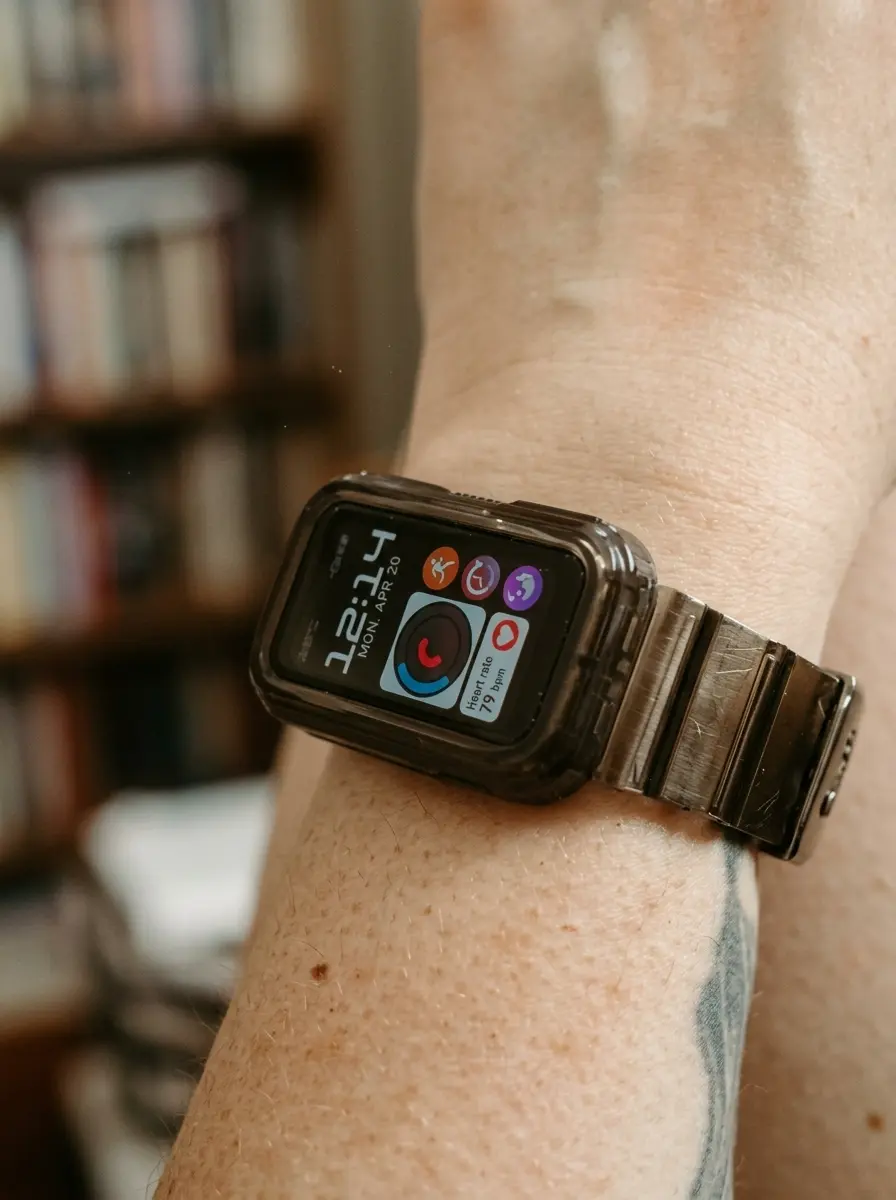
A smartwatch removes the crown problem entirely, because the digital controls work from either side once you tell the software which wrist you chose. Apple’s Watch app includes an orientation setting that flips the screen and moves the Digital Crown’s behavior to suit the right or left wrist, so the hardware never forces a decision.
Tracking accuracy is the better argument for the non-dominant wrist here. Your dominant hand gestures, fidgets, and works all day, and that extra motion can inflate step counts, which is exactly why Fitbit asks during setup whether the device sits on your dominant or non-dominant wrist and tunes its step detection accordingly. A peer-reviewed comparison of activity monitors, published in the Journal of Measuring Physical Behaviour, also found step counts differ between the two wrists, so if your data matters to you, the quieter wrist gives the cleaner read.
The screen argues in the same direction. Tapping notifications and scrolling workouts is easier with a dominant index finger while the watch sits on the other wrist. And if your tracker has become part of your outfit rotation rather than just a data tool, our guide to styling the Garmin Cirqa’s core shades and bands covers matching bands to what you already own.
| What is on your wrist | Recommended wrist | Why it lands there |
|---|---|---|
| Manual-wind mechanical | Non-dominant | Daily winding stays a five-second job for the dominant hand. |
| Automatic mechanical | Non-dominant, though either works | No winding needed, yet crown comfort and knock protection still favor the quieter side. |
| Smartwatch | Either, with non-dominant edging ahead | Orientation flips in software, while sensors read cleaner away from a busy dominant hand. |
| Step-focused fitness tracker | Non-dominant | Less fidget motion means fewer phantom steps once handedness is set in the app. |
| Left-crown destro dive watch | Right | The whole case is mirrored so the crown clears the back of the hand. |
The Etiquette Question, and the Gender One
There is no etiquette ruling on wrists. Columns that address watch manners, including the Emily Post Institute’s notes on watch and tech etiquette, concern themselves with when a watch should stay discreet, not which wrist carries it. The Gentleman’s Gazette, after walking through the traditional rules of watch wearing, lands where every honest answer lands: “Wear a watch on the wrist that feels most comfortable to you.”
The gender version of the question dissolves just as quickly. The first wristwatches were made for women, so the idea that a wrist belongs to one sex is historically backwards, and the mechanics of handedness apply identically to men and women. A right-handed man and a right-handed woman get the same answer, the left wrist, until comfort says otherwise.
The only stigma ever attached to wrist choice is leftover, not current. Before the war, civilian American men treated wristwatches as effeminate, and the writer Mary Roberts Rinehart recalled that her son hid the wristwatch she brought him from London in a bureau drawer, “for America still believed that a wristwatch was effeminate.” That prejudice died with the trench generation. Choosing the right wrist today reads as a preference, at most a small statement, never a breach.
Choosing a Wrist in Real Life
- If you wind a mechanical watch every morning: keep it on the non-dominant wrist so winding stays a five-second ritual instead of a two-handed negotiation.
- If you are left-handed and your watch fights your hand: try two weeks on the right wrist before shopping, and if a standard crown still digs into the hand, look at destro pieces like the Pelagos LHD.
- If your steps and workouts are tracked: wear the device on the non-dominant wrist, set handedness in the app, and compare a week of data before trusting any streak.
- If your work is hard on your hands, like nursing, line cooking, or carpentry: notice which wrist actually meets the day’s knocks and let that decide, and consider keeping a tougher work watch separate from the good one.
- If a bracelet or bangle already lives on one wrist: put the watch on the other side so the metals stop trading scratches, and when you do stack metals on purpose, the same dominant-metal logic from our guide to mixing gold and silver jewelry keeps the wrist coherent.
- If a skin sensitivity, injury, or medical device is part of the decision: ignore all of the above, because comfort and skin tolerance outrank every convention in this article.
Frequently Asked Questions About Which Hand to Wear a Watch On
What hand does a man wear a watch on?
The non-dominant one, which for most men means the left. The convention came from military practicality rather than gender, so a right-handed man and a right-handed woman land on the same wrist.
What hand should a woman wear a watch on?
The same answer, the non-dominant wrist. Wristwatches were originally made for women, including Patek Philippe’s 1868 piece for Countess Koscowicz, so women never needed permission for the left wrist in the first place.
Do you wear a watch on your dominant hand or non-dominant hand?
Non-dominant, by convention and by mechanics. The dominant hand winds the crown and takes the knocks, so the watch lives on the quieter wrist. Nothing enforces it, and comfort is allowed to win.
Is it okay to wear a watch on the right hand?
Completely. Left-handed wearers, owners of left-crown destro watches, and people protecting an injured wrist all wear the right wrist, and none of them are breaking anything that ever existed.
Why do some right-handed people wear a watch on the right wrist?
Usually a habit formed young, a strap that fits that wrist better, or a deliberate style choice. A minority simply find the crown more comfortable pointing the other way. The reason matters less than the fact that nobody notices except other watch people.
The Hand Decides, the Wrist Follows
Which hand do you wear a watch on? The one that works less. A century of soldiers, divers, and desk workers settled on the non-dominant wrist because it keeps the crown reachable, the crystal out of harm’s way, and the working hand free, and smartwatches inherited the same logic through their sensors. Try the other wrist for a week if you are curious, because the convention exists to serve you and not the reverse, then let the quieter wrist win.
Wrist choice is one of those small accessory decisions that rewards the same instinct as knowing when a belt finishes an outfit and when it only adds noise, which our guide to when to wear a belt walks through. Once the watch sits on the right wrist for you, the only question left is what it should sit next to.
SOURCES
- U.S. National Library of Medicine, MedlinePlus: Is handedness determined by genetics?, Access Date: August 7, 2026
- PubMed Central, de Kovel C.G.F. (2019): A large-scale population study of early life factors influencing handedness, Access Date: August 7, 2026
- Journal of Measuring Physical Behaviour (Human Kinetics): Dominant vs. Non-Dominant Wrist Placement of Activity Monitors, Access Date: August 7, 2026
- Vintage Watch Straps, David Boettcher: First World War Trench Watches, Access Date: August 7, 2026
- The Doughboy Foundation, republishing Task & Purpose: How World War I soldiers gave America the wristwatch, Access Date: August 7, 2026
- The Jewellery Editor: Patek Philippe first women’s wristwatch 1868, Access Date: August 7, 2026
- Hodinkee: How The Left Wrist Became The Right Wrist For Watches, Access Date: August 7, 2026
- Rolex: GMT-Master II, reference 126720VTNR, Access Date: August 7, 2026
- Panerai: Luminor Destro PAM01655, Access Date: August 7, 2026
- Tudor: Pelagos LHD, Access Date: August 7, 2026
- Longines: What wrist should you wear your watch on?, Access Date: August 7, 2026
- Emily Post Institute: Tech/Watch Etiquette, Urbane Gentleman, Access Date: August 7, 2026
- Gentleman’s Gazette: 8 Rules Of The Watch, Access Date: August 7, 2026
- Inc.: You’ve Been Wearing Your Apple Watch Wrong All This Time, Access Date: August 7, 2026
- The Timex Blog: Which Wrist Should You Wear a Watch On?, Access Date: August 7, 2026