When to Wear a Belt: Practical Waistline Proportion Guide
For decades, traditional style manuals maintained that leaving belt loops empty was a sign of a rushed morning. The assumption was simple: if loops exist, you are required to fill them. Modern garment design rejects this rigid dictation, treating the choice of when to wear a belt as an exercise in structural proportion rather than an absolute rule.
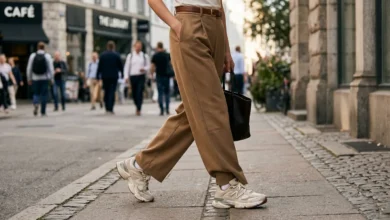
A belt is structurally optional if your trousers fit correctly. In formal settings, leaving visible belt loops empty while tucking in a top looks incomplete. For casual outfits with untucked tops or monochromatic pieces, you can cleanly omit hardware to preserve a streamlined, uninterrupted vertical silhouette.
The Shifting Architecture of When to Wear a Belt
Pants do not come with loops because a style council mandated them. Mass manufacturing relies on standardized templates, meaning most off-the-rack garments include loops to accommodate the widest pool of buyers. Because of this factory reality, wearing a belt is structurally optional; trousers that fit correctly at the waist do not require accessories to remain upright.
Myth: Empty loops mean an incomplete outfit.
This legacy rule stems from rigid mid-century menswear tailoring. In modern dressing, a clean waistband can look entirely intentional. The deciding factor isn’t the existence of the loop itself, but the dress code of the room and the visual break you want to create.
When Tucked Profiles Benefit From Hardware
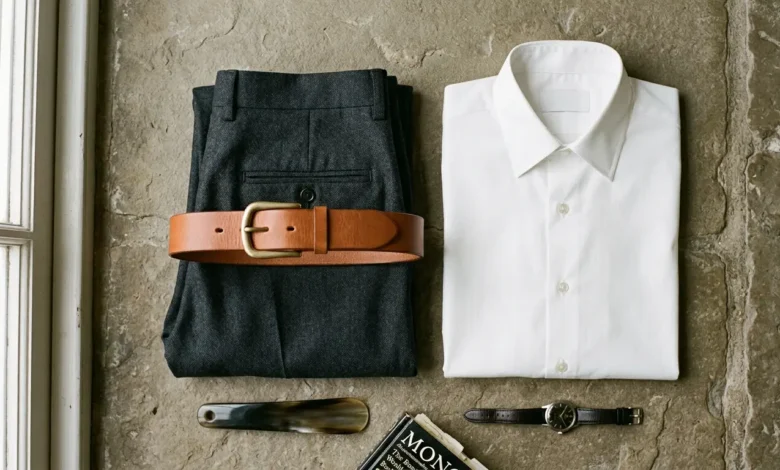
Exposing a bare waistband while tucking in a top presents a specific design choice. In formal or corporate settings, leaving visible loops entirely empty while tucking in a high-contrast blouse can look like an oversight. A classic leather strap adds a clean visual finish here, pulling separate pieces together cleanly. This works exceptionally well for maintaining a cohesive look within a sharp corporate dress code or a modern business casual dress code.
The hardware creates an intentional focal point. When you tuck a crisp white button-down into deep navy trousers, the stark line where the fabrics meet can look harsh. A leather band softens that transition. According to official guidelines from outfitter logs like Gazman, filling those loops signals attention to detail in professional environments where classic neatness is expected.
The Minimalist Case for Empty Loops
Conversely, modern minimal styling relies heavily on uninterrupted vertical lines. If you are wearing tone-on-tone pieces—such as a charcoal knit tucked into slate trousers—adding a dark belt splits your frame in half unnecessarily. Ditching the hardware allows the eye to travel smoothly from shoulder to hem, making you look taller.
Casual ensembles featuring untucked tops, lightweight knitwear, or weekend denim can cleanly skip a belt without disrupting the outfit’s balance. When a sweater falls over the waistband, a belt buckle only creates an awkward, bulky bump underneath the fabric. Forcing a belt into the mix just because loops exist compromises the relaxed line of a Regular Fit or casual trouser.
Visual Proportions: Width, Rise, and Torso Length
Choosing a belt requires looking at your frame as a set of blocks. The waistline acts as a horizon line across your body. Where you place that line, and how thick you make it, alters how long your legs look compared to your upper body. This structural logic dictates how an accessory impacts your overall body shape and silhouette balance.
Before picking up a belt, check your trouser rise and natural proportions—a framework separate from the technical choice between high-rise and low-rise pant fits:
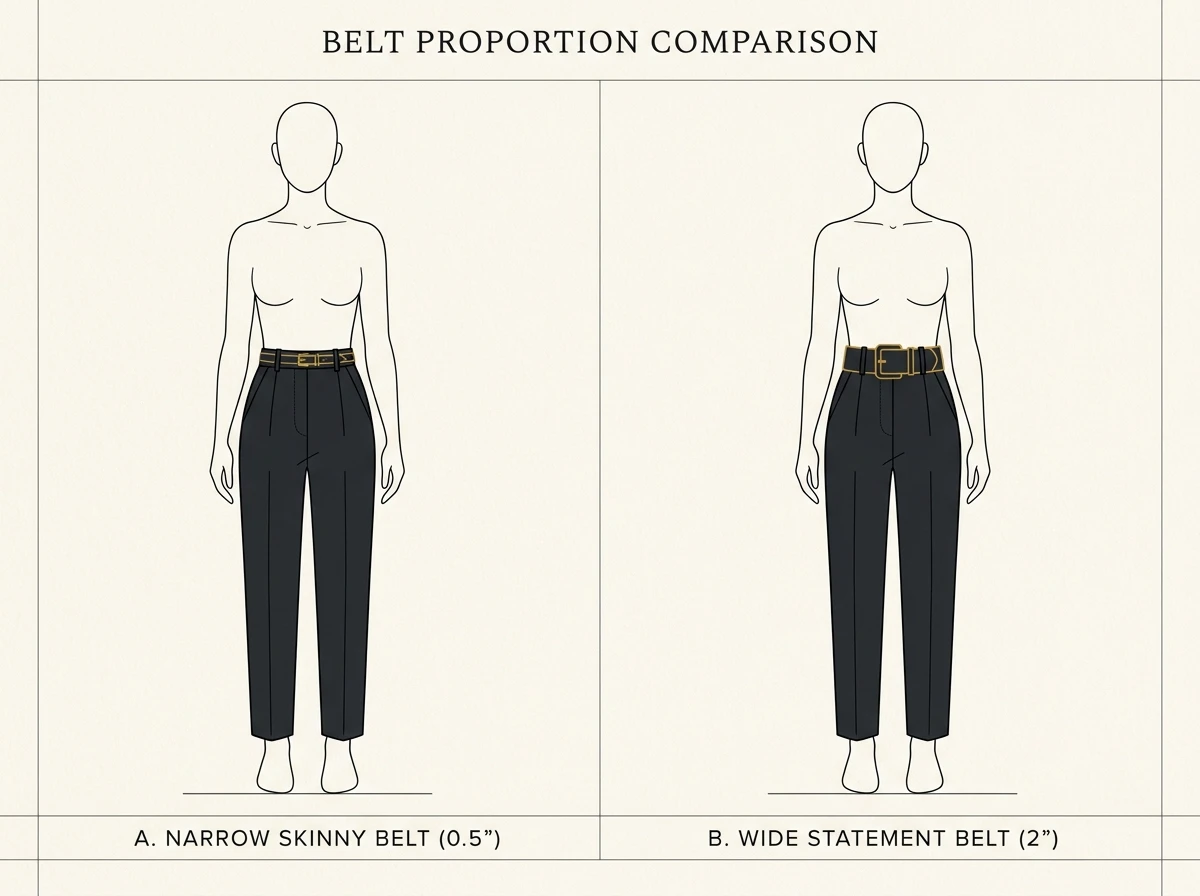
- If you have a long torso and shorter legs: It is usually best to skip wide belts at the natural waist. They consume valuable vertical space, which can make your legs appear shorter.
- Balancing a short torso with long legs: A wider belt works beautifully here to lower your visual waistline, bringing your proportions into a more comfortable equilibrium.
- Navigating high-rise trousers: Stick to thin or medium bands. Fastening a massive, thick belt across a high waist can look crowded and push the metal hardware uncomfortably close to your ribs.
How Belt Dimensions Interact With Loop Sizes
A common error is mismatched scaling between the strap width and the loop window. When a thin half-inch belt rattles around inside a wide two-inch denim loop, the scale looks broken. The strap should fill roughly three-quarters of the loop height to look stable and intentional.
| Garment Classification | Standard Loop Window | Recommended Belt Width | Structural Rationale |
| Casual Denim | 1.5 to 2.0 inches | 1.25 to 1.5 inches | Fills heavy denim loops to balance rugged fabrics. |
| Tailored Trousers | 1.25 to 1.5 inches | 1.0 to 1.25 inches | Sits flat against fine wool without bulk. |
| Skirts and Dresses | No loops (built-in) | 0.5 to 3.0 inches | Decided purely by fabric weight and drape. |
For denim cut in a Straight Fit, a wider leather belt anchors the weight of the heavy cotton utility fabric. Fine dress pants need a narrower, sleeker strap to match their delicate tailoring.
Breaking Monochromatic Blocks vs. Elongating Silhouettes
Color contrast behaves like ink on paper. A black belt worn with white trousers creates a sharp visual break. This break is highly useful if you want to define your waist or break up an exceptionally long frame. If you want a continuous, elongated look, match the belt color to your trousers instead.
When styling casual coordinates, matching a tan suede belt with khaki trousers keeps the line unbroken while adding texture. This subtle framing works well across various frames, similar to tactical framing choices designed for a pear body shape. You get the polish of hardware without the stark horizontal division that cuts your height in half.
Fabric Compatibility and Tailoring Constraints
Not every fabric welcomes being squeezed. Cinching a waist changes how fabric falls around your hips and seat. Heavy cloths resist the pressure, while lightweight textiles collapse completely under the weight of heavy leather.
Stiff Textiles: Heavy Denim and Tailored Wool
Dense materials handle hardware well. Rigid denim and heavy wool trousers hold their own structure, meaning a belt sits flat against the waistband without causing the fabric to bunch up or roll over. When styling a classic Relaxed Fit jean, a sturdy leather belt provides an anchor point, preventing the waistband from gapping at the spine during movement.
With tailored wool, the waistband is often stiffened with internal buckram or canvas. This construction supports a sleek leather dress belt beautifully. The accessory slides into place, sits flush, and stays secure without distorting the crisp press of the trouser leg.
Fluid Materials: When Cinching Pulls and Distorts
Delicate materials require an entirely different approach. When you cinch a lightweight cotton poplin or a fluid Linen Blend, the fabric gathers aggressively. This creates tight, gathered puckering around the waistband that adds unwanted bulk right at your midsection.
Warning: Avoid hardware on fragile fabrics.
Squeezing a delicate silk Satin or fine viscose Crepe with a heavy leather belt can permanently pinch the weave or pull the delicate seams. If a fluid dress or skirt requires a belt, swap heavy leather for a soft sash made of the same fabric, or choose a lightweight cord without a heavy metal buckle.
Structural Layering Over Blazers and Outerwear
Belting over jackets or outerwear shifts the accessory from a tailoring fix to a structural statement. Wrapping a medium leather belt around an oversized wool blazer creates an immediate visual focal point. According to editorial records from style houses like ELLE, this technique controls the volume of loose fabric, keeping oversized tailoring from overwhelming your frame.
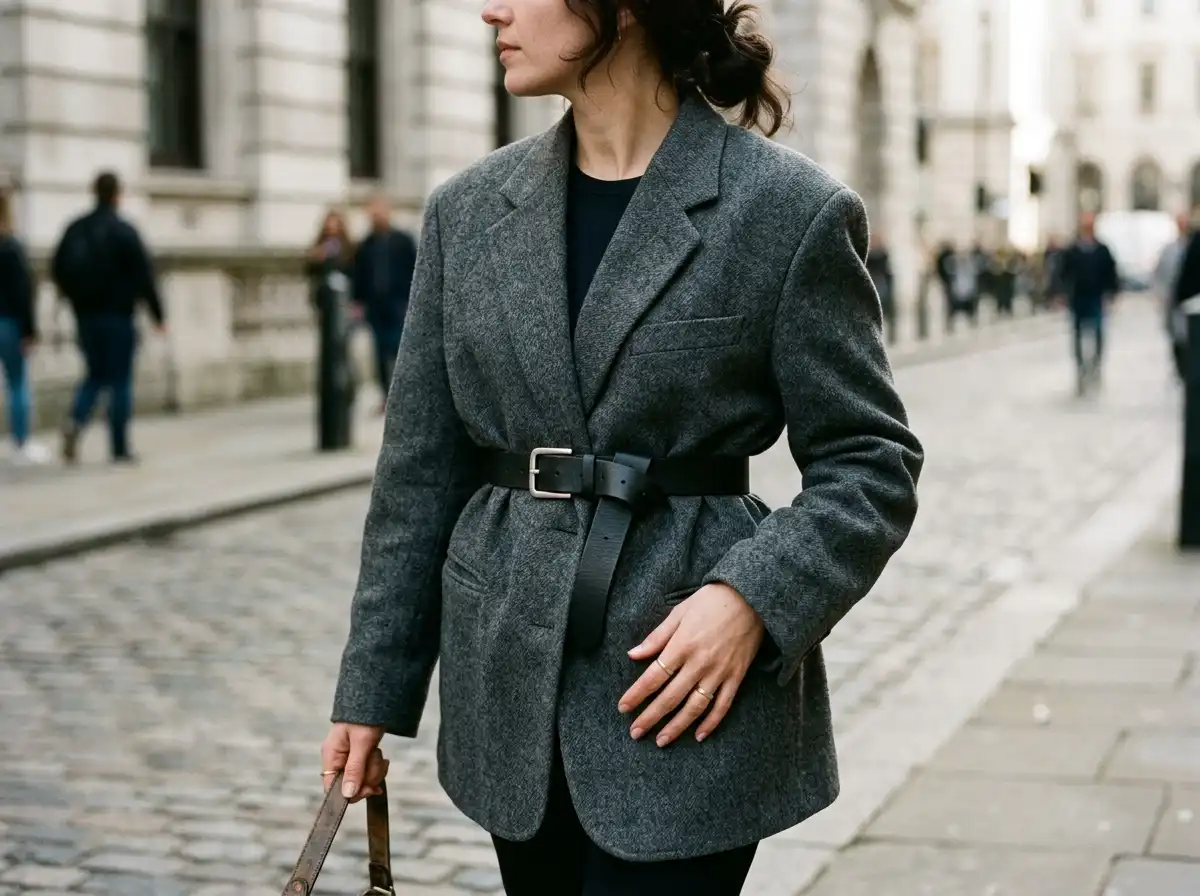
When layering hardware over outerwear, thickness matters. A skinny belt over a thick tweed coat looks swallowed and weak. Match the scale: heavy wool coats need a substantial belt with enough structural weight to compress the dense fabric without bending or twisting out of shape.
Practical Execution and Tailoring Alternatives
Modern styling has moved past old, rigid rules. You do not need to match your leather belt to your shoes with absolute precision anymore. Mixing a matte black leather belt with brown leather boots adds depth and feels less formulaic. Keep the metal hardware tones in the same family—such as pairing a brass buckle with gold jewelry or coordinating your hardware metal with your watch and choice of handbag—to ensure the outfit feels cohesive.
If your favorite trousers keep slipping down but you hate the look of a belt, skip the hardware and visit a tailor. A professional can easily take in the waistband or add hidden interior side-adjusters. For a clean look in a Sim Fit trouser, removing the factory belt loops entirely creates an immaculate, custom finish that never requires an accessory.
Frequently Asked Questions About Waistline Styling
Do you have to wear a belt if there are loops?
No. Belt loops are standard factory additions to mass-produced pants. If your trousers fit comfortably at the hips and waist without slipping, leaving the loops empty is perfectly acceptable, especially in casual or contemporary settings.
Can you wear a belt with a dress that has no loops?
Yes. A belt can act as an excellent visual anchor on a shift dress or an oversized shirt dress. Choose a belt width that matches the fabric weight, and ensure the belt is tight enough to stay in place without pulling or warping the garment’s natural drape.
Should your belt match your shoes exactly?
In strict formal settings, matching your leather tones keeps the profile tidy. For everyday wear or professional environments, matching tones exactly can look overly stiff. Staying within similar color families provides a modern finish instead.
Tailoring Intent Over Rigid Frameworks
Deciding when to wear a belt ultimately comes down to intentional garment construction rather than obeying arbitrary fashion rules. A belt should serve a purpose, whether that means anchoring a pair of heavy jeans, balancing your torso proportions, or giving a loose blazer a clear visual focal point. If the hardware breaks a clean vertical line or distorts a fluid fabric, trust your tailoring and skip it entirely. Your clothes should always work for your specific frame, and a clear understanding of fabric and fit beats a rigid rulebook every single time.
Sources
- Gazman | When & How to Wear a Belt | Access Date: July 19, 2026 | Source Tier: Tier 6
- Industry Sources
- Who What Wear | The One-Second Trick to Upgrading Your Favorite Dress | Access Date: July 19, 2026 | Source Tier: Tier 5
- ELLE UK | Waist Belts Trend Guide | Access Date: July 19, 2026 | Source Tier: Tier 5