The advice to never wear gold and silver at the same time is a retail relic. It was originally pushed in the mid-twentieth century to sell complete, matching jewelry sets. Today, strictly coordinating your watch, rings, and necklace can look rigid and dated. Mixing metals feels more personal and less manufactured.
The problem is that randomly stacking different tones usually looks like an accident. Throwing a bright silver pendant over a heavy brassy gold chain creates visual friction. Intentional mixing relies on weight, surface finish, and strategic spacing. Once you understand how these metals interact, you can stop treating your jewelry box as two separate wardrobes.
To mix gold and silver jewelry successfully, follow a four-step process:
- Choose one dominant metal to make up roughly 70 percent of the overall look.
- Introduce the second metal using a single two-tone bridge piece.
- Match the surface finishes so highly polished silver sits next to highly polished gold.
- Layer the pieces closely together so the combination reads as a deliberate styling choice rather than a mistake.
Why Contrast Actually Works
Jewelry design has embraced mixed tones for a century. The Cartier Trinity ring, introduced in 1924, permanently intertwined yellow, white, and rose gold into a single band. The combination worked because the metals shared the exact same rounded shape and polished finish. The contrast felt structural.
Metals contrast based on their alloy mixtures. The Gemological Institute of America notes that 14 karat yellow gold contains 58.3 percent pure gold, with the rest made up of copper, zinc, or silver. This specific alloy creates a softer, paler yellow that blends easily against the bright white tone of sterling silver. Conversely, 18 karat gold contains 75 percent pure gold, resulting in a much deeper, richer yellow that creates a stark, sometimes jarring contrast when placed next to white metals. Knowing what karat weight you own dictates how aggressively you can mix it.
Rule 1: Anchor With a Bridge Piece
A bridge piece is a single item that incorporates both silver and gold. It acts as a visual permission slip for the rest of your outfit. When someone sees a two-tone watch on your wrist, a gold necklace and a silver ring suddenly make sense together.
Classic bridge pieces include two-tone steel and gold watches, intertwined bands, or necklaces with mixed-metal pendants. If you want to start mixing metals but feel hesitant, invest in one high-quality bridge piece and build outward from there. This approach is much more effective than relying entirely on statement earrings to carry the whole look.

Rule 2: Balance the Proportions (The 70 to 30 Ratio)
An equal split between gold and silver rarely works. An exact half-and-half division confuses the eye and splits your outfit down the middle. Instead, choose a primary metal for the day.
If you wear a prominent silver watch and silver earrings, let a single gold chain provide a 30 percent accent. This ratio makes the minor metal look like a deliberate highlight. Establishing a dominant tone is a core part of creating a signature style that feels consistent without being boring.
At a Glance: Proportion Splitting
- The Equal Split (Avoid): Two silver rings, two gold rings, one silver chain, one gold chain. Reads as indecisive and cluttered.
- The Highlight Split (Use): A silver watch, a silver bracelet, silver earrings, and one distinct gold pinky ring. Reads as intentional and curated.
Rule 3: Match the Finishes First
Metals clash most violently when their textures fight. A hammered, matte silver cuff looks completely out of place next to a high-polish, mirror-finish gold bracelet. The eye picks up on the mismatched textures before it even registers the different colors.
Keep your finishes grouped together. Pair matte silver with matte gold. Pair high-polish white gold with high-polish yellow gold. When the light hits both metals the exact same way, they look like they belong to the same collection.
Comparing Metal Tones and Compatibility
| Metal Type | Composition Fact | Mixing Behavior |
|---|---|---|
| 14k Yellow Gold | 58.3 percent pure gold | Low contrast. Blends smoothly with silver due to its paler, cooler yellow tone. |
| 18k Yellow Gold | 75 percent pure gold | High contrast. The deep, rich yellow requires careful spacing away from bright white metals. |
| Sterling Silver (925) | 92.5 percent pure silver | The universal base. Pairs beautifully with lower-karat yellow gold and rose gold. |
| Platinum | 90 to 95 percent pure platinum | Carries a slightly grayish undertone. Best kept separate from bright white gold to avoid looking dull by comparison. |
Rule 4: Layer Closely for Impact
Distance creates confusion. Wearing a gold necklace while putting a silver ring on your left hand makes the two pieces look disconnected. To make mixed metals work, force them to interact.
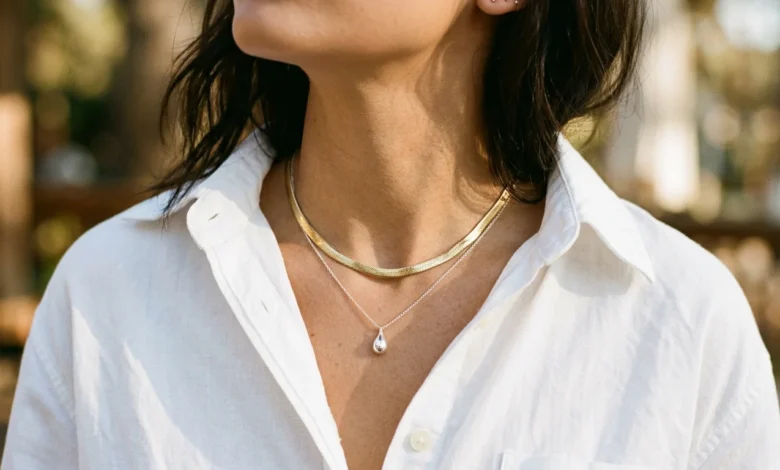
Stack a silver band directly on top of a gold band on the same finger. Layer a silver pendant chain one inch below a gold collar chain. Grouping the contrasting metals in one specific zone on your body proves that you paired them on purpose.

When Uniform Metals Make More Sense
Mixing metals provides flexibility, but it is not mandatory. Strict uniformity still serves a real purpose in specific situations.
Highly formal dress codes often benefit from a single metal tone to maintain a streamlined silhouette. If you are wearing a heavily embellished gown to a black-tie event, mixing jewelry tones adds unnecessary visual noise. Additionally, those who prefer strict quiet luxury aesthetics often stick to one metal (typically 18k gold or platinum) to project an uninterrupted, unified appearance.
If You Have a Permanent Wedding Band
A platinum or white gold engagement ring does not lock you into a lifetime of silver-toned jewelry. Treat permanent jewelry as a neutral baseline rather than a restrictive rule.
To integrate your rings with yellow gold accessories, add a thin yellow gold spacer band directly next to your wedding ring. This immediately turns your left hand into a mixed-metal bridge, freeing you up to wear yellow gold necklaces and earrings without a second thought.
If You Wear a Smartwatch
Smartwatches introduce a heavy block of dark glass and aluminum or stainless steel to your wrist. If you wear an aluminum smartwatch with a black screen, trying to stack delicate 14k gold bracelets directly next to it usually highlights the tech device in a negative way.
Keep your smartwatch wrist dedicated to function, perhaps pairing it with a simple silver-toned chain bracelet that matches the watch casing. Move your warm gold pieces to the opposite wrist to keep the aesthetic separate from the technology.
Frequently Asked Questions About Mixing Gold and Silver Jewelry
Can you wear a gold necklace with silver earrings?
Yes, but the transition needs a bridge. If you wear a gold necklace and silver earrings, the look improves dramatically if the necklace features a small silver pendant, or if you add a two-tone ring to tie the top and bottom halves of your outfit together.
Does white gold look the same as sterling silver?
Not exactly. Sterling silver carries a bright, slightly cooler white tone. White gold is typically plated with rhodium to achieve its bright finish, but as that plating wears off, white gold reveals a faint yellowish undertone. When layered directly next to each other, the color difference becomes noticeable.
How do you mix metals without looking cluttered?
Stick to the 70 to 30 ratio and keep your piece count low. Mixing metals already adds visual complexity, so you do not need five necklaces and eight rings to make a statement. Two layered chains and three rings are plenty when you are working with contrasting colors.
The Final Polish
Your jewelry should adapt to your wardrobe, not restrict it. Learning how to mix gold and silver jewelry frees you from passing up a beautiful vintage piece just because it is the wrong color. By using bridge pieces, matching your finishes, and controlling your ratios, you can combine your entire collection with confidence.
Official Sources
Gemological Institute of America (GIA): Yellow Gold vs. Rose Gold: Discovering the Differences, July 2026
Gemological Institute of America (GIA): 10 Tips for Buying a Diamond Engagement Ring, July 2026
Industry Sources
Jewelers of America: The Guide to Jewelry Metals and Alloys, July 2026