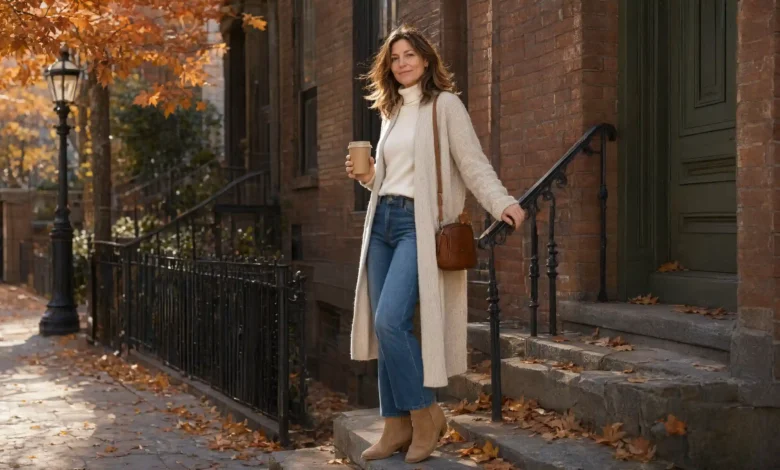
It is 7:40 in the morning on a mid-October Tuesday and it is 48 degrees at the bus stop. By the three o’clock pickup line it will be 65 and sunny, and between those two temperatures sits the test every one of these modest fall outfit ideas has to pass: covered enough for the cold morning, light enough to carry by afternoon, and put together enough for the people you will inevitably run into.
Modest, here, is not an aesthetic. It is a coverage spec: sleeves that reach the wrist, hems that stay past the knee when you sit and bend, necklines that hold when you lean over a backpack. Coverage never reads as frumpy on its own. What reads as frumpy is cut, specifically a missing waistline and a fabric too stiff to drape. Fix those two variables and the coverage starts looking intentional.
This guide builds the whole season from a small set of repeatable formulas: the belted shirtdress as the anchor, five occasion templates, pumpkin patch rules that hold up in plus sizes, and the layering weights that add warmth without adding bulk. Every piece earns its hanger by repeating, not by being new.
The reliable version of modest fall dressing follows four moves: 1) start with a covered base such as a belted midi shirtdress, a turtleneck sweater dress, or an A-line midi skirt with a ribbed knit, 2) place the waist with a belt or wrap tie so the coverage keeps a shape, 3) layer measured weights, a 110 to 160 GSM base under a 170 to 260 GSM mid under a trench or duster, and 4) ground the hem with a block-heel boot or a clean sneaker. Sleeves to the wrist, hems to mid-calf, one accent color per outfit.
What Modest Fall Dressing Requires, and What It Does Not
Three checkpoints decide whether an outfit counts as covered: the sleeve ends at the wrist or forearm, the hem stays past the knee through sitting and bending, and the neckline holds when you move. That is the entire requirement. It is a spec you can meet with a denim shirtdress and sneakers as easily as with a crepe dress and boots, which is why modesty travels across aesthetics instead of being one itself.
What the spec does not require is a shapeless silhouette, an all-beige palette, or a single new purchase. The extra contortions people add on their own, tent-like cuts, three sizes too big, nothing but oatmeal, are the things that age an outfit. Coverage with a placed waistline and one accent color reads as deliberate. Coverage with no waistline reads as a costume of someone older.
At a glance
- The requirement: wrist-length sleeves, knees covered while sitting, a neckline that holds when you bend.
- The myth that modest means baggy. Baggy plus unbelted is what reads as frumpy, not the coverage itself.
- The myth that modest means beige. Jewel tones carry identical coverage with considerably more authority.
- The reality: waist placement, not the amount of fabric, decides how polished the coverage looks.
The Shirtdress, Belted: The Anchor of the Whole Season
No other garment answers the coverage spec with less effort. A shirtdress brings its own structure at the collar and cuff, covers the sleeve and hem requirements by default, and splits into two entirely different outfits depending on whether the belt is tied. That range is why the piece keeps surviving trend cycles, and why the questions I hear most often are not whether to wear one but how to keep it from looking shapeless.
The shapeless version has two causes, and both are mechanical. First, no waist placement: a shirtdress worn with the self-tie dangling is a rectangle, and the rectangle is what reads as dated. The belt’s job is to place the waistline, not to cinch it, which is the whole argument of our waistline proportion guide.
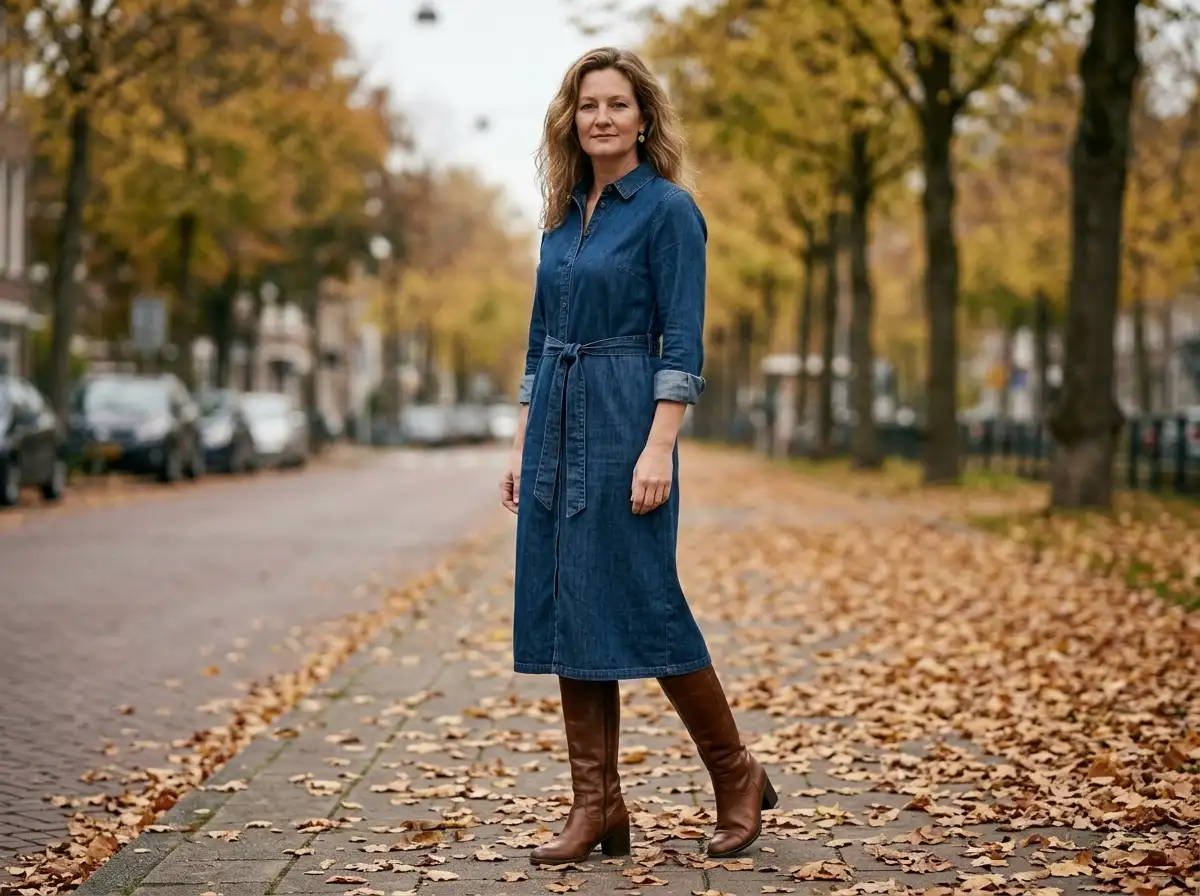
Tie it at the natural waist for a defined line, or an inch above for a longer skirt sweep. Second, fabric weight: a poplin under about 110 GSM collapses into cling, and a stiff cotton over 160 tents out. The working range for fall is 110 to 140 GSM poplin in September, 8 to 10 oz denim in October, and flannel or a wool blend once November asks for more.
Length follows proportion, not age. Mid-calf is the default because it covers the knee in every position and still shows the ankle. Petite frames can stop at the knee instead, since a midi that lands on a petite shin drags the whole line down. The modernizing moves are small: push the sleeves to the forearm, keep one statement note at the ear or wrist, and let the footwear be current, because the hem-and-boot pairing rules in our ankle boot hemline guide apply to a shirtdress exactly as they apply to skirts.
On the budget end, Torrid’s denim trucker dress, cut for sizes 10 through 30, lists around $75 against a $125 comp value, and the trucker stitching gives the waist some built-in shape. On the premium end, a wool-blend belted shirtdress from Banana Republic or Everlane runs $100 to $200 and repeats for a decade. The price gap is real. The belting technique is identical.
Five Formulas That Repeat All Season
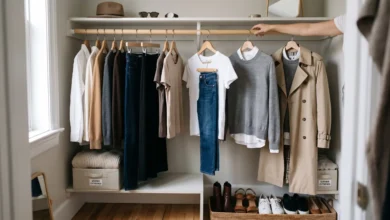
Each formula below is a template, not a shopping list. Shop your closet first and let the gaps drive what you buy.
The School Run and Errands
Denim shirtdress, belt tied, white leather sneakers, trench left open, crossbody bag. This is the four-minute version: one piece does the coverage, the sneakers keep it current, and the open trench draws two vertical lines down the front. When the trench gets warm by noon it folds into the trunk and the outfit still holds.
Church or a Service
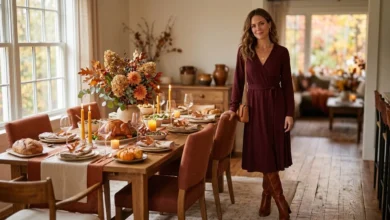
Wrap midi dress in a jewel tone, opaque tights, knee-high boots on a block heel, peacoat. The wrap tie places the waist without hardware, the tights add structure and warmth, and burgundy or emerald carries the same coverage as beige with more authority. Swap the boots for a block-heel pump if the seating runs formal.
Work, Then Dinner After
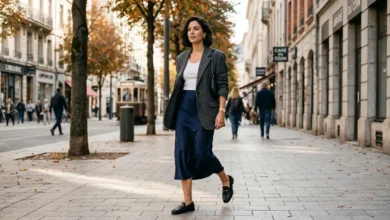
Turtleneck sweater dress in a 220 to 300 GSM knit, duster coat, ankle boots on a 2 to 3 inch block heel, blanket scarf for the commute. At the restaurant the scarf comes off, the coat stays in the car, and one pair of statement earrings takes over the statement role. The knit weight is the trick: light enough to sit through dinner without overheating, heavy enough that the silhouette never collapses under office fluorescents.
The Pumpkin Patch
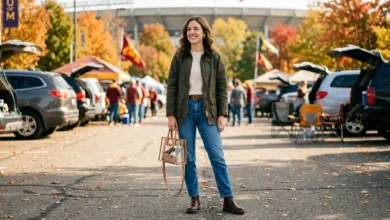
Flannel shacket, stretch straight-leg jeans, flat lug-sole Chelsea boots, ribbed knit underneath. Every layer has to pass the carry test we laid out in our summer-to-fall layering rules, because a patch afternoon swings twenty degrees and the shacket will end up carried by its strap. Dark denim with a rust or olive knit hides straw, mud, and cider spills, which is the entire aesthetic brief of a farm visit.
A Fall Wedding or Evening Event
Lined crepe or stretch-velvet midi dress, wool wrap coat, block-heel pump, one metal family at the ear and wrist. Giorgio Armani’s line, “Elegance is not about being noticed, it’s about being remembered,” is the whole styling note: the coverage is the elegance, and the jewel tone does the remembering. Skip sparkle on the fabric and put it in the jewelry instead.
Pumpkin Patch Rules for Plus-Size Bodies
Pumpkins are grown on about 66,200 acres across the United States, more than 1.5 billion pounds in a single season by USDA figures, which is why the patch is the most universal fall event on the calendar and the one most styling lists ignore for plus-size bodies. The terrain is the first variable: wet grass, loose straw, and gravel punish any heel over two inches, so this is the one formula where I steer away from the block heel and toward a flat lug sole.

The second variable is the vertical line. An open shacket or duster over a monochrome base, dark jean and matching knit, builds two unbroken lines down the front of the body, and shade depth matters more than exact color matching. The third is the waistband: a mid-rise sits below the bend when you reach for a pumpkin, so it stays put instead of rolling, and 11 to 13 oz denim with a little elastane holds its shape through a two-hour visit where a 9 oz jean gives out at the knee.
The fit note that matters most: buy for the largest point and tailor the rest. A shacket that closes over the shoulder but swings at the waist is a correct purchase, because a side-seam dart is a fifteen-dollar alteration. On final-sale flannel bought online, the inspection in your own hallway is the return policy.
Layering Weights That Add Warmth Without Bulk
Bulk comes from where the weight sits, not from how warm the layers are. Three measured layers beat two heavy ones because the air between them does free work. NOAA’s October 2025 monthly report put the contiguous U.S. average at 56.9 degrees, a month where morning and afternoon routinely sit twenty degrees apart, so the ladder below is the whole season in one table, and it is the same ladder that runs through our year-round capsule wardrobe system.
| Layer | Target weight | Job it does | Named example |
|---|---|---|---|
| Base | 110 to 160 GSM | Sits flat under knits without adding visible thickness | Cotton poplin shirtdress, fine merino crew |
| Mid | 170 to 260 GSM | The visible warmth layer, where ribbed knits and shackets live | Flannel shacket, ribbed turtleneck |
| Structured | 220 to 300 GSM | Holds the silhouette when everything else is soft | 12 oz denim, wool-blend midi skirt |
| Outer | 8 to 10 oz cotton twill, then wool | Blocks wind, the last layer added before December | Everlane’s Modern Trench at $258 |
The boot budget works the same way: one pair that does two jobs beats two pairs that do one. Clarks’ Chelsea boots sit between $110 and $140 and handle the errands formula and the patch formula in the same week, which is the cost-per-wear math that justifies spending on footwear first.
A Palette That Reads Polished, Not Costumey
Run the site’s 70-30 ratio at the outfit level: about 70 percent dominant neutral, camel, charcoal, navy, cream, and 30 percent accent in rust, olive, mustard, or burgundy. One accent per outfit and one statement note, and the earthy palette does what it does best, making mixed textures look collected rather than matched. Head-to-toe orange reads as a costume by October 15. Camel with one rust note reads as a person who owns a mirror.
Who This Approach Is Not For
If your October still runs 80 degrees, this is the wrong article, because warm-climate fall is a recoloring of summer weights rather than a layering season, and these knits will overheat you by noon. If you wear a uniform dress code, the formulas collapse into whatever the code allows at the waistline.
If your budget is tight right now, skip buying entirely and run the audit first, because every formula above works with a belted dress or skirt and knit you already own. And if you love a stark minimalist aesthetic, the layering math may simply not be your language, which is a preference, not a failure.
Adjusting the Formulas to Your Mornings
If you have four minutes before the door: pick one formula and repeat it all week, rotating only the accent color. Decision fatigue is the real enemy of getting dressed, and a repeated uniform with a rotated palette reads as a signature, not a rut.
If your body has changed this year: the wrap tie and the belt are your tools, because they place a waistline on a body whose waistline moved, and sizing up plus a fifteen-dollar hem or dart beats compression every time.
If you already know exactly what you like: recolor before you replace. A rust knit and an olive shacket over your existing black and cream wardrobe changes the season without adding a single hanger.
Frequently Asked Questions About Modest Fall Outfits
What Length of Shirtdress Works Best After 40?
Mid-calf, the classic midi, is the most forgiving length because it covers the knee in every sitting and bending position and still shows the ankle. Petite frames can stop at the knee instead, since a midi that hits a petite wearer at the shin can drag the whole line down.
Can Moms Wear a Shirtdress to a Semi-Formal or Evening Event?
Yes, if the fabric and footwear shift up. Swap poplin for a matte satin or a lined crepe, add a block-heel boot or pump, and let one piece of jewelry carry the statement. The cut stays the same while the materials do the dressing up.
Do Modest Fall Outfit Ideas Work if You Don’t Wear Dresses?
Absolutely. The same coverage spec works with a ribbed turtleneck over a straight or A-line midi skirt, or with 11 to 13 oz stretch jeans under a tunic-length knit. The rules are about sleeve length, hem depth, and waist placement, not about dresses.
What Shoes Go With a Midi Hem in Fall?
A pointed-toe boot on a 2 to 3 inch block heel lengthens the leg line under a midi, and a flat lug-sole Chelsea takes over for grass, gravel, and wet pavement. Clean white sneakers keep the school-run version current.
What Should I Wear to a Pumpkin Patch if I’m Plus Size?
Stretch straight-leg jeans, a flannel shacket worn open over a monochrome base, and a flat lug-sole boot. The open shacket builds a vertical line, the mid-rise waistband stays put when you bend, and the tread handles wet grass and straw.
The Point of the Repetition
Modest fall dressing stops being a puzzle the day you stop treating coverage as the hard part. Coverage is the easy part, since any shirtdress, midi skirt, or tunic knit provides it for free. The variables worth your attention are the ones this whole season runs on: a placed waistline, a measured fabric weight, a boot that matches both the hem and the ground. Rachel Zoe’s old line, “Style is a way to say who you are without having to speak,” is really a description of modest dressing done well, because the coverage gets quiet and the fit does the talking.
So start with one formula, not the whole list. Wear it three times this week with a different accent each time and watch what happens. The modest fall outfit ideas in this guide all repeat, and the repetition is the point. You will not remember what was trendy in October of 2026, but you will still own a belted shirtdress that works.
Sources
Official Sources
- NOAA National Centers for Environmental Information: Monthly Climate Reports, October 2025, Access date: August 24, 2026
Industry Sources
- USDA Agricultural Marketing Resource Center: Pumpkins, Access date: August 24, 2026
- Torrid: Plus Size Denim Trucker Dress, Access date: August 24, 2026
- Everlane: The Modern Trench Coat, Access date: August 24, 2026
- Clarks: Women’s Chelsea Boots, Access date: August 24, 2026
Additional Reading
- Flux Luxury Magazine: Giorgio Armani, “Elegance is not about being noticed, it’s about being remembered”, Access date: August 24, 2026
- AZQuotes: Rachel Zoe quote, “Style is a way to say who you are without having to speak”, Access date: August 24, 2026