Your handbag betrayed you at the turnstile. One shrug of the shoulder, one slick strap, and it is on the platform floor while the doors close. That moment was not bad luck. It was a measurement error, made weeks earlier, in a store that never asked how you commute.
A handbag is the hardest-working object in your wardrobe. A blazer faces the world twice a week, but a daily bag absorbs constant friction, sudden rain, and the dead weight of a water bottle, a laptop, and a paperback, every single day. Most buying guides still open with a gallery of pretty silhouettes. That is backwards. Physics first, aesthetics second.
How to choose a handbag, in four checks: (1) weigh the empty bag and reject anything over 2 pounds, because a loaded one-shoulder bag should never cross 5 percent of your body weight; (2) match the crossbody strap drop to your height bracket, 18 to 20 inches under 5’3″, 20 to 23 inches between 5’3″ and 5’7″, and 22 to 25 inches above 5’7″; (3) size the body to your frame, under 12 inches wide for petite frames and 14 inches or wider for tall frames; (4) pick the grain to your climate, Saffiano or pebbled for rain and transit, smooth calfskin only for dry, low-friction days.
Step 1: Judge the Construction Before the Aesthetic
Boutique lighting flatters the leather, not the seams. So run your own inspection, and do it in this order: strap geometry, stitch density, empty weight, closure. The aesthetic vote comes last.
Strap Drop: The Measurement That Decides Comfort
The strap drop is the vertical distance from the peak of the strap to the top edge of the bag body, and it dictates exactly where the bag lands on your torso. Get it wrong and the base bounces off your thigh on every stride, or the strap strangles your arm under a winter coat. Get it right and you forget the bag exists.
| Height bracket | Target crossbody strap drop | Where the bag lands |
|---|---|---|
| 4’11” to 5’3″ | 18 to 20 inches | Above the lower thigh, no bounce on the stride |
| 5’3″ to 5’7″ | 20 to 23 inches | At the hip bone, easy one-hand access |
| 5’7″ and above | 22 to 25 inches | Clears the ribcage, stride unconstricted |

Shoulder bags run a different test. A short fixed strap that glides over a summer shirt will jam against the deep armscye of a drop-shoulder wool coat in January, so for year-round utility look for a flat, slightly textured shoulder strap with a drop of at least 9 to 10 inches. Width matters just as much. “The wider the strap, the better,” says Dr. Hayden, an Atlanta chiropractor cited in a Center for Spine and Orthopedics briefing, because a broad strap spreads the load away from the delicate nerve zone where the neck meets the arm.
Stitch Density, Rivets, and the Box-X Test
Turn the bag inside out if the lining allows, or lift the lining and peer at the internal seams. High-quality construction holds a minimum of eight to ten stitches per inch, and anything sparser is a fast, low-cost run that unravels under load. Then check where the straps meet the body, because that junction carries your entire cargo. It should show a stitched box-X pattern or metal rivets anchored through a double layer of leather or industrial backing, not a single line of thread through a folded edge.
The Empty Weight Benchmark
Weigh the bag before you add anything. An unlined, open-top pebbled leather tote typically lands near 1.6 pounds empty, while a fully lined, structured compartment with a heavy brass frame can exceed 2.5 pounds before your phone even enters the equation. That extra pound of dead weight across a forty-minute commute is what turns a trapezius muscle into a knot by Thursday.
“One of the consequences of carrying a shoulder bag on one shoulder is that it significantly interferes with the normal gait,” says Dr. Erickson, a New York chiropractor, in the same Center for Spine and Orthopedics briefing. The general ceiling for a carried load is 10 percent of body weight, but for a one-shoulder purse she recommends not exceeding 5 percent.
Do the arithmetic for your own body. At 130 pounds, your loaded daily bag should stay under 6.5 pounds, which means the empty bag itself should sit as close to 1.5 pounds as the shop will allow.
Zippers, Magnets, and the Transit Test
A metal zipper is full security for a crowded train, although a narrow-cut opening will scrape your knuckles on every reach. A magnetic snap opens in one motion and pops open just as fast when the bag is stuffed to capacity. Match the closure to your environment: zip for transit and travel, magnet for a desk-to-dinner day where you touch the bag forty times.
Step 2: Match Scale to Your Frame, Not Just the Size Chart
An oversized tote anchors a tall frame and swallows a petite one whole. This is not about rigid styling rules. It is about visual weight, the way a bag’s mass reads against your vertical line.
| Height tier | Ideal bag scale | Target dimensions | Visual outcome |
|---|---|---|---|
| Petite (under 5’3″) | Small to medium | Width under 12 inches, height under 10 inches | The frame stays visible and the silhouette unbroken |
| Average (5’3″ to 5’7″) | Medium to semi-oversized | Width 12 to 14 inches, height 10 to 12 inches | Proportions hold without competing with garment lines |
| Tall (over 5’7″) | Large to oversized | Width 14 to 16 inches or more, height 12 inches or more | Balances long vertical lines and elongates the silhouette |

Height is still a coarse proxy, and here is the nuance most guides skip: torso length and shoulder width do the real work. Two women at 5’5″ can need different bags because one carries a long torso and narrow shoulders. Use the hip-bone test in a mirror: the base of the bag should land within two inches of your hip bone, because that is where the eye reads balance.
If a shorter frame genuinely needs tote capacity for work, choose an east-west layout, wider than it is tall, rather than a north-south design. A vertically deep bag drags the eye downward, while a wide, low profile sits with the curve of the hip. The runways confirm the timing: the elongated east-west silhouette is one of the defining bag shapes of fall 2026, from The Row to Fendi, precisely because it reads sleek while still holding a real day’s cargo.
Pair the Silhouette to Your Garment Volume
Fluid, unstructured clothing, a linen dress, a relaxed trench, asks for a structured, boxy bag that grounds the drape. Sharp tailoring asks for the opposite: a rounded hobo or a soft half-moon shape, the other strong 2026 silhouette, that breaks up hard lines without softening your authority.
The whole industry is leaning toward utility for real life. Designer Pieter Mulier summed up the mood at Alaïa with a line Vogue quoted: “It’s just really clothes for real people, not for an image.” Buy the bag for the real-people version of your week.
Step 3: Choose the Material for Your Climate, Then Your Habits
Saffiano vs Pebbled vs Smooth Calfskin
Saffiano leather carries a cross-hatch stamped grain under a protective wax coat, which makes it rigid, scratch-resistant, and largely indifferent to rain marks. Pebbled leather is the reliable middle: soft in the hand, a raised texture that hides abrasions, and it flexes without cracking in a packed commuter bag. Smooth calfskin is the delicate one, a satin-like surface that records fingernails, keys, and every corner of a desk.
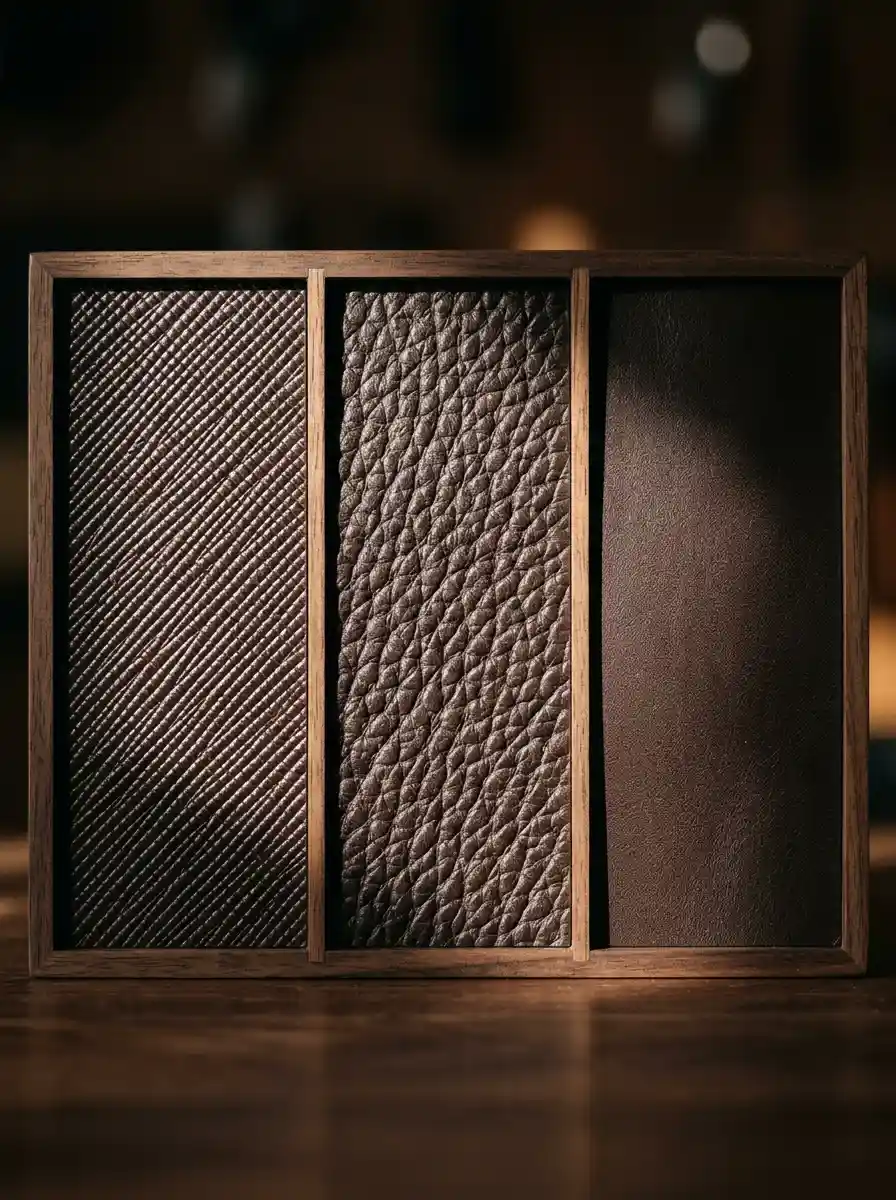
Water is the honest judge. Grained finishes wipe clean after light rain. Untreated aniline and smooth leathers drink moisture, leaving permanent spots, and can transfer dark dye onto raw denim on contact.
The “Genuine Leather” Label Trap
Here is the contrarian truth the hang tags will not tell you: “genuine leather” is not a quality badge. It is a marketing term that often describes one of the lower grades on the rack, sitting below top-grain and far below full-grain. Insist on the specific grade. Full-grain and top-grain leather, cared for with seasonal conditioning, routinely last ten to twenty years, while bonded and synthetic alternatives crack and peel at the stress points within 12 to 24 months.
Canvas, Nylon, and Suede: The Honest Limits
Heavy cotton canvas has lovely structure and behaves like a sponge, absorbing coffee, oil, and dirt, and spot-cleaning tends to leave rings. Nylon laughs at rain and weighs almost nothing, but without a reinforced base it sags under a laptop and pulls the straps into your shoulder. Suede is the dry-day specialist: the nap flattens at every touchpoint, stretches under load, and stains in water, so keep it for low-impact environments, not a wet Tuesday commute.
Plant-based and vegan leathers have improved fast, and the 2026 racks are full of them. Judge them like any other material and ask for the base fiber plus the coating, because a polyurethane-faced “vegan leather” peels on the same 12 to 24 month clock as any other synthetic.
Step 4: Run the Numbers: Capacity, Color, and Cost-Per-Wear
The Three-Bin Cargo Audit
Do not shop for the idealized version of your week. Empty your current bag onto a table and sort everything into three bins: Non-Negotiable Tech (laptop, tablet, charger, planner, anything that must lie flat), Daily Essentials (wallet, keys, sunglasses, cosmetics), and Variable Utility (water bottle, umbrella, gym shoes, the seasonal extras). Measure the tech bin first, because a padded laptop sleeve positioned against the back wall keeps the heaviest mass close to your spine and stops smaller items crushing at the base.
If your week swings between the office and site visits, or the classroom and the commute, the bag has to bridge dress codes as well. This is where a clean, unbranded profile pays for itself, the same logic we apply when decoding professional business casual dress codes or anchoring a long-term capsule wardrobe: the quiet piece gets worn most.
Neutral vs Statement: The 80 Percent Rule
Default advice says buy black. Black is fine, yet it can read harsh against soft seasonal palettes, so muted stone, deep espresso, and ink navy do the same grounding work with more range. Then run the 80 percent check on your own closet: if four out of five garments you actually wear are neutral, a third neutral bag disappears into the crowd, and a single statement color, oxblood, croc-embossed chocolate, siren red, all strong notes for 2026, may log more wears than another black one.
Luxury Pricing Tiers in 2026
If designer leather is in play, know the ladder before you climb it. Entry-level luxury from Coach, Kate Spade, or Tory Burch sits roughly between 200 and 600 dollars. Contemporary houses like Polène, Strathberry, and Khaite run about 500 to 3,000 dollars. Established luxury, Gucci, Saint Laurent, Prada, Dior, and Bottega Veneta, occupies 1,500 to 6,000 dollars.
Ultra luxury starts where Chanel now stands: the Medium Classic Flap rose to 11,700 dollars after the April 2026 adjustment, a 3.5 percent jump, and the same Maxi Flap that sold for 3,700 dollars in 2010 now retails at 13,200 dollars, an increase of 257 percent.
| Pricing tier | Representative houses | Typical 2026 range in USD | What to inspect at this tier |
|---|---|---|---|
| Entry-level luxury | Coach, Kate Spade, Tory Burch, Michael Kors | 200 to 600 | Stitch density and strap anchoring, because this is where corners get cut |
| Contemporary luxury | Polène, Strathberry, Khaite, DeMellier | 500 to 3,000 | Explicit full-grain or top-grain labeling, lined interiors, metal feet |
| Established luxury | Gucci, Saint Laurent, Prada, Dior, Bottega Veneta | 1,500 to 6,000 | Hardware plating, resale track record, repair network |
| Ultra luxury | Chanel, Hermès | 5,000 to 15,000 and above | Allocation history, price appreciation, authentication paper trail |
That math cuts both ways. An 11,700 dollar bag worn 1,500 times over a decade costs about 8 dollars per wear, while a 120 dollar synthetic that peels in 18 months and logs 300 wears ends in the bin five times across the same span. The honest question is not “can I justify it.” It is “will I carry it 1,500 times?” If the answer is no, the contemporary tier is where the value lives.
Handbag Questions, Answered Directly
What size handbag is best for everyday use?
A medium body, roughly 12 to 14 inches wide and 10 to 12 inches high, is the practical baseline for most frames, holding the three-bin cargo without overwhelming your silhouette.
Does a small handbag work for everyday use?
Yes, if your daily cargo is genuinely small: phone, cardholder, keys, lip balm. The failure mode is buying small for the aesthetic and then stuffing your coat pockets or adding a second pouch, which doubles the load on your body.
What is a clue that a handbag is oversized?
Hold it at your side in a mirror. If the body spans more than the distance from your waist to mid-thigh, or if the base drops below your hip line with the strap fully engaged, it will read oversized and fight your stride.
How do I measure a bag’s strap drop at home?
Lay the strap flat, find the highest midpoint of the handle, and measure straight down to the horizontal top edge of the bag. For a crossbody fit, measure the full loop and divide by two.
Is full-grain leather worth the investment over synthetic?
For a daily bag, yes. Full-grain and top-grain leather clean easily and develop character over ten to twenty years, while polyurethane alternatives crack and peel along the stress points within 12 to 24 months.
The right bag will not announce itself. It will simply disappear into your day, strap honest, seams tight, weight invisible, while the doors close and you are already on the right side of them.
Industry and Research Sources
Official Sources
- Chanel: Classic 11.12 Handbag, Lambskin & Gold-Tone Metal, Access Date: August 2026.
- Ontario Chiropractic: Pack it Light, Wear it Right: Handbags, Access Date: August 2026.
Industry Sources
- PurseBlog: The Inevitable Chanel Price Increase 2026 Is Here, Access Date: August 2026.
- Vogue: A Close Look at the 7 Key Fall 2026 Handbag Trends, Access Date: August 2026.
- Who What Wear: Dated Bag Trends 2026: Handbags to Retire and Buy Instead, Access Date: August 2026.
- Harper’s Bazaar UK: Best Designer Handbags Worth the Investment, Access Date: August 2026.
- Business Insider: Best Work Bag for Women Review Matrix, Access Date: August 2026.
Research Sources
- Center for Spine and Orthopedics: Is Your Purse Causing Back Pain?, Access Date: August 2026.
- Milo Leather: How to Identify Full Grain Leather: A Comprehensive Guide for Industry, Access Date: August 2026.
- Love Your Leather: What is Top-Grain Leather? A Leather Grade Guide, Access Date: August 2026.
Additional Reading
- Masari Shop: How to Choose Bag Size That Complements Your Body Type, Access Date: August 2026.
- Foley + Corinna: Handbag Size Guide: How to Choose the Right Size Bag, Access Date: August 2026.
- Real Simple: 8 Handbag Trends That Will Be Huge in 2026, Access Date: August 2026.