The phrase “business casual” is a linguistic trap. It borrows the authority of business and the relaxation of casual wear, then leaves you to guess where the compromise actually lands. You accept the job offer. The offer letter arrives with one throwaway line under the dress code section. No further detail follows. No employee handbook is attached. It remains one of the most common moments in modern work life. This exact ambiguity explains why the business casual dress code stays one of the most searched and heavily debated phrases in office culture.
The confusion is rarely about the clothes themselves. It is about a term that expects you to intuitively map a boundary between a boardroom and a weekend. A fixed rulebook does not exist. A law firm in Boston and a design studio in Austin operate under entirely different visual agreements. A recent Harris Poll survey conducted for Express Employment Professionals found that seventy percent of managers now consider previously unacceptable workplace etiquette to be perfectly fine. Over half of hiring managers note that these rapid changes leave employees entirely confused about proper attire.
The Quick Answer: What Actually Counts as Business Casual in 2026?
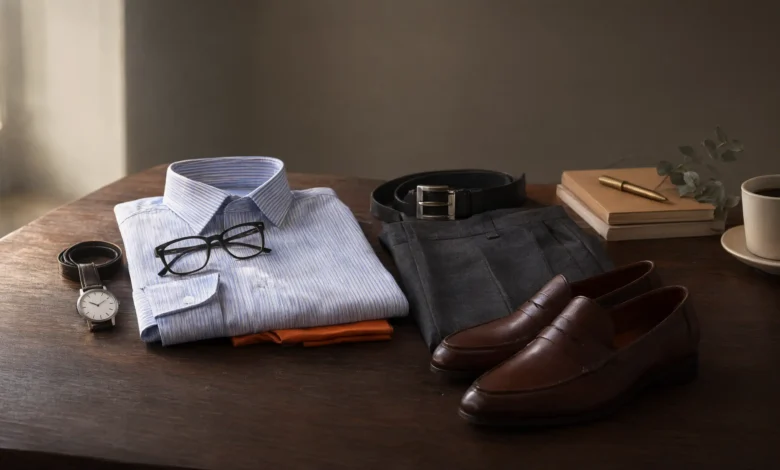
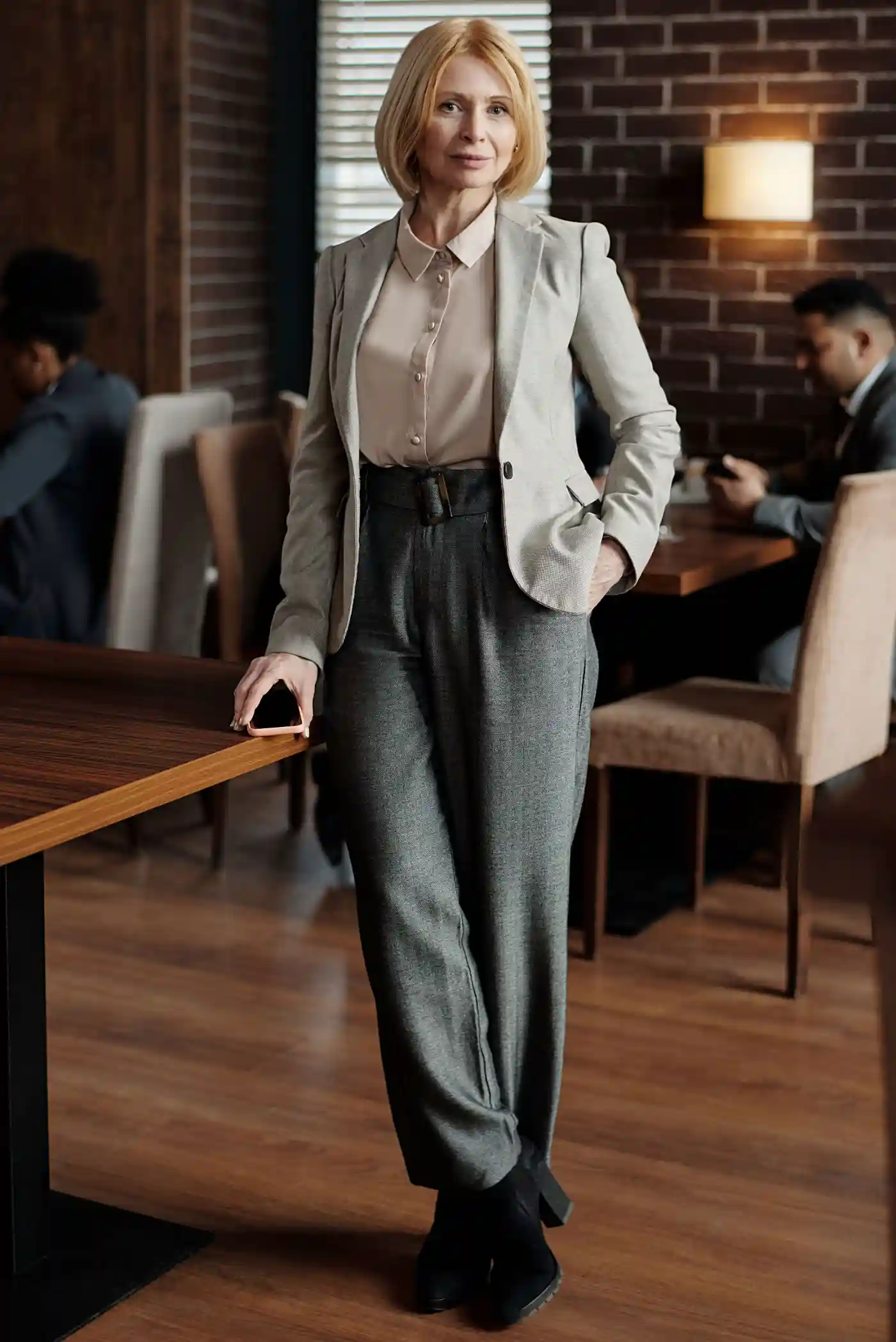
Business casual is a mechanical compromise between formal suiting and weekend leisure. It relies on tailored bottoms (chinos, dress pants, or structured midi skirts), substantial tops (collared shirts, fine-gauge knits, or blouses), and closed-toe footwear. The defining metric is not a specific garment list. The true test is whether the outfit demonstrates intentional structure through fabric weight, clean lines, and contextual awareness of your specific industry. When genuinely unsure, dress one structural notch above the room you are walking into.
The Mechanics of the Compromise
Two words are doing heavy lifting here, and they pull in opposite directions. Business implies structure. Casual implies the exact opposite. Nothing about the phrase specifies where the middle ground actually sits. A memo stating only business casual generates more questions than it answers.
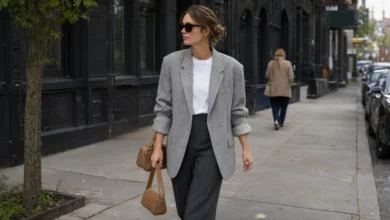
Fashion forecasting firm WGSN named polished casual a defining workplace trend heading into 2026. They describe it as comfort dressing meeting professional polish. That framing provides a highly useful lens for the current version of the dress code. It is less about hitting an exact list of approved garments. It is more about looking deliberate. A fitted crewneck under a structured blazer with tailored trousers reads as business casual. That exact same crewneck paired with joggers fails the test entirely, regardless of how much either piece cost.
Dress codes are moving underneath the people who have to follow them. A 2025 industry survey covered by the fashion publication Made Me Mine found that more than sixty percent of companies updated their dress code policies within the previous three years. This tracks with what most people notice firsthand. The rules your office enforced five years ago rarely match the ones enforced today.
What Actually Passes the Test
Bottoms carry most of the visual weight in this dress code. They are the fastest way to read as too casual or overly formal. Tailored trousers, chinos, and dress pants remain the safest defaults. A structured midi or knee-length skirt accomplishes the exact same job for anyone who prefers skirts.
Dark denim has crept into many business casual offices, particularly in tech and creative fields. This is the one category worth confirming before you wear it. A well-fitted straight or slim cut in dark indigo or black denim is the version that tends to pass. The mechanical variable that matters here is fabric weight. A 12 to 14 ounce denim weight holds a sharp line and reads as intentional. Light washes, distressing, or baggy cuts read as weekend clothes regardless of the fiber content.
On top, a collared button-down, a blouse in a substantial fabric, a polo, or a fine-gauge knit all work. The balance is the real test for any top. It must look put together enough for a meeting while remaining comfortable enough to wear for eight straight hours.
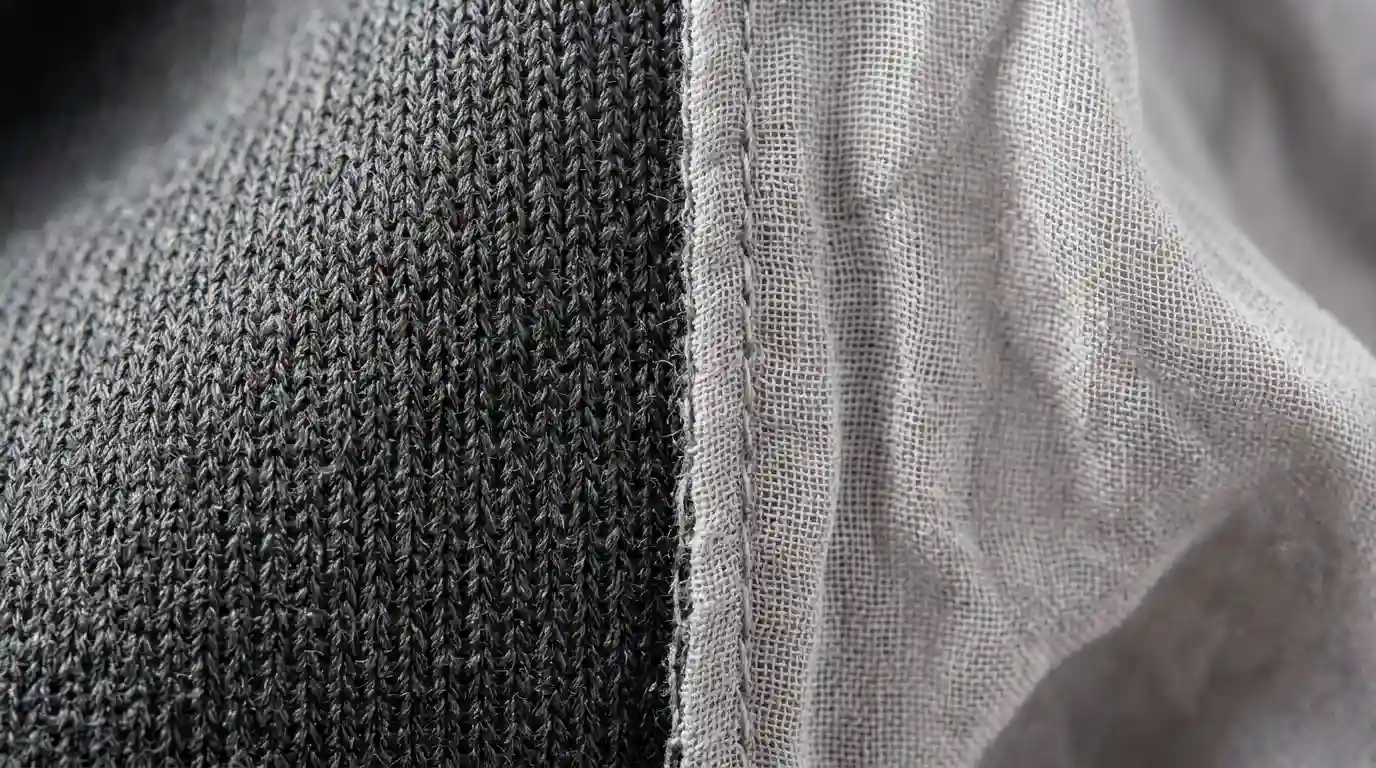
Let us talk about textile density. This is where most people get the dress code wrong. A 120 gram per square meter rayon blouse will cling, wrinkle, and lose its shape by noon. A 180 to 240 gram per square meter ponte or merino knit holds its structure on camera and resists humidity. If you are moving from an air-conditioned corporate desk to a humid outdoor networking lunch, that specific weight threshold prevents sweat-pooling and maintains a polished silhouette.
Shoes stay closed-toe in most business casual environments. Loafers, oxfords, low block heels, or clean leather sneakers work perfectly where the office culture already leans that way. Sandals, flip-flops, and anything with visible wear are the most common shoe mistakes. They are also the fastest way to undercut an otherwise solid outfit.
Layers are where business casual earns its flexibility. An unstructured blazer, a cardigan, or a wrap can dress an outfit up or down in under a minute. This matters immensely when a nine in the morning desk day turns into an eleven o’clock client call. Finding the right outerwear is a precise skill, which is why understanding how to buy a blazer that actually fits is critical for maintaining shoulder structure without looking like you borrowed a suit jacket.
What Stays Off the Table
A short list holds steady across nearly every business casual workplace. This applies no matter how relaxed that office otherwise runs. Visible logos and graphic tees belong elsewhere. Gym clothes worn as street clothes fail the professional test. Flip-flops and slides are entirely off limits. Anything with rips, stains, or heavy wrinkling communicates a lack of care. Clothing built for a night out rather than a desk has no place here.
None of this is about being precious over fashion. Clothes communicate before anyone says a word. In an office, that first read still matters. According to research published in the Academy of Management Discoveries, employees experience “enclothed harmony” when their clothing choices align with their context. This alignment directly boosts productivity and engagement.
Business Casual at a Glance
| Category | What Works | What Fails |
|---|---|---|
| Bottoms | Chinos, dress pants, tailored trousers, structured skirts, 12 to 14 ounce dark denim (if permitted) | Light wash jeans, distressed denim, joggers, shorts, athletic wear |
| Tops | Collared shirts, blouses, polos, 180 to 240 GSM knits | Graphic tees, sheer fabrics, crop tops, clubwear |
| Shoes | Loafers, oxfords, block heels, clean leather sneakers | Sandals, flip-flops, scuffed footwear, gym shoes |
| Layers | Unstructured blazers, cardigans, fine-gauge wraps | Hoodies with loud logos, distressed denim jackets, athletic zip-ups |
How the Rules Shift by Industry
The phrase means something entirely different at a financial firm than it does at a creative agency. Pretending otherwise is where most of this confusion actually starts.

| Industry | What Business Casual Tends to Look Like | Where People Usually Get It Wrong |
|---|---|---|
| Law, Finance, Traditional Corporate | Closer to business formal. Dress pants matched with a jacket, conservative colors, minimal denim. | Wearing sneakers or jeans before confirming leadership does the exact same thing. |
| Tech and Startups | Chinos or dark jeans, clean sneakers, a blazer kept strictly for client days. | Assuming the daily uniform also works for investor pitches or external meetings. |
| Healthcare and Education | Conservative, practical fits regardless of the written policy. | Overlooking that patient-facing or classroom roles carry unwritten expectations on top of the memo. |
| Creative Agencies | More personal style latitude, unusual colors, intentional statement pieces. | Reading creative as anything goes instead of intentional but less predictable. |
The Interview Exception
An interview sits one step above whatever a company’s daily business casual actually looks like. This is worth knowing before you show up in exactly what current employees wear on an average Tuesday. When Forbes Vetted asked stylists about interview attire, the guidance was to opt for well-coordinated separates. This usually includes a blazer, a top, and trousers. The advice holds across most image consultants.
Dress a notch above the daily standard. Do not go all the way up to a full suit unless the industry explicitly expects one. Navigating these high-stakes environments requires a precise approach, and reviewing what to wear to a job interview ensures you hit the exact right register without overdressing.
Where This Dress Code Runs Out of Answers
Business casual guidance has real limits. It does not cover uniformed roles. It does not apply to dress codes set by safety regulations. It also ignores workplaces that have moved to a genuinely open standard for remote employees who rarely appear on camera.
The same blazer and trouser combination that reads as perfectly appropriate at one company can read as slightly underdressed at another. It might read as slightly overdressed at a third. No article can substitute for watching what the people already working there wear during your first two weeks.
According to a comprehensive report by professional styling company Style Space, ninety-one percent of working women find it difficult to choose outfits for work events and client meetings. Yet ninety-six percent of those surveyed feel more confident in their abilities when they are also confident in their style. Finding those reliable wardrobe essentials bridges the gap between corporate expectations and personal comfort.
Matching the Code to Your Reality
First Day at Work and No Idea What to Wear
Default to the safest version for the first week. Wear dress pants or chinos, a collared shirt or blouse, closed-toe shoes, and a blazer you can remove once you have clocked what everyone else is wearing. Save the jeans and the more relaxed shoes for after you have actually watched the room for a few days.
Rebuilding Your Workwear from Scratch
A body that has changed, a return to the office after years remote, or a first job out of school all point to the exact same fix. You need a small rotation of pieces that combine with each other. You do not need a full wardrobe bought in one weekend. Two pairs of well-fitting trousers, three tops, and one blazer already produce more outfit combinations than most closets in active daily rotation. Learning how to build a capsule wardrobe covers the exact math on that strategy.
In a Rush
Put the blazer over the most polished thing already in your closet. Pair it with a plain top, a pair of dark trousers, and shoes with no visible wear. It will not be the most original outfit you own. It will read as business casual on sight. That is the entire assignment on a morning you did not plan for.
Frequently Asked Questions
Is business casual the same as smart casual?
Not quite, though the two overlap. Business casual generally sits closer to traditional office wear. It is built around trousers, collared shirts, and closed shoes. Smart casual allows more room for dressed-up casual pieces like dark jeans or clean trainers as a starting point rather than an exception. The most reliable way to tell them apart in any specific office is still to watch what current employees wear on an ordinary day.
Are jeans ever business casual?
Sometimes. This mostly happens in tech, creative, and startup environments. When jeans do work within business casual, a well-fitted straight or slim cut in dark indigo or black denim is the version that tends to pass. Light washes, distressing, or baggy fits usually do not. Chinos are the safer substitute during a first week at any new job.
What should I avoid wearing under a business casual dress code?
Visible logos, athleisure worn as street clothes, flip-flops or slides, anything torn or heavily wrinkled, and clothing built for a night out rather than a desk. These hold steady across almost every business casual office, regardless of how relaxed that office otherwise runs.
How is business casual different from business professional?
Business professional generally means a matched suit or an equivalent fully tailored set. It is worn with a tie in more conservative settings. Business casual drops that jacket-and-tie requirement in favor of separates such as trousers or a skirt paired with a shirt, blouse, or knit.
The Real Skill Behind Business Casual
The real skill behind business casual was never really about memorizing an approved list of garments. It is about noticing what a given office already rewards. You then build a small set of pieces that let you meet that standard without buying a new outfit every week. The dress code will keep shifting company to company and year to year. The underlying test barely changes. The only question is whether the outfit looks like something chosen on purpose. Get that right, and the rest tends to follow on its own.
Source
Industry Sources
- Express Employment Professionals: Harris Poll Workplace Etiquette and Dress Code Survey, Accessed August 2026.
- StyleRave: The New Rules of Business Casual Dressing for 2026 (citing WGSN trend forecasting), Accessed August 2026.
- The Forage: What Does Business Casual Really Mean in 2026?, Accessed August 2026.
Research Sources
- Forbes: Your Style Choices Can Boost Or Hinder Work Performance, According To New Research, November 2024.
- Academy of Management Discoveries: Enclothed Harmony and Contextual Productivity, Accessed August 2026.
- Style Space: Professional Styling and Workplace Confidence Report, Accessed August 2026.
Additional Reading
- Made Me Mine: Business Casual Women 2026: Smart Outfits Guide (citing 2025 industry survey), Accessed August 2026.
- Forbes Vetted: What To Wear To An Interview 2026, Accessed August 2026.