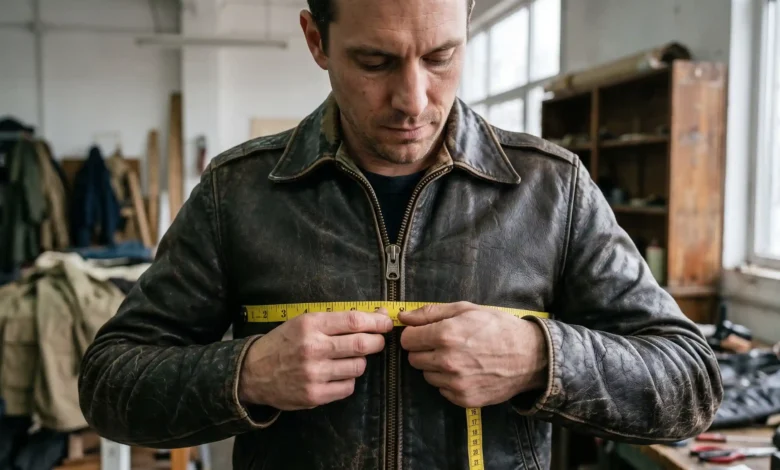
There is a particular kind of optimism that shows up in front of a secondhand leather jacket. The listing says vintage. The photos are flattering. The price feels like a story you will retell later. None of that tells you whether the hide is forty years old or four, whether the zipper is original, or whether the sleeves will still flex next winter.
A useful vintage leather jacket buying guide answers three questions before money moves: how old is the jacket, what shape is it in, and what it is actually worth to the person holding it. The six checks below answer those questions in order, and they work the same way in a thrift store aisle as they do on a resale app at midnight.
None of it requires connoisseurship. It requires ten minutes, a flexible tape measure, and a willingness to walk away.
To buy a vintage leather jacket well, run six checks in order: 1) date the jacket through its zippers, labels, and construction, 2) flex the hide at the elbows and collar for dry rot and red rot, 3) stress the seams, lining, and hardware, 4) size by pit-to-pit measurement instead of the tag, 5) price the condition before the brand, and 6) add cleaning and repair costs before agreeing to a number.
Check 1: Date the Jacket Before You Price It
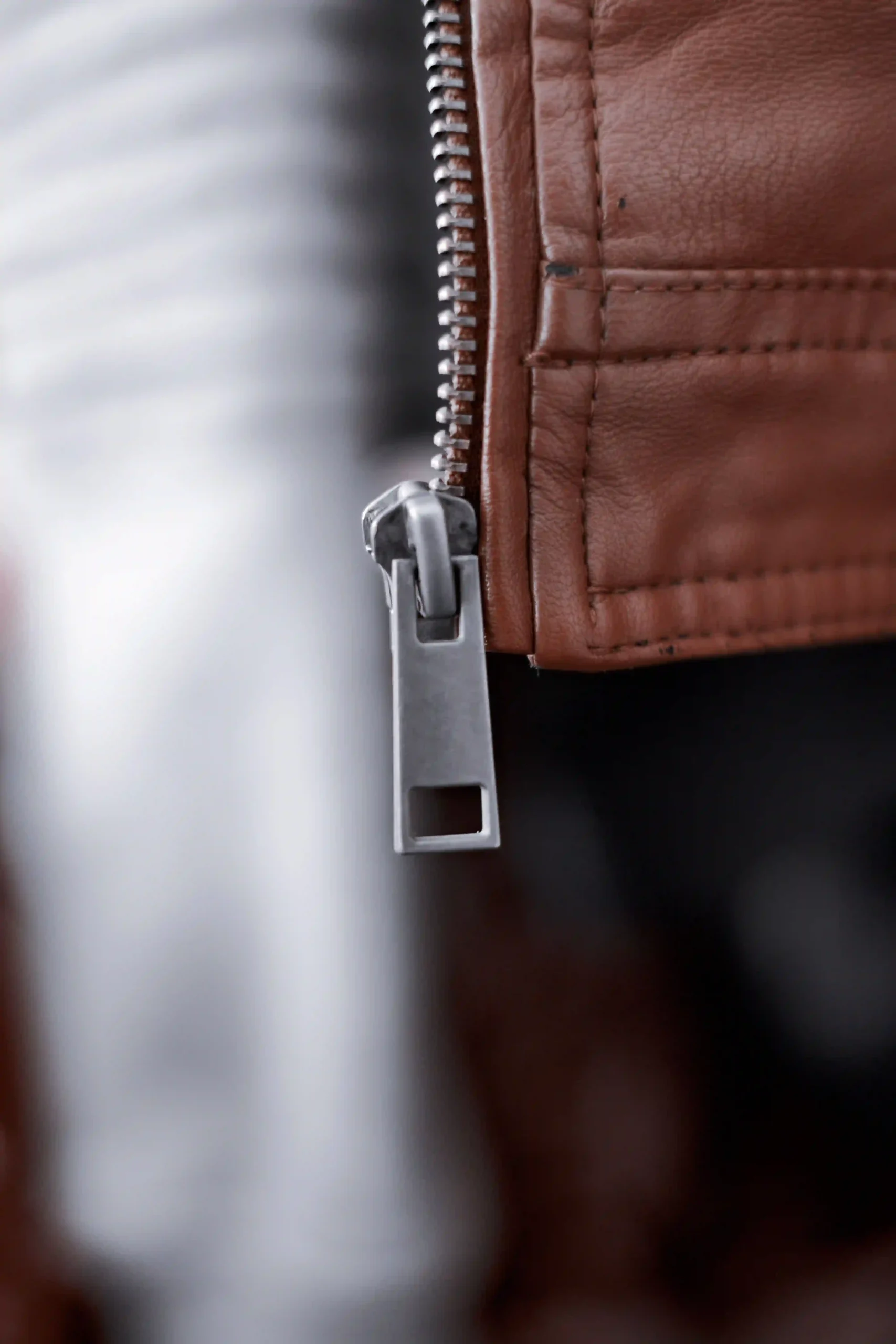
Age is the first thing a seller mentions and the last thing a buyer verifies. Start with the main zipper, because hardware is the fastest tell. Collector guides put Talon, the dominant American zipper maker of the mid-twentieth century, in heavy use from the 1930s through the 1970s, with Conmar, Scovill, Crown, and Serval stamps running alongside it on workwear and motorcycle gear. A jacket sold as pre-1960s that closes on a brand-new generic slider has either been repaired, which is fine when priced honestly, or mislabeled, which is not.
Then cross-check the hardware against the label and the construction, because zippers get swapped and labels lie less often. Early American motorcycle and flight jackets were built as equipment: a bi-swing back or action pleats across the shoulders, underarm gussets, a belted waist, a rayon or quilted satin lining that now shreds at the folds.
Schott introduced the Perfecto, the first zippered motorcycle jacket, in 1928 at a retail price of five dollars and fifty cents, and the U.S. Army Air Corps approved the horsehide A-2 flight jacket on May 9, 1931. Those two silhouettes, the asymmetric double rider and the military flyer, are the family tree most vintage leather descends from, and their working details are your dating evidence.
| Where to look | What older pieces tend to show | Read it as |
|---|---|---|
| Main zipper | A Talon, Conmar, Scovill, Crown, or Serval stamp, often with a plain stamped-metal pull | A hint of mid-century American make, strong only when the label agrees |
| Label and tags | Woven cloth label, a union tag, no barcode anywhere | Consistent with pre-1980s production, since a scannable barcode on a jacket sold as 1950s is a contradiction |
| Lining | Rayon or quilted satin, usually shredded at the shoulder folds | Age-consistent wear, and relining is a known invoice rather than a mystery |
| Back and shoulder construction | A bi-swing back, action pleats, or underarm gussets | Working features from the era when jackets were equipment, not costume |
Check 2: Flex the Hide for Dry Rot and Red Rot
Leather is skin, and skin dries out. Every old jacket sits somewhere on a line from supple to stiff to brittle, and only the last stop is a deal breaker. Hold the jacket at the elbows, the collar, and the pocket flaps, and flex the hide gently. A healthy old hide creases and recovers, showing fine grain lines that look like a worn baseball glove. A drying hide shows crazing, a network of shallow cracks that whitens at the fold. A brittle hide cracks through the finish and feels like it could split under your thumb, and that jacket is a wall hanging, not outerwear.
Run your fingers along the shoulders and seams for red rot too, the powdery reddish crumbling that conservation literature describes as irreversible deterioration in vegetable-tanned leather. If your fingertip comes away with red dust, walk away. And smell the jacket twice, once at the collar and once inside a sleeve. Mustiness that survives a day of airing usually means mold spores deep in the hide, and odor is the one flaw cleaning rarely erases completely.
Keep versus walk away, at a glance
- Stiff but smooth hide that still flexes: conditionable, and often discounted by sellers who read stiffness as damage.
- Fine surface crazing at the elbow folds: cosmetic, as long as the grain is not splitting.
- Cracking that opens through the color, or a split at any stress point: structural, and leather repair costs more than the jacket.
- Red dust on your fingertip or a sweet musty smell: irreversible, so walk away.
Check 3: Stress the Seams, Lining, and Hardware
Thread rots faster than hide, so the seams tell you how the jacket was stored. Give a gentle tug at the underarm gussets, the pocket corners, and where the cuffs meet the sleeve, and look for popped stitches or thread that powders under a fingernail. Open every pocket zip and the main zip all the way, then close them again, because a zipper that skips teeth or separates behind the slider is failing.
Brass hardware with a dark or greenish oxidation is patina and cleans up, while a missing original pull on a collectible jacket is a real deduction, so price it that way. Lining tears at the shoulders and underarms are common and relinable, which makes them a negotiating point rather than a rejection.
Check 4: Size by Measurement, Never by the Tag
Vintage sizing runs one to two sizes smaller than the number on the modern rack, and the tag is the least reliable number on the jacket anyway. Lay the jacket flat, zip it, and measure pit to pit, straight across under the arms, then double that reading for the chest circumference. Compare it to your own chest measured over a shirt, and leave about two inches of ease for a close motorcycle fit, or three to four if you plan to wear a hoodie under it. Then measure shoulder seam to cuff with the sleeve flat, plus the back length from the collar seam to the hem, because vintage cuts run short in the body and high in the armhole.
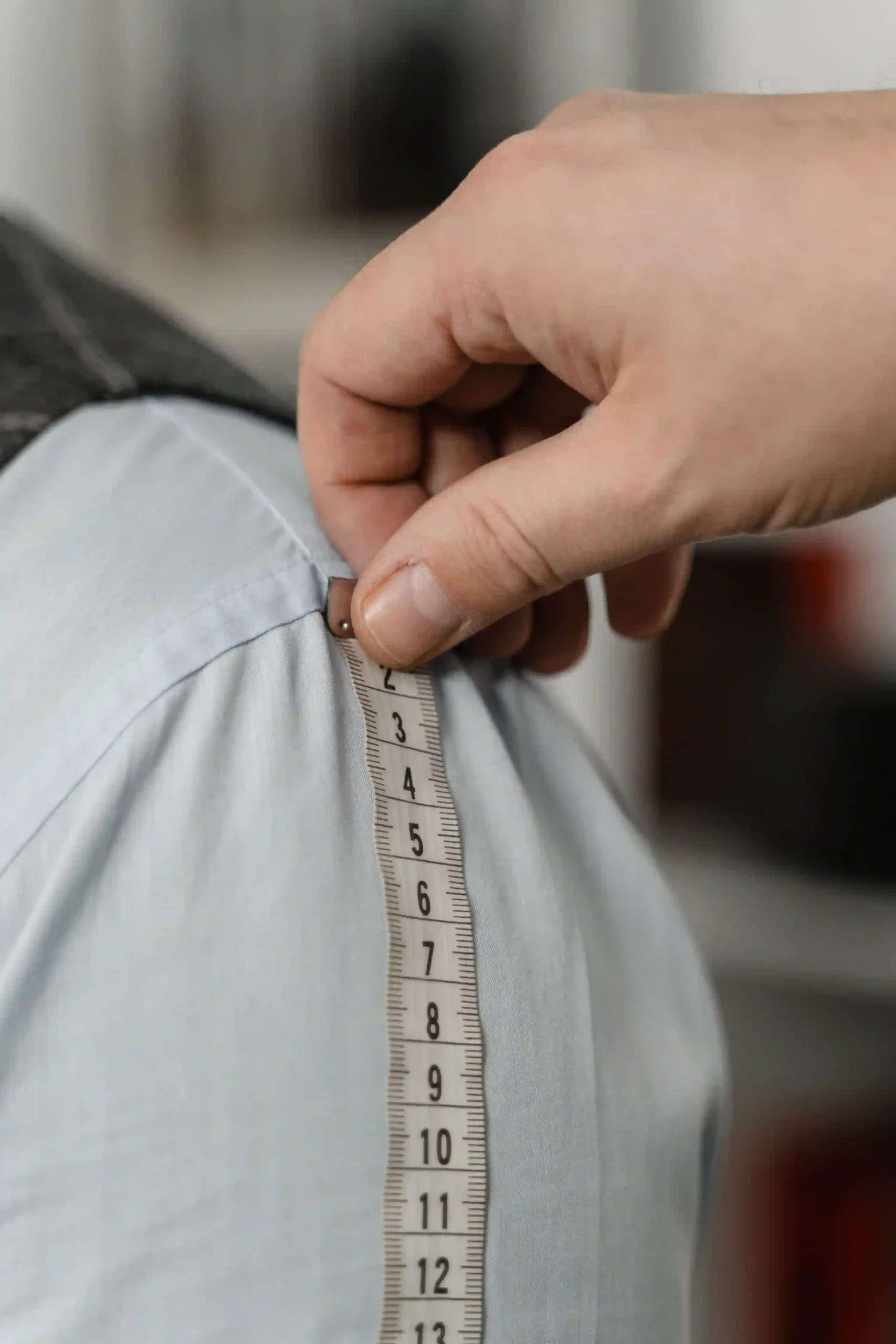
The rule that matters most is the one tailors repeat about every structured jacket: the shoulders are the one point no alteration can rescue, which is the same standard we apply in our blazer fit guide. If the shoulder seam sits past your shoulder point, the jacket is not yours, no matter how good the chest reads.
Check 5: Price the Condition First, the Brand Second
Brand sets the collector ceiling, and condition sets the price you should pay. An unbranded American steerhide jacket from a thrift rack at sixty to a hundred and fifty dollars is a wear-value buy, where the hide and the fit do the work and the label never enters the math.
Named mid-century makers in honest condition, a 1970s Schott or a Sears Hercules, typically ask three hundred to six hundred dollars, and Money Talks News tracked a 1970s Perfecto selling for 550 dollars on eBay, which sits in the middle of that market. Pre-1960s collector pieces, early Perfectos, Buco, Bates, military-contract flight jackets, start in the four figures and move on originality rather than wearability.
| What you are looking at | Typical asking range | What moves the number |
|---|---|---|
| Unbranded thrift and estate jackets, mostly steerhide or cowhide | 60 to 150 dollars | Hide condition and fit, with the label never entering the math |
| Named American makers from the 1970s to 1990s, like Schott, Sears Hercules, and Montgomery Ward Windward | 300 to 600 dollars | Model desirability, with double riders above car coats |
| Pre-1960s collector pieces, including early Perfectos, Buco, and military-contract flight jackets | 1,000 dollars and far beyond | Originality of zipper, label, and lining first, then provenance |
Inside any tier, condition does the discounting. A jacket that needs relining, a zipper swap, and a professional leather clean carries two or three hundred dollars of invisible cost, so subtract those invoices from the asking price before comparing it to anything. Most vintage sales are final, which makes the inspection your return policy, and the same pre-checkout discipline we outline in our seven fashion buying mistakes guide applies double here.
Check 6: Add the After-Costs Before You Agree to a Number
The FTC’s Care Labeling Rule requires leather garments to carry a professionally-leather-clean instruction for a reason: standard dry cleaning solvents strip the oils that keep an old hide alive, and a 400 dollar jacket can come back from the wrong cleaner worth 40. Budget a professional leather clean for the first week you own it, then light conditioning afterward with a dressing like Pecard or Bick 4, never a heavy oil soak that darkens the color and feeds mold.
Odor work is time rather than money, since a week of fresh air with crumpled newsprint and baking soda in the pockets does what no spray will. Get any repair quote, zipper swap, relining, seam rebuild, from a leather tailor before you buy, so the after-costs are arithmetic instead of a surprise.
Where to Buy, and What Each Venue Hides
Thrift stores are where the sixty-dollar miracles live and where mislabeled reproduction jackets hide, so bring the checklist and assume nothing. Established vintage dealers price higher and have already done the dating work, which is worth paying for on a first buy. Online resale gives you the widest selection and the weakest guarantees, so ask the seller for a zipper stamp photo, a lining photo, and a flexed-elbow photo before you commit. Auctions are for collector pieces with provenance, and the buyer’s premium belongs in your budget the moment you raise a paddle.
Who Should Skip Vintage Leather Entirely
Vintage leather is a maintenance relationship, and it is honest to say who it fails. If you want a jacket you never think about, a modern mid-tier piece in drum-dyed cowhide asks nothing of you. If smell sits close to the surface for you, decades of smoke and storage are rarely fully negotiable. If you avoid animal products, today’s plant-based leathers are a different conversation with their own trade-offs. And if your total budget is under a hundred dollars, a thrifted modern jacket will out-wear a vintage project piece that needs a relining you cannot fund.
Matching the Jacket to Your Situation
If this is your first vintage jacket
Buy a 1970s to 1990s named American maker in good condition. You get the era’s heavier hides and boxier cut without collector pricing, and you learn the six-check habit on a 300 dollar jacket instead of a 1,500 dollar one.
If you collect pre-1960s pieces
Originality is the asset. An untouched zipper, label, and lining is what you are paying for, so ask for documentation and pay for it, because a replaced Talon changes the story even when the jacket stays beautiful.
If your whole budget is under two hundred dollars
Work the thrift racks for unbranded steerhide or cowhide, spend part of the budget on a professional clean and light conditioning, and skip anything that needs structural repair, since seam rebuilds and relinings are tailor invoices that dwarf the jacket’s price.
Frequently Asked Questions About Buying a Vintage Leather Jacket
How can you tell if a leather jacket is truly vintage?
Cross-check three independent tells: the zipper stamp, since Talon, Conmar, Scovill, Crown, and Serval point to mid-century American production, the label, which should be woven cloth with union tags and no barcode, and the construction, where bi-swing backs, action pleats, and rayon linings all argue for age. One tell alone proves little, because zippers get replaced and labels get swapped, but three agreeing tells are strong evidence.
What zipper brands show up on pre-1970s leather jackets?
Talon is the most common, in heavy use on American garments from the 1930s through the 1970s, alongside Conmar, Scovill, Crown, and Serval. Treat the stamp as a starting hint and confirm it with the label and construction, since a zipper can be replaced decades after the jacket was sewn.
Is vintage leather higher quality than modern leather?
Often, but not automatically. Mid-century American jackets typically use heavier full-grain steerhide and horsehide than today’s mass-market leather, and Aero Leather Clothing notes that horsehide’s denser fiber structure is a big reason those jackets still wear so well. Modern production wins on consistency and on lighter, softer hides. You are buying a specific jacket, not an era.
Can a dried-out, stiff vintage leather jacket be restored?
Stiff but intact, usually yes. A professional leather clean followed by light conditioning brings most dry hides back to wearable suppleness. Brittle is different: cracking that opens through the color, or red rot’s powdery surface, is irreversible by conservation standards, and those jackets belong to display rather than to your rotation.
How much should you pay for a vintage leather jacket?
Condition first, brand second. Unbranded thrift pieces run 60 to 150 dollars, named 1970s to 1990s American makers run 300 to 600 dollars, and pre-1960s collector pieces start in the four figures. Subtract any repair and cleaning costs from the asking price before comparing, because a jacket that needs a relining and a zipper swap is priced accordingly.
The Last Check Is Patience
A vintage leather jacket is one of the few purchases where the used version can outlast the new one, provided the hide was checked before the money moved. Run the six checks in order, let condition set the price, and treat the after-costs as part of the sticker. The next step is small: pick one listing you already had your eye on, ask the seller for a zipper photo and a pit-to-pit measurement, and run this vintage leather jacket buying guide against it once, start to finish. Ten minutes now saves a season of regret on a hanger.
Sources
Official Sources
- U.S. Federal Trade Commission: Care Labeling of Textile Wearing Apparel and Certain Piece Goods (16 CFR Part 423), Access Date: August 14, 2026
Research Sources
- Journal of Conservation and Museum Studies: The Degradation and Conservation of Leather, Access Date: August 14, 2026
- Smithsonian National Air and Space Museum: Jacket, Flying, Type A-2, United States Army Air Forces, Access Date: August 14, 2026
- Society of American Archivists Dictionary: Red Rot, Access Date: August 14, 2026
Industry Sources
- Schott NYC: History of Schott NYC, Access Date: August 14, 2026
- Aero Leather Clothing: Horsehide vs Cowhide: Which Is Better for Leather Jackets?, Access Date: August 14, 2026
- Flying Apple Vintage: How To Date Vintage Clothing, Access Date: August 14, 2026
- The Steel Zipper: Vintage Clothing Zipper Guide, Access Date: August 14, 2026
Additional Reading
- Money Talks News: How to Thrift Shop for Vintage Schott Jackets, Access Date: August 14, 2026