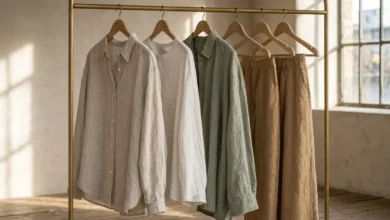
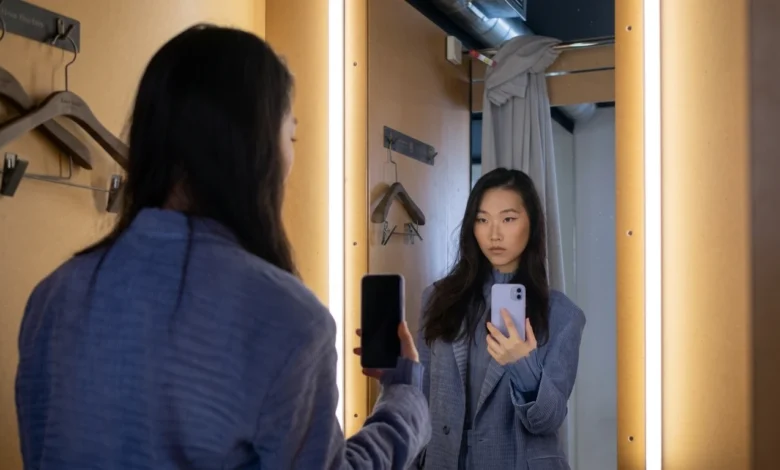
The fitting room mirror is honest in a way no size tag is. One blazer pulls into an X at the button. Another swallows your hands past the knuckles. A third sits beautifully on the shoulders and costs more than you planned, which is exactly the moment knowing how to buy a blazer that actually fits pays for itself.
Fit is also the quiet budget-killer in tailored clothing. In the UK, 30 percent of fashion items bought online are returned, and poor fit is the top named reason, according to trade publication just-style. American shoppers return online apparel at similar rates. A blazer that fits is not a luxury purchase. It is the difference between a jacket you reach for twice a week and one that lives on the back of a door.
The good news is that fit is checkable. Six points, in a specific order, tell you almost everything, and a modest tailor visit fixes most of what the rack gets wrong.
To buy a blazer that actually fits, check six points in order: 1) the shoulder seams end at the edge of your shoulder bone, 2) the collar rests against your neck with no gap, 3) the chest buttons flat with no X crease, 4) the waist shows slight shaping without pulling, 5) the sleeves end at the wrist bone with a quarter to half inch of shirt cuff showing, and 6) the hem covers your seat. Buy for the shoulders, because those are the one part a tailor cannot fix, and tailor the rest.
Why the Shoulders Decide Everything
Every other fit problem on a jacket can be corrected with a needle. The shoulders cannot. GQ puts it bluntly: “A tailor can’t fix a bunk, saggy shoulder, so make sure the seam ends right at the outside of yours.” The seam should terminate exactly where your shoulder bone ends and your arm begins.
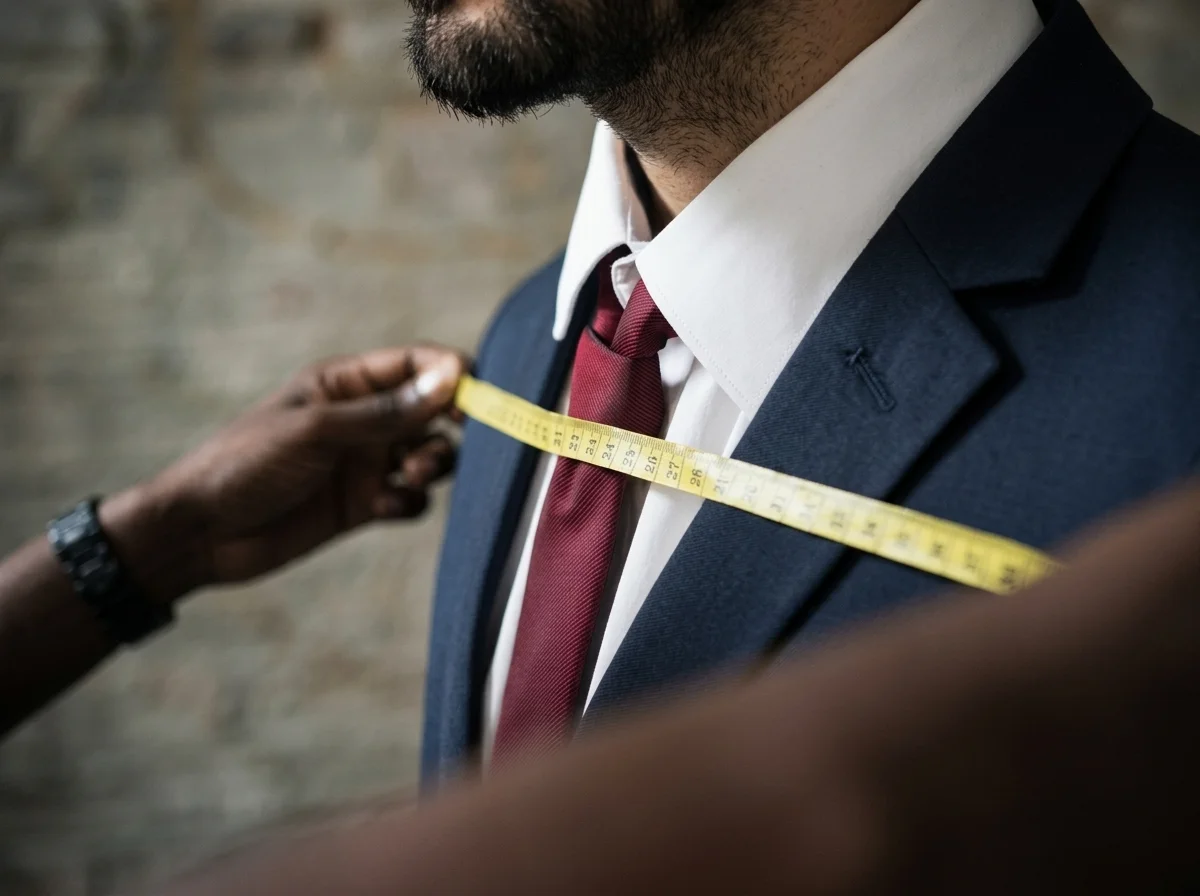
Too small shows up as a divot, a dent at the top of the sleeve where the pad meets your arm, or a seam pulled toward your neck. Too big shows up as a droop, with the seam hanging over the bone onto your upper arm, plus diagonal rumpling below the collar.
There is a second, smaller school of thought that prefers the seam a half inch before the edge of the shoulder, which GQ UK’s tailoring guide recommends, and the gap between the two camps is smaller than it sounds. Both are describing a seam that sits on the bone, not past it. The real test is visual: a clean line from collar to sleeve with no dent and no overhang.
This one check changes how you shop. A jacket that is right everywhere except the waist is a purchase, because taking in the waist is inexpensive. A jacket that is right everywhere except the shoulders is a walk-away, because shoulder reconstruction is the most expensive alteration in tailoring and rarely makes financial sense on anything under a few hundred dollars.
For women’s blazers, the same rule applies whether the jacket is padded or unstructured. The pad should end where your bone ends, and an unstructured linen blazer should still sit clean, just softer. Women’s sizing also jumps in bigger increments between sizes, which makes trying two adjacent sizes the fastest shortcut in the fitting room.
The Six-Point Fit Check, in Order
Run these in order, because a failure at point one makes the rest irrelevant.
1. The shoulder seam
Stand sideways to the mirror and feel for the bone at the top of your arm. The seam should sit on that edge. Shrug your shoulders. If the jacket fights the movement or the pads climb toward your ears, the shoulder is too tight or too heavily padded for your frame.
2. The collar
The jacket collar should rest against your shirt collar, or against your neck if you are not wearing one, with no daylight between them. A visible gap at the back usually means the jacket is too big through the body or the wrong length for your torso. It is one of the harder fixes, so treat a stubborn collar gap as a walk-away too.
3. The chest and button stance
Button the top button only, on a two-button jacket, and look for the X crease, the two diagonal pull lines radiating from the button. That X means the chest is too tight, and it is the single most common sign of a too-small jacket. The front should close with a gentle curve, not a strain. On the loose side, the classic tailor’s test is that a flat hand slides between your chest and the jacket comfortably, while a closed fist swimming around inside means a size too big.
4. The waist
A tailored blazer follows your body slightly inward at the waist, what tailors call suppression. You want a hint of shape, not a pinch. If the jacket hangs like a straight column, that is usually a fix rather than a failure, because taking in the side seams is one of the cheapest and most transformative alterations there is.
5. The sleeves
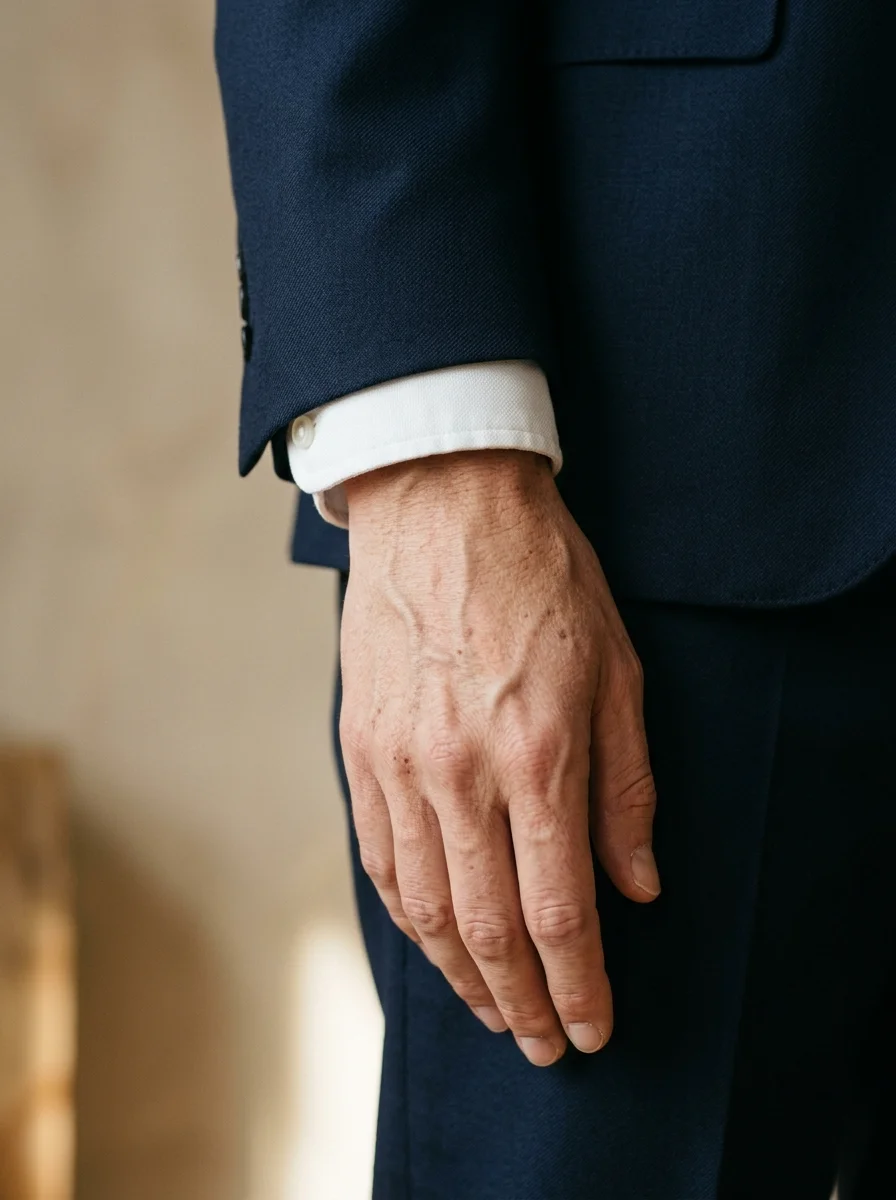
Let your arms hang. The jacket sleeve should end at your wrist bone, leaving a quarter to half inch of shirt cuff visible, the range most tailoring guides agree on. Without a dress shirt, the sleeve should end just past the wrist bone at the base of your thumb. Sleeve length is cheap to fix in either direction, as long as there is fabric inside the hem.
6. The body length
From behind, the hem should cover your seat. Simon Crompton, who writes the Permanent Style journal and has measured more jackets than most, states the rule plainly: “the seat should be covered.” An older second test says the hem ends around the knuckles of your curled hand when your arms hang at your sides. Women’s cropped blazers break this rule on purpose, and that is fine, because a cropped hem is a design decision. A hem that accidentally stops at the widest part of your hips is not.
What a Tailor Can Fix, and What You Walk Away From
The economics of blazer buying get much easier once you know the alteration price list. Men’s Wearhouse publishes its alteration pricing, and the ranges below track what most US tailors charge.
| Alteration | Typical US price | Verdict |
| Taking in the sides at the waist | $35 to $55 | The best money you can spend on a jacket. Turns a boxy rack fit into a shaped one. |
| Shortening or lengthening sleeves | $20 to $50, higher with working button cuffs | An easy win, and the most common fix after a purchase. |
| Center seam and minor shaping | $20 to $30 | Worth it when the shoulders and chest are already right. |
| Lower collar adjustment | $32 to $42 | Sometimes rescues a mild collar gap. Ask the tailor first, because results vary. |
| Shoulder reconstruction | $100 to $240 or more | Usually costs more than the jacket is worth. Walk away instead. |
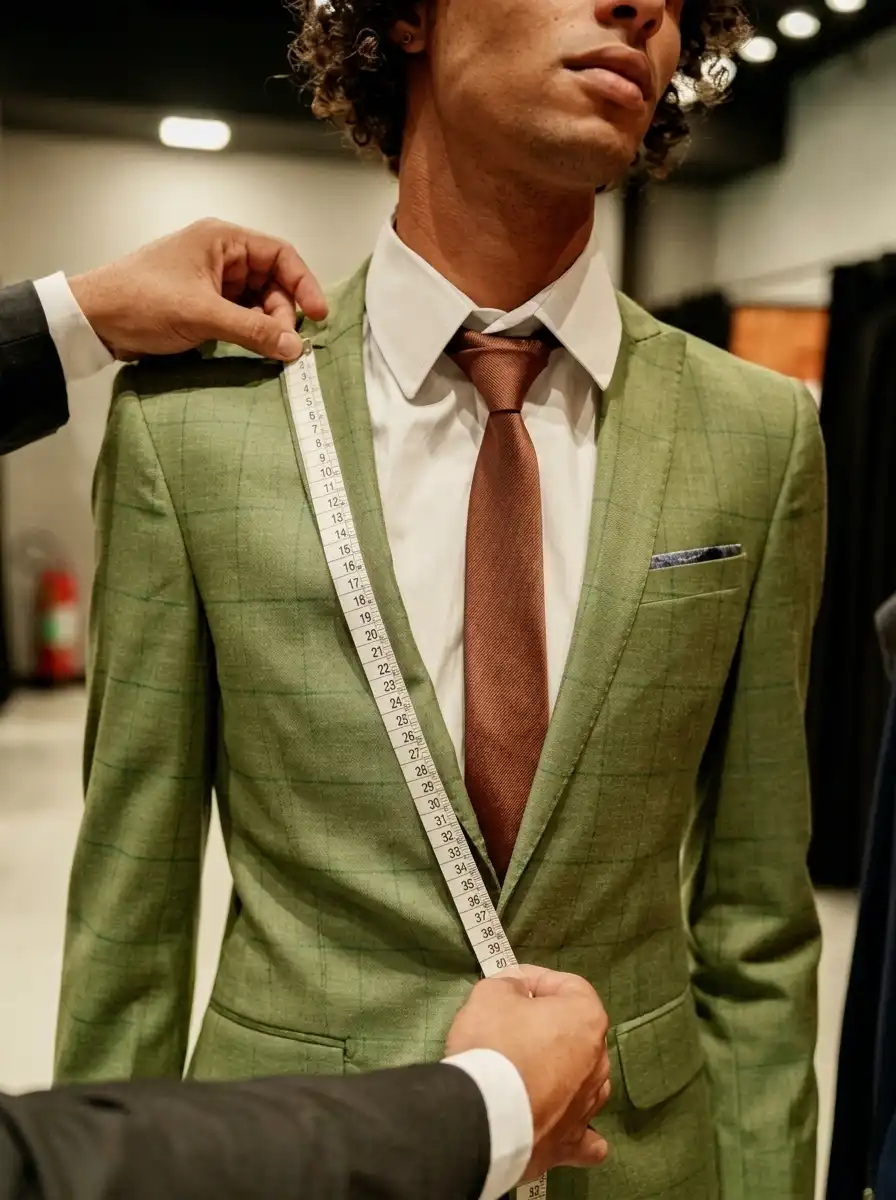
So the buying rule writes itself: spend your budget on the parts that cannot be altered, and let the tailor handle the parts that can.
At a glance: fix versus walk away
Fix at the tailor: waist suppression, sleeve length, minor hem length, button stance.
Walk away on the rack: wrong shoulders, a stubborn collar gap, a chest that X-creases when buttoned, a body length that misses your seat by inches.
Off the Rack, Made to Measure, or Bespoke?
Off the rack wins for most people, most of the time. A decent jacket runs $200 to $800 off the rack, and $60 to $100 of alterations usually closes the gap between standard proportions and yours. Made to measure, which starts around $800 to $1,000 for a quality jacket, adjusts a house pattern to your measurements and earns its premium when your proportions are not standard, longer arms, a bigger chest-to-waist drop, a sloped shoulder. True bespoke, a personal paper pattern cut from zero, typically starts between $2,000 and $3,000 and climbs past $5,000 at established houses. That is a lifetime-garment decision, not a Tuesday purchase.
| Route | Typical jacket price | Wait | Who it suits |
| Off the rack plus alterations | $200 to $800, plus $60 to $100 in tailoring | Same day, plus a week at the tailor | Standard proportions, first blazers, work wardrobes |
| Made to measure | From about $800 to $1,000 | Three to six weeks | Long or short arms, athletic chests, repeated alteration frustration |
| Bespoke | $2,000 to $5,000 and up | Two to four months, with fittings | Difficult proportions, or a once-a-decade garment |
One honest caveat about made to measure: it fixes measurement problems, not judgment problems. A $1,000 made-to-measure jacket in a shiny synthetic will still look like a shiny synthetic, so read the fiber content label before you fall for the process, the same way you would for any garment.
When the Rack Will Not Cooperate
Some bodies are simply not served by standard blocks, and no amount of fit-checking changes that. If you have a pronounced chest-to-waist drop from lifting, one shoulder visibly lower than the other, or you sit well outside the height range the sizes assume, off the rack will always be a compromise. That is not a failure of effort. It is the mathematical reality of cutting thousands of identical jackets. For those readers, made to measure stops being a luxury and starts being the practical option, because it prices in the alterations you would otherwise pay for anyway.
And if your only goal this season is an intentionally oversized silhouette, this guide’s rules are the wrong tool on purpose. The dropped-shoulder look runs on its own measurements, including a shoulder seam that can sit up to three inches past your bone, and we laid out those rules separately in our guide to how to style oversized blazers.
How to Buy a Blazer That Actually Fits Online
Start with the brand’s garment measurements, not the size letter, and compare them against a blazer you already own that sits well on your shoulders. Chest and shoulder measurements are the two numbers that matter, because those are the two points you cannot alter. Order two adjacent sizes when returns are free, and check the return policy before checkout, since a final-sale discount that doesn’t fit isn’t a discount. Run the same pre-checkout checks you would on any garment, and budget $40 to $60 for a tailor visit after the box arrives. That budget line is not a penalty. It is the last step of manufacturing.
If Your Situation Is Complicated
If you have one event and two weeks: buy off the rack this week, choose the size that fits your shoulders and chest even if the waist is boxy, and book a tailor visit for the same week. Waist and sleeve work is usually a five to seven day turnaround, which leaves you a buffer.
If you are rebuilding a work wardrobe: start with one navy or charcoal blazer that passes the shoulder test, and budget the alteration cost into the purchase price from the start. One shaped jacket beats three almost-right ones, every time.
If your size or shape has changed recently: do not buy for the body you had two years ago, and do not size down as motivation. Buy the jacket that fits your shoulders now. If that leaves the chest loose, a tailor can bring it in, and if every rack jacket fails the shoulder test, that is the moment made to measure earns its price.
Frequently Asked Questions About Blazer Fit
Where should the shoulder seams on a blazer sit?
The seam should end right at the edge of your shoulder bone, where your arm begins. If it droops onto your upper arm the blazer is too big, and if it pulls toward your neck or dents the sleeve head it is too small. Shoulders are the one part a tailor cannot realistically fix, so this is the first check and the dealbreaker.
How long should blazer sleeves be?
The sleeve should end at your wrist bone, letting a quarter to half inch of shirt cuff show when your arms hang at your sides. Sleeve shortening typically costs $20 to $50, so a perfect shoulder with a slightly long sleeve is still a buy.
How should a blazer fit when buttoned?
With the top button closed, the front should lie flat with no X-shaped crease radiating from the button. A common tailor’s test is that a flat hand slides comfortably between your chest and the fabric, while a closed fist moving around inside means the jacket is a size too big.
Is it worth getting a blazer tailored?
Yes, for the waist and sleeves. Taking in the sides runs about $35 to $55 and sleeve work $20 to $50, and both visibly change the jacket. Shoulder and collar reconstruction is expensive and rarely worth it, so those problems are reasons to walk away, not to tailor.
What is the X crease on a blazer?
It is the pair of diagonal pull lines that radiate from a closed button when the chest is too tight. Seeing it while standing in a relaxed posture means the jacket is too small through the chest, and letting out a little seam allowance rarely solves it, so size up and tailor the waist instead.
Buy for the Shoulders, Tailor the Rest
Here is the whole skill in one sentence: the rack supplies the shoulders, and the tailor supplies the rest. Once you internalize that, how to buy a blazer that actually fits stops being a guessing game and becomes a ten-minute inspection followed by a short visit to someone with a needle. Your next step is small. Try on one size larger and one size smaller than you think you are, run the six checks in order, and ask the tailor what the waist and sleeves would cost before you decide. The fit answer will surprise you more often than the price tag will.
Sources
Industry Sources
- just-style: UK online fashion returns hit 30% with ‘poor fit’ as top reason, accessed August 10, 2026.
- GQ: Why Fit Matters When Choosing a Suit, accessed August 10, 2026.
- GQ UK: How to get a suit tailored so you look like a Savile Row pro, accessed August 10, 2026.
- Men’s Wearhouse: Alteration Services Pricing, accessed August 10, 2026.
- The Black Tux: Custom vs. Off-the-Rack Suits: What’s Worth the Investment, accessed August 10, 2026.
- Stitch Fix: How To Tell If Your Blazer Fits, accessed August 10, 2026.
Additional Reading
- Permanent Style: How long should a jacket be?, accessed August 10, 2026.
- Gentleman’s Gazette: Suit Alterations: What A Tailor Can and Can’t Do, accessed August 10, 2026.
- Black Lapel: How Long Should My Suit Jacket Sleeves Be?, accessed August 10, 2026.