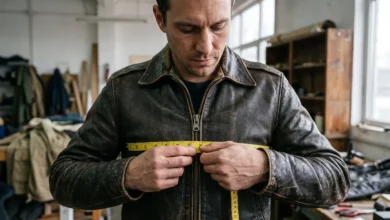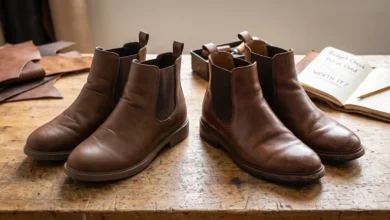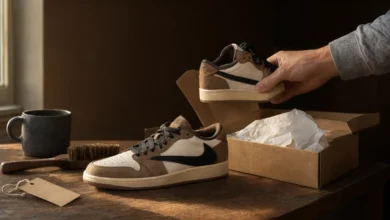

Most unworn clothing sitting in modern closets isn’t the result of poor personal taste or a tight budget. It happens because people evaluate garments as static images in a fitting room mirror rather than dynamic items subject to movement, washing, and real weekly routines. According to wardrobe utilization studies published in Harper’s Bazaar, most adults wear roughly 20% of their clothes 80% of the time, leaving the rest untouched due to fit friction, fabric discomfort, or lifestyle disconnects.
Learning the most common fashion buying mistakes to avoid before reaching the register keeps your closet functional and stops you from spending money on pieces that never leave the hanger. Building a reliable wardrobe starts with mastering the foundational rules in our guide to 5 reliable wardrobe essentials every woman needs, but keeping those pieces working depends on how carefully you evaluate new additions before checking out.
Common fashion buying mistakes include evaluating clothes in static fitting room poses, ignoring weak seam construction, misreading FTC fiber percentage tags, and purchasing for an imagined fantasy lifestyle. To avoid these traps, perform an in-store seam pull test, run a 3-step dynamic motion check, and apply the 3-item closet pairing audit before checking out.
1. Believing Fitting Room Mirrors: The First Fashion Buying Mistake to Avoid
Standing completely still with your shoulders back, stomach engaged, and hands at your side is a great pose for a photo. It is a terrible way to evaluate whether a garment fits your life.
Fitting rooms are engineered to sell clothes. The overhead lighting flattens shadows, mirrors are frequently angled backward by two to three degrees to elongate your silhouette, and you spend less than ninety seconds standing upright on a carpeted floor. The moment you step outside, sit at a desk, or reach for a subway handrail, the garment behaves completely differently.
A skirt that lies flat while you stand can ride up three inches the second you sit down. A jacket that looks tailored across the chest might bind across your shoulder blades when you reach for a steering wheel.
The Dynamic Motion Test: 3 Movements Before Checking Out
Before taking any garment to the register, run through three basic movements in the fitting room stall:
- The Chair Sit: Sit down on the bench. Check if the waistband digs into your ribs, if the lap gapes open, or if the fabric pulls tight across your thighs. A Relaxed Fit trouser should maintain breathing room, while a Straight Fit jean ought to bend without pinching your hips.
- The Overhead Reach: Raise both arms straight up as if reaching for a high shelf. Note how far the hem rises and whether the sleeve armholes bind. If the entire torso lifts past your waistline, the armholes are cut too shallow for your frame.
- The Stride Walk: Walk six wide paces back and forth. Ensure pencil skirts don’t bunch at the hip line and trousers don’t drag under your heels.
2. Ignoring Structural Seam Construction and Stitch Density
When an apparel brand cuts production costs, the fabric weight isn’t always the first thing to change. They save money on structural labor, using fewer stitches per inch, dropping reinforced backing seams, and relying on loose single-thread finishes on load-bearing joints.
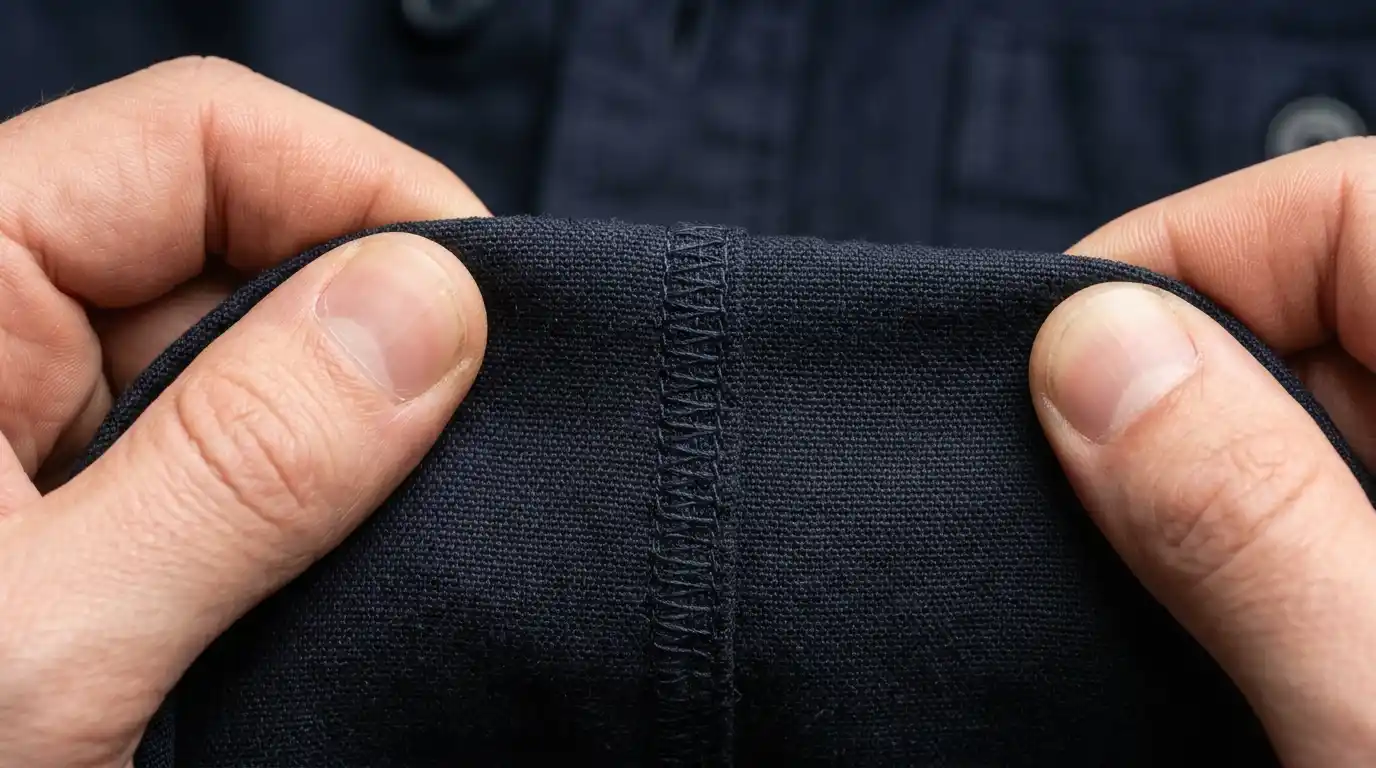
Load-bearing areas, side seams, armholes, crotch seams, and pocket joinery, require strong stitching. Single serged edges (where a zig-zag machine clips and loops thread over a raw fabric edge) work fine for lightweight hems. On a main seam, that single thread line breaks down quickly under tension.
How to Perform a 5-Second In-Store Seam Pull Test
Grasp the fabric on either side of a main side seam or back seam. Pull your hands apart gently with moderate pressure.
If you see the thread stretching, daylight showing between the stitches, or needle holes expanding in the cloth, put the garment back. That seam will pull apart or pucker after three trips through a washing machine.
| Seam Type | Visual Appearance | Load Capacity | Where You Want to See It |
| Lockstitch | Two straight, parallel rows of tight stitches | High | Pants side seams, jacket shoulders, armholes |
| French Seam | Encapsulated seam edge, clean inside and out | Moderate to High | Lightweight Satin, silk tops, delicate blouses |
| Bound Seam | Edge wrapped in bias tape binding | Very High | Unlined blazers, heavy coats, structural dresses |
| Single Serged | Loops wrapping raw edge without straight stitch | Low | T-shirt hems, lightweight knit edges only |
Evaluating seam architecture becomes even more critical when buying structured denim, where heavy fabrics put intense strain on rivets and fly joinery. For a deeper breakdown on denim stress points, read our technical guide on how to buy jeans that fit.
3. Misreading Fabric Tags and Fiber Mechanics
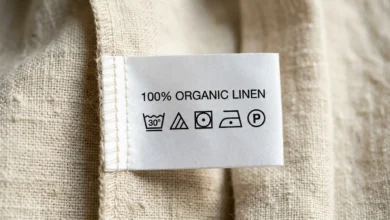
Fabric names printed on front display signs tell you how a garment looks. The small white tag sewn into the lower interior seam tells you how it will behave.
Under Federal Trade Commission (FTC) regulations (16 CFR Part 303), apparel manufacturers selling in the U.S. must disclose exact fiber content percentages by weight. A shirt marketed as a crisp cotton blouse might actually contain 70% polyester and 30% low-grade rayon, a combination that traps body heat, pills across the underarms, and holds onto body odors even after laundering.
+-------------------------------------------------------------+
|                      READING THE FTC TAG                    |
|                                                             |
|  [ DISPLAY SIGN ]               [ INTERIOR FTC TAG ]        |
|  "Breezy Linen Top"    --->     55% Linen / 45% Viscose     |
|                                 (Expect high drape,         |
|                                  moderate creasing,         |
|                                  cold-water wash only)      |
+-------------------------------------------------------------+
Decoding FTC Fiber Percentage Disclosures and Chemical Softeners
Be cautious with garments containing high percentages of unblended rayon or viscose. While these cellulosic fibers feel silky on the rack, they absorb moisture easily, lose structural integrity when wet, and shrink 5% to 10% if exposed to warm wash water.
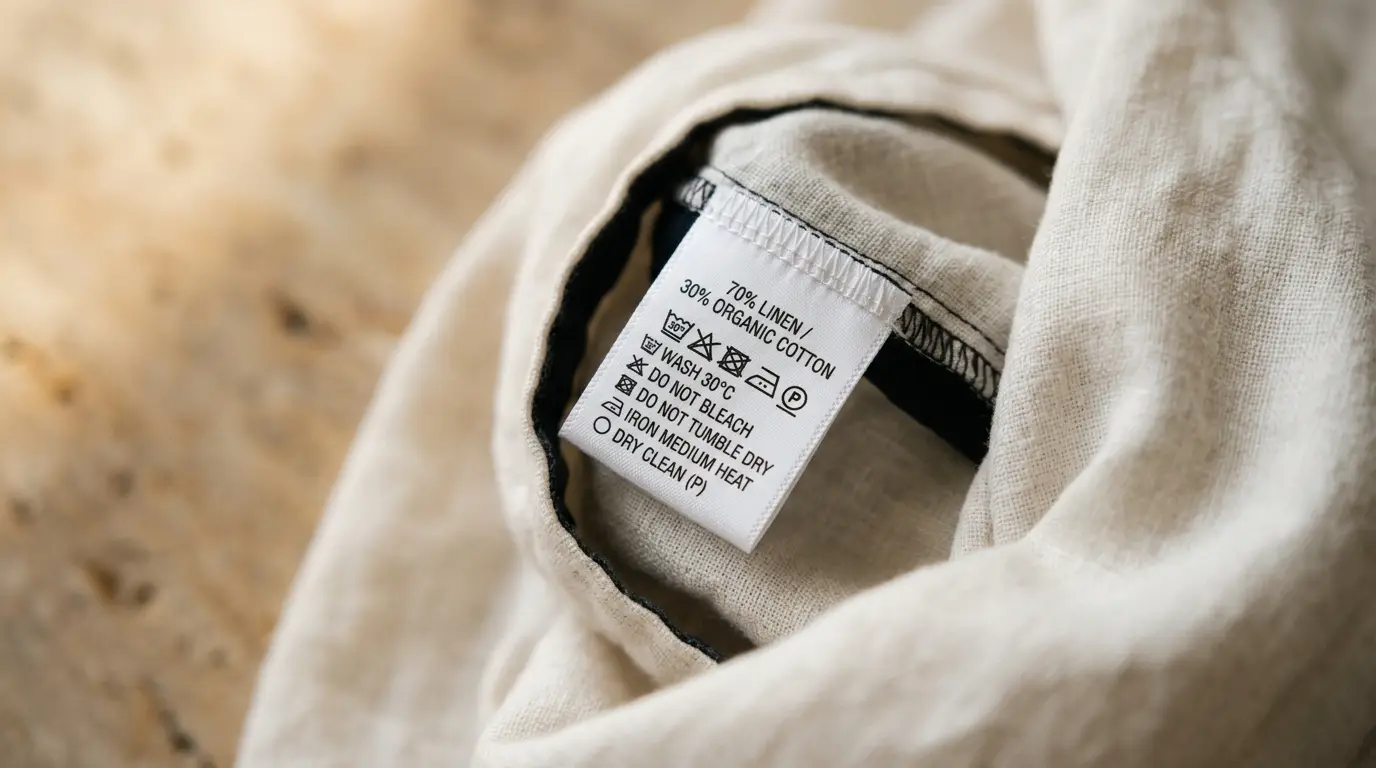
Manufacturers often treat low-density synthetic knits with temporary silicone softening washes. That sweater feels plush under store lighting, but that chemical coating washes away in two laundry cycles, leaving behind a scratchy, pilling fabric.
| Fiber Profile | Hand Feel on Rack | Washing Risk | Long-Term Durability |
| Cotton Poplin | Crisp, smooth, structured | Low shrinkage in cold water | Excellent; holds shape across years |
| Linen Blend | Textured, breathable, light | Moderate shrinkage; pucker risk | High; softens over time |
| Modal / Rayon | Ultra-soft, heavy fluid drape | High shrinkage; water-line watermarks | Moderate; prone to pilling |
| Polyester Knit | Slick, warm, wrinkle-free | Low shrinkage; heat-set risk | High elasticity; traps lingering odor |
4. Buying for an Imagined “Fantasy Lifestyle”
We all carry an idealized version of our weekly routine in our heads. That version goes to gallery openings, reads books on outdoor patios, and walks through farmer’s markets in crisp cream silk.
Your actual life might involve forty hours sitting at an office laminate desk, wrangling toddlers into a car, and walking a dog in rainy weather. When you shop for your fantasy schedule, you end up with a closet full of delicate midi dresses and satin trousers that sit untouched while you wear the same two pairs of washable pants every single week.
The 80/20 Reality Check: Audit your calendar for the past two weeks. Count the exact hours spent in office settings, running errands, lounging, and attending formal events. Your garment purchases should match those percentage splits.
The 3-Item Pairing Audit: Filtering Out Standalone Purchases
Never buy a top or pair of trousers unless you can immediately name three items already sitting in your closet that pair with it without requiring a new shoe or jacket purchase.
If a new piece requires you to buy a specific strapless bra, a different length coat, and specific footwear just to make one outfit work, it is not a practical garment, it is an expensive anchor pulling down your budget. Integrating new pieces into a structured capsule wardrobe framework prevents these standalone impulse purchases from cluttering your space.
5. Discount Bias: A Common Fashion Buying Mistake to Avoid
A red sale tag does strange things to human psychology. When a $200 blazer is marked down to $60, your brain stops evaluating whether the shoulder seams sit correctly or whether the color suits your skin tone. You focus entirely on the $140 you are “saving.”
   [ THE DISCOUNT BIAS TRAP ]

   Regular Price: $200
   Sale Price:    $60   ---> Brain perceives $140 "earned"

   REALITY CHECK:
   Does it fit your shoulders? NO.
   Will you pay $35 to tailor it? NO.
   Real Cost: $60 lost on an unworn hanger.
Discount bias is one of the most common causes of closet clutter. An ill-fitting blazer on sale isn’t a bargain, it’s an unworn item that cost you sixty dollars.
Before buying any marked-down piece, ask yourself one simple question: Would I buy this item at full price if I saw it on a standard display rack today? If the answer is no, step away from the clearance section.
6. Buying “Replacement Substitutes” Instead of the Target Piece
You go shopping for a structured black wool coat. The store doesn’t have your size, but they do have a navy acrylic coat on sale. It’s close enough, so you buy it.
Three weeks later, you still don’t have a black wool coat. You have a navy acrylic coat you don’t love, less money in your bank account, and the exact same original wardrobe gap waiting to be filled.
Settling for “close enough” substitutes fills your closet with second-choice garments. If a piece does not meet your criteria for fit, fabric, and color, leave it in the store and wait until you find the exact item you need.
7. Overlooking Care Label Friction and Maintenance Costs
Under FTC 16 CFR Part 423 (The Care Labeling Rule), clothing manufacturers must disclose at least one safe method of laundering on a permanent interior tag. Ignoring these instructions is the fastest way to ruin a good garment.
If a label reads “Dry Clean Only,” factor that ongoing cost into the garment’s price. A $50 viscose top that costs $12 to dry clean every three wears gets expensive fast.
[ GARMENT COST-PER-WEAR FORMULA ]

  Initial Price + (Laundering Cost per Wear x Total Wears)
  ---------------------------------------------------------
                         Total Wears
If your routine involves washing clothes on normal cycle and tossing them straight into a high-heat tumble dryer, buying delicate modal tees or hand-wash-only silk tops guarantees ruined hems and shrunk waistlines within a month. Match your clothing purchases to your actual laundry habits, not the habits you wish you had.
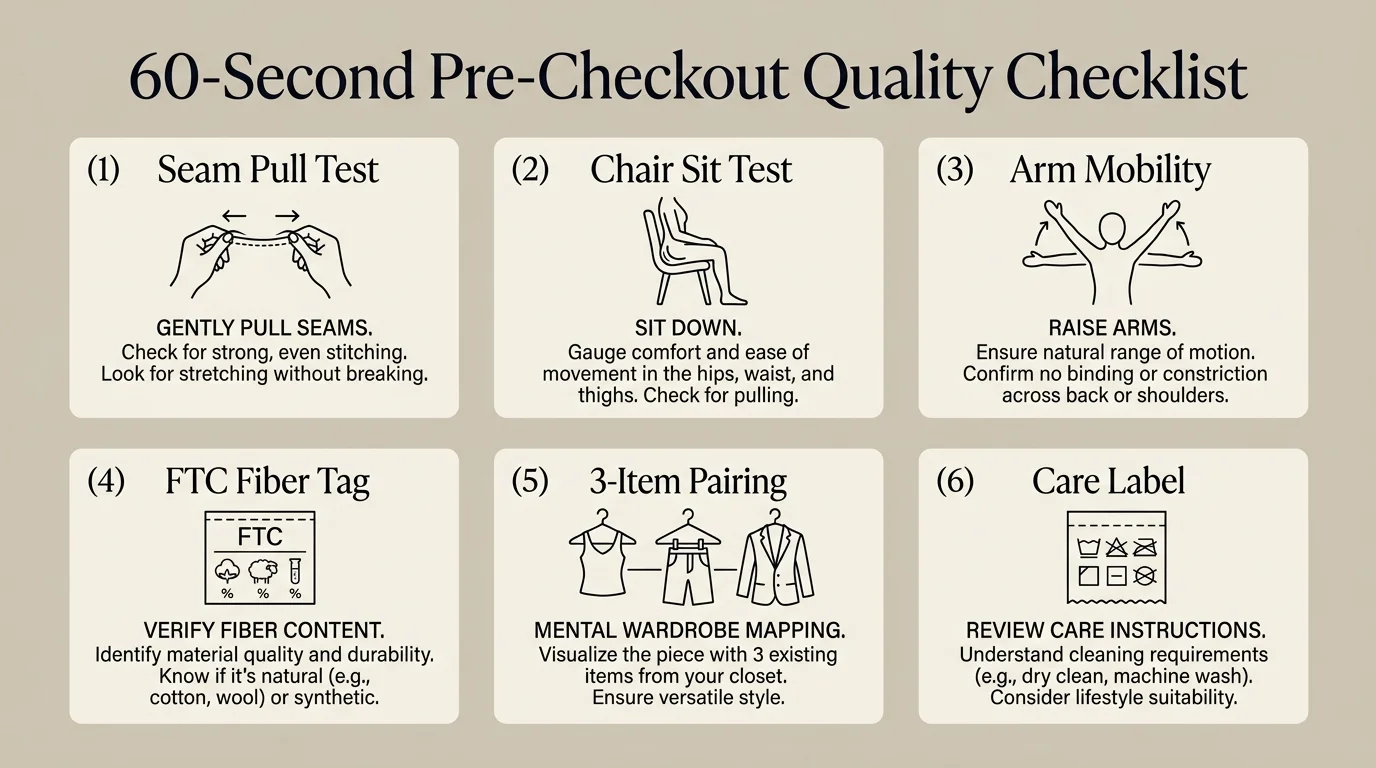
Fashion Buying Mistakes to Avoid: 60-Second Pre-Checkout Matrix
Use this 60-second evaluation checklist before taking any item to the register:
| Inspection Point | What to Test | Pass Criteria | Fail Red Flags |
| 1. Seam Tension | Pull side seam horizontally | Stitches stay tight, no thread gaps | Visible daylight between stitches |
| 2. Dynamic Fit | Sit down in a chair | Waistband stays comfortable, hem holds | Deep digging at waist, pulling across hips |
| 3. Arm Mobility | Lift arms overhead | Torso stays near waistline | Torso lifts past belly button |
| 4. Fiber Composition | Read internal FTC tag | High natural/breathable blend ratio | >50% low-grade rayon/viscose without structure |
| 5. Closet Pairing | Name 3 existing pieces | Works with 3 items in current closet | Requires new shoes or undergarments to wear |
| 6. Care Reality | Check laundering tag | Matches your actual laundry routine | “Dry Clean Only” for an everyday piece |
Who Standard Buying Advice Doesn’t Work For
General rules for buying clothes don’t apply to every single situation. There are two clear scenarios where standard pre-purchase advice changes:
- Vintage and Antique Clothing Collectors: Older garments (pre-1980s) often use different sizing scales, lack FTC fiber tags, and feature delicate natural fibers that require specialized handling or tailoring. Evaluating vintage pieces relies on structural restoration potential rather than off-the-rack perfection.
- Tailored Eventwear and Formalwear: Formal garments are built for specific posture, light movement, and targeted aesthetics rather than forty hours of weekly wear. In these pieces, tight structural boning, delicate silk crepes, and dry-cleaning care requirements are expected trade-offs for precise tailoring.
Frequently Asked Questions
What is the most obvious sign that a garment is poorly constructed?
The clearest sign is a load-bearing seam that pulls open under light hand tension. If you pull a side seam sideways and see thread gaps or stretching needle holes, the manufacturer used low stitch density to save money. Loose threads on buttonholes and unaligned patterns across main seams are also quick indicators of poor quality.
How can I tell if a fabric will shrink or pill after washing?
Check the internal fabric tag required by the FTC. Blends containing more than 30% rayon, viscose, or un-stabilized modal shrink easily if exposed to warm water or dryer heat. For knits, rub a small patch of fabric against itself for five seconds; if tiny fuzz balls form immediately, the yarn uses short-staple fibers that will pill quickly.
Why do clothes look better in the fitting room than when I get home?
Fitting rooms use angled mirrors, soft downlighting, and controlled environments that hide fabric drag lines and body shadows. At home, natural lighting and flat mirrors reveal how the garment actually sits during normal posture and movement.
Is 100% polyester always a sign of bad quality?
Not always. Technical woven polyesters used in weather-resistant outerwear, pleating, and activewear offer durability and moisture management that natural fibers can’t match. However, cheap, glossy polyester knits used in everyday tops trap heat, hold body odor, and feel scratchy against the skin.
How do I stop impulse buying on the clearance rack?
Never buy a sale item simply because the markdown looks huge. Ask yourself if you would buy the item at full price if it sat on a regular display rack. If the answer is no, or if you can’t name three items in your current wardrobe that pair with it immediately, leave it in the store.
Final Verdict: How to Build a Friction-Free Closet
Stopping bad clothing purchases comes down to replacing emotional impulse buying with a physical inspection process. When you test how a garment moves, read its FTC fiber tag, check its seam strength, and verify that it fits your actual weekly schedule, you stop wasting money on clothes that sit unworn.
Step away from the register whenever a garment fails a physical test, requires an inconvenient laundry routine, or relies on a discount tag to look attractive. A smaller closet filled with well-constructed, easy-to-wear pieces will always serve you better than racks of discounted items you never wear.
Sources
Official Sources
- Textile Fiber Products Identification Act (16 CFR Part 303), Federal Trade Commission (FTC) | Access Date: July 2026 | Source Tier: Tier 3
- Care Labeling of Textile Wearing Apparel & Certain Piece Goods (16 CFR Part 423), Federal Trade Commission (FTC) | Access Date: July 2026 | Source Tier: Tier 3
Research Sources
- Garment Care Symbols and Fiber Longevity Analysis, Textile Preservation Institute / Selvane | Access Date: July 2026 | Source Tier: Tier 4
Industry & Editorial Sources
- Sustainable Closet Architecture and the 80/20 Wardrobe Rule, Harper’s Bazaar (US) | Access Date: July 2026 | Source Tier: Tier 5
- Textile Inspection Guide and Commercial Apparel Quality Control Checklist, Pro QC International | Access Date: July 2026 | Source Tier: Tier 5
- Factors Affecting Clothing Fit and Dynamic Comfort in Apparel, Textile Learner | Access Date: July 2026 | Source Tier: Tier 5