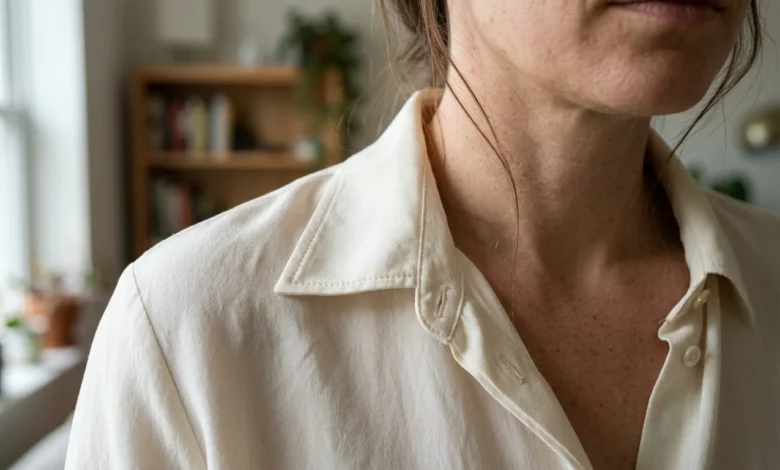
Finding a silk blouse that survives more than a single season of wear requires looking past the hanger sheen. A silk shirt often looks fluid under retail lighting, but poor weave density or weak seam construction reveals itself after the first trip to the dry cleaner or gentle hand wash. Knowing what to look for when buying silk blouses saves you from overpaying for sheer, fragile garments that pull apart at the armholes or show water spots permanently.
Evaluating silk comes down to weight, weave structure, seam finishing, and fit allowance. Brands across price points from direct-to-consumer labels like Quince and Cuyana to heritage fashion houses like Equipment and L’Agence use vastly different fabric weights. A higher price tag does not automatically guarantee a durable momme weight or pure mulberry fibers.
By focusing on physical textile metrics rather than brand reputation, you can select a silk blouse that drapes clean, stays opaque, and holds its shape through years of regular wear.
To evaluate quality when buying a silk blouse, follow a 4-step technical protocol: 1. Check the momme weight, targeting 16 to 22 momme for opaque, durable everyday wear; 2. Identify the weave type, choosing matte crepe de chine for low-maintenance drape or lustrous charmeuse for formal structure; 3. Inspect internal seam construction, insisting on French seams or bias-bound edges that prevent fraying; and 4. Verify fit allowance, ensuring a minimum of 2 inches of ease across the upper back and armholes to prevent seam slippage.
Rule 1: Measure Fabric Weight with the Momme Index
In silk textiles, fabric weight is measured in momme (pronounced “moe-mie”), abbreviated as mm. One momme represents the weight in pounds of a piece of silk 100 yards long by 45 inches wide. This corresponds to approximately 3.75 grams per square meter. Unlike cotton or wool, which use ounces per square yard or GSM indices, momme directly reflects thread density and fiber count.
Lightweight silks fall between 12 and 15 momme. While suitable for delicate scarves or sheer overlays, a 12 momme silk blouse requires a camisole underneath and catches easily on jewelry. Mid-weight silks between 16 and 18 momme form the practical standard for workwear and daily styling. They offer natural opacity without feeling heavy. Heavyweight silks between 19 and 22 momme provide rich drape, exceptional tensile strength, and complete opacity even in ivory or cream shades.
When reviewing product details online or reading interior tags, look for explicit momme disclosures. If a brand omits the momme count, test the opacity by holding the fabric up to natural light. If you can clearly see the outline of your hand behind a single layer of colored silk, the weight is likely below 16 momme. Learning how to read clothing labels helps you identify whether a manufacturer discloses fiber density or hides behind vague descriptors like pure silk.
At a Glance: Momme Weight Guidelines for Blouses
- 12 to 14 Momme: Sheer and featherweight. Requires a base layer; prone to seam stress under movement.
- 16 to 18 Momme: Semi-opaque to opaque. Ideal balance of fluid drape and everyday breathability.
- 19 to 22 Momme: Completely opaque and substantial. High tear resistance and long-term durability.
Rule 2: Select the Weave That Matches Your Use Case
The way silk threads are woven dictates a blouse’s surface texture, luster, and resistance to water spotting. Four primary weaves dominate modern apparel:
Crepe de Chine
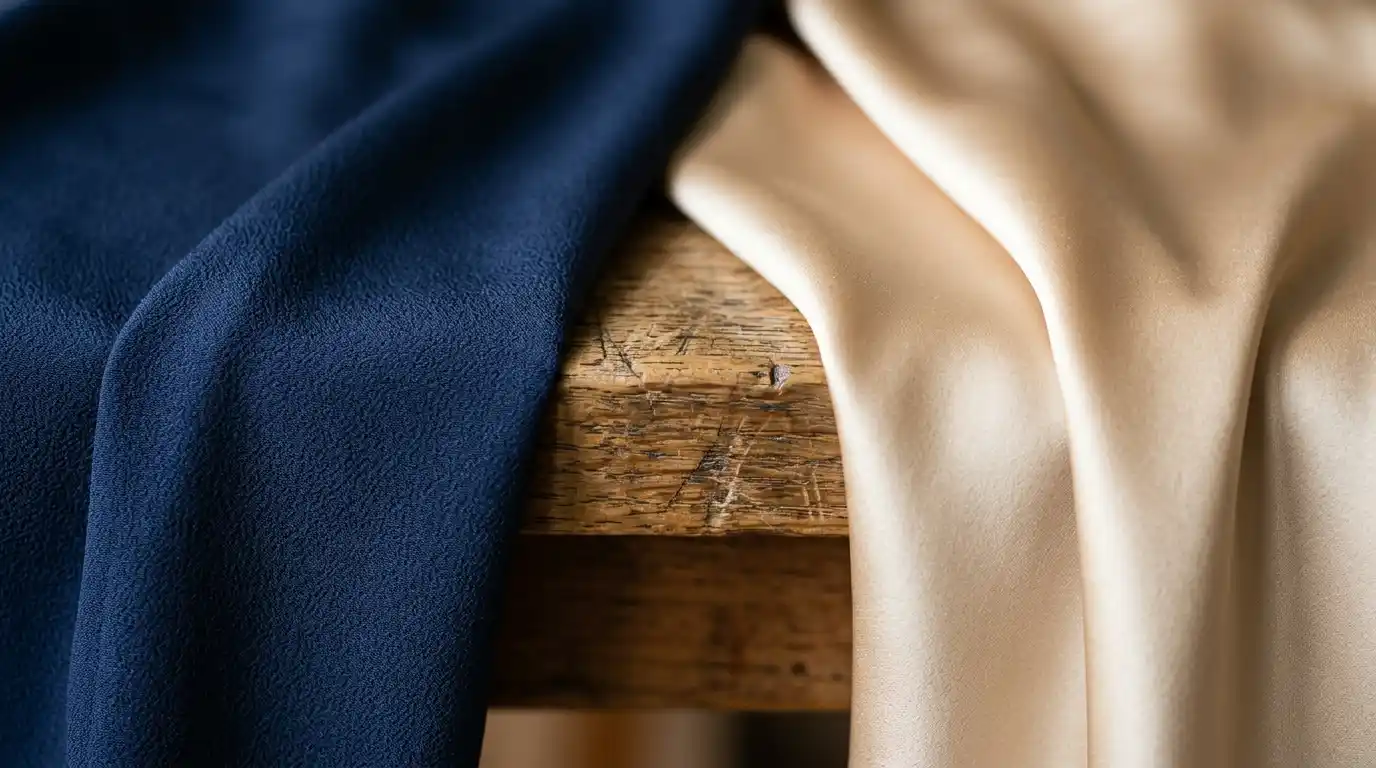
Woven with high-twist yarns in alternating directions, crepe de chine features a subtle pebbled texture and a soft, matte sheen. It drapes naturally along body contours without clinging. Because of its textured surface, crepe de chine hides minor fabric slubs and resists liquid water marking better than glossy weaves. An 18 momme crepe de chine shirt is one of the most versatile professional garments you can own.
Silk Charmeuse
Charmeuse uses a satin weave construction, creating a reflective satin finish on the front face and a dull matte finish on the reverse. It offers liquid-like drape and intense color saturation. However, charmeuse is sensitive to abrasion, friction pilling, and water marks. If you choose charmeuse, aim for 19 to 22 momme to ensure the satin surface has enough yarn density to resist snagging.
Silk Habotai and Georgette
Habotai (often called plain silk) is a smooth, lightweight plain weave that feels soft against the skin but offers minimal elasticity or drape variance. Georgette uses twisted creped yarns in a sheer, springy plain weave. Both are commonly used in layered blouses or summer shirts. Understanding these textile characteristics builds on the principles outlined in our technical guide to the best fabrics for hot weather.
Rule 3: Inspect Seam Construction and Stitching Density
Silk fibers are smooth and straight, which means low-quality seams can slide apart under tension—a flaw known in textile science as seam slippage. When evaluating a blouse in store or upon home delivery, turn the garment inside out to examine the internal construction.
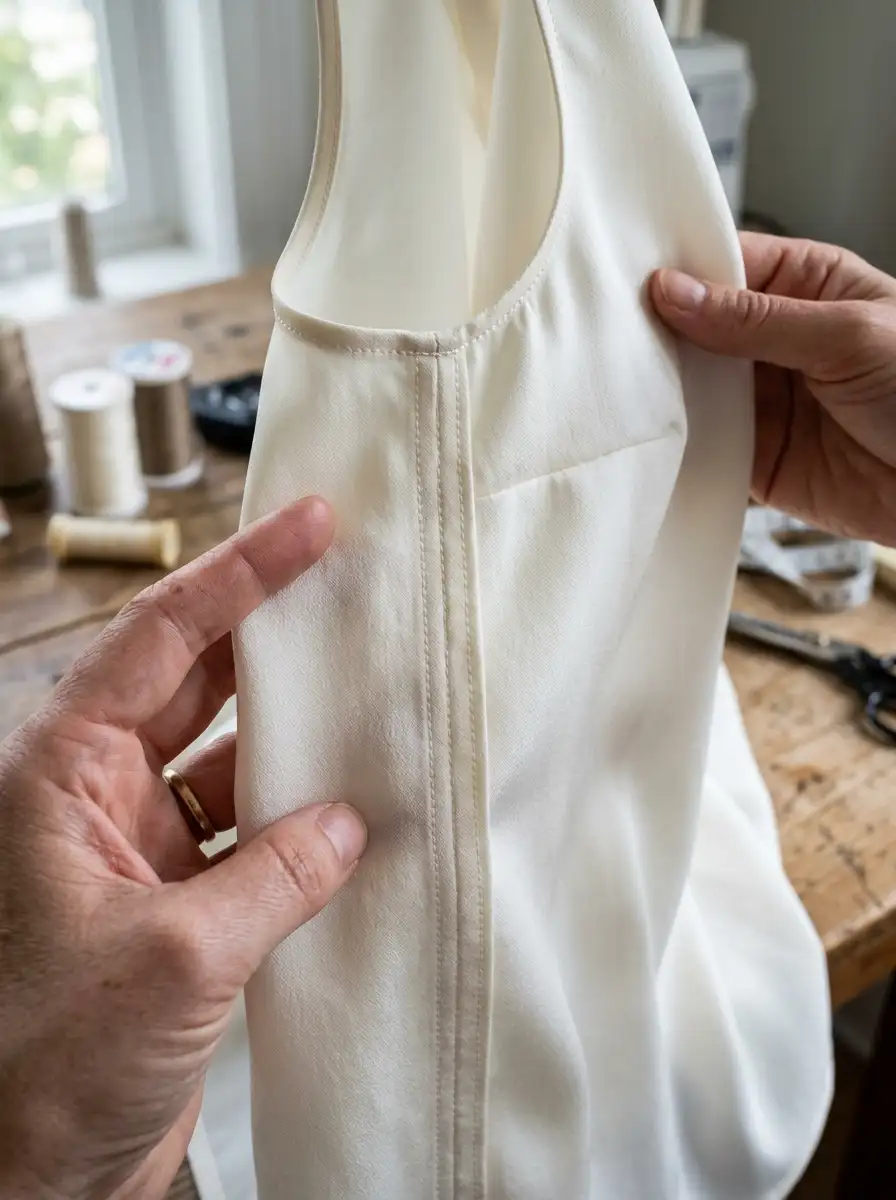
High-quality silk blouses feature French seams. A French seam encloses the raw fabric edges inside a double-stitched fold, leaving zero exposed threads inside the shirt. This prevents fraying during cleaning and eliminates raw edge friction against your skin. Budget silk garments frequently use basic 3-thread overlock stitching. Overlocked edges on lightweight silk often pull loose after repeated dry cleaning cycles.
Check the stitch length along the shoulder seams and armhole curves. Quality silk tailoring requires 12 to 15 stitches per inch (SPI). Coarse stitching with fewer than 10 stitches per inch creates wide needle punctures that weaken the fine silk yarns, increasing the risk of tearing along stress points. Inspecting these physical details before purchase prevents common fashion buying mistakes that lead to premature garment failure.
Rule 4: Verify Fit Allowance and Movement Ease
Silk fabric possesses virtually zero natural stretch unless blended with elastane. Buying a silk blouse in your exact body measurements leads to strain across the back, armholes, and bust.
When trying on a blouse, perform three movement checks:
- Extend both arms straight forward. The fabric across the upper back should feel taut but must not pull tightly against the shoulder blades.
- Lift both elbows overhead. The hem of the blouse should remain stable without pulling harshly at the side seams.
- Hug yourself tightly. Watch for pulling diagonal wrinkles around the armscye (armhole seam).
A well-patterned silk blouse requires a minimum of 2 inches of functional ease through the chest and upper back relative to your body measurements. For relaxed or tailored fits, 3 to 4 inches of ease ensures the fabric drapes cleanly over body contours without placing mechanical stress on the delicate silk yarns.
Silk Blouse Specifications Matrix
| Silk Weave | Recommended Momme | Surface Finish | Opacity Level | Best Practical Use
|
|---|---|---|---|---|
| Crepe de Chine | 16 to 22 mm | Subtle matte pebble texture | Opaque (18+ mm) | Daily workwear, layered suiting, year-round capsules |
| Silk Charmeuse | 19 to 22 mm | High-gloss satin face | Opaque (19+ mm) | Formal evening wear, tailored occasion blouses |
| Silk Habotai | 14 to 16 mm | Smooth plain weave | Semi-sheer to opaque | Summer shirts, soft camisole linings |
| Silk Georgette | 12 to 14 mm | Grainy sheer crepe | Sheer | Layered blouses, romantic sheer silhouettes |
Who This Garment Isn’t For
A 100 percent silk blouse is not the ideal choice for every lifestyle or working environment. If your daily routine involves high physical movement, frequent contact with rough equipment, or an environment where grease or ink stains are common, silk requires more maintenance than it returns in comfort. Additionally, if you prefer low-effort laundering and decline to hand wash or professional dry clean your clothes, synthetic alternatives like high-grade technical cupro or modal blends offer similar drape with machine-wash convenience.
Real-World Shopping Scenarios
If You Need a Blouse for Daily Office Wear: Prioritize an 18 to 20 momme silk crepe de chine shirt in a neutral shade like navy, ivory, or charcoal. Crepe de chine resists wrinkling under blazer sleeves and maintains professional opacity under bright office lighting. Look for concealed button plackets and French seam finishing to ensure long-term durability through weekly wear.
If You Prefer Low-Maintenance Home Care: Seek out washable silk blouses crafted from 19 momme sand-washed silk. Sand-washing uses micro-abrasive treatments to soften the silk fibers, creating a suede-like matte finish that tolerates delicate hand washing at home without water spotting or losing its soft texture.
If You Want an Evening Statement Piece: Select a 22 momme silk charmeuse blouse in a jewel tone. The heavier momme weight ensures the liquid satin sheen holds its structure without clinging or showing static cling against trousers or skirts.
Frequently Asked Questions About Buying Silk Blouses
What momme weight is best for a silk blouse?
A momme weight of 18 to 22 momme is the recommended sweet spot for a durable, opaque silk blouse. Weights in this range offer excellent drape, high tensile strength, and complete coverage without requiring an undershirt.
Is silk crepe de chine better than silk satin for everyday wear?
Yes. Silk crepe de chine features a matte, pebbled surface that resists water spots, hides minor surface abrasions, and holds up better to frequent wear than glossy silk satin or charmeuse.
How can you tell if a silk blouse is real silk or polyester?
Check the inner fiber content label required under federal regulations. You can also inspect the fabric warmth and touch: genuine silk warms quickly against the skin and exhibits a multidimensional luster, whereas synthetic polyester feels slick, cold, and reflects static light uniformly.
Should you size up when buying a silk blouse?
Sizing up by one size is often smart if you are between sizes or broad-shouldered. Because 100 percent silk fabric has no natural elastane stretch, extra ease prevents tension along the back seams and armholes.
Last Words
Investing in a silk blouse comes down to inspecting physical material standards rather than relying on price tags or brand marketing. By choosing an 18 to 22 momme weight, selecting a practical weave like crepe de chine, and verifying French seam construction with adequate movement ease, you secure a timeless wardrobe piece that maintains its shape, color depth, and elegant drape over years of wear.
Sources
- Federal Trade Commission: Threading Your Way Through the Labeling Requirements Under the Textile and Wool Acts, Access Date: August 5, 2026
- eCFR: 16 CFR Part 303: Rules and Regulations Under the Textile Fiber Products Identification Act, Access Date: August 5, 2026
- Federal Trade Commission: 16 CFR Part 423: Care Labeling of Textile Wearing Apparel and Certain Piece Goods, Access Date: August 5, 2026
- Industry Sources:
- Selvane: The Best Silk for Blouses: A Guide to Weight, Drape, and Opacity, Access Date: August 5, 2026
- The Silk Route: Best Silk for a Blouse: A Connoisseur’s Guide to Fabric and Drape, Access Date: August 5, 2026
- Yardblox: What Is Momme in Silk? Silk Weight, Quality and Fabric Guide, Access Date: August 5, 2026