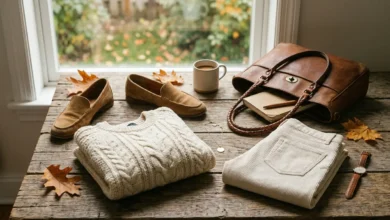

It is the second Tuesday of March and your 8 a.m. commute starts at 44 degrees, but the walk home at 3 p.m. happens at 68. The wool coat is too much by lunch. The linen shirt is a lie until May. Somewhere in between sits the actual spring, and most closets are not built for it. A spring capsule wardrobe checklist for beginners exists to fix exactly that gap, with pieces chosen for the swing instead of the extremes.
The version we build here starts with what you already own. A capsule that begins as a shopping list repeats the mistake that filled the closet in the first place, so the audit comes first, the checklist second, and the wallet last.
What follows is the full method: a 25-slot checklist in real spring fabric weights, a palette rule that keeps outfits cohesive, a two-week pilot that exposes the true gaps, and a channel order for buying only what is actually missing.
Quick answer: To build a spring capsule wardrobe, follow a four-step process: 1) audit your closet and keep only pieces that pass a three-outfit test, 2) set a palette of about 70 percent anchor neutrals and 30 percent personality, 3) map what you kept onto a 25-slot checklist in spring weights (110 to 160 GSM wovens and knits, a 10 to 12 oz denim, one trench-weight layer), and 4) buy only the slots that stay empty after a two-week 3-3-3 pilot, thrift first for outerwear and knits.
Why Spring Is the Hardest Season to Dress For
Spring fails wardrobes on weight, not style. A closet stocked with summer weights and winter weights has no middle, so every March outfit is either a sweatbox or a freezer. The fix is a thin middle layer of pieces in transitional weights, and that middle is exactly what this checklist builds.
There is a second reason a capsule makes sense right now. Between 2000 and 2015, clothing production doubled while the number of times a garment gets worn fell by 36 percent, according to the Ellen MacArthur Foundation’s textiles research, a figure the UN Environment Programme cites in its own sustainable fashion reporting. The average closet got bigger and got worn less. A spring capsule is the personal counter-move: fewer pieces on the rail, each one earning three or four outfits, so the wear count goes back up even as the hanger count goes down.
That is also why cost per wear, not sticker price, runs through every recommendation below. A spring piece worn twice a week for ten weeks beats a bargain worn once, every single time.
Step 1: Audit Your Closet Before You Buy Anything
Pull everything out, not just the spring shelf. Seeing winter and summer together is the only way to spot the missing middle, and it is the same honest-closet-audit starting point we use in every wardrobe build on this site.
Sort into three piles: keep, donate, and a maybe box that leaves the bedroom for thirty days. Then run the keep pile through one test: every piece must pair with at least three other pieces you actually own. A satin blouse that only works with one skirt is not a capsule piece, however pretty it is. Caroline Joy, the wardrobe stylist behind Un-Fancy, built her entire 37-piece method on this exact instinct, keeping only the pieces she genuinely reached for and rebuilding season by season.
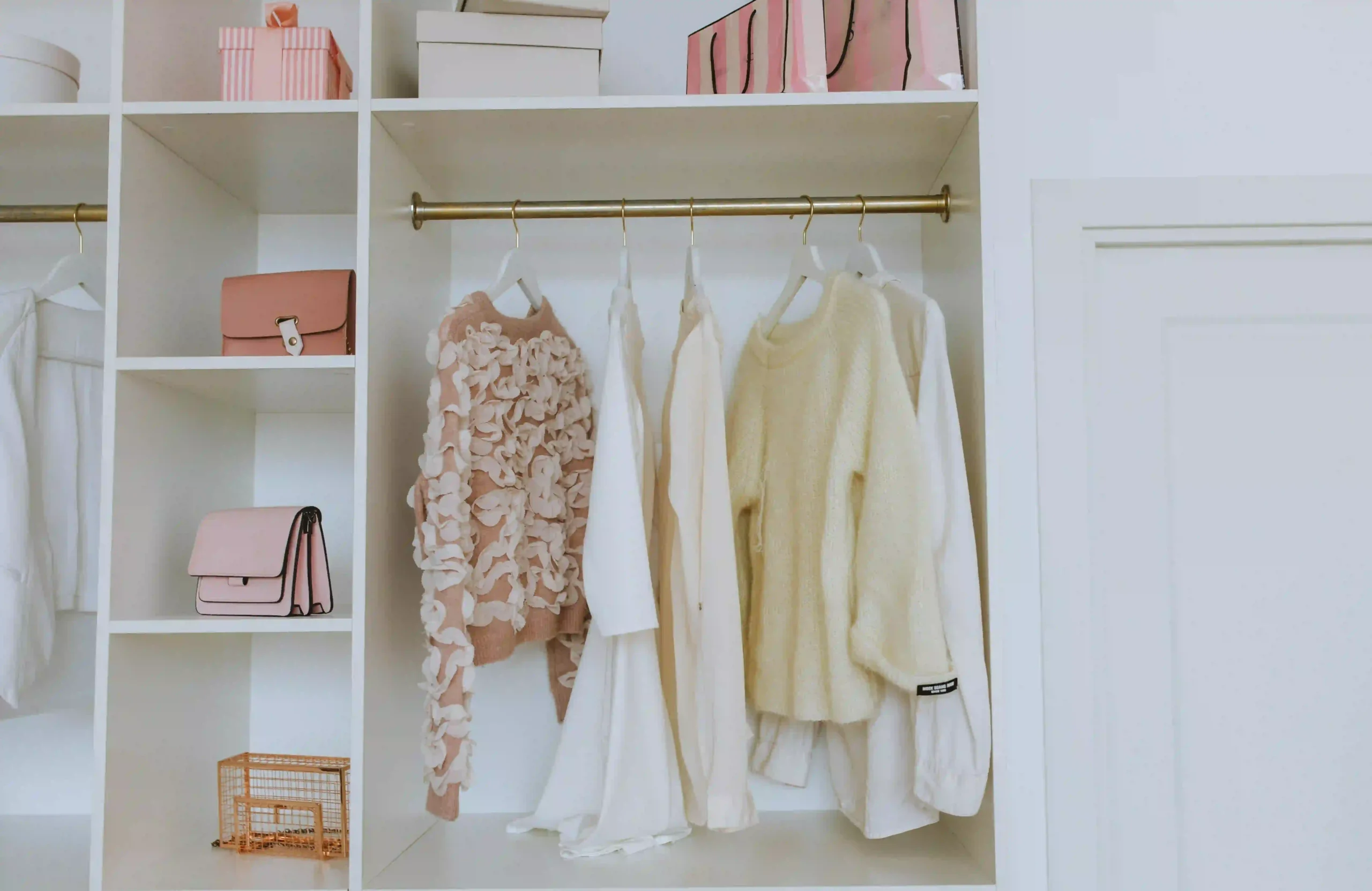
Two audit rules save beginners the most money. First, store the winter heavyweights out of sight so they stop competing with spring. Second, do not replace anything yet. The audit tells you what you have, and the pilot in a later section tells you what is truly missing. The full audit and editing method lives in our guide on how to build a capsule wardrobe if you want the longer version.
Step 2: Set a Palette With the 70/30 Rule
The 70/30 wardrobe rule keeps about 70 percent of your closet in classic, functional basics and reserves the remaining 30 percent for statement and personality pieces. In a spring capsule, the 70 percent is your anchor neutrals and the 30 percent is where the season shows up.
Spring anchor neutrals that work across most US climates: cream, stone, navy, tan, and one or two denim washes. They read lighter than winter’s black and charcoal without going fragile. For the 30 percent, spring 2026’s usable accents are soft and slightly washed: frosted mint (the same Pantone 12-5703 family we mapped in our mint green dress coverage), sage, butter yellow, and a pale sky blue. Pick two accents, not six. Two accents that both sit well with every anchor neutral give you variety; six give you orphan pieces.
One last cohesion rule: pick a single metal family for hardware, so belts, bag hardware, and jewelry agree with each other. It is the same dominant-over-accent ratio we apply to mixing gold and silver jewelry, just moved up a level from the wrist to the whole outfit.
Step 3: Fill Your Spring Capsule Wardrobe Checklist From What You Own First
Write the 25 slots below on a list, then fill each slot with something from the keep pile before you consider buying. Most beginners are surprised to find 15 to 18 slots already covered. The count matters less than the coverage: Project 333 runs a whole season on 33 items including jewelry and shoes, Un-Fancy builds 37-piece seasonal capsules, and most capsule guides land between 30 and 40 pieces. Twenty-five clothing and shoe slots is simply a workable single-season default for a beginner, and the number should follow your audit, never the other way around.
Spring capsule at a glance
- 25 slots: 7 tops, 6 bottoms, 4 layers, 1 dress, 4 shoe pairs, 3 accessories
- Palette: 70 percent anchor neutrals, 30 percent personality, two accents maximum
- Weights: 110 to 160 GSM wovens and tissue knits, 10 to 12 oz denim, one trench
- Order of operations: audit, pilot, then thrift outerwear before buying anything new
Tops (7 slots)
- Two tees, one white and one in an anchor neutral, in a midweight jersey around 180 to 220 GSM so they hold structure and never go sheer.
- One Breton or striped top, the quiet pattern that counts as a neutral.
- One cotton poplin button-down in the 110 to 140 GSM range, crisp without stiffness.
- One satin or washable silk blouse for office days and evenings, 120 to 150 GSM for satin or 18 to 22 momme if you go real silk.
- One fine-gauge merino or modal crew, a tissue-weight knit that layers under everything without bunching.
- One cardigan sweater, hip-length, for cool offices and May evenings.
- One statement top that carries your 30 percent, in one of your two accents.
Bottoms (6 slots)
- Wide-leg jeans in a mid-weight 10 to 12 oz denim that bridges March wind and May sun.
- Straight fit jeans in a darker wash for business casual days where your office actually accepts denim.
- Tailored trousers in crepe or poplin, the workhorse of the work week.
- An A-line midi skirt that takes a knit early and a tee later.
- A linen-blend pant, 130 to 160 GSM, held in reserve for late spring.
- A relaxed cotton twill or chino pant in tan or olive for weekends.
Layers and outerwear (4 slots)
- A trench coat, the anchor of the whole season. New, a Uniqlo trench runs 129.90 dollars; thrift first, because outerwear keeps its structure for years.
- A denim jacket for the weeks the trench feels like too much.
- An unstructured blazer that treats a tee like a finished outfit.
- A packable rain shell or utility jacket for the wet weeks, because April does not check your calendar.
One dress
- A shirt dress or wrap dress. The wrap silhouette does real waistline work through size and shape changes, and a shirt dress layers over a tee in March before flying solo in May.
Shoes (4 pairs)
- White sneakers, ballet flats, loafers, and an ankle boot on a two to three inch block heel. These four are the spring subset of our essential shoes for a capsule wardrobe blueprint, and the block heel matters: it is the pair that makes cropped trousers and the midi skirt read finished.
Accessories (3 slots)
- A leather belt, because waistline definition belongs in construction and hardware, not compression.
- A silk scarf, the cheapest way to add a third accent without buying a third accent top.
- A structured tote or shoulder bag in tan or navy that agrees with your chosen metal family.
The Fabric Weights That Make Spring Layering Work
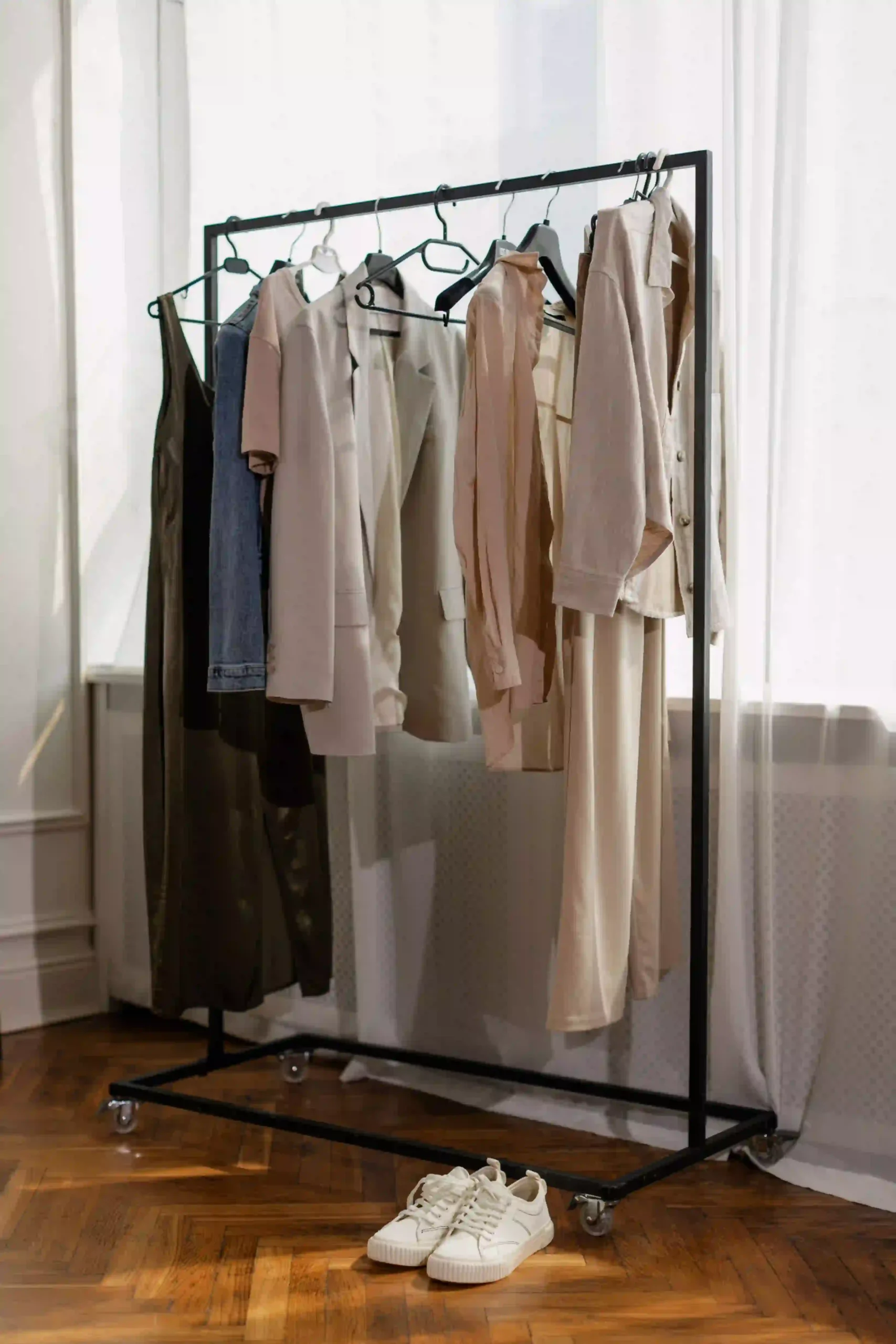
Fiber name gets all the attention, but weight is the variable that decides whether a piece belongs in spring. A stiff 200 GSM poplin is a winter shirt; a 120 GSM one is a spring shirt. Here is the reference range we use across the site, applied to the checklist above.
| Fabric | Target weight | The spring job it does |
|---|---|---|
| Cotton poplin | 110 to 140 GSM | Crisp button-downs that breathe through a warm afternoon |
| Linen blend | 130 to 160 GSM | Late-spring trousers with enough body to hold a pressed line |
| Tissue merino or modal knit | 120 to 160 GSM | The under-trench layer that never bunches at the armhole |
| Tee jersey | 180 to 220 GSM | A white tee that reads structured instead of sleepwear |
| Denim | 10 to 12 oz | Jeans that handle March wind without turning into May armor |
| Satin, or silk for blouses | 120 to 150 GSM, or 18 to 22 momme | Office polish that drape-qualifies by weight, not by shine |
| Cotton gabardine, trench | Mid-weight, wind-resistant | The outer layer that makes everything else usable in April |
When the season tips from swing weather into real heat, the late-spring half of this logic lives in our guide to the five best fabrics for hot weather, which picks up exactly where this table stops.
Test-Drive the Capsule With the 3-3-3 Rule Before You Spend
Before buying a single gap, run the 3-3-3 rule, also called the 333 styling method: pick three tops, three bottoms, and three pairs of shoes from your keep pile and mix them into as many outfits as possible for two weeks. The Everygirl, which has covered the method in depth, describes it as a bite-sized capsule, and that is precisely its value here. It is a pilot, not a promise.
The pilot converts imagined gaps into proven ones. You may have assumed you needed a new blazer and discover the real hole is a third pair of shoes, or that your poplin shirt only works with one bottom and fails the three-outfit test after all. Buy only what the two weeks proved missing. If you enjoy the pilot, the longer cousin is Courtney Carver’s Project 333, dressing with 33 items for three months, which has anchored the minimalist capsule conversation since Carver launched it on bemorewithless.com.
How to Buy the Missing Slots Without Blowing the Budget
When a slot stays empty after the pilot, buy in channel order. The sequence does more for the budget than any single store choice.
| Buy this | Try first | Why the order works |
|---|---|---|
| Trench and blazers | Thrift and resale, including thredUp and local consignment | Outerwear keeps its structure for years, and resale prices sit at a fraction of retail |
| Knits and cardigans | Secondhand, then off-price | Pilling shows on a used knit, so you can judge condition in person before paying |
| Trousers and shoes | Off-price, like Nordstrom Rack, TJ Maxx, and Banana Republic Factory | Last season’s cut costs less and fits exactly the same |
| Tees, poplin shirts, basics | Mass retail and direct brands: Uniqlo, Old Navy, Target, Quince | These are the low-risk new buys, and Quince staples start around 16 dollars |
| Silk | Direct brands and off-price | Quince washable silk blouses run 50 to 80 dollars against 200-plus dollar department store equivalents |
Run the cost-per-wear math on anything that feels expensive. A 130 dollar trench worn thirty days a spring for four springs lands near a dollar a wear. A 25 dollar statement top worn three times is over eight dollars a wear, which makes the trench the budget buy and the top the splurge, whatever the tags say.
Two final buying rules. Read the fiber content and care label before checkout, because a dry-clean-only spring blouse carries a cost the tag does not show. And treat the return policy as part of the price: a final-sale discount that does not fit was never a discount.
Who This Checklist Isn’t For
A spring capsule is a genuinely wrong tool in a few situations, and saying so saves you a frustrating season. If your job runs on a uniform or a strict dress code, the checklist’s casual half has nowhere to go. If you live a dual-climate life with a winter in one place and a spring in another, your real project is two lean wardrobes, not one transitional one.
If you love maximal variety and find repetition draining, a capsule will read as a cage, and your energy is better spent on a mixing method than a piece count. And if the budget is genuinely tight right now, do not buy the capsule at all: the audit plus the 3-3-3 pilot will surface outfits you already own, and that costs nothing.
If Your Situation Is a Little Different
If your spring is two weeks long
Some regions go from winter to summer with a brief layover. Skip the dedicated capsule and build a bridge instead: the trench, the tissue knit, and the 10 to 12 oz denim worn over summer pieces for three weeks. Keep the checklist to eight or ten swap-in slots rather than 25.
If you are rebuilding after a size or life change
Start from the pilot, not the audit, using only what fits and feels like you now. Buy secondhand through the transition so changes do not get priced at full retail, and hold off on the 30 percent personality pieces until the 70 percent anchors actually fit.
If you only have one weekend
Spend day one on the audit and the palette, day two setting up the 3-3-3 pilot. The buying then spreads across the season instead of the weekend, which is better for the budget anyway.
If you dress for a business casual office
Shift the ratios inside the same 25 slots: add a second trouser and swap one casual top for a second blouse, and let dark, unripped denim sit in the rotation only where your workplace has proven it accepts it. Observing your actual coworkers still beats any written guide, this one included.
Frequently Asked Questions About Spring Capsule Wardrobes
What should be in a spring capsule wardrobe?
Seven tops, six bottoms, four layers, one dress, four shoe pairs, and three accessories cover most US springs. The exact pieces matter less than the weights: 110 to 160 GSM wovens and tissue knits, a 10 to 12 oz denim, and one trench-weight outer layer that handles a windy morning.
How many pieces should a beginner capsule wardrobe have?
Most guides land between 30 and 40 pieces for a full wardrobe, Project 333 runs on 33, and Un-Fancy built its method on 37. For a single-season beginner spring capsule, 25 clothing and shoe slots is a workable default, and the number should follow your audit, not the other way around.
What is the 3-3-3 rule for clothes?
The 3-3-3 rule, also called the 333 styling method, is a two-week capsule pilot: pick three tops, three bottoms, and three pairs of shoes from what you own and mix them into as many outfits as possible. It shows you which gaps are real before you spend money filling imagined ones.
What is the 70/30 wardrobe rule?
The 70/30 wardrobe rule keeps about 70 percent of your closet in classic, functional basics and reserves the remaining 30 percent for statement and personality pieces. It is a ratio for keeping outfits cohesive while still feeling like you, and it applies to a spring capsule the same way it applies to a full closet.
How do I start a spring capsule wardrobe checklist as a beginner?
Start with a closet audit, not a shopping trip. Keep only pieces that pass a three-outfit test, set a palette of 70 percent anchor neutrals and 30 percent personality, map the kept pieces onto a 25-slot checklist, and buy only the slots that stay empty after a 3-3-3 pilot.
Where to Start This Weekend
A spring capsule wardrobe checklist for beginners is, in the end, an editing exercise wearing a shopping list’s clothing. The audit decides what stays, the palette decides what agrees, the weights decide what works in the swing, and the pilot decides what gets bought. Done in that order, the capsule stops being a 25-item purchase and becomes the reason you finally wear the 25 items you already loved. Start with the audit this weekend, and when the season turns, the same method flips neatly into fall.
Sources
Official Sources
- UN Environment Programme: Sustainable fashion to take centre stage on Zero Waste Day, Access Date: August 15, 2026
Industry Sources
- Uniqlo: Women’s Coats, Access Date: August 15, 2026
- Quince: Silk Blouses for Women, Access Date: August 15, 2026
- Be More with Less: Project 333 Challenge, Access Date: August 15, 2026
- Un-Fancy: How to build a capsule wardrobe, Access Date: August 15, 2026
Research Sources
- Ellen MacArthur Foundation: Fashion and the circular economy, Access Date: August 15, 2026
Additional Reading
- The Everygirl: What Is the 333 Styling Method? Benefits, Tips, and Outfit Ideas, Access Date: August 15, 2026
- People: 10 Quince Capsule Wardrobe Staples, Access Date: August 15, 2026