How to Build a Capsule Wardrobe: A Step-by-Step Practical Guide
You do not need to empty your bank account to purchase a pre-packaged minimalist uniform, nor do you need to throw away your entire closet to find balance. Most fashion advice treats streamlining your clothes like a stylistic emergency, demanding you buy a rigid set of white t-shirts and camel trench coats. In reality, learning how to build a capsule wardrobe is an exercise in practical alignment, not subtraction.
How to Build a Capsule Wardrobe?
To build a capsule wardrobe from scratch, first edit your closet by applying the 12-month wear rule. Next, map out a clear palette using three to four neutral bases balanced by two accent tones. Finally, assemble your clothes into modular six-piece building blocks that perfectly mirror your actual weekly lifestyle hours.
Rethinking the Uniform: The Core Principle of an Interchangeable Closet
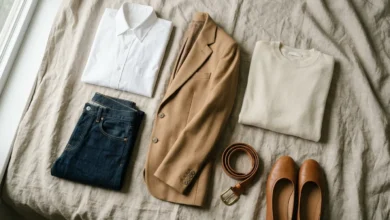
Opening a packed closet only to feel like you have absolutely nothing to wear is a structural failure, not a lack of options. The problem stems from accumulating individual garments that exist as isolated islands rather than pieces that work together. A functional capsule wardrobe relies on a small, deliberately chosen set of interchangeable pieces built around neutral bases. This approach shifts your focus from the sheer volume of your clothing to how easily those items mix and match.
Historic style precedents show how freeing a personal uniform can be. For instance, industry profiles indicate that style icons like Carolyn Bessette-Kennedy used a strict minimalist uniform of clean lines and neutral layers as a strategic tool to maintain aesthetic control and intentionality. By leaning into simple silhouettes, she built an iconic presence without chasing seasonal micro-trends. You can achieve this same clarity by first defining your personal style baseline before introducing new items into your rotation.
The Capsule Wardrobe Myth-Busting Pass
- The Number Trap: You don’t need to cap your closet at exactly 33 items. Hard limits are great diagnostic tools when you’re starting out, but your actual environment should dictate your true wardrobe size.
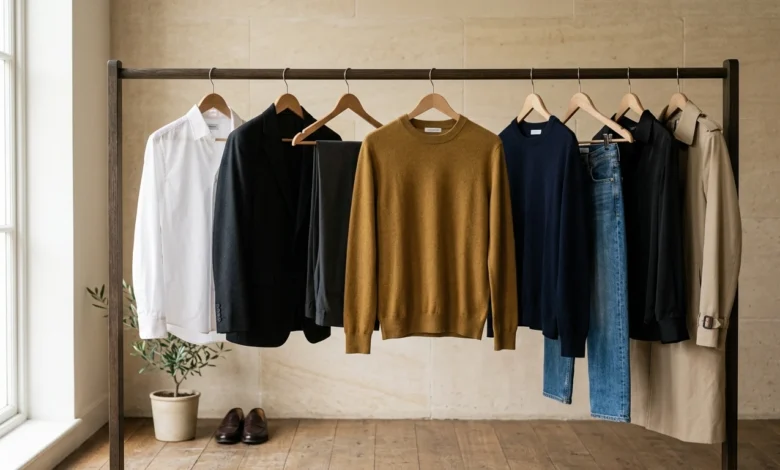
- Beyond Beige: A capsule isn’t a life sentence to a gray closet. While neutral bases anchor the system, rich tones like olive green, deep navy, or warm burgundy function as excellent foundations.
- Visual Texture: Skipping loud prints doesn’t mean your outfits look flat. High-quality textures—like crisp cotton poplin or a fine knitwear weave—give a simple outfit enough visual depth to stand on its own.
The Lifestyle Audit: Mapping Your Clothing to Your Daily Hours
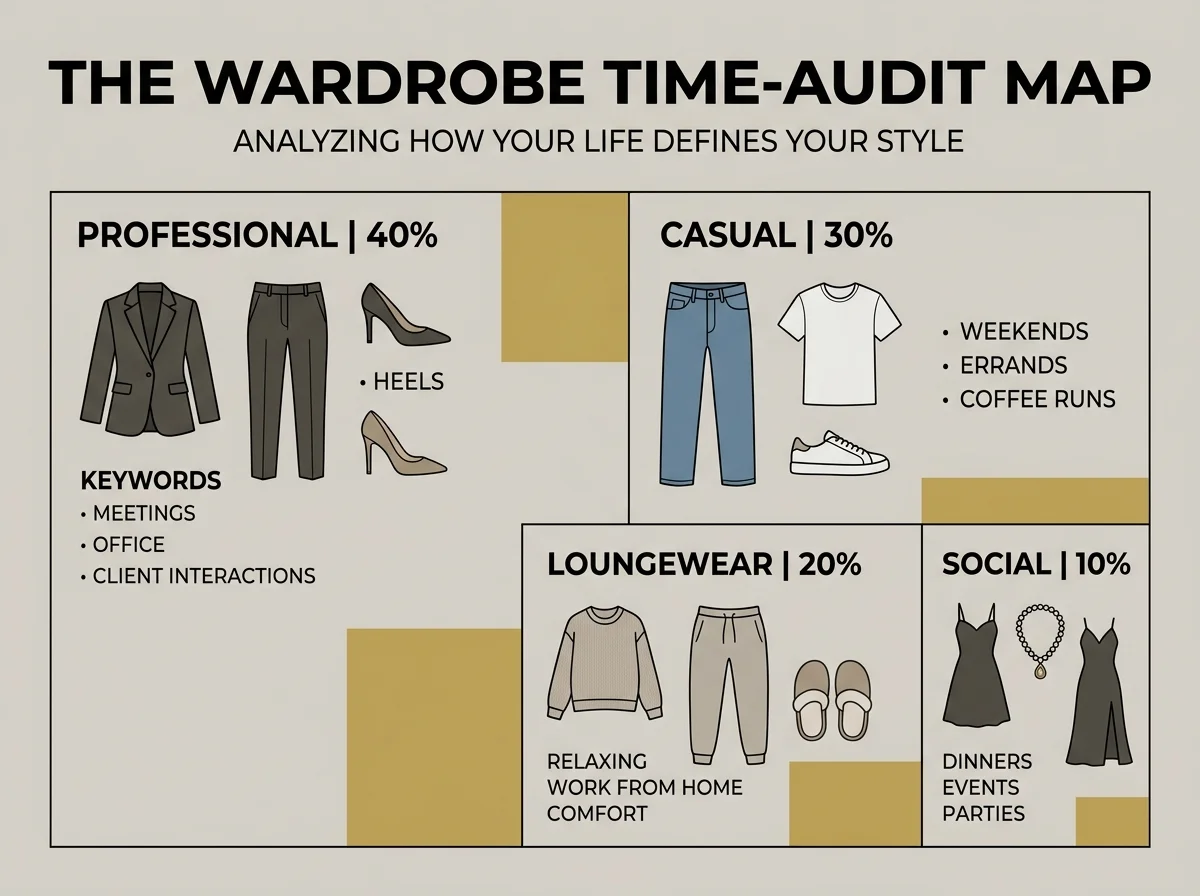
Your wardrobe should accurately reflect how you actually spend your time throughout a normal week, not an idealized version of your life. Staring at an array of silk cocktail dresses when you spend 80% of your time working remotely creates a permanent friction point every morning. To resolve this, run a simple seven-day time audit to see where your hours actually go. If 60% of your weekly waking hours are spent in a professional setting, then 60% of your closet belongs to tailored configurations.
A systematic closet edit begins by evaluating your current inventory against those real-world hours. Apply the traditional 12-month culling rule: identify and remove pieces that have remained completely untouched for a full year. If an item has survived four distinct seasons without being worn once, it isn’t serving a functional purpose. When sorting your professional layers, navigating professional dress codes requires an honest assessment of whether your pieces fit a true business casual or smart casual environment.
| Lifestyle Category | Weekly Hours logged | Target Closet Allocation | Ideal Garment Volume |
| Professional / Office | 45 Hours | 40% | 14 Items |
| Casual / Everyday | 35 Hours | 30% | 11 Items |
| Active / Loungewear | 25 Hours | 20% | 7 Items |
| Social / Occasion | 10 Hours | 10% | 3 Items |
The Chromatic Formula: Balancing Neutrals and Accents
A cohesive color palette is the mechanical engine behind an interchangeable closet. If your tops and bottoms cannot be mixed at random in the dark, your palette is too fragmented. To establish a framework that coordinates effortlessly, apply a clear structural ratio: choose three to four neutral bases and pair them with two to three complementary accent colors. This maintains deep color combinations across your outfits while completely preventing visual clashes.
Consider a practical working scenario. An intentional capsule built around navy, charcoal gray, and crisp ivory bases provides an exceptionally stable canvas. By introducing olive green and soft camel as your secondary accent tones, every single item shifts into alignment. A navy wool blazer layers naturally over an ivory linen blend top, which then anchors effortlessly to charcoal gray tailored trousers. The accents add warmth, while the neutral bases ensure you never run out of reliable combinations.
How to Build a Capsule Wardrobe with Modular Blocks
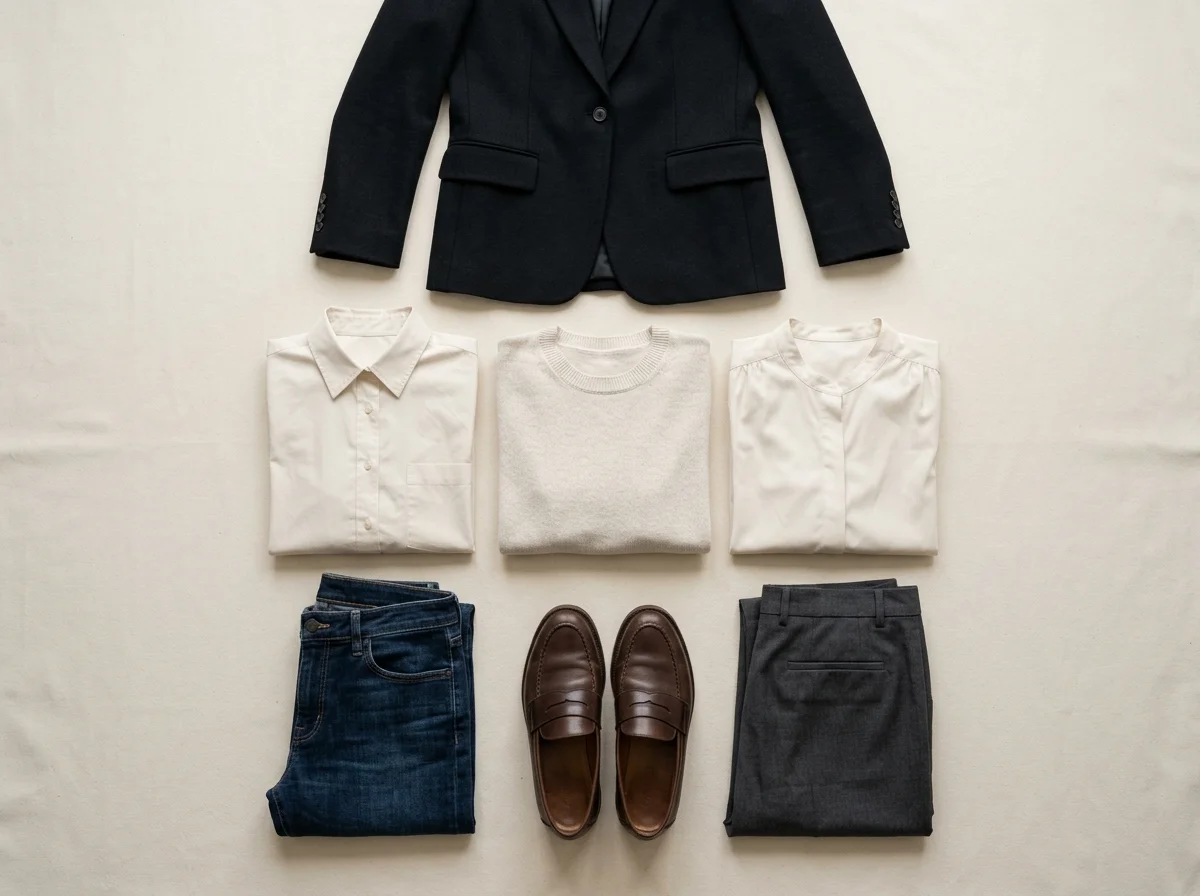
Building out the physical framework relies entirely on assembly modules rather than buying scattered clothes. While rigid historical challenges like Project 333 demand a fixed count of 33 items for an entire three-month season, real-world utility usually requires a touch more flexibility. A highly reliable execution method uses a modular layout of two bottoms, three tops, and one layering piece. An item earns its permanent place in your capsule only if it satisfies the coordination rule: it must pair seamlessly with at least three distinct pieces to generate entirely different looks.
When integrating relaxed silhouettes into your modules, keep an eye on how the clothes are cut. Truly intentional oversized garments must still fit correctly at your natural shoulder line and sleeve length to maintain structural proportion. If the shoulder seam spills down your arm, the piece looks sloppy rather than deliberate. To ensure your foundational closet functions correctly across all seasons, focus on balancing your physical silhouette before investing in foundational pieces that carry the rest of your wardrobe.
Fabric and Construction: Spotting Quality Before You Buy
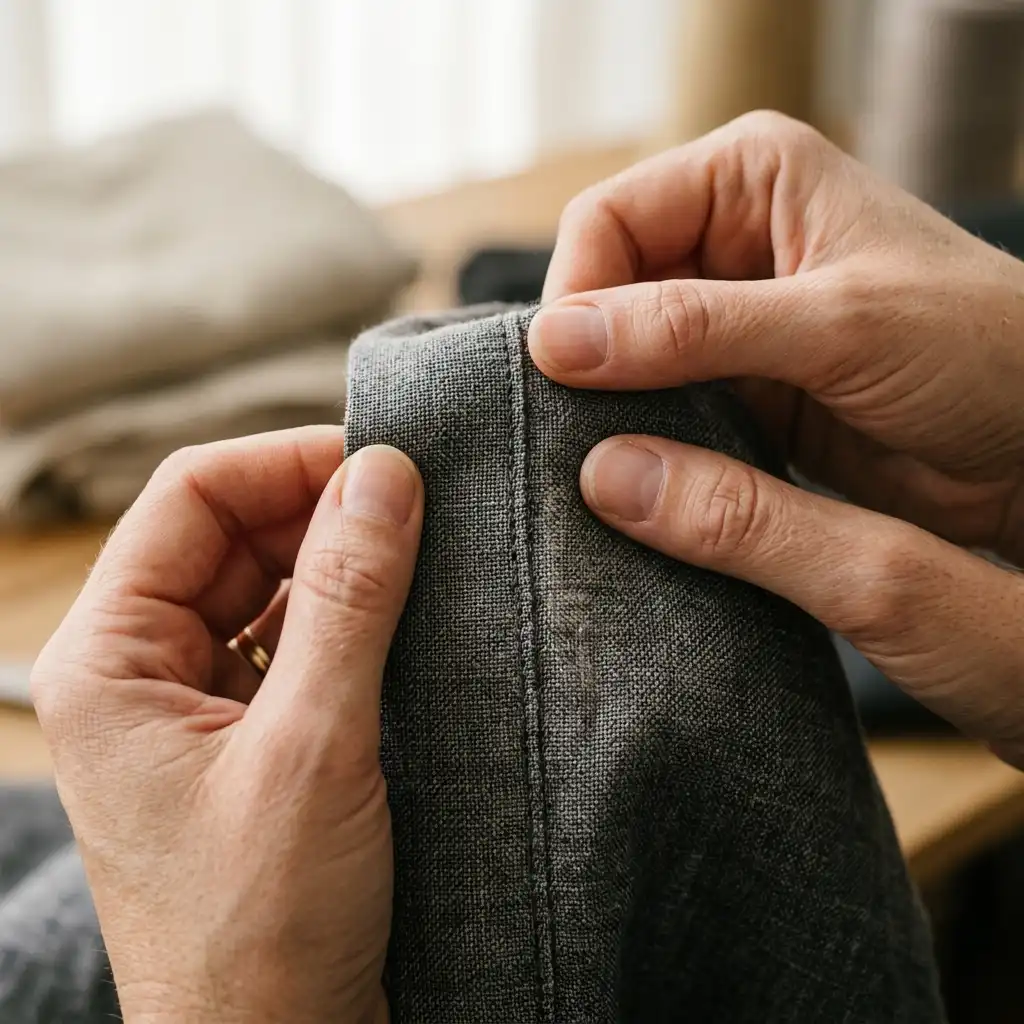
A capsule wardrobe demands that a small number of clothes perform under high-frequency wear. This means you must become a tactical inspector of textile quality before passing your card to a cashier. Industry standard fabric quality diagnostics show that the presence of surface fuzz or loose fibers on a brand-new garment indicates shorter yarn lengths, signaling poor-quality construction that is highly prone to premature fabric pilling.
When shopping for everyday wardrobe staples, look past the brand label and look closely at the interior material tag. Synthetic blends often degrade rapidly under standard laundry cycles, whereas high-utility textiles like a mid-weight cotton poplin, dense merino wool, or a structured linen blend hold their shape over multiple seasons. Keep in mind that even premium linen blends will exhibit slight, natural puckering along the seams after the first wash—this is an inherent trait of the fiber, not a construction defect. If you are building out a warm-weather rotation, choosing breathable seasonal textiles is essential to ensure your capsule remains comfortable during mid-summer temperature spikes.
The In-Store Garment Inspection Checklist
- The Light Pass: Hold the woven fabric up to a bright light. If the light passes through unevenly or shows erratic thread gaps, the weave is inherently unstable and will thin out quickly.
- Seam Integrity: Gently pull the primary seams apart at the stress points. If the threads separate easily or reveal immediate slippage, the garment is bound to unravel under normal wear.
- The Snap-Back Check: Stretch the knit or jersey fabric firmly between both hands for three seconds, then let go. High-quality yarn should immediately return to its original shape without leaving a saggy, stretched-out center.
Dismantling the Influencer Checklist: Common Wardrobe Mistakes
The fastest way to fail at building a streamlined closet is to blindly copy a generic capsule checklist found online. These lists are almost always built for an aspirational lifestyle rather than a real one, assuming every individual needs the exact same balance of trench coats, crisp white button-downs, and stiletto heels. If your daily life involves chasing toddlers at a park or walking through dusty job sites, a pristine ivory silk blouse is a non-functional burden.
Another frequent mistake is executing a sudden, massive closet purge only to immediately purchase a whole new array of minimalist basics from scratch. This simply replaces one form of mindless consumption with another. True capsule building is a gradual process of observational curation. Let your real-world wear patterns reveal where your gaps actually lie, and give yourself permission to let your wardrobe evolve slowly over time.
FAQs
How many items should actually be in a capsule wardrobe?
There is no rigid legal number. Niche historical challenges suggest 33 pieces, but real-world setups usually range from 30 to 40 primary seasonal items depending on your daily routine.
Do shoes, bags, and workout gear count toward the total capsule number?
True procedural capsules exclude specialized fitness gear, loungewear, and undergarments from the tally. However, high-frequency accessories like shoes and primary handbags should be factored into your modular mix-and-match blueprints.
Can a capsule wardrobe contain color, or must it be entirely neutral?
It can absolutely feature color. The ideal chromatic ratio is 60% neutral bases (like charcoal, navy, or cream) paired with 40% secondary tones and accent colors that suit your style palette.
Sources
Research Sources
- Who What Wear | How to Start a Capsule Wardrobe | https://www.whowhatwear.com/uk/how-to-capsule-wardrobe | July 2026 | Tier 5
Industry Sources
- ELLE UK | The Ultimate Guide to Building an Evergreen Wardrobe Cluster | https://www.elle.com/uk/fashion/what-to-wear/a62222676/capsule-wardrobe/ | July 2026 | Tier 5
- Harper’s Bazaar | The Historic Clean Uniform: Lessons from Bessette-Kennedy | https://www.harpersbazaar.com/fashion/trends/a70279883/carolyn-bessette-kennedy-style-guide/ | June 2026 | Tier 5
- Selion AI Research Desk | The Chromatic Matrix and Cross-Coordination Efficiency Index | https://selionai.app/blog/capsule-wardrobe-guide | May 2026 | Tier 6
- The ‘drobe Assembly Room | Modular Time Tracking and Wardrobe Allocation Ratios | https://inspo.thedrobe.com/capsule/capsule-wardrobe-essentials-how-to-create/ | March 2026 | Tier 6