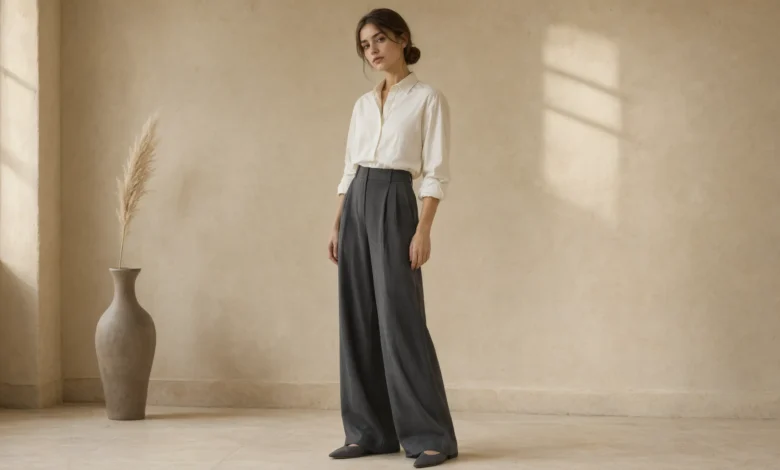
You know the fitting-room moment. The waistband sits where it should, the color works, and then you look down and the hem is pooling over your shoes like the trousers gave up halfway. Wide leg pants are cut with more circumference at the ankle than any other silhouette, so every extra inch of length shows up as twice the fabric on the floor.
That pooling is almost never your body’s fault. It is a pattern-block problem, and it is fixable if you know which numbers to read on the size chart. This petite wide leg trousers buying guide walks the four decisions that determine whether the silhouette works on a frame under 5’4″: the inseam, the front rise, the fabric weight, and whether the brand actually cut a petite block or just shortened a regular one.
The market has finally caught up, too. Abercrombie, Madewell, Aritzia, Ann Taylor, and Quince all cut wide leg trousers with dedicated petite or short blocks now, and the measurements below tell you which pairs earn a spot in your cart.
To buy petite wide leg trousers that fit, work four checks in order: 1) shop a 25 to 27 inch inseam for full length, or 24 to 26 inches for cropped, 2) keep the front rise between 10 and 11.5 inches so the waistband lands at your natural waist, 3) choose a fabric with real drape, like crepe or Tencel twill, or real structure, like cotton twill or gabardine, and 4) buy from a brand that cuts a true petite block, then hold 15 to 35 dollars for a hem when the length runs close.
What Petite Sizing Actually Changes on a Trouser
Petite sizing exists because of a wartime data set. In the late 1940s, the American designer Hannah Troy studied measurements recorded from women who served in WWII and concluded that only about 8 percent of them fit the standard sizing of the day, so she built a line, and a term, for shorter proportions.
On a modern size chart, a true petite block adjusts proportion, not just length. The rise shortens so the crotch does not drop. The waistband sits higher relative to your torso. Pocket placement, knee position, and leg opening all move up with the hem. The average American woman measures 5 feet 3.5 inches tall according to CDC anthropometric data, yet most regular trousers are drafted for someone two to three inches taller, which is why hemming a regular pair fixes the floor and nothing else.
That makes one filter more useful than every other in this guide: before you look at price or color, check whether the retailer lists a separate rise for its petite size. If the size chart shows only a shorter inseam on the same rise, you are buying a shortened regular pant, and the waistband will sit low on your torso no matter what the hem does.
The Two Numbers to Check Before Anything Else
Every size chart prints a dozen measurements, but two of them decide whether a wide leg trouser elongates you or swamps you.
The inseam. For full-length wide leg trousers, most petite frames land between 25 and 27 inches, which matches the petite range Stitch Fix publishes for women 5’3″ and under, while cropped styles run 24 to 26 inches per the ranges Style at a Certain Age lists for its petite readers. The target hem position for a full-length pair is grazing the top of your shoe with a slight break at most. A cropped pair should end above the ankle bone, so the widest part of the leg never sits at the floor.
| Your height | Full-length inseam to shop | Cropped inseam to shop |
|---|---|---|
| 4’10” to 5’1″ | 25 to 26 inches | 22 to 24 inches |
| 5’2″ to 5’3″ | 26 to 27 inches | 24 to 25 inches |
| 5’4″ | 27 to 28 inches | 25 to 26 inches |
The front rise. This is the number petite shoppers skip, and it controls the silhouette. A wide leg pant reads as one long line from waistband to hem, so the line starts wherever the rise puts the waistband. On most frames under 5’4″, that is a front rise between 10 and 11.5 inches, the same high-rise window our fitting notes use elsewhere on the site.
The pairs in the brand table below run from a 10 inch rise on the Ann Taylor Perfect Wide-Leg to 11.75 inches on the Madewell Petite Harlow, and the spread is deliberate: if your torso is short, the 10 to 10.5 inch end keeps the waistband below your ribcage, and if your torso runs long, the 11 to 11.5 inch end keeps the waist at its natural spot instead of sliding toward your hips.
One caution from the fitting room: a rise that is too long on a wide leg cut does more than sit high. It pushes the fullest part of the leg volume downward, which is exactly the swamp effect you are trying to avoid.
At a glance: rise, by torso
- Short torso: 10 to 10.5 inch front rise, waistband at the smallest part of your waist
- Balanced torso: 10.5 to 11.5 inches, the range most true petite blocks target
- Long torso: 11 to 12 inches, or buy for the rise and tailor the waist
Fabric Weight Decides How Wide a Wide Leg Can Go
Wide leg covers a family of silhouettes, and fabric weight is the dial that moves you through it.
Fluid fabrics in the 150 to 220 GSM range, think crepe, lyocell (usually labeled Tencel), and rayon blends, fall straight from the hip and skim the body, which keeps the column narrow even when the leg opening measures 22 inches or more. Structured fabrics in the 220 to 300 GSM range, cotton twill, gabardine, wool blends, hold a pressed crease and stand slightly away from the leg, giving a clean architectural line at the cost of some visible volume. The mistake zone is the middle: a fabric too stiff to drape and too light to hold a shape reads as bulk.
At a glance: choosing the fabric
- Fluid crepe, lyocell, and rayon blends, 150 to 220 GSM: the narrowest column and the most movement
- Structured cotton twill, gabardine, and wool blends, 220 to 300 GSM: a pressed, architectural line that adds a little volume
- Linen blends, 130 to 160 GSM: the breathable summer pick that wrinkles by lunch
Season matters as well. Linen and linen-cotton blends breathe well enough for humid offices, and the same weight logic carries our women’s work pants for summer guide, though linen reads more casual unless it is blended or lined. Ponte knit is the outlier: stable and forgiving at the waist, but on a super-wide cut it can swing like a skirt, so point ponte toward straight and gently wide legs rather than palazzo volume.
Pleats, Cropped Hems, and the Puddle Question
Pleats are a volume decision, not a decoration. A single pleat adds sitting room at the hip without widening the hem, which is why so many of the better petite cuts, including the Aritzia Effortless Pant, use one knife pleat at the front. Double pleats add more air through the thigh and look intentional mainly with a heel or on a longer leg line. Flat fronts give the cleanest vertical and are the safest first pair.
Then there is the puddle hem, the extra-long cut that pools over the shoe on purpose. On a petite frame it works only with three conditions met at once: a drapey fabric, a heel under the puddle, and a crisp waist. Miss any one and the puddle reads as a hem you gave up on. The cropped wide leg is the more forgiving statement: a 24 to 26 inch inseam ending above the ankle bone, worn with a pointed flat or a low block heel, keeps the volume intentional and the ankle visible.
If your hips carry more volume than your shoulders, this silhouette is already doing some of the balancing work we outline in our pear shape guide, because the wide hem evens out the hip-to-floor line instead of clinging to it.
The Best Petite Wide Leg Trousers, Measured
The table below is the practical heart of the guide. Every entry lists a separate petite or short block with its own rise and inseam, pulled from the brands’ own product pages at last check in August 2026, and the prices are what those pages showed on the same pass.
| Style | Front rise | Petite or short inseam | Price at last check | Where it wins |
|---|---|---|---|---|
| Abercrombie Sloane Tailored Pant, short | 11.5 inches | 26.25 inches | 90 dollars | Pleated front, stretchy flat waistband, machine washable |
| Madewell Petite Harlow Wide-Leg | 11.75 inches | 27.5 inches | 118 dollars | The drapey twill falls straight without clinging |
| Aritzia Effortless Pant, short | 11 inches | 27.25 inches | 148 dollars | Knife pleats and a crepe that holds its line through a full workday |
| Ann Taylor Petite Perfect Wide-Leg | 10 inches | 28.5 inches | 139 dollars | The lowest rise here, and the one we hand to short-torso readers first |
| Quince petite wide leg, linen and Tencel | varies by style | 27 to 28 inches | 50 to 100 dollars | Hem designed to graze the ankle rather than pool |
| Uniqlo Smart Wide Pants, petite fit | mid to high | hemmed in store to about 27 inches | under 40 dollars | The budget answer, with inexpensive alteration at the register |
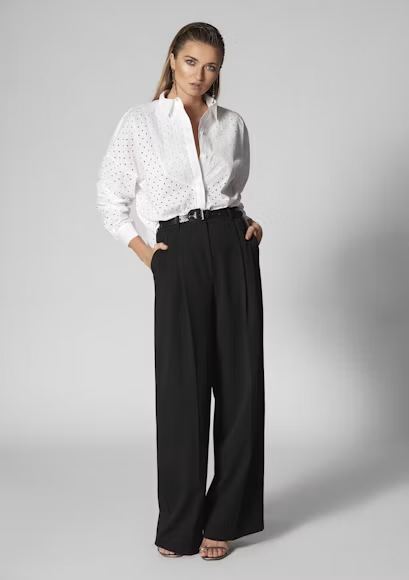
A few honest footnotes. The Abercrombie Sloane is the value pick for pleated tailoring, though its short block is a length option rather than a full petite proportion, so check the rise against your torso. Banana Republic’s Hayden runs a 29 inch inseam in petite, which is really a heel-length pair and a trap for flat wearers. The Aritzia is the splurge that keeps a crease at hour nine. And the Uniqlo makes the silhouette accessible at all: Jean, who writes the petite fashion blog Extra Petite, called the sub-50-dollar wide cuts with alteration available “a fantastic value” after trying them unaltered.
When a 20 Dollar Hem Is Worth It and When to Walk Away
A basic trouser hem runs about 15 to 35 dollars at most US tailors, and wide or pleated hems can land near 25 to 60 dollars in pricier cities. Hemming is worth it when the rise sits right and only an inch or two of length is wrong, because a straight-across hem keeps the leg opening exactly as designed. If the trousers have a finished or weighted edge, ask the tailor to preserve the original hem finish.
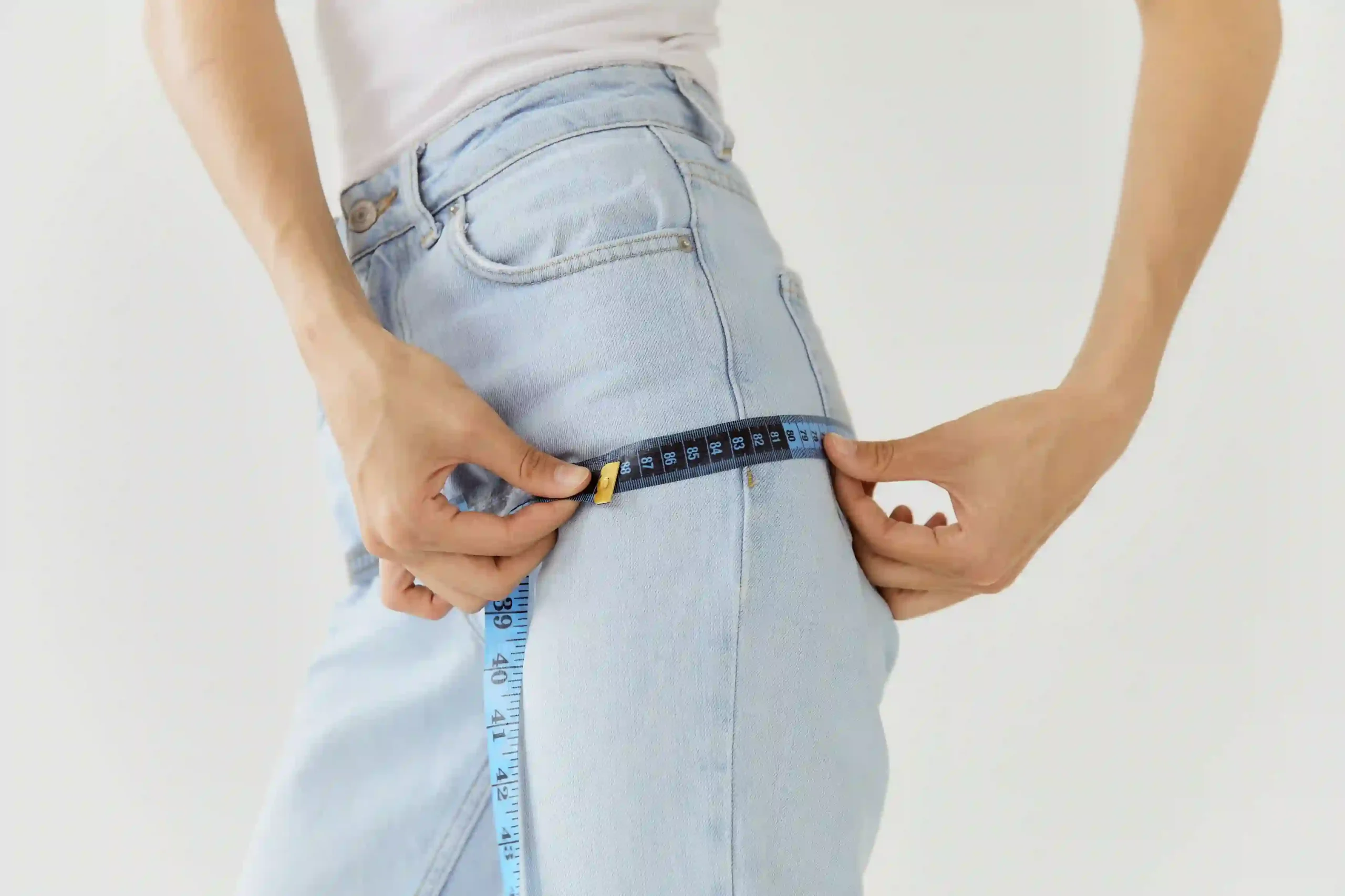
Hemming is not worth it when the rise is the problem, since no hem moves a waistband. It is not worth it on a final-sale markdown that ends up costing more to alter than you saved, the same return-policy math we walk through in our guide to fashion buying mistakes. And it is not worth it on a puddle hem, where the pooling is the design. In those cases the trousers were never yours, and the money is better spent on a pair cut to your numbers.
Styling Notes That Keep the Column Long
Three habits do most of the work. Tuck or knot the top so the waistband, and therefore the leg line, starts where it should. Keep one color family from waist to shoe when you want maximum length, since a broken color line is a broken vertical. And let the shoe follow the hem: pointed toes extend a cropped hem, while platform sneakers and chunky loafers need a full-length hem that covers most of the shoe, so the sole, not the ankle, breaks the line.
Who This Guide Won’t Help
Some honesty before the recommendations. If you are 5’4″ with a long inseam, regular blocks are already cut to your numbers and the petite sections will feel cropped. If you want zero size-chart reading and zero tailoring spend, an elastic-waist cropped palazzo is the low-effort answer, and that is a legitimate choice, not a failure. And if your office runs strict conservative suiting, lean on the gabardine and wool rows above, because the softest drapey pairs read casual by comparison.
Three Situations, Three Short Answers
If you need one pair to carry the work week
Buy the Ann Taylor Perfect Wide-Leg if your torso runs short, or the Aritzia Effortless short if you want the crease that survives a full day, and budget the hem in the same purchase so the pair arrives ready for Monday.
If you are rebuilding a wardrobe on a tight budget
Start with the Uniqlo Smart Wide Pants under 40 dollars plus a register hem, or Quince’s linen wide leg around 50 dollars for warm months. Two pairs at that price teach you your numbers before you invest in the 100 dollar tier.
If your size recently changed and you are buying cautiously
Look for a flat front with a back elastic waist, like the LOFT Versa Palazzo, which measures an 11.5 inch rise and a 27.5 inch inseam in petite. You get a polished front line while the waist forgives a body in transition, and you can buy for your hip and tailor the waist later for less than most people spend on lunch.
Frequently Asked Questions About Petite Wide Leg Trousers
Can petite women wear wide leg trousers without looking shorter?
Yes, when three things line up: the waistband sits at your natural waist, the hem grazes the shoe instead of pooling, and the top is tucked or cropped so the leg line starts high. Alison, the 5’3″ writer behind the personal style site Wardrobe Oxygen, puts the stance plainly: “Wide leg pants work for every body, including petite and curvy ones. Yes, really.” What shortens a petite frame is the combination of a low waistband and a dragging hem.
What inseam length should petite wide leg pants be?
For a full-length cut, 25 to 27 inches covers most frames under 5’4″, with 27 to 28 inches at the tall end of petite. Cropped styles land at 24 to 26 inches, ending above the ankle bone. Use the height table above as a starting point, then confirm against a pair you already own.
Should the hem touch the floor or the ankle on a petite frame?
Neither, exactly. Aim for the hem to graze the top of the shoe with a slight break at most. A true floor puddle works only with a drapey fabric and a heel, and a cropped hem works when it ends above the ankle bone. The failure zone is a hem that pools an inch or two around a flat shoe.
Is high rise or mid rise better for petites wearing wide legs?
High rise, in most cases, because the wide leg reads as one line from the waistband down and a higher start makes that line longer. If your torso is short, choose the lower end of high rise, a 10 to 10.5 inch front rise, so the waistband stays below your ribcage. Mid rise earns its place mainly when you plan to wear every top untucked.
Are pleats flattering on petite wide leg trousers?
A single pleat usually is, since it adds sitting room at the hip without widening the hem. Double pleats add visible volume through the thigh and look most intentional with a heel or on a longer leg line. Flat fronts are the cleanest first pair if you are unsure.
Final Fit Notes Before You Buy
Wide leg trousers are not a tall-woman’s silhouette that petites borrow. They are a proportion equation, and every variable in it is printed on the size chart once you know where to look. Measure one pair you already own that feels right, write down its inseam and rise, and carry those two numbers plus a fabric weight preference into every store. Brands will keep cutting new versions of the petite wide leg trouser each season, but your numbers stay yours. Start with the two numbers, and the rest of the silhouette follows.
SOURCES
- Centers for Disease Control and Prevention: Body Measurements, FastStats, Access Date: August 14, 2026
- University of Minnesota Digital Conservancy: A Case Study on the Designer Hannah Troy, who Translated French Couture for the American Petite Woman, Access Date: August 14, 2026
- Vintage Fashion Guild: Troy, Hannah, Label Archive, Access Date: August 14, 2026
- Abercrombie & Fitch: Women’s A&F Sloane Tailored Wide Leg Pant, Access Date: August 14, 2026
- Madewell: The Petite Harlow Wide-Leg Pant in Drapey Twill, Access Date: August 14, 2026
- Aritzia: The Effortless Pant, Crepette, Access Date: August 14, 2026
- Ann Taylor: Petite Wide Leg Pants, Access Date: August 14, 2026
- Quince: Petite Pants & Shorts for Women, Access Date: August 14, 2026
- Uniqlo: Women’s Smart Wide Pants, Access Date: August 14, 2026
- Alterations Express: 2026 Clothing Alterations Price Guide, Access Date: August 14, 2026
- Stitch Fix: Your Guide to Denim Inseams, Access Date: August 14, 2026
- Wardrobe Oxygen: How to Style Wide Leg Pants as a Grown Woman, Access Date: August 14, 2026
- Extra Petite: Uniqlo Petite-Friendly Finds and Viral Wide Leg Pants, Access Date: August 14, 2026 (published 2023, pricing possibly stale, fit notes still current)
- Pumps and Pushups: Five Petite-Friendly Wide Leg Trousers That Actually Work, Access Date: August 14, 2026
- Style at a Certain Age: Wide-Leg Pants for Petites Over 50: How to Style Them Right, Access Date: August 14, 2026
- theSkimm: We Tried Aritzia’s Viral Work Pants, Access Date: August 14, 2026