
How to Dress for a Pear Body Shape: The Spatial Geometry Guide
For years, legacy fashion advice treated the triangle silhouette like a structural flaw that required constant camouflage. You were likely told to wrap yourself in dark, oversized layers to minimize your lower chassis, or to blend into the background altogether. Learning how to dress for a pear body shape is not about hiding your proportions; it is about mastering the spatial physics of clothing to create a balanced silhouette. When you understand how fabric weight, line placement, and structural angles interact with your frame, your wardrobe becomes a system of deliberate choices. Not a series of compromises.
Clothing exists to serve your comfort and utility, treating traditional rules as dynamic inputs rather than restrictive commandments. By shifting the focus from concealment to visual equilibrium, you retain full authority over your closet. This guide establishes the core mechanical frameworks needed to navigate garment choices with absolute confidence.
how to dress for a pear body shape
To dress for a pear body shape, focus on creating visual equilibrium by broadening the shoulder line and highlighting the natural waist. Use horizontal necklines like boat necks to expand the upper chassis, and allow structured trousers or A-line skirts to drop cleanly from the widest part of the hip line without clinging.
1. The Proportional Blueprint: Re-Checking the Pear Silhouette Geometry
Before reconfiguring a wardrobe, it helps to ground your styling choices in objective geometry. A traditional pear layout occurs when the lower half of the chassis carries more visual weight than the torso. Factual guidelines from industry-recognized platforms like Who What Wear show that this Body Shape is mathematically defined when the hip measurement is greater than 5% larger than the shoulders or bust.
To make this calibration concrete, consider a straightforward worked scenario:
The 5% Metric in Practice:
If an individual’s shoulder plane measures 36 inches across, a hip span measuring 38 inches or greater establishes a clear triangle blueprint. If your shoulders measure 40 inches and your hips measure 42.5 inches, your frame matches these identical balancing parameters.
Identifying this layout has nothing to do with dress size, weight, or arbitrary aesthetic standards. It is a stable physical architecture. Some frames feature narrow shoulders and a small bust, while others possess a broader ribcage but still maintain the 5% lower-body variance. If you are still adjusting your measurements or need a refresher on collecting these dimensions accurately, reviewing the master guide on calculating your baseline body shape metrics will help anchor your reference points.
2. The Spatial Mechanics of Visual Equilibrium
Achieving proportional balance across a triangle frame requires a shift in visual emphasis. The primary styling goal for a pear frame is to create visual equilibrium by adding presence to the upper half while highlighting the narrow, defined waist. Because the human eye evaluates structural lines relative to one another, expanding the perceived width of the shoulder plane instantly softens the transition down to a fuller hip.
Shoulder Broadening: The Bateau and Off-the-Shoulder Architecture
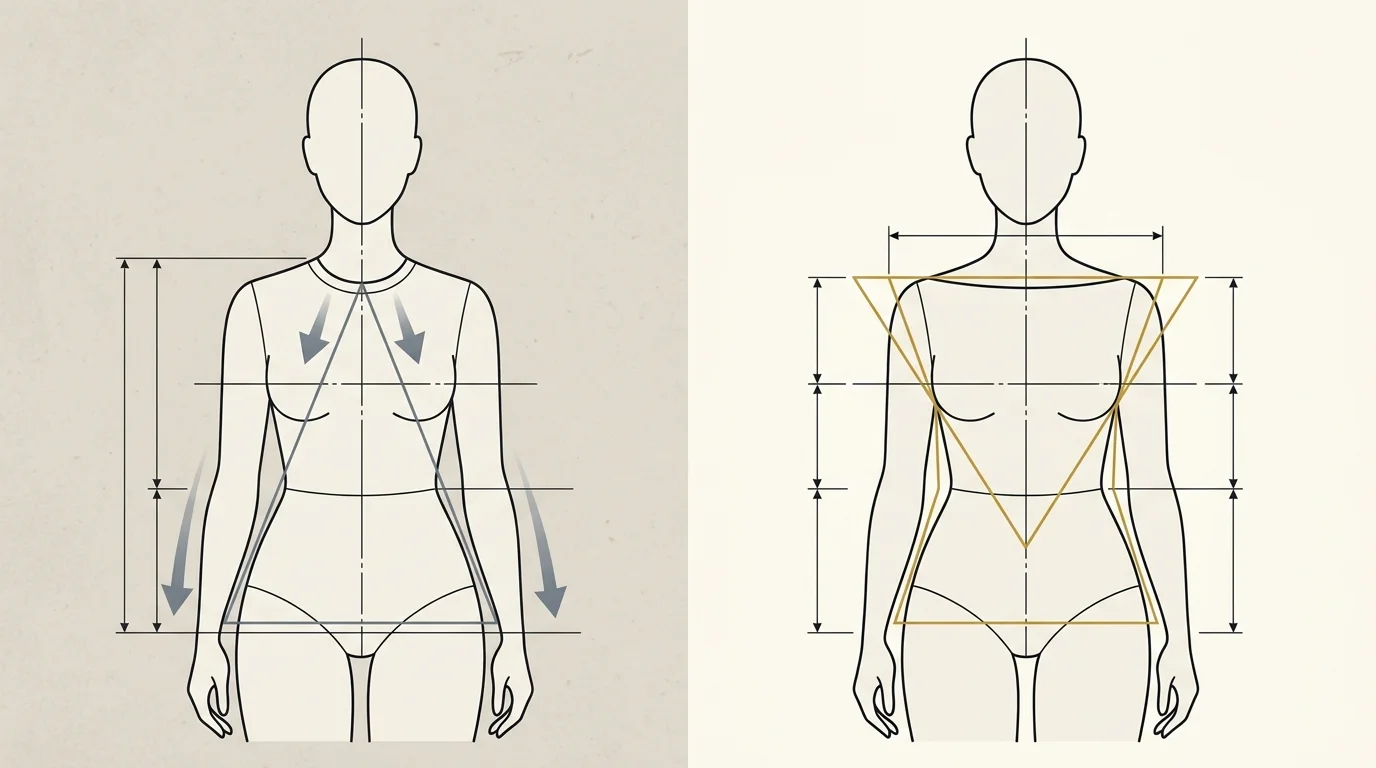
To create a reliable counterweight to a wider lower chassis, your upper garments should utilize horizontal lines that draw the eye outward. Wide, horizontal necklines like boat necks and off-the-shoulder cuts visually broaden narrow shoulders to balance wider lower proportions. The horizontal line of a Boat Neck creates a structural illusion, making the upper torso appear wider and more aligned with the hip axis.
Expert-Opinion Callout:
“When styling a base-heavy frame, think like an architect rather than a tailor. A structured garment that utilizes a subtle Drop Shoulder or an integrated shoulder pleat acts as an anchoring point, squaring off the top half so the lower body drapes in a clean, uninterrupted vertical line.”
Adding visual volume details like puff sleeves, breast pockets, or textured layers adds upper torso presence to balance proportions smoothly. When an upper piece introduces texture, the lower half appears more streamlined by comparison.
Waist Definition: High Anchors vs. Low-Rise Distortions
The narrowest part of a triangle frame is almost always the natural waist, sitting just above the navel. High-waisted or mid-rise bottoms anchor at the narrowest point of the torso, while low-rise cuts artificially widen the hip span. Low-rise waistbands cut across the absolute widest part of the pelvic structure, shortening the leg line and creating a high-contrast horizontal boundary that emphasizes lower volume. Raising the waistband Backpack elongates the legs and highlights your natural architecture.
3. Curating the Lower Chassis: Trouser and Skirt Geometry
Managing the lower half of your wardrobe is less about restricting your options and more about understanding how fabric falls from the hips. When selecting trousers, the goal is to let the textile drop cleanly from the widest part of the hip line. This prevents fabric from bunching or pulling across the thigh, though you will almost certainly run into the classic gap at the back of the waistband with off-the-rack pieces—a minor annoyance easily solved by a local tailor adding internal darts.
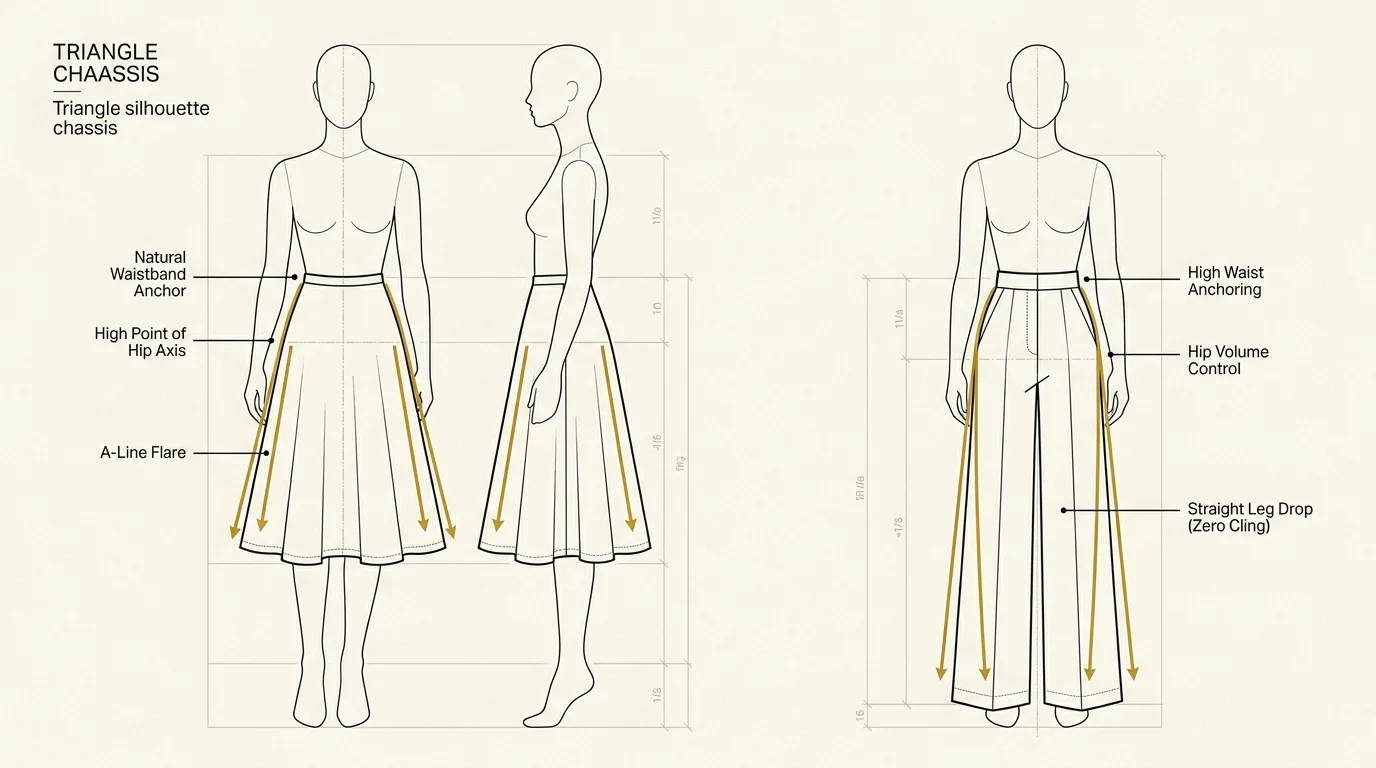
Wide-leg and straight-leg pants that drop cleanly from the widest part of the hip create an elongated vertical line. A Straight Fit trouser maintains a consistent width from the pelvic bone to the floor, ensuring the fabric never pinches around the knee or calf. This structural choice balances out the side profile as well, offering a clean line from any viewing angle.
| Lower Silhouette Cut | Mechanical Interaction | Ideal Fabric Weight | Perceived Visual Effect |
| Wide-Leg Trousers | Drops directly from the hip bone without tapering at the knee. | Medium-weight wool or heavy linen. | Creates a long, continuous vertical line that smooths lower transitions. |
| Straight-Leg Pants | Maintains equal width from the thigh down to the ankle hem. | Structured raw denim or heavy cotton poplin. | Provides a neutral, stable framework that balances a top layer. |
| A-Line Sweeps | Anchors at the natural waist and flares gradually toward the hem. | Fluid woven crepe or structured cotton twist. | Skims the hip entirely, highlighting the waist with zero lower restriction. |
Skirts require a similar study in geometry. An A-line silhouette, along with classic empire-waist cuts, flares gradually from the natural waist, skimming over the hips and thighs without adding bulk. A structured Midi length that terminates precisely mid-calf anchors the lower sweep of the garment, creating a graceful exit line that frames footwear cleanly.
4. The Fabric and Texture Equation: Fluid Drapes vs. Clinging Weights
The way a garment handles movement depends entirely on its yarn construction and material weight. Light, fluid fabrics like Crepe, Modal, and lightweight cotton blend drape cleanly without clinging to the lower chassis. These textiles possess a fluid quality that follows the body’s natural motion without catching on curves or creating unwanted horizontal fold lines.
When building a cohesive Capsule Wardrobe, matching material behavior to seasonal weather shifts ensures your pieces remain highly functional. If you are curating a summer closet or transitioning into warmer conditions, exploring technical insights on breathable summer fabrics can prevent common textile selection errors.
Textile Performance Checklist
- Wovens Over Knits: Woven fabrics hold a pre-engineered shape and slide easily over the body, whereas heavy jersey knits expand horizontally and cling to high-friction zones.
- The Rayon-Modal Balance: Pure Rayon and beech-wood modal blends offer excellent drape for skirts, but they can occasionally generate static cling during dry seasons if unlined.
- Linen Blend Performance: Combining flax with cotton or viscose retains characteristic ventilation while significantly minimizing harsh, stiff wrinkling across the lap.
5. Deconstructing Stylistic Dogma: Common Blunders and Structural Myths
Many fashion manuals enforce absolute rules that do not hold up under practical closet testing. The most prevalent myth suggests that individuals with a triangle frame must completely banish Skinny Fit trousers or narrow denim from their lives. This restriction is entirely unnecessary if you understand how to adjust your upper layering.
The Mid-Thigh Seam Blunder
One genuine construction error to watch for is the misplaced hemline. Tops and jackets should avoid ending directly at the widest part of the hips, as this line emphasizes lower-body width. A jacket hem that cuts across the midpoint of your thighs creates an artificial line that visually widens your profile. Instead, ensure your outerwear finishes either safely above the hip bone or stretches down to mid-calf to elongate your line.
[Incorrect Hemline Placement] -> Ends at widest hip span -> Emphasizes horizontal width
[Correct Hemline Placement]   -> Ends above hip bone OR below thigh -> Maximizes vertical line
Rewriting the Skinny Denim Ban
You can wear form-fitting jeans successfully by introducing an open layer that alters your side profile. Pairing a slim trouser with a structured blazer creates a strong top-line anchor. Darker, solid colors on the lower body recede visually, allowing bright or patterned tops to draw focus upward. This technique is highly effective when navigating a professional Business Casual Dress Code, allowing you to combine sleek lines with tailored authority.
Integrating these pieces into your look helps bridge the gap between structural dressing and a polished office presentation. For a complete system of professional styling options, matching these rules with a curated set of foundational wardrobe essentials will ensure your choices stay versatile across a normal workweek. Ultimately, managing your clothing options is about cultivating a distinctive personal style that honors your natural frame while respecting your personal comfort boundaries.
6. A Dynamic Reference Starting Point: The Silhouette Verdict
Your body shape is a structural reference point, not a stylistic verdict. Proportional balancing mechanics are flexible inputs designed to streamline your shopping choices, not rigid boundaries meant to lock you into a single uniform. Style exists to support your daily life, and any garment can be adapted if you adjust its visual anchoring points intentionally.
Core Styling Routine
- The Waist Anchor: Fasten every lower-body piece securely at your mid-to-high natural waistline to instantly maximize your vertical line.
- Upper-Body Presence: Broaden the shoulder plane with horizontal necklines, structured jackets, or deliberate sleeve detailing.
- Hemline Clearance: Verify that tops and outerwear cut off safely above the hip bone or cascade all the way down below the thickest part of the thigh.
Mastering these basic spatial rules allows you to look at any garment on a rack and know exactly how it will interact with your frame. By treating your closet as an architectural canvas, you ensure your clothing consistently highlights your confidence and individual style.
FAQs
Can a pear body shape wear skinny jeans successfully?
Yes. Pair form-fitting or skinny denim with a structured blazer or extended outerwear layers that square off your shoulders and adjust your side profile silhouette.
Where should jackets and tops end on a triangle frame?
Outerwear hemlines should cut off cleanly above the hip bone or cascade below the widest sweep of the thighs to maintain long vertical lines.
What necklines are best for balancing narrow shoulders?
Horizontal configurations like boat necks, wide scoops, and off-the-shoulder cuts visually extend the upper torso alignment.
Sources
Official Sources
- Macy’s | Dress Guide for the Pear Body Shape | Access Date: July 2026 | Source Tier: Tier 6
Industry Sources
- Who What Wear | How to Dress for a Pear Body Shape | Access Date: July 2026 | Source Tier: Tier 5
- The Concept Wardrobe | Pear Body Shape Style Guide | Access Date: July 2026 | Source Tier: Tier 5
- Sumissura | Dressing the Pear Body Shape | Access Date: July 2026 | Source Tier: Tier 6