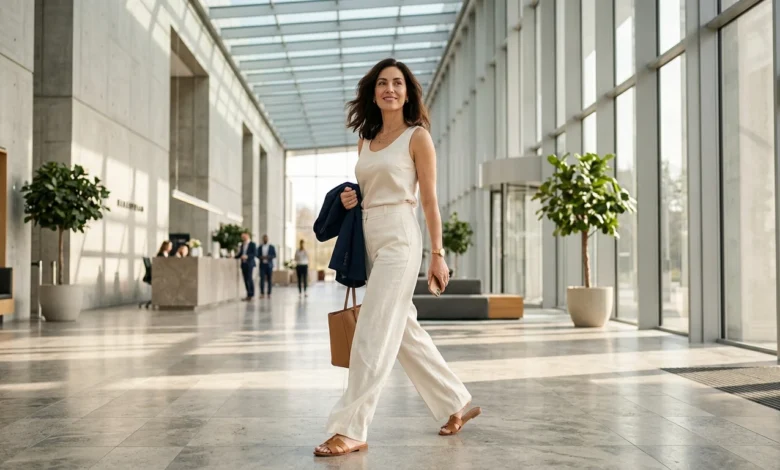
You are standing on a sweltering 90-degree train platform. Twenty minutes later, you are sitting directly under a 68-degree air conditioning vent at your desk. Finding summer work pants that handle this massive temperature shift without looking like beachwear is frustrating.
Standard synthetic trousers usually fail here. They lock in body heat while you walk outside and stay damp once you get indoors.
Fixing this does not require finding a luxury brand. It comes down to reading the fabric tag. If you avoid thin, clingy synthetics and choose the right natural fibers and cuts, your pants will naturally vent heat away from your body.
Here is exactly what to look for to stay cool and maintain a crisp, tailored look all day.
The best women’s work pants for summer balance airflow and tailorship through breathable fibers like Super 100s tropical wool, 55/45 linen-viscose blends, double crepe, and crisp cotton poplin. High-waisted wide-leg and straight-leg cuts promote circulation during warm commutes while holding a polished structure in air-conditioned offices.
The 4 Best Breathable Fabrics for Summer Work Pants
At a Glance: The Ideal Summer Office Trouser
The best warm-weather work pants balance airflow and tailorship through high-twist fibers like Super 100s tropical wool, 55/45 linen-viscose blends, double crepe, and crisp cotton poplin. High-waisted wide-leg and straight-leg cuts promote circulation during warm commutes while holding a polished structure in air-conditioned offices.
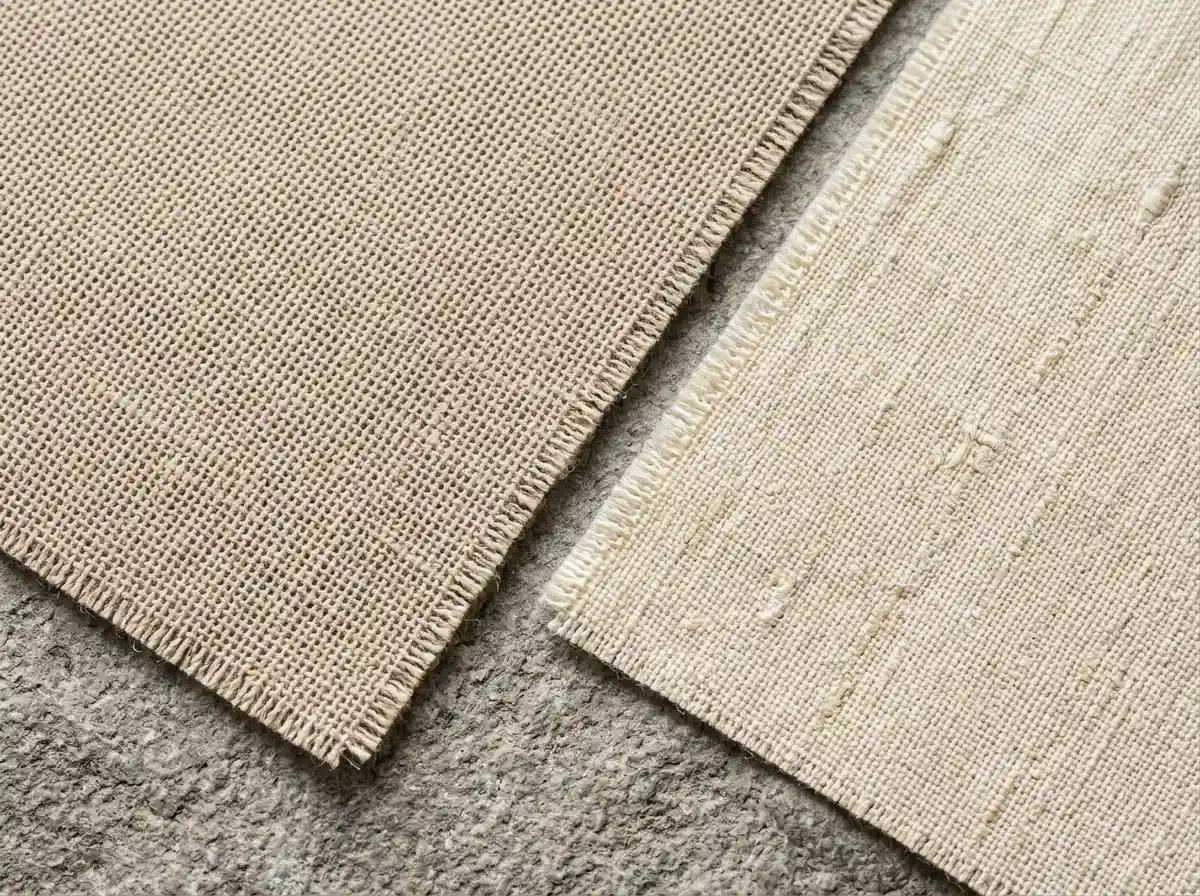
Fiber selection determines whether trousers stay crisp or turn into a rumpled mess by lunchtime. Evaluating fabric weight—measured in grams per square meter (GSM)—alongside fiber composition helps ensure your work trousers offer adequate coverage without holding onto excess heat.
+---------------------+-------------------------+----------------+-------------------+-------------------------------+
| Fabric Type         | Fiber Composition       | GSM / Weight   | Crease Resistance | Ideal Office Setting          |
+---------------------+-------------------------+----------------+-------------------+-------------------------------+
| Tropical Wool       | 100% High-Twist Wool    | 200–220 GSM    | High              | Formal Corporate / Executive  |
| Linen-Viscose Blend | 55% Linen / 45% Viscose | 180–210 GSM    | Medium            | Business Casual / Creative    |
| Double Crepe        | 100% Modal or Rayon     | 210–240 GSM    | High              | Corporate / Daily Desk Wear   |
| Cotton Poplin       | 100% Crisp Cotton       | 150–180 GSM    | Medium-Low        | Smart Casual / Warm Commutes  |
+---------------------+-------------------------+----------------+-------------------+-------------------------------+
Super 100s Tropical Wool: The Moisture-Wicking Corporate Standard
Despite its reputation as a winter material, wool remains one of the most effective cooling fibers when woven correctly. Tropical wool utilizes Super 100s to Super 120s high-twist yarns woven into an open, porous structure at a lightweight 200 to 220 GSM.
The tight twist of the wool yarn creates tiny gaps within the weave, allowing air to pass through freely. Simultaneously, wool’s natural protein structure absorbs up to 30 percent of its weight in moisture vapor without feeling damp to the touch, releasing that moisture into the surrounding air. Because high-twist yarns naturally spring back into shape, tropical wool trousers resist lap creases and knee sagging, making them a reliable choice for executive environments and formal corporate dress codes.
Engineered Linen-Viscose Blends: Airflow Without the Heavy Wrinkles
Pure 100 percent flax linen offers excellent breathability, but its rigid plant fibers crease deeply within minutes of sitting at a desk. For a corporate setting, engineered linen blends solve this issue.
Combining 55 percent linen with 45 percent viscose or Tencel (Lyocell) preserves the cooling properties of flax while introducing soft drape and elasticity. Viscose fills the gaps between rigid flax yarns, softening the fabric and preventing hard, stubborn fold lines across the lap. Reviewing the textile mechanics behind breathable natural fiber weaves for hot weather confirms that linen-viscose combinations provide high airflow while holding a clean, presentable line through back-to-back meetings.
Double Crepe: Fluid Drape with Zero Sheerness
Double crepe woven from semi-synthetic cellulose fibers like rayon or modal offers an opaque, matte finish with a fluid drape. Crepe fabric uses highly twisted yarns that produce a subtle, pebbled surface texture. This textured weave diffuses light, preventing the transparency issues common with lighter summer colors such as ivory, soft cream, and pearl grey.
At a medium weight of 210 to 240 GSM, double crepe skims smoothly over the lower body without clinging to calves or thighs. The fabric’s natural springiness helps it shed packing wrinkles quickly, making it a dependable option for business travel and long desk shifts.
Crisp Cotton Poplin and Twill: Tailored Structure for Smart-Casual Offices
Lightweight cotton poplin and fine-twill weaves (ranging from 150 to 180 GSM) offer a crisp, structured alternative for casual or smart-casual workplaces. Poplin uses a tightly woven plain weave with fine horizontal ribs, creating a smooth, flat surface that pairs easily with unlined blazers and summer shirting.
When shopping for cotton work pants, check the garment’s interior care label. Under federal standards established in FTC 16 CFR Part 303 (the Textile Fiber Products Identification Act), apparel manufacturers must disclose exact fiber percentages on permanently attached labels. Look for 100 percent cotton or high-content cotton-spandex blends (around 97 percent cotton and 3 percent spandex) to avoid hidden polyester fills that restrict airflow.
Summer Trouser Architecture: Cuts That Maximize Airflow
Fabric choice works alongside garment silhouette to manage body heat. Tight trousers trap hot air against the skin regardless of how light the material is. Choosing cuts with built-in space between the fabric and your legs allows air to circulate naturally as you move.
                      TAILORED TROUSER AIRFLOW
  =============================================================
  WIDE-LEG CUT ("Chimney Ventilation")
  [Waistband] ──> Snug, tailored fit holds pant at natural waist
  [Thigh/Knee] ──> Generous clearance prevents fabric clinging
  [Wide Hem] ──> Body heat rises and exits; cool air enters from base

  STRAIGHT / CROPPED CUT (Clearance & Mobility)
  [Straight Leg] ──> Uniform width from hip to hem avoids calf pull
  [26–28" Hem] ──> Ends above ankle bone; highlights loafers/flats
  =============================================================
Tailored Wide-Leg Trousers and the “Chimney Effect”
High-waisted, wide-leg trousers create a natural ventilation system. As you walk, the back-and-forth movement of wide leg openings acts like a gentle bellows, drawing cooler air up from the hem while pushing warm air out. This continuous circulation prevents moisture from collecting around the thighs and knees during warm outdoor walks.
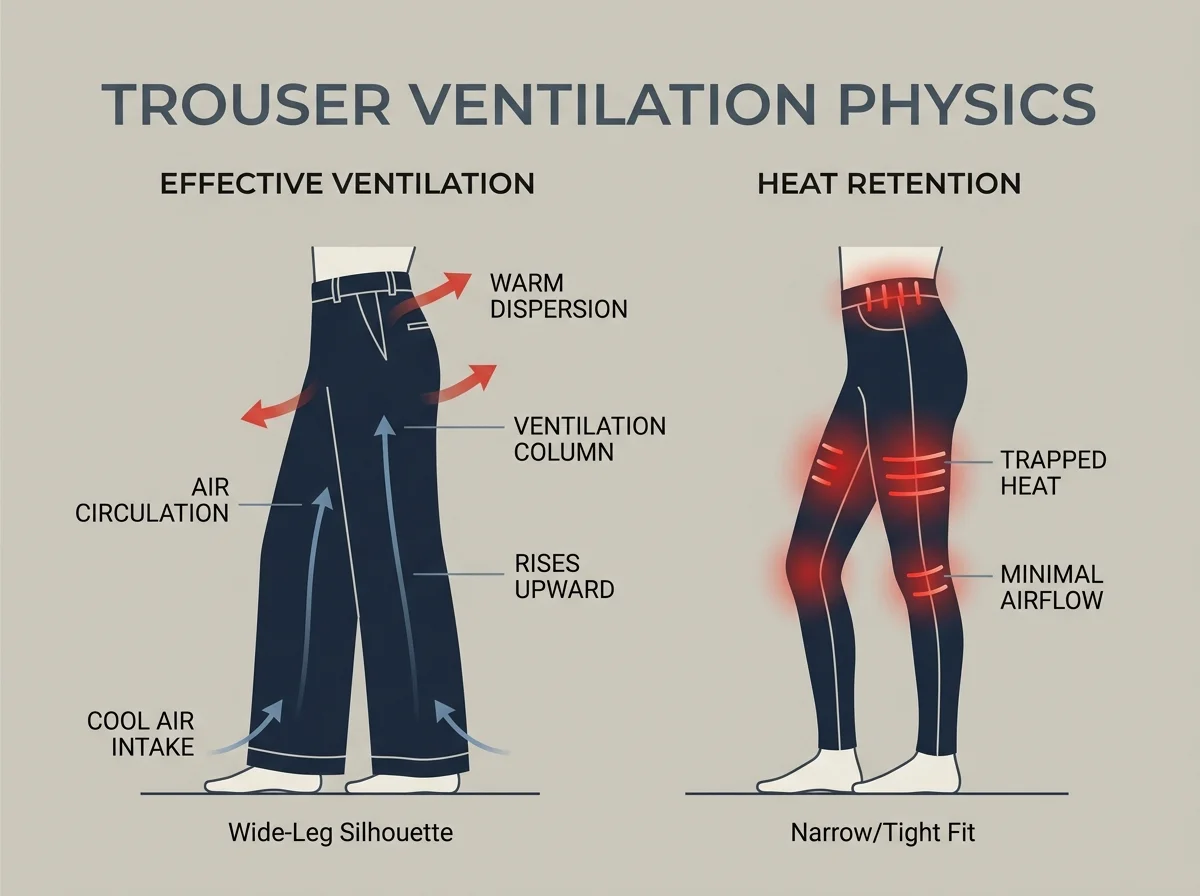
Volume alone isn’t enough. When selecting wide-leg styles, look for front pleats that provide adequate room through the hips and lap. Deep single or double pleats should lie flat while you stand. If the pleats pull open across your hips when standing still, the size is too small, which will restrict movement and cause the fabric to strain when you sit.
Straight-Leg and Ankle-Cropped Cuts for Footwear Clearance
For those who prefer a narrower profile, a classic straight-leg cut maintaining a consistent width from hip to hem offers a clean look without clinging to the calves.
Ankle-cropped trousers featuring a 26 to 28-inch inseam hit just above the ankle bone, keeping pant hems safely off dusty or damp summer sidewalks. This cropped length pairs cleanly with low-profile office footwear like pointed-toe flats, leather loafers, or classic slingbacks. To keep proportions balanced when wearing ankle-length bottoms, consider coordinating your waistline placement with the guidelines in our guide on when to wear a belt to visually anchor your torso.
Fit and Waistband Engineering for 8-Hour Sitting Comfort
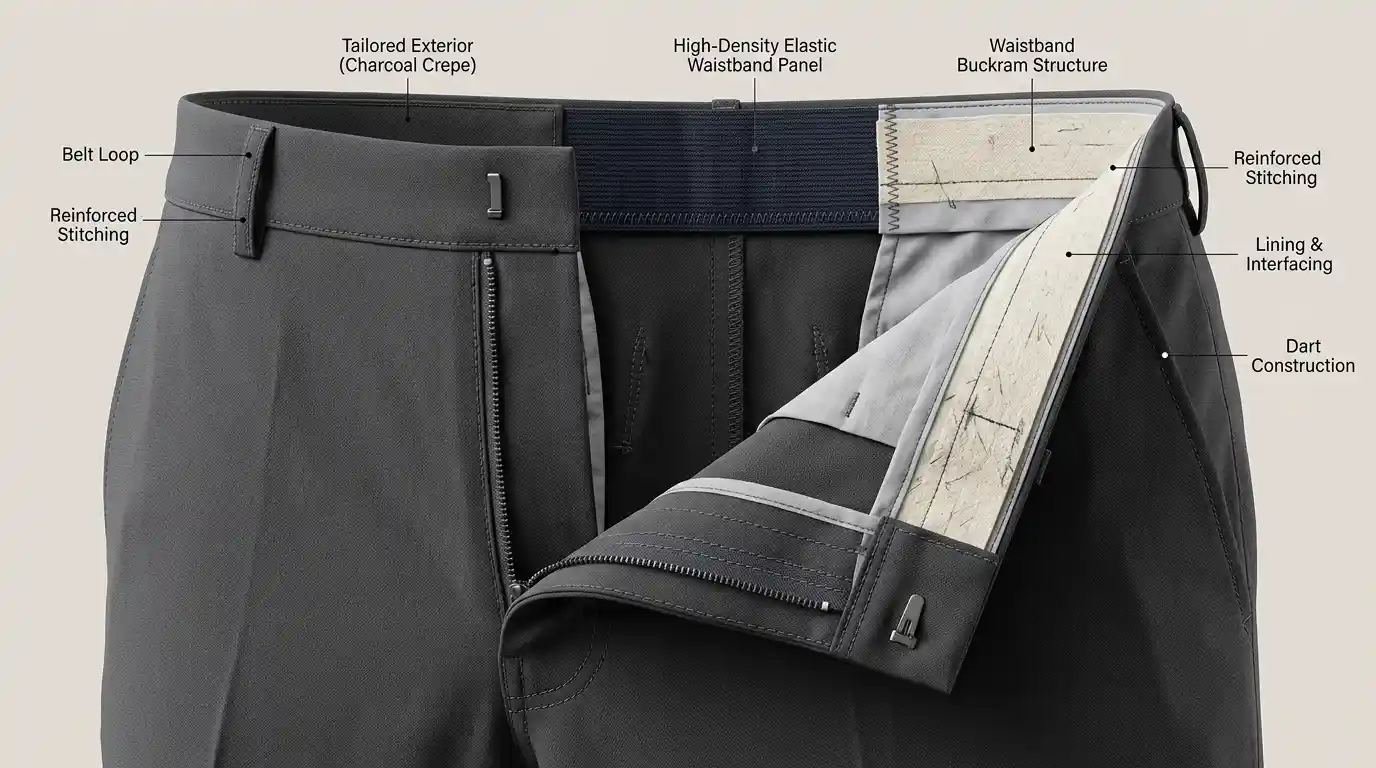
A pair of work trousers can feel light and comfortable while you stand in a fitting room, yet cut into your waist after two hours at a desk. As you sit, your abdominal region naturally expands, and your hips tilt backward. Rigid, unyielding waistbands press against the stomach, causing discomfort during long workdays. Stiff interior buckram canvas—often used to stiffen formal suit trousers—can dig painfully into the hip bones when hunched over a laptop.
+-----------------------------------------------------------------------------------+
|                        FIT CHECKLIST: THE SIT-STAND CREASE TEST                  |
+-----------------------------------------------------------------------------------+
| [ ] Step 1: Fasten the waistband at your natural waist and stand normal. Check     |
|     that the front pleats lie flat and slash pockets do not flare open.           |
|                                                                                   |
| [ ] Step 2: Sit down in an armless chair. Verify that the waistband accommodates   |
|     natural abdominal expansion without digging into your stomach.                |
|                                                                                   |
| [ ] Step 3: Stand up after two minutes. Examine the lap and back of knees;        |
|     wrinkles should soft-diffuse rather than form rigid, sharp creases.           |
+-----------------------------------------------------------------------------------+
Look for tailored trousers that feature a flat-front waistband paired with a hidden, high-density elastic panel set cleanly into the back interior waistband. This construction maintains a clean, tailored appearance in front—ideal for tucked-in blouses and button-downs—while providing two to three inches of flex across the back to accommodate sitting. Combining this flexible waistband engineering with flexible smart-casual workwear options ensures your warm-weather office outfits stay comfortable throughout long workdays.
How to Test Opacity and Quality Before Buying
Light-colored summer work trousers in shades of cream, oat, ivory, and soft grey require extra attention during pre-checkout inspection. Transparent fabric and dark interior pocket bags showing through light cloth ruin an otherwise polished look.
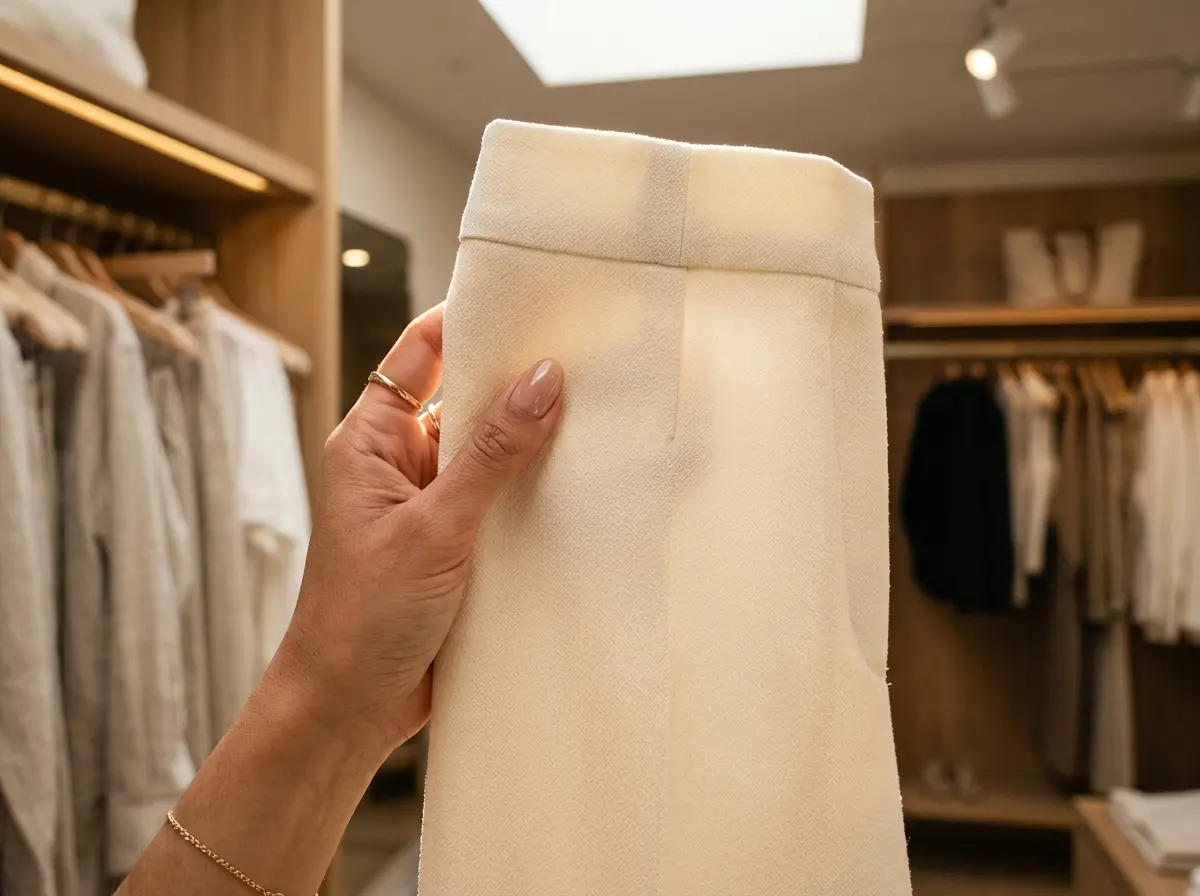
                  THREE-STEP OPACITY & QUALITY INSPECTION
  ===========================================================================
  1. THE LIGHT PASS
     Hold the trouser leg up against overhead store lighting. If you can
     clearly see the outline of your hand through both fabric layers, the
     pants will likely be sheer outdoors under direct sunlight.

  2. THE POCKET BAG CHECK
     Inspect the interior slash pocket linings. Cheap, bright-white polyester
     pocket bags pull under stress and show distinctly through light trousers.
     Quality pairs use flesh-toned or self-fabric pocket linings that blend in.

  3. THE SEAM RECOVERY TEST
     Gently pull the side seams outward along the outer thigh. The thread
     should hold firmly without visible stitch gaps, and the fabric should
     snap back smoothly without leaving stretched needle holes.
  ===========================================================================
Before making a final purchase, take a moment to evaluate garment construction details using the checklist above. Reviewing these construction checks alongside the pre-checkout steps outlined in 7 fashion buying mistakes to avoid helps prevent common buyer’s remorse when building a warm-weather office capsule.
Frequently Asked Questions About Women’s Summer Work Pants
Can I wear linen pants to a formal office without looking wrinkled?
Pure 100 percent linen wrinkles quickly upon sitting, making it better suited for relaxed or creative environments. For formal corporate offices, select an engineered 55/45 linen-viscose or linen-Tencel blend. Viscose adds drape and wrinkle recovery while preserving linen’s breathability, keeping your pants neat throughout the workday.
Are wide-leg trousers or straight-leg pants better for summer office heat?
Wide-leg trousers offer superior cooling because the roomier hem creates a natural ventilation column, drawing air upward as you walk. Straight-leg and ankle-cropped trousers also perform well in business environments, provided the fabric contains breathable fibers like tropical wool or lightweight cotton twill.
How do I stop light-colored ivory or cream summer work pants from being see-through?
Transparency issues are best avoided by selecting structured fabrics with a textured or double-woven surface, such as double crepe or medium-weight linen blends (210+ GSM). Additionally, look for trousers with nude-toned interior pocket linings, and wear smooth, laser-cut undergarments that match your skin tone rather than the color of the trousers.
How do I choose women’s work pants for summer that handle outdoor heat and cold office AC?
Select high-twist natural textiles like Super 100s tropical wool or modal-based double crepe. These materials wick away moisture during warm outdoor commutes and maintain insulation indoors, keeping you comfortable without needing extra layers.
Building a Reliable Summer Workwear Rotation
Assembling a functional warm-weather office capsule does not require a closet full of seasonal options. Three well-chosen pairs of women’s work pants for summer in distinct fabrics and silhouettes can cover a full workweek rotation:
- The Executive Foundation: A high-waisted, straight-leg tropical wool trouser in dark navy or charcoal gray for formal meetings and long travel days.
- The Commuter Workhorse: A tailored wide-leg linen-viscose trouser in warm stone, camel, or olive for hot days requiring maximum airflow.
- The Smart-Casual Staple: A cropped, flat-front cotton poplin or double crepe trouser in black or ivory for daily office wear.
Focusing on high-twist fiber weaves, proper waistband construction, and generous silhouette ease allows you to build a summer workwear rotation that looks crisp, manages outdoor humidity, and stays comfortable through long hours at your desk.
Sources
Official Sources
- Federal Trade Commission, Textile Products Identification Act (16 CFR Part 303) | Access Date: July 2026 | Source Tier: Tier 3
Research Sources
- Dalsarto Tailoring, Tropical Wool: The Best Summer Suit Fabric | Access Date: March 2026 | Source Tier: Tier 4
Industry Sources
- Harper’s Bazaar, Bazaar’s Guide to Effortless Summer Workwear | Access Date: June 2026 | Source Tier: Tier 5
- Who What Wear, The Best Summer Work Capsule Wardrobe | Access Date: June 2026 | Source Tier: Tier 5
- Who What Wear, The Best Black Tailored Pants for Work | Access Date: April 2026 | Source Tier: Tier 5