Nobody warns you that the ride home from the hospital happens in a body that still reads as six months pregnant, wearing underwear the hospital handed you in a paper bag. That gap, between what your closet holds and what your body can actually tolerate, is what a postpartum wardrobe is for. The good news is that the list of postpartum wardrobe essentials for new moms is far shorter than any retailer would like you to believe.
For the first six weeks or so, your clothes have exactly three jobs: stay off a healing belly, open for feeding with one hand, and survive the washing machine on a repeated cycle. Anything that does those three things counts. Anything that only performs in a mirror can wait.
This guide builds the list the same way we build every wardrobe here, starting with what you already own and filling the real gaps with inexpensive, hardworking pieces. Most of what follows costs less than one going-out dress and gets worn roughly ten times as often.
A working postpartum wardrobe covers five jobs: underwear that clears or covers the incision, tops that open one-handed for nursing, bottoms with a soft or adjustable waistband, layers that open in front, and slip-on shoes. In pieces, that runs 12 to 16 items, and most new mothers already own a third of them from pregnancy or the back of their own dresser. Buy the gaps, not a whole new closet.
What the First Six Weeks Ask of Your Clothes
Postpartum bleeding, called lochia, typically tapers over four to six weeks after a vaginal birth, and the American College of Obstetricians and Gynecologists now frames recovery as a fourth trimester of ongoing care rather than a single six-week checkpoint. Engorgement usually lands in the first week as milk comes in, which means bra size is a moving target exactly when you are least equipped to shop for it. And because 32.4 percent of births in the United States were cesarean deliveries in 2024, per CDC data, a waistband that respects a surgical incision is not a niche concern.
Read together, those facts produce a simple clothing spec. Nothing should press on the lower belly or the chest. Everything that needs to open should open with one hand, because the other hand is holding the baby. And every fabric should tolerate frequent washing, since the first weeks involve leaks of several kinds.
That spec is the entire philosophy behind the list below. Style returns later. It always does.
The Postpartum Wardrobe Essentials List, Organized by Job
Counts follow decisions here, the same rule we apply to every capsule, so treat the table as a menu rather than a mandate. The last column is what to check before anything goes in the cart.
| The job | The piece | Why it works | Check before buying |
|---|---|---|---|
| Underwear, weeks 1 to 2 | Disposable high-waist briefs, like the FRIDA Mom c-section pack | They hold heavy pads in place, stretch over or under a tender belly, and get thrown away when done | Price per pack, not per panty; about 16 dollars for eight is the going rate |
| Underwear, week 3 and on | High-waisted cotton or modal briefs, three to five pairs | Soft bands sit above or well below the incision line once bleeding tapers | Wash test first, and skip lace and stiff elastics until sensitivity settles |
| Nursing tops | Crossover necklines, henleys, and button-downs, four to six | Every one opens with one hand and doubles as regular clothing later | Stretchy cotton beats thin synthetic that shows through |
| Bras | Two wireless nursing bras to start, clip or pull-aside cups | Wireless cups tolerate engorgement, and clips let you feed without undressing | Buy two inexpensive ones before birth, then reassess size at week three |
| Bottoms | Drawstring joggers and postpartum leggings, three to four | Elastic and drawstrings adjust daily as swelling drops | Do a sit test, or order from a retailer with free returns |
| One-piece | A wrap dress or shirtdress, one to two | The waist ties where you want it and the front opens for feeding | Mid-weight fabric; thin jersey clings to everything in week two |
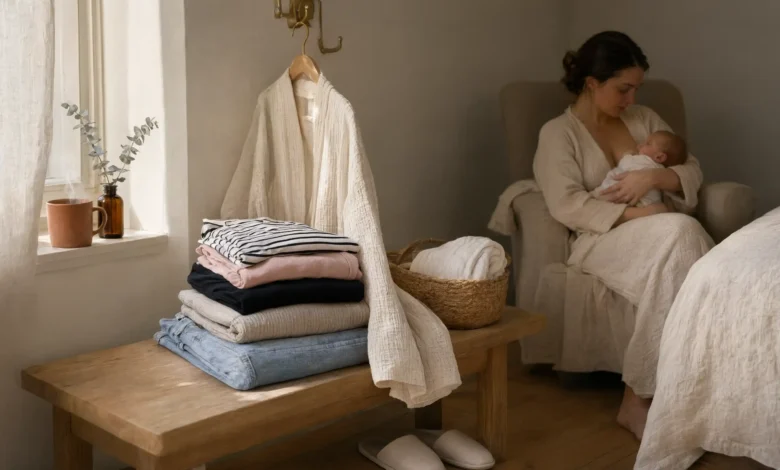
| Night and home | A nursing nightgown or pajama set, plus a robe | Visitors, the doorbell, and 3 a.m. feeds all happen in these | The robe earns its hanger as a nursing cover and a warmth layer |
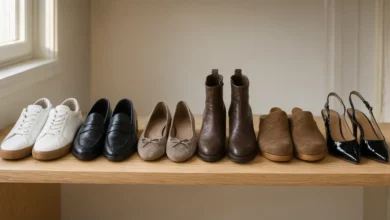
| Feet | Slip-on sneakers or loafers, one pair | No laces means no bending and no balancing on one foot | Stability wins; heels can wait a month |
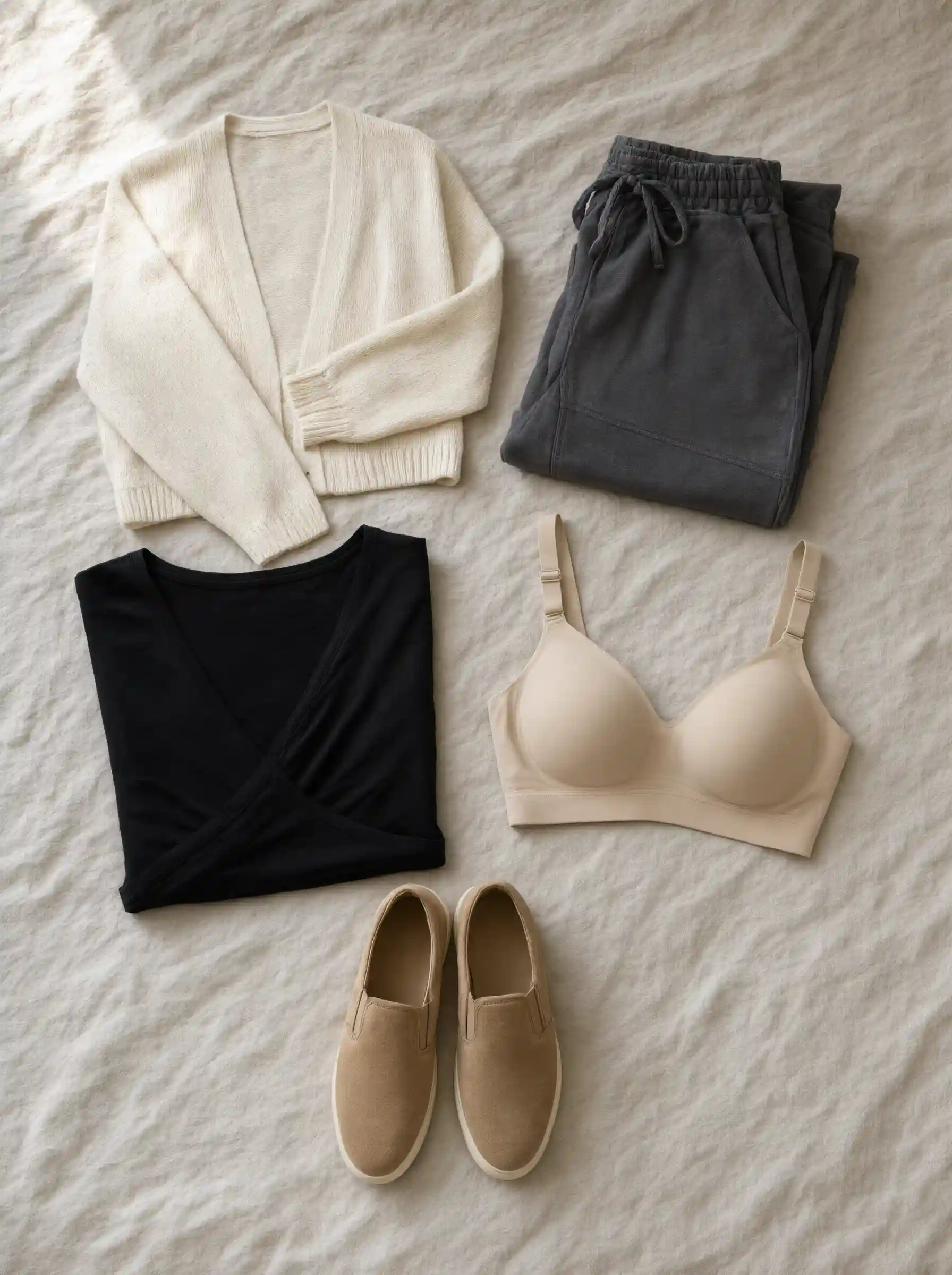
Notice what is missing from that table: compression wraps, belly bands, and any garment whose job is to hold you in. Some mothers genuinely like a belly wrap for the feeling of support, and WebMD describes wraps as a gentle way to hold healing muscles in place while the body recovers. That makes compression an optional comfort purchase, not an essential, and the same goes for compression leggings. The wardrobe’s job is access and softness. Compression is a personal add-on.
The Going-Home Outfit Is One Decision, Not an Outfit
Search traffic calls this the postpartum going home outfit, and the honest answer is that it is one decision, not an ensemble. Pick the single softest thing you own that opens in front or stretches without fighting. A loose midi dress, maternity leggings with an oversize henley, even the nightgown you wore in the hospital all qualify. Who What Wear’s editor-tested maternity leave list lands on the same core five pieces, with a nightie, robe, nursing bra, postpartum underwear, and comfy lounge pants carrying the early weeks.
The mesh underwear question comes up in every honest conversation about this ride home. Chrissy Teigen posted a photo in her hospital-issued mesh pair, and in Today’s reporting of the post she asked, “Tell me those hospital underwear are not god sent?!” Wear whatever holds the pads in place and hurts nothing. The parking lot does not judge.
What not to wear is the pre-pregnancy jeans you bought as motivation. They will not fit for weeks to months, and the ride home is the wrong day for a fight with a zipper.
After a C-Section, the Waistband Rule Changes
About one birth in three ends in a cesarean delivery, so this deserves its own section rather than a footnote. The only rule that matters is that no waistband, seam, or elastic edge lands on the incision line. Everything else is preference.
Two solutions clear that line. High-waisted underwear and leggings that sit a couple of inches above the incision, which is why FRIDA Mom makes a high-waist disposable brief specifically for c-section recovery, is the first. Low, soft waistbands that rest below the scar on the hips are the second. What fails is the mid-rise band that parks exactly on the incision.
The same logic applies to bottoms: drawstring joggers worn loose and low, or high-waisted leggings with a wide, flat band. Once healing is further along and you want help with the midsection beyond recovery wear, our guide on how to dress an apron belly covers the waistband and drape mechanics in depth.
Nursing Access Without Buying a Costume
Nursing-friendly clothing comes in three access styles, and knowing the names saves you from buying pieces that turn out to be useless. Crossover necklines pull aside with one hand. Clip cups unhook at the strap. Henleys and button-downs simply open in front. All three work, and the right pick is whichever you can operate half-asleep, because that is the condition you will use it in.
The trade-off worth naming is that dedicated nursing wear with hidden zips and double layers tends to look like dedicated nursing wear, which is fine at home and less fine at a birthday party. Crossover tops, henleys, and button-downs are ordinary clothes that happen to open, which is why they survive the whole year instead of only the fourth trimester.
Bras are the one category where I would genuinely buy purpose-built. A wireless nursing bra from a brand like Kindred Bravely, whose line runs to soft clip and pull-aside styles, costs about as much as a takeout dinner and removes a daily friction. Buy two before birth and hold off on the good ones until engorgement settles and your size stops moving, usually around week three or four.
Sizing: Buy the Transition, Not the Destination
The most expensive postpartum mistake is buying a whole new wardrobe in a new size during a period when your size is provably temporary. Bleeding tapers over weeks, swelling drops fast in the first ten days, and many bodies keep changing well past the six-week visit. So the strategy is to buy the transition, not the destination.
In practice that means keeping tops in your pre-pregnancy size and choosing relaxed cuts instead. Size up only in the two categories that physically must clear tender areas, which are bottoms and bras. Let maternity pieces work double duty, since the elastic waistbands and stretchy panels that carried the bump carry the recovery too. And set a checkpoint at six weeks, after your postpartum visit, to sort what turned out to be permanent from what was transitional.
At a Glance: sizing by category
- Bottoms and bras: size up or go adjustable now, reassess at six weeks.
- Tops and dresses: pre-pregnancy size, in relaxed, wrap, or front-opening cuts.
- Maternity pieces: keep working, because the bump room becomes recovery room.
- Structured pre-pregnancy jeans and blazers: store them, do not fight them.

This is also the audit-first logic we apply to building a capsule wardrobe at any other life stage. The closet you have is the starting point, and the buy list is only what the audit proves is missing.
Building the List on a Real Budget
A full transition wardrobe does not need to cost more than one mid-range dress. The disposable underwear weeks are inexpensive by design. Old Navy joggers list in the high 30s and routinely sell for under 25 dollars. Crossover tops and henleys are thrift-shelf staples, and a clothing swap with other mothers is the oldest postpartum supply chain there is.
The two places I would spend the little money available are one good wrap dress in a mid-weight fabric and one pair of slip-on shoes you can walk a stroller in. Those two carry the going-out job for six months. Everything else can be borrowed, swapped, or thrifted without losing anything that matters.
Cost per wear is the honest math here, the same standard we hold the five permanent wardrobe essentials to. A 30 dollar henley worn forty times in the fourth trimester outperforms a 120 dollar dress worn once to a christening.
Who This List Is Not For
If your workplace or a uniform dress code resumes within a few weeks of birth, this loungewear-first list only covers your off-hours, and a workwear capsule deserves its own planning session. If you genuinely dislike loungewear and feel more like yourself in structured clothes, honor that, and size up your existing tailored pieces instead of buying soft ones you will resent. And if the budget is genuinely tight right now, skip buying entirely for the first two weeks, because the maternity drawer plus one pack of disposable underwear covers the acute phase and the audit can happen at week six.
If Your First Weeks Look Different
Three or four versions of the first month exist, and the list bends to fit them.
- If you are recovering from a c-section: high-waist disposable briefs for weeks one and two, then wide-band leggings, with nothing mid-rise until the scar stops noticing.
- If you are nursing around the clock: nightgowns and a robe do more work than daytime outfits, so keep two of each and treat the crossover top as your going-out uniform.
- If you are feeding mostly bottles: skip dedicated nursing wear entirely and buy front-opening pieces for burping and carrying, because a button-down shirt is the whole system.
- If visitors and outings fill your calendar: the wrap dress plus slip-on shoes is the entire going-out answer, and one cardigan that opens in front finishes it.
Frequently Asked Questions About Postpartum Wardrobes
What counts as postpartum wardrobe essentials for new moms?
Underwear that clears or covers the incision, tops that open one-handed for nursing, bottoms with soft or adjustable waistbands, front-opening layers, and slip-on shoes. In pieces that runs 12 to 16 items, and most new mothers already own a third of them from pregnancy or their existing closet.
What is the best underwear to wear postpartum?
Disposable high-waist briefs for the first two weeks, since they hold heavy pads in place while lochia tapers over its four to six weeks. After that, soft high-waisted cotton or modal briefs whose band sits above or below a c-section scar instead of on it.
Should I size up after having a baby?
In bottoms and bras, yes, or choose adjustable waistbands and wireless cups instead of a new number on the tag. In tops and dresses, keep your pre-pregnancy size and change the cut to relaxed, wrap, or front-opening styles, then reassess at the six-week postpartum visit.
What should I wear home from the hospital?
The softest stretchy or front-opening thing you own, like a loose dress, maternity leggings with an oversize henley, or drawstring joggers worn loose. Skip the pre-pregnancy jeans, since the body you arrive home in still carries a third-trimester belly.
How long until my clothes fit the way they did before pregnancy?
Longer than the internet implies and shorter than it feels at 3 a.m. Bleeding tapers over four to six weeks, but ACOG frames recovery as an ongoing fourth trimester and many bodies keep changing for months, which is why this guide buys for the transition rather than the destination.
The Bottom Line
A postpartum wardrobe is a six-week tool kit, not an identity. Underwear that respects the healing body, tops that open with one hand, bottoms that adjust daily, and shoes that need no balancing: that is the whole assignment, and it is deliberately small so your attention can go to the baby and to your own recovery. When the six-week checkpoint arrives and the picture gets clearer, the permanent wardrobe can be rebuilt calmly, piece by piece, with the same audit-first habits. Until then, postpartum wardrobe essentials for new moms are less about buying the right things than about refusing the wrong ones.
Sources
Official Sources
- CDC: FastStats, Births, Method of Delivery, Access Date: August 23, 2026
- American College of Obstetricians and Gynecologists: Committee Opinion No. 736, Optimizing Postpartum Care, Access Date: August 23, 2026
Research Sources
- Mayo Clinic: Postpartum Care: What to Expect After a Vaginal Birth, Access Date: August 23, 2026
- Cleveland Clinic: Lochia (Postpartum Bleeding), Access Date: August 23, 2026
- Cleveland Clinic: Breast Engorgement: Causes, Complications and Treatment, Access Date: August 23, 2026
- WebMD: Postpartum Belly Wraps: Risks, Benefits, Types, and Safety, Access Date: August 23, 2026
Industry Sources
- Today: Chrissy Teigen Jokes About Postpartum Underwear on Instagram, Access Date: August 23, 2026
- Who What Wear: The Best Postpartum Clothes I Wore on Maternity Leave, Access Date: August 23, 2026
- FRIDA Mom: High-Waist Disposable Postpartum Underwear, Access Date: August 23, 2026
- Kindred Bravely: Nursing Bras for Breastfeeding Moms, Access Date: August 23, 2026
- Old Navy: Women’s Joggers, Access Date: August 23, 2026
- Belly Bandit: Maternity Compression Products, Access Date: August 23, 2026
Additional Reading
- Babylist: Why You Need a Postpartum Capsule Wardrobe, Access Date: August 23, 2026
- The Bump: The Best Postpartum Underwear, Tested by 12 New Moms, Access Date: August 23, 2026