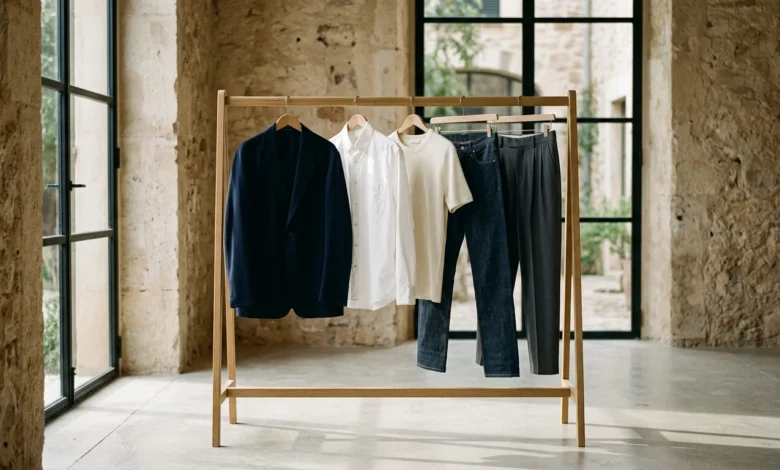
The Core Principle: Why Building a Wardrobe From Zero Starts With Lifestyle, Not Shopping
Most fashion advice suggests that clearing out a closet requires an immediate weekend shopping trip to buy thirty new garments. That approach rarely works. Knowing how to build a wardrobe from scratch starts with understanding how you move through a typical week, not with a pre-packaged shopping list.
When people buy clothing for an idealized version of their lives—formal evening wear for someone who works remotely, or rigid suits for a relaxed office—the result is predictable. Editors at Harper’s Bazaar UK noted that the average person regularly wears only 40% to 60% of the clothes sitting in their closet. The rest stays unworn because those pieces do not fit actual daily routines.
Before spending money on new clothing, take time for defining your personal style framework. A clear sense of visual preference helps prevent impulse purchases, but visual taste still needs to ground itself in daily utility.
How to Build a Wardrobe From Scratch?
To build a wardrobe from scratch, start by calculating your weekly active hours with a lifestyle audit. Next, select a core neutral base palette (cool or warm). Build four-piece modular clusters combining two bottoms, three tops, one outer layer, and one shoe pair. Finally, pace purchases in 30-day wear-testing waves to avoid overspending.
The Lifestyle Audit: Mapping Garments to Real Weekly Hours
To avoid buying clothes for a routine you do not actually live, run a 168-hour lifestyle audit. A single week contains 168 hours. Subtract 56 hours for sleep, leaving 112 active hours.
Break those 112 hours into distinct categories:
- Desk or Office Work: 40 hours (36%)
- Casual Home Time: 35 hours (31%)
- Active Recreation & Exercise: 15 hours (13%)
- Dining out & Socializing: 12 hours (11%)
- Errands & Travel: 10 hours (9%)
If 36% of your waking week involves desk work, roughly a third of your clothing budget belongs in comfortable, structured office wear. If social dinners account for only 11% of your time, buying three cocktail dresses on your first shopping trip creates immediate imbalance.
If you are transitioning your current closet rather than starting from absolute zero, try the hanger trick. Turn all your closet hangers backward at the start of a season. When you wear and wash an item, hang it back up with the hook facing forward. After three months, any backward hanger reveals a piece that failed your real-world lifestyle test.
Step 1: Establish Your Core Neutral Palette and Base Layers
When building a wardrobe from zero, foundational base layers carry your daily outfits. Base layers are solid, unpatterned tops, versatile bottoms, and light outer layers cut in neutral shades. According to style analysis from Who What Wear, high-quality basic items anchor outfits and increase how often you can wear statement pieces without looking repetitive.
Start with five core garments: two structured tops, two versatile bottoms, and one flexible outer layer. For tops, a mid-weight white crew-neck tee and a crisp cotton poplin button-down offer reliable daily coverage. Expect woven cotton poplin to show minor placket seam puckering after two or three cold washes—this is a normal fiber reaction, not a defect. For bottoms, choose one pair of dark-wash straight fit denim and one pair of tailored trousers in a woven crepe or wool blend. Straight fit denim maintains a consistent width from knee to hem, making it far more versatile across flats, loafers, and boots than extreme tapered or flared cuts.
For a complete breakdown of construction parameters on foundational pieces, read our foundational wardrobe essentials fit guide.
| Neutral Base Type | Primary Base Colors | Accent Companions | Leather & Hardware Tones |
| Cool Neutrals | Black, Deep Navy, Slate Gray, Crisp White | Soft Blue, Burgundy, Emerald | Black Leather, Silver Hardware |
| Warm Neutrals | Camel, Espresso, Cream, Soft Olive | Terracotta, Warm Gold, Forest Green | Cognac/Brown Leather, Gold Hardware |
Cool vs. Warm Neutrals: Choosing Your Foundational Base
Mixing too many conflicting undertones early in a closet rebuild limits how easily garments pair together. To maintain high interchangeability, pick one base family for your initial pieces.
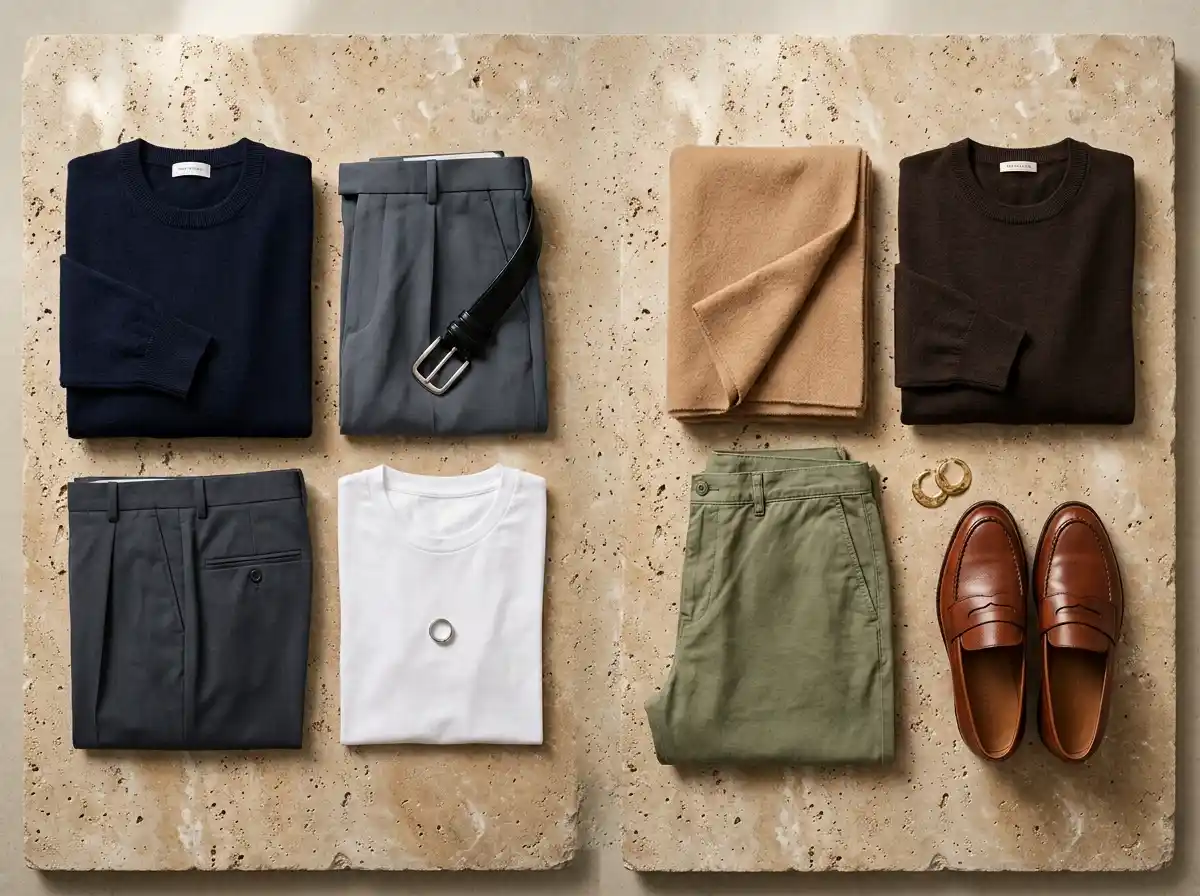
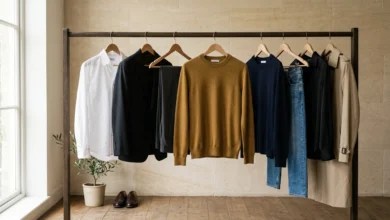
A cool neutral base relies on black, deep navy, slate gray, and bright white. These shades pair cleanly with silver jewelry and black leather accessories. A warm neutral base centers on camel, espresso brown, warm cream, and soft olive, pairing best with gold jewelry and cognac leather footwear. Selecting one side of this spectrum guarantees that any top you pull from a hanger pairs with any bottom in your drawer.
Step 2: Build Modular Outfit Clusters (The 4-Piece Formula)
Instead of buying individual garments that catch your eye on a rack, build in four-piece modular clusters. Independent closet analysts and retail testing show that grouping clothing into a ratio of two bottoms, three tops, one layer, and one footwear pair creates up to 18 distinct outfit combinations from just seven total items.
If you want to keep your overall collection small while maximizing daily options, explore our guide on building a streamlined capsule wardrobe.
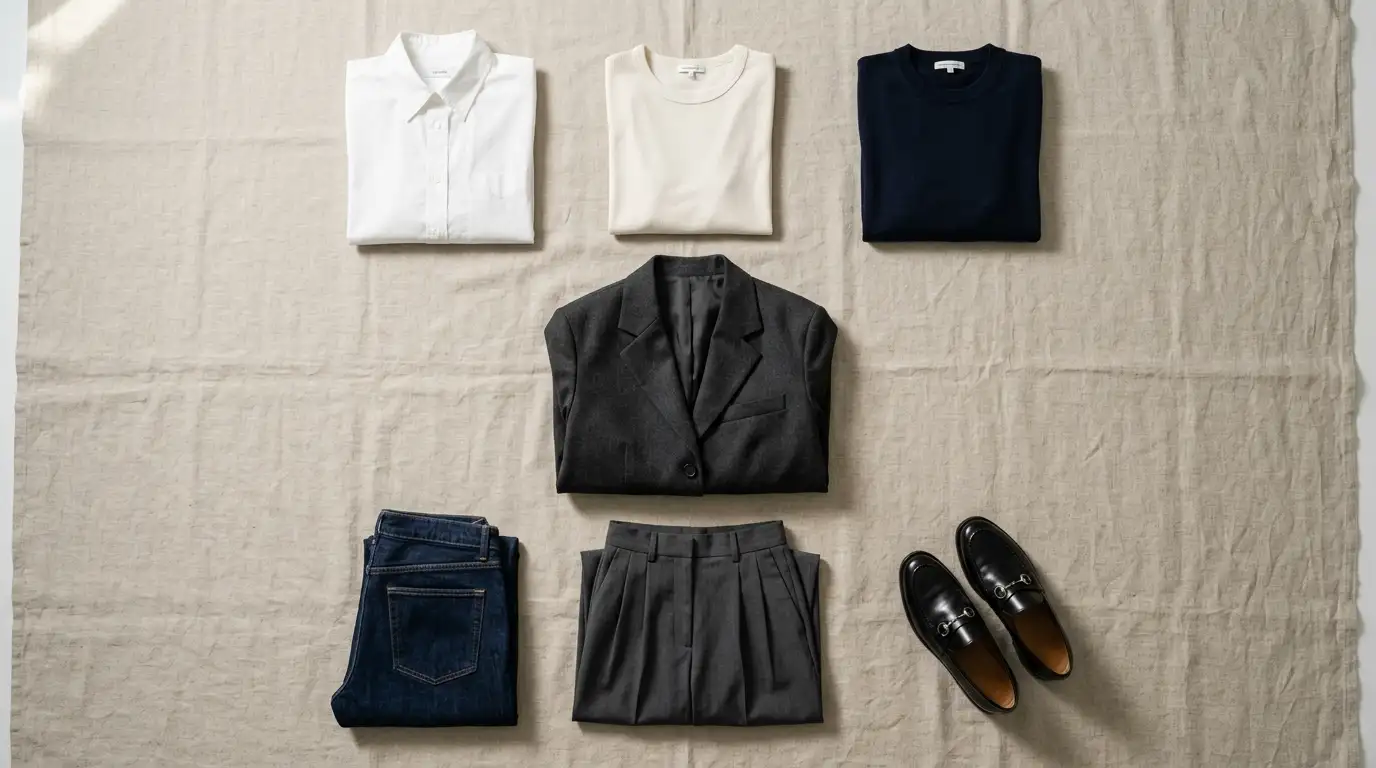
A practical four-piece cluster for smart casual settings looks like this:
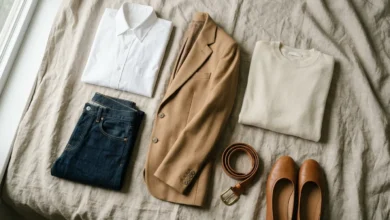
- Tops (3): One white cotton poplin shirt, one ribbed crew-neck tee, one fine-gauge crew knit.
- Bottoms (2): One pair of mid-rise straight fit dark denim, one pair of high-waisted pleated crepe trousers.
- Layer (1): One relaxed fit blazer in dark navy or charcoal. A relaxed fit cut—featuring a gentle drop shoulder and a straight body—layers over knits far better than a tight, fitted jacket. If you need help checking shoulder measurements, view our guide on styling oversized blazers with precise shoulder alignment.
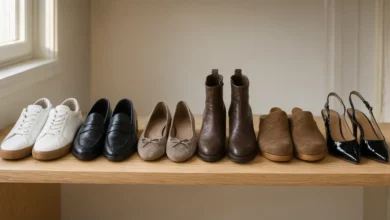
- Footwear (1): One pair of flat leather loafers. Polished leather loafers provide structured support while remaining comfortable for daily walking.
| Cluster Role | Recommended Item | Silhouette / Cut | Versatility Role |
| Base Top 1 | White Poplin Button-Down | Regular Fit | Layers under blazers or over tees |
| Base Top 2 | Ribbed Crew-Neck Tee | Slim Fit | Tucks cleanly into trousers and denim |
| Mid-Layer | Fine-Gauge Crew Knit | Regular Fit | Provides standalone warmth or shoulder drape |
| Core Bottom 1 | Dark-Wash Jeans | Straight Fit | Bridges casual and smart casual codes |
| Core Bottom 2 | Pleated Trousers | Tailored Wide-Leg | Delivers professional structure |
| Outer Layer | Tailored Navy Blazer | Relaxed Fit (Drop Shoulder) | Anchors informal tops into office wear |
| Footwear | Flat Leather Loafer | Structured Low-Profile | Replaces casual sneakers with polish |
Step 3: Define Fit Parameters and Construction Standards
A new wardrobe breaks down quickly if clothes stretch out, pill, or shrink after a few washes. Before buying any item, check its physical construction and fiber content.
Start by checking seam tension. Gently pull on the side seams of a garment under bright light. If the threads separate visibly or show light passing through the stitch holes, the seam will likely pull apart under normal movement. Next, check hem allowances. High-quality trousers and skirts usually feature at least an inch of fold-over fabric at the hem, allowing a tailor to adjust the length if needed.
Before finalizing any garment choice, take time for determining your body shape proportions to ensure cuts complement your natural frame. If you are specifically sourcing denim, read our technical denim fit guide.
Evaluating Fabric Weight and Labeling (FTC 16 CFR Standards)
In the United States, garment fiber disclosures are legally regulated under Federal Trade Commission (FTC) 16 CFR Part 303. This standard requires manufacturers to list accurate fiber percentages on permanent garment tags. FTC 16 CFR Part 423 requires clear laundering and care instructions on permanent labels.
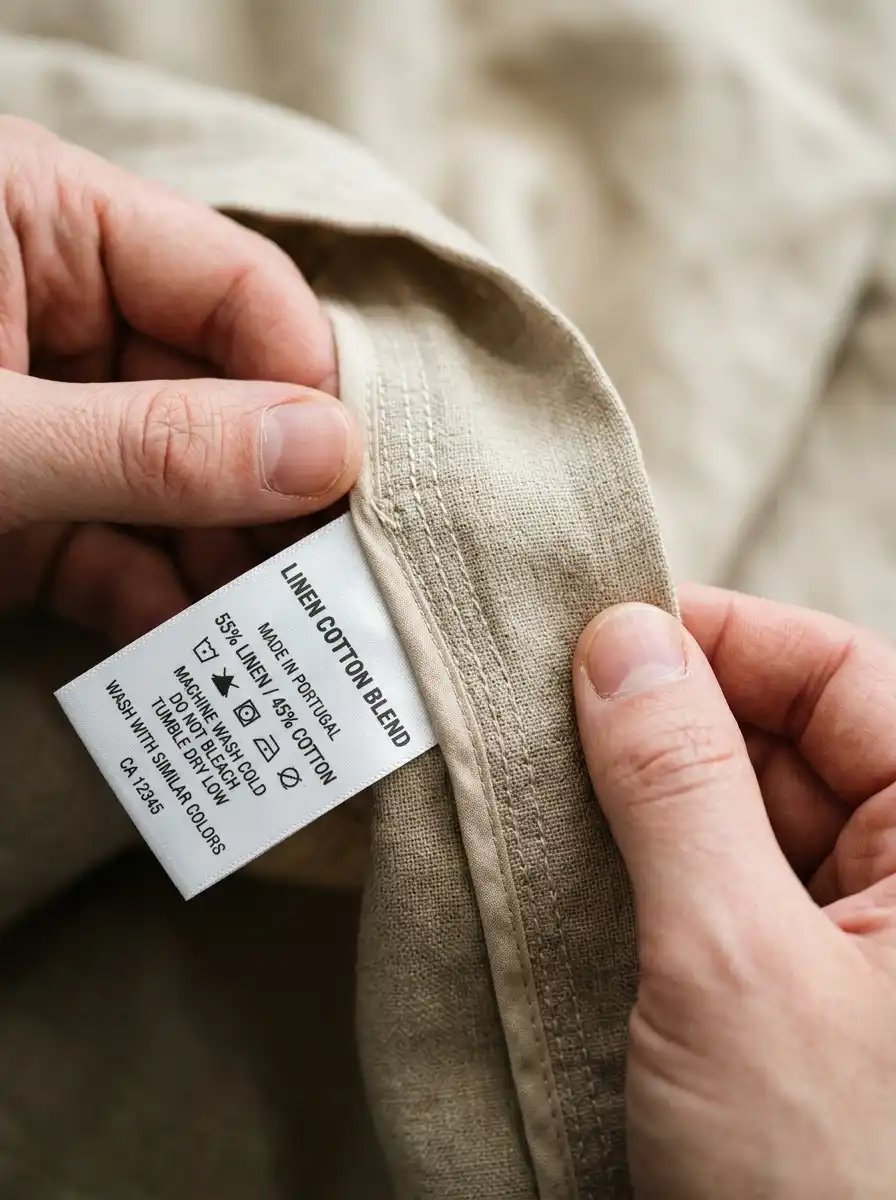
When inspecting fabric tags, look for fiber blends engineered for stability. A linen blend combining 55% flax with 45% cotton or viscose reduces the harsh creasing of pure linen while keeping the fabric soft and breathable. Pure modal or rayon fabrics offer a fluid drape, but synthetic-cellulose knits carry a risk of surface pilling over time due to friction loosening short staple fibers.
| Fiber Type | Key Characteristics | FTC Care Standard (16 CFR 423) | Maintenance Profile |
| Cotton Poplin | Crisp weave, breathable, holds structure | Machine wash warm, iron medium heat | Low pilling risk; requires light pressing |
| Linen Blend | Soft drape, breathable, reduced creasing | Machine wash cold, line dry | Minimal pilling; natural textured surface |
| Modal / Rayon | Soft hand-feel, fluid drape, absorbent | Delicate cycle cold, dry flat | Moderate pilling risk under arm friction |
| Wool Blend | Thermal insulation, wrinkle resistant | Dry clean or hand wash cold | Low-to-moderate pilling; store flat |
Step 4: Execute Paced Purchasing in 30-Day Waves
One of the biggest financial errors when building a wardrobe from scratch is buying everything in a single weekend. Pacing your purchases across distinct 30-day waves protects your budget and lets you test how garments perform in real life.
- Wave 1 (Days 1–30): The Core Foundation. Buy your seven core base items: three tops, two bottoms, one layer, and one pair of shoes in your chosen neutral palette. Wear only these pieces for thirty days. This wear-testing phase reveals if you need longer hems, lighter fabrics, or different shoe support.
- Wave 2 (Days 31–60): Secondary Layers & Texture. Add two additional tops, one alternative bottom (such as an A-line mid-calf midi dress), and a secondary outer layer like a mid-weight trench coat.
- Wave 3 (Days 61–90): Accent Colors & Accessories. Introduce subtle patterns, accent colors, or secondary shoe options once your foundational base layers are fully proven.
Common Wardrobe Rebuild Mistakes to Avoid
Building a practical closet requires avoiding behavioral traps that cause closet clutter:
- Shopping for Aspirational Events: Buying clothes for formal galas or tropical vacations before securing daily workwear leaves you with nothing to wear on Monday morning.
- Ignoring Footwear Compatibility: Purchasing pants that require a three-inch heel when you walk three miles a day during your commute creates unworn inventory.
- Ignoring Fabric Construction: Choosing thin, synthetic blends simply because the price tag is low leads to rapid garment decay and frequent replacement costs.
Garment Care: How to Maintain Your New Foundational Pieces
Protecting your new clothing investment requires correct maintenance habits. Storage environment matters greatly for natural fibers like wool, cotton, and silk. Store natural protein and cellulose fibers in breathable cotton garment bags rather than sealed plastic containers to prevent moisture trap and fiber breakdown.
For daily maintenance, high-temperature garment steaming removes light odors and relaxes textile wrinkles without the harsh direct heat or friction of a flat iron.
If surface pilling develops on modal or rayon knits from bag straps or seatbelts, use a small handheld electric fabric shaver. Glide the shaver gently across the flat fabric surface to shear off loose fiber pills without tugging on the underlying weave.
Frequently Asked Questions About Building a Wardrobe From Scratch
Where should I start if I am clearing out my closet completely?
Start with a lifestyle audit. Calculate where you spend your waking hours each week, then buy a single seven-piece neutral cluster (three tops, two bottoms, one layer, one shoe pair) tailored strictly to your primary daily activity.
How many total garments do I need when rebuilding your closet from scratch?
A functional starting collection requires roughly 12 to 15 garments. This includes four tops, three bottoms, two outer layers, two pairs of shoes, and one versatile midi dress, creating over 30 unique outfit combinations.
How do I choose between cool and warm neutral bases?
Look at the shoes, bags, and jewelry you already own. If you prefer black leather and silver jewelry, build on a cool neutral base (black, navy, white, slate). If you lean toward brown leather and gold jewelry, choose a warm base (camel, cream, espresso, olive).
Should I buy all my new clothes at once or spread purchases out?
Spread your purchases across 30-day waves. Buying your core base items first gives you thirty days of real-world wear testing, helping you spot fit or fabric needs before buying secondary layers.
How can I tell if a garment is good quality before buying it?
Check the inner seam tension, look for generous hem allowances, and read the permanent care tag for fiber composition under FTC 16 CFR Part 303 standards. High-density natural fibers or stable blends like cotton-linen hold structure far better than thin synthetic weaves.
Building a Wardrobe That Lasts: Final Steps
Creating a functional closet is not about chasing every passing trend or filling hangers for the sake of abundance. By mapping clothing choices to your actual weekly routine, selecting a tight neutral base, and testing fit construction, building a functional wardrobe from scratch becomes a clear, systematic process.
Focus on versatile base layers, pace your purchases in structured waves, and let your clothes support your daily life with ease.
Sources
Official Sources
- Federal Trade Commission (FTC), Textile Fiber Products Identification Act (16 CFR Part 303) | Access Date: July 23, 2026 | Tier 3
- Federal Trade Commission (FTC), Care Labeling of Wearing Apparel and Certain Piece Goods Rule (16 CFR Part 423) | Access Date: July 23, 2026 | Tier 3
Industry Sources
- Who What Wear, How to Build a Capsule Wardrobe | Access Date: July 23, 2026 | Tier 5
- Who What Wear, An Ageless Capsule Wardrobe | Access Date: July 23, 2026 | Tier 5
- Harper’s Bazaar UK, How to Detox Your Wardrobe | Access Date: July 23, 2026 | Tier 5
- Harper’s Bazaar UK, How to Build a Capsule Wardrobe | Access Date: July 23, 2026 | Tier 5