The checked bag fee at most major U.S. airlines is now $45 to $50 for a single bag, one way. That number alone has changed how a lot of people pack. It’s no longer just a space problem tucked away for the night before a flight. It’s a math problem, and the honest goal of a good travel wardrobe is to solve it without showing up somewhere in the same three outfits on repeat.
Travel wardrobe essentials are not the same as a regular capsule wardrobe. At home, a closet edit has to work for months of weather and moods. A travel wardrobe has to work for a fixed number of days, an unpredictable climate, a bag with a hard limit, and often more than one occasion (a flight, a dinner, a hike, a meeting) inside the same trip. The rules that make a home closet efficient don’t automatically make a suitcase efficient.
This is not an argument for buying an entirely new travel-specific wardrobe. Most of what belongs in a carry-on is probably already in a closet. It’s an argument for packing on purpose: one color story, a piece-count formula that flexes with trip length, two or three fabrics that are actually worth their weight, and an honest list of what to leave home.
The short version: building reliable travel wardrobe essentials comes down to four decisions. First, choose one neutral color story with a single accent color so every piece works with every other piece. Second, size the wardrobe to the trip using a flexible ratio (roughly five tops, four bottoms, three shoes, two layers, one dress is the common starting point, adjusted up or down by trip length). Third, spend the fabric budget on two or three pieces that resist wrinkling and odor, not the whole suitcase. Fourth, buy toiletries and one-time-use items at the destination instead of packing them, which is often what actually saves the bag fee.
Why Packing for Travel Breaks the Normal Wardrobe Rules
The Transportation Security Administration’s 3-1-1 liquids rule has not changed for 2026, despite periodic speculation that it might. Liquids, gels, and creams still need to be under 3.4 ounces per container, all fitting into a single quart-size bag. Some airports have started using CT scanners that let travelers leave that bag inside their carry-on during screening, but the size limit itself is unchanged. That single rule quietly shapes half of what should live in a toiletry bag versus what should just get bought at the destination.
The other pressure is financial. Checked bag fees jumped again in early 2026, with several major carriers raising first-bag pricing by about $10 after a run-up in fuel costs. According to Bureau of Transportation Statistics data reported by AARP, U.S. airlines collected more than $7.4 billion in baggage fees in 2025 alone, a figure that has climbed 162 percent over five years. Every piece added to a suitcase now has a cost attached to it, whether or not it ever gets money out of a wallet at the counter.
At a Glance: Trip Length Sets the Piece Count
- Weekend (2 to 4 days): around 8 to 10 pieces, laundry not required.
- One to two weeks: the 5-4-3-2-1 ratio (roughly 15 pieces) is the common starting point, adjusted for climate.
- Three weeks or longer: expect one laundry cycle mid-trip rather than packing for every single day.
- Multi-climate or business-plus-leisure trips: build two small capsules that share a color story rather than one large one.
Start With a Color Story, Not a List
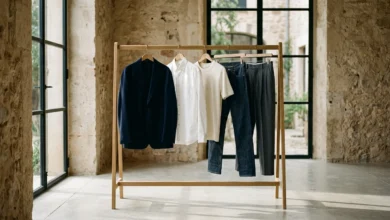
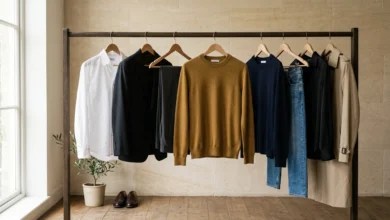
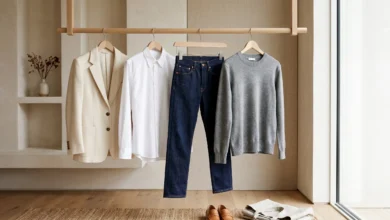
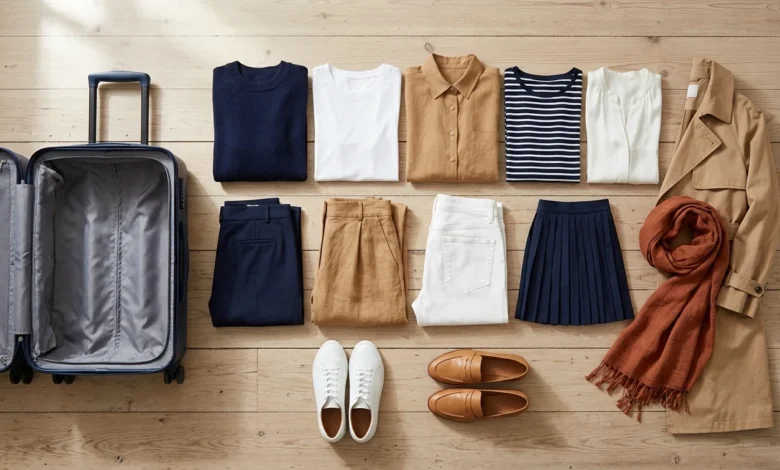
Packing lists tend to start with categories: tops, bottoms, shoes. A better starting point is color, because color is what actually determines whether ten pieces make ten outfits or thirty. Two neutrals and one accent color is enough. Black and camel with a rust accent. Navy and white with a single olive piece. The point isn’t the specific palette, it’s that every top has to work with every bottom without a mental spreadsheet to track it.
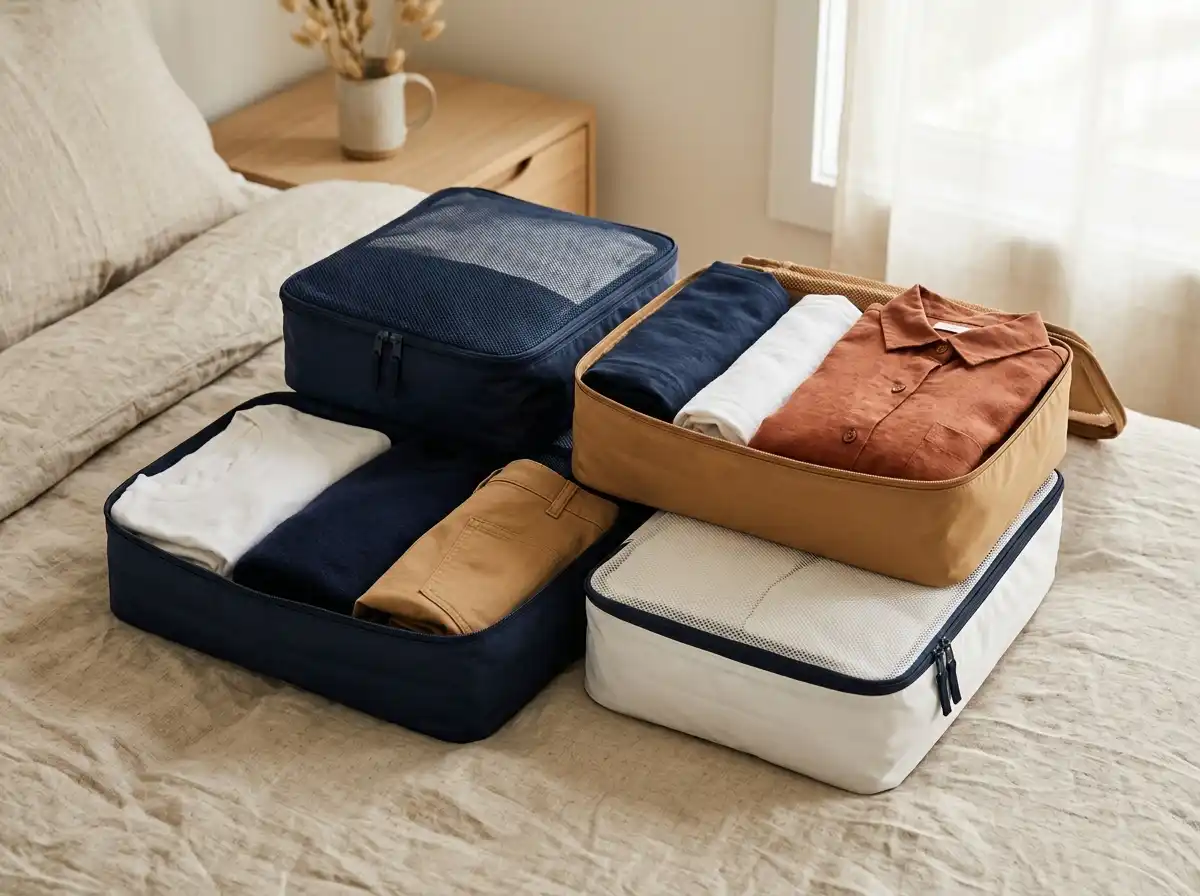
This is also where a lot of packing goes wrong before a single item is chosen. A favorite going-out top that only pairs with one specific skirt is, functionally, half an outfit taking up the space of a whole one. It might still be worth packing for a specific dinner, but it shouldn’t be treated as equivalent to a top that pairs with everything else in the bag.
The 5-4-3-2-1 Method, and When to Break It
The most widely used shorthand for a travel capsule is the 5-4-3-2-1 method: five tops, four bottoms, three pairs of shoes, two layers or dresses, one accessory or statement piece, adjusted to trip length and climate. It isn’t a rigid formula so much as a ratio that keeps a bag from either being packed to the seams or missing something obvious. For a weekend, that number drops closer to a 3-2-1 shape. For a three-week trip, most experienced travelers don’t scale up proportionally, since laundry becomes part of the plan instead.
| Trip length | Approximate piece count | Laundry expected? | Best fit for |
|---|---|---|---|
| Weekend (2 to 4 nights) | 8 to 10 pieces | No | City break, short visit, single climate |
| One week | 12 to 15 pieces | Optional, one load | Standard vacation or single-destination business trip |
| Two weeks | 15 to 18 pieces | Yes, one to two loads | Multi-city or mixed business and leisure itineraries |
| Three weeks or more | 15 to 20 pieces, not more | Yes, regular cycle | Extended travel, studying abroad, slow travel |
The number that stays constant across all four rows is the shoe count. Shoes are the single heaviest, most space-consuming category in most bags, and three pairs (one walking, one dressier, one weather-specific) covers nearly every trip without becoming its own suitcase.
Fabrics Worth the Suitcase Space
Not every fabric earns a spot in a bag with a hard limit. Two properties matter more than any other for travel specifically: how a fabric looks after being folded into a suitcase for hours, and how many times it can be worn before it needs washing.
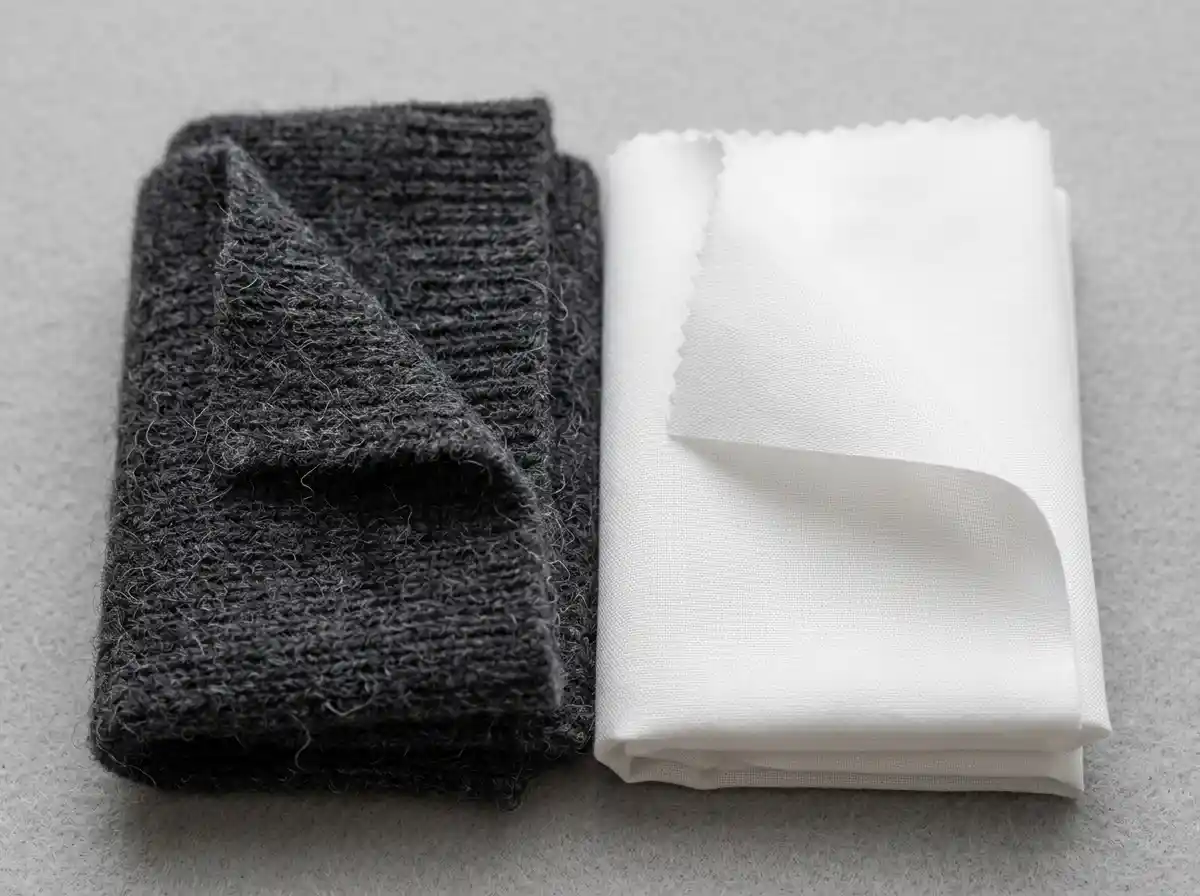
Wool performs unusually well on both counts, and this isn’t just brand marketing. A New Zealand study led by AgResearch, cited by the Woolmark Company, tested wool against polyester and cotton for body odor retention and found wool held onto 66 percent less odor intensity than polyester and 28 percent less than cotton after wear. Wool’s fiber structure also has natural spring, which is why a wool sweater tends to shake out smooth after a flight while a cotton one holds its creases. That combination is exactly why merino has become a common travel-specific pick, even though it costs more per piece than a basic cotton tee.
Cotton poplin and structured cotton blends remain worth packing for anything that needs a crisp, put-together look, like a button-down for a meeting, but they wrinkle more and need more frequent washing. Linen blends breathe well in heat but crease on purpose, which reads as relaxed in some settings and sloppy in others, worth knowing before packing one for a client dinner. Rayon and modal drape nicely and pack small, but neither resists odor the way wool does, so they work best paired with a wash cycle rather than five days of rewear.
| Fabric | Wrinkle behavior | Rewear before washing | Best use in a travel bag |
|---|---|---|---|
| Merino wool | Springs back after packing | Multiple wears, often 4 to 7 days | Base layers, sweaters, travel dresses |
| Cotton poplin | Wrinkles visibly, needs pressing | 1 to 2 wears | Structured shirts for meetings or dinners |
| Linen blend | Creases by design | 1 to 2 wears | Hot-weather daytime, casual settings only |
| Rayon or modal | Packs small, mild wrinkling | 1 wear typically | Dresses and tops needing drape, not longevity |
What’s Worth Buying New, and What Isn’t
It’s easy to assume a good travel wardrobe requires a shopping trip. Most of the time, it doesn’t. A closet audited for color and fabric usually turns up most of what a trip needs already. The exception worth an actual purchase is a genuine gap: no lightweight layer that packs small, no shoe that works for walking eight miles and still looking presentable at dinner. One or two targeted pieces, not a full replacement wardrobe, closes that gap.
Toiletries are the other place where packing instinct works against the traveler. Meredith Thomas, who writes about travel on her blog Two Packs and a Pup, put it plainly to AARP: Unless your products are expensive, highly specialized or prescription, there’s no need to bring everything with you.
That’s a reasonable line to draw. A specialty serum or a prescription is worth the ounce allowance. A full-size shampoo that’s identical to what most hotels already stock in the shower is not, and it’s exactly the kind of item that quietly pushes a carry-on toward a checked bag fee.
Shoes and Accessories Take Up More Room Than You Think
Shoes are the least flexible category in a suitcase, and the one most travelers overpack. Three pairs is a reasonable ceiling for almost any trip: one built for walking all day, one that can go from day to evening without looking sporty, and one weather-specific pair only if the destination genuinely requires it (rain boots, real winter boots, sandals for a beach). A fourth pair rarely earns its space unless the itinerary specifically calls for it, like a formal event or a hike.
A belt, one scarf or wrap, and a bag that can shift from daytime to evening cover most accessory needs without adding real bulk. A scarf in particular does double duty as a travel layer on a cold plane and a styling piece once a trip actually starts.
If You’re Juggling Business and Leisure in One Trip
Mixed-purpose trips are where a single capsule tends to fall apart, because a meeting outfit and a hiking outfit rarely share a fabric or a silhouette. The fix isn’t packing two full wardrobes. It’s building one color story that supports both, then adding a small number of purpose-specific pieces on either end: a blazer that layers over the same top used for dinner, trousers that work in a boardroom and a nice restaurant, one pair of shoes that’s polished enough for a client meeting and sturdy enough for a walk. The overlap pieces do the heavy lifting; the purpose-specific pieces stay to two or three, not a parallel set.
If You’re Packing the Night Before
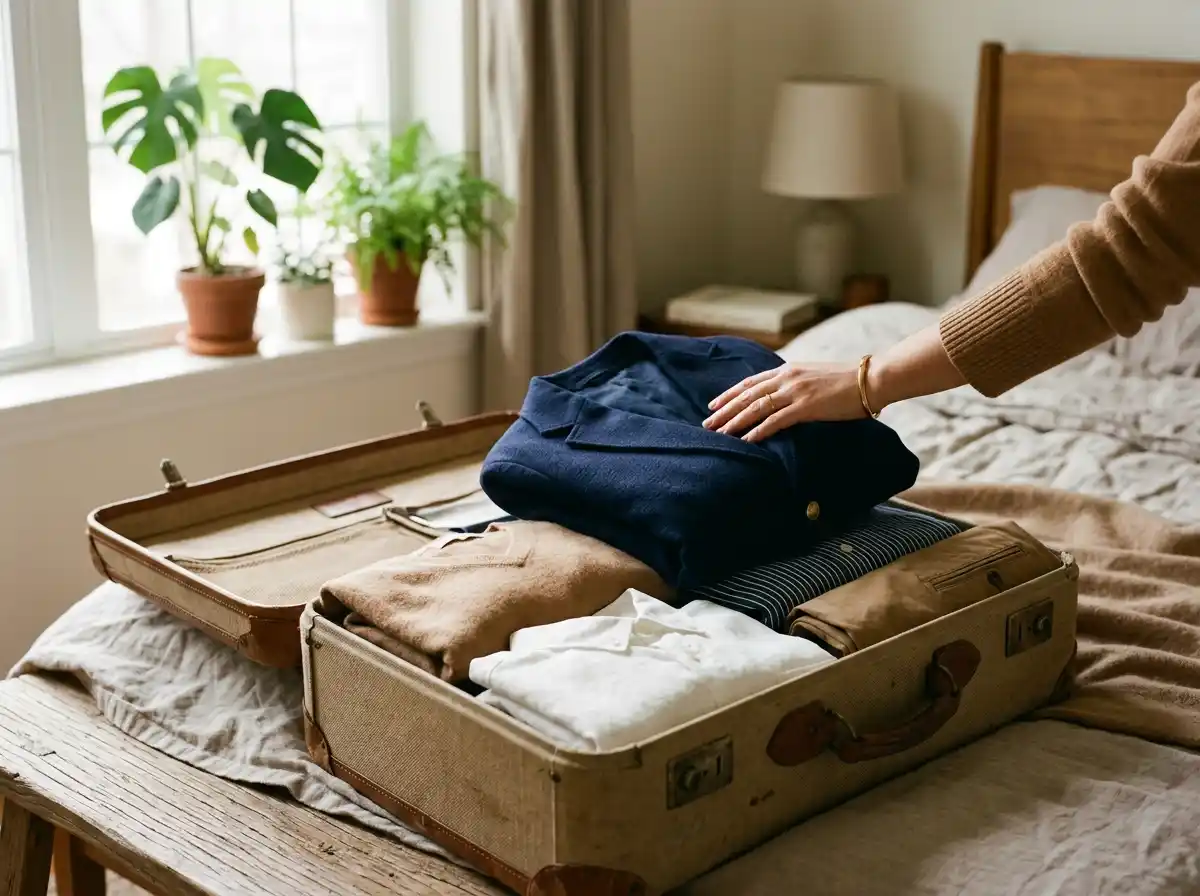
A rushed pack benefits from constraint, not more options. Pull only pieces already known to work together (this is the payoff of having a color story established ahead of a trip, not the night before it) and skip anything that needs a decision about matching. Three shoes, not five. One dress, not three. The 5-4-3-2-1 ratio, applied loosely and fast, still produces a workable bag in under twenty minutes when the color story is already settled.
Who This Approach Isn’t For
A tightly edited travel capsule isn’t the right call for every trip. Cruises and events with multiple formal nights genuinely need more than a capsule can flex to cover, and trying to force one outfit to do the work of a cocktail dress is a losing trade.
Expedition or technical travel (multi-day hiking, cold-weather trekking) has its own gear logic built around function and layering systems, not a fashion capsule. And travelers who check a bag on every trip regardless, or who are traveling with children where extra changes of clothes are non-negotiable, don’t gain much from a system built around a hard piece-count ceiling. The framework works best for the traveler trying to stay in one bag, not the one who’s already decided to check one anyway.
Frequently Asked Questions About Travel Wardrobe Essentials
How many outfits should a travel wardrobe essentials packing list actually include?
Fewer than it sounds like it needs. A 12 to 15 piece capsule built on one color story typically produces 20 to 30 outfit combinations once tops, bottoms, and layers are mixed and matched, which comfortably covers a one to two week trip without repeating a full look.
Is it worth buying merino wool specifically for travel?
For two or three heavy-rotation pieces, yes, given the odor and wrinkle-resistance data above. For an entire wardrobe, not necessarily. Merino costs more per piece than cotton or a cotton blend, and the benefit matters most for items being worn several days in a row without laundry access.
Do I need special travel-branded clothing?
No. Most travel-specific collections are built from the same fiber logic described here (wool blends, wrinkle-resistant weaves) at a premium price. Auditing an existing closet for color coordination and fabric performance usually covers most of a trip before any new purchase is necessary.
What should stay out of a carry-on because of the TSA liquids rule?
Anything liquid, gel, cream, or paste over 3.4 ounces per container has to go in a checked bag or get left behind, since the quart-bag limit for carry-ons hasn’t changed for 2026. Solid alternatives (bar shampoo, solid perfume, pressed powder) sidestep the rule entirely and are worth considering for anything used daily on a trip.
How do I pack for a trip that covers more than one climate?
Build around layers rather than separate outfits for each climate. A base layer, a mid layer, and one outer layer, all in the same color story, can be added or removed as the weather shifts, which is more space-efficient than packing distinct warm-weather and cold-weather outfits.
None of this requires a new suitcase or a closet’s worth of new purchases. It requires deciding, before a trip starts, what a bag actually needs to do: survive a security line, fit a fee-conscious airline, and still produce an outfit that looks intentional on day one and day ten. A color story, a flexible ratio, two or three fabrics worth their weight, and an honest edit of what’s genuinely needed get a bag there without much extra spending. The rest can be bought, borrowed, or worn twice.
Sources
Official Sources
- Transportation Security Administration (via secondary reporting): TSA 3-1-1 liquids rule status for 2026 | https://withautopilot.com/blog/tsa-liquid-rules | Accessed July 26, 2026 | Tier 2 (reputable travel-industry explainer citing TSA’s current published policy)
Industry Sources
- AARP: Reporting on airline baggage fee data (sourced from the U.S. Bureau of Transportation Statistics) and traveler packing habits | https://www.aarp.org/travel/travel-tips/pack-light-travel-guide/ | Accessed July 26, 2026 | Tier 1
- NerdWallet: Airlines with the Best (and Worst) Fees in 2026 | https://www.nerdwallet.com/travel/learn/which-airlines-have-the-best-and-worst-fees | Accessed July 26, 2026 | Tier 1
- The Points Guy: Airline baggage fees by carrier, 2026 | https://thepointsguy.com/airline/airline-baggage-fees/ | Accessed July 26, 2026 | Tier 1
- The Woolmark Company: Summary of AgResearch (New Zealand) wool odor-retention study | https://www.woolmark.com/industry/research/wool-reduces-body-odour/ | Accessed July 26, 2026 | Tier 2 (industry trade body summarizing an independent research study; original study not independently located in this research pass)
Research Sources
- Textile Research Journal (Wang, Lu, Wang, Wang): Quantitative and sensory evaluation of odor retention on polyester/wool blends | https://journals.sagepub.com/doi/abs/10.1177/0040517518801183 | Accessed July 26, 2026 | Tier 1 (peer-reviewed; abstract-level access only, used to corroborate the Woolmark summary rather than as the primary citation)
Additional Reading
- Indyx / Miik / Modern Minimalism (packing-method explainers): Background on the 5-4-3-2-1 travel capsule method, used to confirm this is an established, widely-used convention rather than a single-source claim | https://www.myindyx.com/blog/travel-capsule-wardrobe | Accessed July 26, 2026 | Tier 3