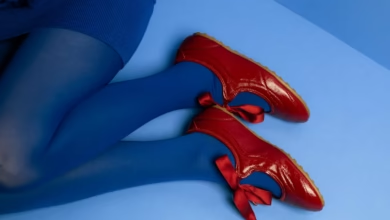

The pair of ballet flats you cannot stop seeing did not begin on your feed. It began as a runway whisper in Paris, then a resale spike, then a forecasting report, and only then an algorithmic flood. By the time the look reached your local mall, the people who started it had already moved on.
That pipeline, the one deciding what hangs in your neighborhood store, reads as chaos from the outside. It is not. It is a machine with three belts and a clock, and once you can see both, you stop buying on someone else’s schedule.
Quick answer: how fashion trends start. 1) Trickle-down pushes styles from luxury runways to mass retailers. 2) Trickle-up pulls styles from subcultures and utility wear into high fashion. 3) Trickle-across releases a style to every price tier at once through media and forecasting data. Agencies like WGSN and Heuritech then map each style onto a five-stage cycle of introduction, rise, peak, decline, and obsolescence, and social algorithms now compress that cycle from years into weeks.
How Do Fashion Trends Actually Start? The Three Vectors
Fashion theory describes style movement through three transmission vectors: trickle-down, trickle-up, and trickle-across. The trickle-down idea traces back to Georg Simmel’s 1904 writing on class and imitation, and together the three still explain most of what lands on a rack today. Read them as traffic lanes, not laws, because a single garment can switch lanes mid-journey.
Trickle-Down: The Runway Pipeline
This is the vertical pipeline most people recognize. A house like Miu Miu, Etro, or Dries Van Noten introduces a silhouette during the seasonal shows, elite buyers and editors adopt it, mid-tier brands ship a simplified version, and mass retail closes the loop with a budget copy. The engine runs on social distinction: the top tier adopts a look, copying makes it common, and the originators move on to keep their distance.

The modern Old Money aesthetic follows this lane closely. Heritage-coded tailoring and muted palettes signaled status first, then mass retailers replicated the look without the fabric quality behind it. Our breakdown of quiet luxury shows how quickly the visual shorthand detached from the construction that created it.
Trickle-Up: From Subculture to Luxury
Innovation frequently travels the other way. Trickle-up describes styles that start in grassroots communities, countercultures, or working-class utility wear and climb into luxury collections. The leather motorcycle jacket is the textbook case: wind protection for pilots and riders first, a rebellion uniform for music subcultures second, and a premium runway silhouette third.
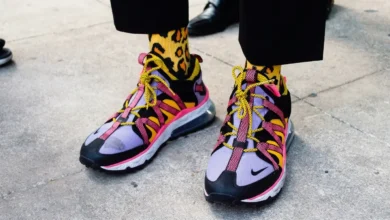
Street style feeds this lane faster than ever. A denim-and-leather look assembled outside the shows can be photographed, tagged, and sitting inside a design team’s research deck the same afternoon, which is why candid street coverage has become part of the industry’s formal apparatus.

Trickle-Across: The Horizontal Flood
The third lane is horizontal. Trickle-across occurs when a style appears at every price tier in the same season, because forecasting data and mass media reach all manufacturers at once. Barbiecore is the cleanest recent example. Valentino’s Pink PP, a hue developed with Pantone and debuted in March 2022, met the Barbie film’s marketing machine, and pink landed at every price point within weeks. No single tier owned the look. Everyone shipped it simultaneously.
Who Decides What Fashion Trends? The Forecasting Industry
Behind the vectors sits a professional forecasting industry. WGSN, Peclers Paris, and Fashion Snoops sell advance readings of color, silhouette, and mood to brands and retailers. WGSN and Coloro publish key colors roughly two years ahead of the selling season, and their Colour of the Year for 2026 is Transformative Teal, a blue-green chosen to signal steadiness plus change. Heuritech adds a quantitative layer, using AI visual recognition to read shapes, fabrics, prints, and textures across millions of social images and project trend growth up to 24 months out.
Here is the part most explainers skip. A forecast is less a prediction than a coordination device. When a major agency names a color, brands adopt it partly because they expect every other brand to adopt it, and the prediction causes itself. Writing for 1 Granary about the AW24 season’s suspiciously synchronized purple-and-yellow color story, Eilidh Duffy captured the effect perfectly: it felt “like someone had gone round and told them all to do it.” Forecasters are not weather stations. They are traffic controllers whose announcements create the traffic.
Everett Rogers’ diffusion of innovations curve supplies the percentages behind the spread, and the fashion translation of his five adopter categories looks like this:
| Adopter category | Share of population | Fashion translation |
|---|---|---|
| Innovators | 2.5 percent | Stylists, editors, costume designers, resale scouts |
| Early adopters | 13.5 percent | Front-row creators and influencers in the Camila Coelho tier, plus your one style-forward coworker |
| Early majority | 34 percent | Mainstream shoppers; the mall midpoint where a trend starts reading as normal |
| Late majority | 34 percent | Skeptical shoppers who adopt once the look reaches sale racks |
| Laggards | 16 percent | Holdouts; by arrival the style reads as a classic or not at all |

Notice where your own world sits in that table. A style can be peaking among innovators in Paris while your office has not seen it at all, and both observations are true at the same time.
The Five Stages of the Fashion Cycle, and How Long Trends Last
Heuritech divides a trend’s life into five stages: introduction, rise, peak, decline, and obsolescence. The stage a style occupies matters more than how loud it feels, because loudness is exactly what peak looks like. Duration depends on the type of trend:
| Trend type | Typical lifespan | Working example | Honest buy response |
|---|---|---|---|
| Fad | 3 to 6 months | Feed-only cores such as soft goth as a pure aesthetic | Borrow, thrift, or skip |
| Seasonal trend | 6 to 12 months | A specific heel spike, like platform shoes over stilettos for one cycle | Secondhand only |
| Long-term trend | 1 to 5 years | The skinny jeans to straight leg denim shift | Buy quality once two independent signals agree |
| Classic | 5 to 25 years | The little black dress, the leather motorcycle jacket | Spend on construction |
The little black dress sits in the classics row, which is why it anchors references like the five wardrobe essentials every woman needs. A feed-only aesthetic sits in the fad row, and the two should never share the same budget.
How Algorithms Compressed the Trend Cycle
The traditional engine ran on a long clock. Music critic Simon Reynolds, in his book Retromania, argued there has “never been a society in human history so obsessed with the cultural artefacts of its own immediate past,” and for decades that obsession ran on a roughly 20-year nostalgia loop. That rule is obsolete. As VICE reported, the loop has collapsed to something like five to ten years, and the full five-stage cycle now completes in months or even weeks for micro-trends.
The numbers explain the speed. Ultra-fast retailers list an estimated 6,000 to 10,000 new styles per day, while a traditional giant like Zara launches about 10,000 new products across an entire year. When a motif gains traction on TikTok or Instagram, production follows inside days, and the style is stripped to pure visual currency on the way. Quiet Luxury showed the pattern clearly: an aesthetic built on construction quality was translated into synthetic satin copies that kept the gloss and dropped the breathability, then moved from niche appreciation to saturation to clearance in record time.
| System dimension | Traditional engine | Algorithmic loop |
|---|---|---|
| Design lifecycle | 12 to 18 months from sketch to shelf | 3 to 10 days via real-time data loops |
| New styles | Fixed seasonal drops | An estimated 6,000 to 10,000 per day at ultra-fast retailers |
| Who steers it | Editorial boards and design directors | Interaction metrics on TikTok and Instagram |
| Nostalgia loop | Roughly 20 years | Five to ten years |
| Material focus | Durable textiles and tailoring | Visual copies in synthetics |
The practical consequence is a sky full of shooting stars. Named micro-aesthetics can complete their entire arc between two paychecks. That is fine, as long as you know you are watching a fad and not a shift.
How to Tell if a Trend Will Last Before You Buy It
Professional forecasters lean on a simple pattern check often called the rule of three: when a motif surfaces across three independent sources, say a runway report, a street style scene in another city, and a resale data spike, it signals a stable trend rather than an algorithmic blip. One feed showing you a style is noise. Three independent lanes agreeing is a signal.
Now the trade-off most guides miss. By the time three sources agree and mass retail has copied the look, you are buying at peak. The honest play is to act on two independent signals plus a fit with what you already wear, and to accept that acting early means occasionally backing a fad. If you want a deeper filter, our three-test longevity checklist walks the same logic at the garment level.
Run the saturation test too. If your feed is flooded with a piece, the style is already at peak, and decline follows quickly. Then check structure, not styling. A lower waistline or a stronger shoulder is a structural shift that will rewear for years. A hyper-specific print on an unchanged silhouette is a visual overlay with an expiration date. A classic Midi hem survives cycles; the same skirt in a seasonal novelty print does not.
How to Wear New Trends Without Buying a New Closet
Knowing how fashion trends start only matters if it changes what happens in your own closet. The shift that counts is treating trends as styling inputs rather than shopping mandates, the same discipline behind finding your personal style baseline and keeping a capsule wardrobe that holds its line against hype.
- Isolate the structural change. Strip the styling hyperbole and name the actual shape: a lower waist, a wider leg, a stronger shoulder.
- Audit your baseline. A Linen Blend shirt worn open over a knit, or tucked into a higher rise, shifts your silhouette without a single purchase.
- Restyle before you buy. A structured blazer with casual flat shoes reads current using pieces you already own.
- If you do buy, run a construction check. Seam straightness, fabric weight, and hem allowance tell you whether a piece survives the season that introduced it.

Make it concrete. If you are a 34-year-old office commuter and the skinny jeans revival lands on your feed, check the diffusion table: the revival sits with early adopters and resale right now, while your office runs early majority, so you have a season or two before it reads normal at work and no urgency at all.
If you thrift, you already own the trickle-up archive, because that 15-dollar leather jacket is the exact silhouette the luxury lane keeps re-borrowing. And if you teach in a warm classroom, skip the synthetic satin version of any trend and keep the silhouette in a breathable linen blend, since the trend you can wear twice a week beats the one that photographs well once.
Frequently Asked Questions
How do fashion trends actually start?
Through three vectors: trickle-down from runways and luxury houses, trickle-up from subcultures and utility wear, and trickle-across when forecasting data and media release a style to all price tiers at once. Forecasting agencies and social algorithms then set the speed at which each style travels its life cycle.
Who starts the fashion trends?
It depends on the lane. Design houses and forecasting agencies like WGSN start trickle-down and trickle-across movements, while subcultures, street scenes, and TikTok creators start trickle-up movements. Because forecasts coordinate the industry as much as they predict it, the origin is usually a group decision rather than a single genius.
How does a trend start and spread?
A style appears with innovators such as stylists and resale scouts, gains visibility with early adopters and creators, then crosses into the early majority when mid-tier retailers ship their versions. On Rogers’ curve the tipping zone sits between early adopters and the early majority, and social algorithms now drag that crossing forward from months to weeks.
What are the 5 stages of the fashion cycle?
Introduction, rise, peak, decline, and obsolescence. A style enters at low volume, rises as copies and coverage multiply, peaks at mass saturation, declines as early movers rotate out, and then becomes obsolete or sleeps until a later revival.
How long do fashion trends last?
By type: fads run 3 to 6 months, seasonal trends 6 to 12 months, long-term trends 1 to 5 years, and classics 5 to 25 years or more. Social platform micro-trends can compress the fad range down to a few weeks.
SOURCE
Official Sources
- University of Minnesota Libraries Publishing: Communicating Fashion, Chapter 6: Trend Lifecycles and Adopter Categories, August 28, 2026.
- University of Oklahoma Department of Communication: Diffusion of Innovation Theory, August 28, 2026.
- Cornell University Info 2040 Blog: How Fashion Trends Start, August 28, 2026.
Industry Sources
- WGSN: Colour of the Year 2026: Transformative Teal, August 28, 2026.
- Coloro: Key Colors, August 28, 2026.
- Heuritech: Fashion Cycles: Understanding The 5 Stages Of A Trend, August 28, 2026.
- Heuritech: Fashion Trend Forecasting and Analytics, August 28, 2026.
- Rest of World: Stat of the Day: Shein’s Daily SKUs, August 28, 2026.
- Vogue College of Fashion: What is a Fashion Trend? A Guide to Understanding the Future of the Industry, August 28, 2026.
Research Sources
- VICE: Trends Used to Come Back Round Every 20 Years. Not Anymore., August 28, 2026.
- 1 Granary: What Do Trend Forecasters Actually Do?, August 28, 2026.
- SUNY Create, Dress Appearance Diversity Pressbook: Fashion Theories, August 28, 2026.
- meer.com: How Fashion Trends Are Born and Why They Matter, August 28, 2026.
Additional Reading
- TrendTome: How to Know if a Trend Will Last: 3 Smart Closet Tests, August 28, 2026.
- TrendTome: How to Build a Capsule Wardrobe: 4 Steps to Stop Overbuying, August 28, 2026.
- TrendTome: How to Find Your Personal Style in 3 Clear Steps, August 28, 2026.
- The AMag: From Microtrend to Fast Fashion Pipeline, August 28, 2026.