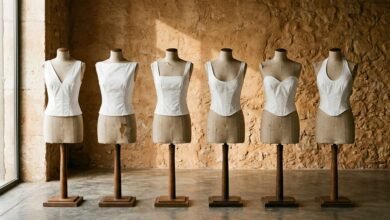
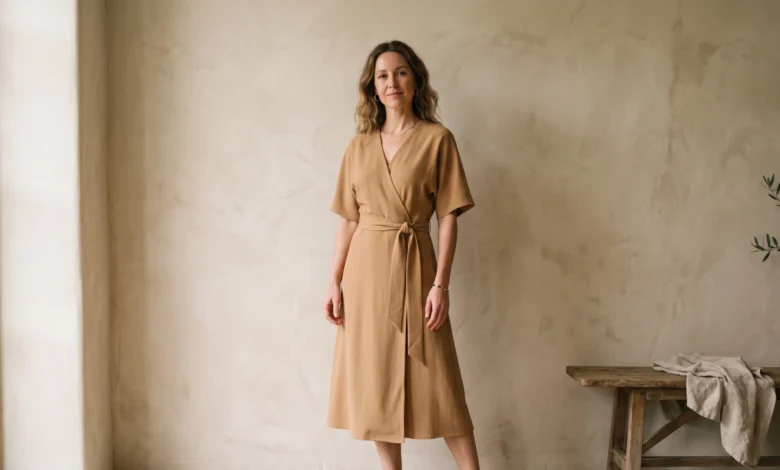
There is a particular fitting-room moment every hourglass shopper knows. The jeans fit your hips and the waistband floats an inch off your back. The dress nips in at a waist that is not yours, or it does not nip in at all. You leave with nothing and a mild grudge against the entire clothing industry.
That grudge is backed by data. In a North Carolina State University study of more than 6,300 women, only 8 percent had a true hourglass figure, yet the industry kept cutting most of its clothes for exactly that silhouette. “Companies are recognizing that there’s an issue,” Dr. Cindy Istook, the study’s lead researcher, told Newswise. “They just haven’t changed their sizing system to demonstrate it.” The shape is rare in real life, assumed on the pattern table, and still oddly hard to dress. If you are sorting out how to dress for an hourglass body shape, the fix is not a longer shopping list. It is a shorter set of fit rules.
To dress an hourglass body shape, follow four fit rules: 1) define the waist with garment construction, like belts, wrap ties, and tailoring, rather than compression; 2) keep the top and bottom halves visually balanced with open necklines and structured shoulders; 3) choose cuts that follow your curves, like wrap dresses, fit-and-flare silhouettes, and high-rise bootcut jeans; 4) buy fabric with enough drape to bend at the waist instead of tenting over it.
What Actually Counts as an Hourglass Body Shape
The short version: your bust and hips measure within about 5 percent of each other, and your waist runs at least 25 percent smaller than both. On a 40-inch hip, that means a waist of 30 inches or less, which is why the shape reads as a figure-eight even in a plain T-shirt. Istook’s research split the family into three variants, the hourglass, the bottom hourglass, and the top hourglass, so plenty of women who feel almost hourglass are not misreading themselves. They are a variant the five-shape internet quizzes never mention. Our four-step measuring method settles which variant you are in one afternoon with a soft tape measure.
The cultural obsession has a research trail too. Psychologist Devendra Singh’s work on waist-to-hip ratio, summarized by the University of New South Wales, found that a ratio near 0.7 read as most attractive across the groups he studied, and a later PLOS ONE study found that ratio activates reward centers in the brain. Take that as trivia, not instruction. The point for getting dressed is narrower: the waist is the feature every other decision serves.
One caveat before the rules. The hourglass label is a proportional sorting tool, the same way a pattern block is, not an identity or a rank. If your measurements put you between an hourglass and a spoon shape, borrow from both guides. Nothing below is a test you can fail.
Rule 1: Define the Waist With Construction, Not Compression
The waist is the entire assignment, so the fastest wins are garments that build a waistline in. A wrap tie you can tighten to your actual waist. A paperbag waistband that cinches where you cinch it. Ruching at the side seams. A darted blazer that curves instead of hanging straight. A belt worn over dresses, coats, and blazers is the most affordable tailoring there is, and our guide to when to wear a belt covers placement, width, and the mistakes that make belting look fussy.
Notice what is not on that list: shapewear as the foundation of the strategy. Compression garments are fine as a personal preference under a specific dress, but they are not what makes an hourglass outfit work. A wrap dress on bare skin still reads as an hourglass outfit, because the construction does the defining. Put your budget toward a 20-dollar side-seam alteration on a sheath dress before you spend it on equipment the garment should already include.
Rule 2: Keep the Top and Bottom in Balance
An hourglass is already balanced, so the styling job is mostly not adding weight to one half. A ruffled high neck makes the top half read heavier; a heavily embellished cargo pant does the same below. Open, lower necklines do the opposite of what you might expect if you feel busty. Personal stylist Niki Whittle ranks V-necks, plunging necklines, scoop necks, square necks, and sweetheart necks as the most flattering for the shape, because they narrow the top half and pull the eye down to the waist. Our neckline guide goes shape by shape if you want the full breakdown.
Structure matters as much as skin. A blazer with a real shoulder and a single button at the waist keeps the figure-eight outline intact where a boxy, unstructured jacket erases it. If you love volume on top, keep the bottom slim and let a belt mark the border. Balance is a ratio, not a ban.
Rule 3: Let Cuts Follow the Curve
This is where the wardrobe actually gets built, and the honest news is that the classics are classics for a reason.
Dresses
The wrap dress is the single most reliable hourglass garment ever made. Diane von Furstenberg’s jersey version debuted in 1974 by most accounts, though Harper’s Bazaar dates the first version to 1973, and the Metropolitan Museum of Art now holds examples as a high point of the American sportswear tradition. Its genius is mechanical: the tie lets every woman set the waistline at her own waist, which is why the same dress survives size changes, long lunches, and decades. Fit-and-flare dresses build the same logic into the seam, and a belted sheath is the work version.
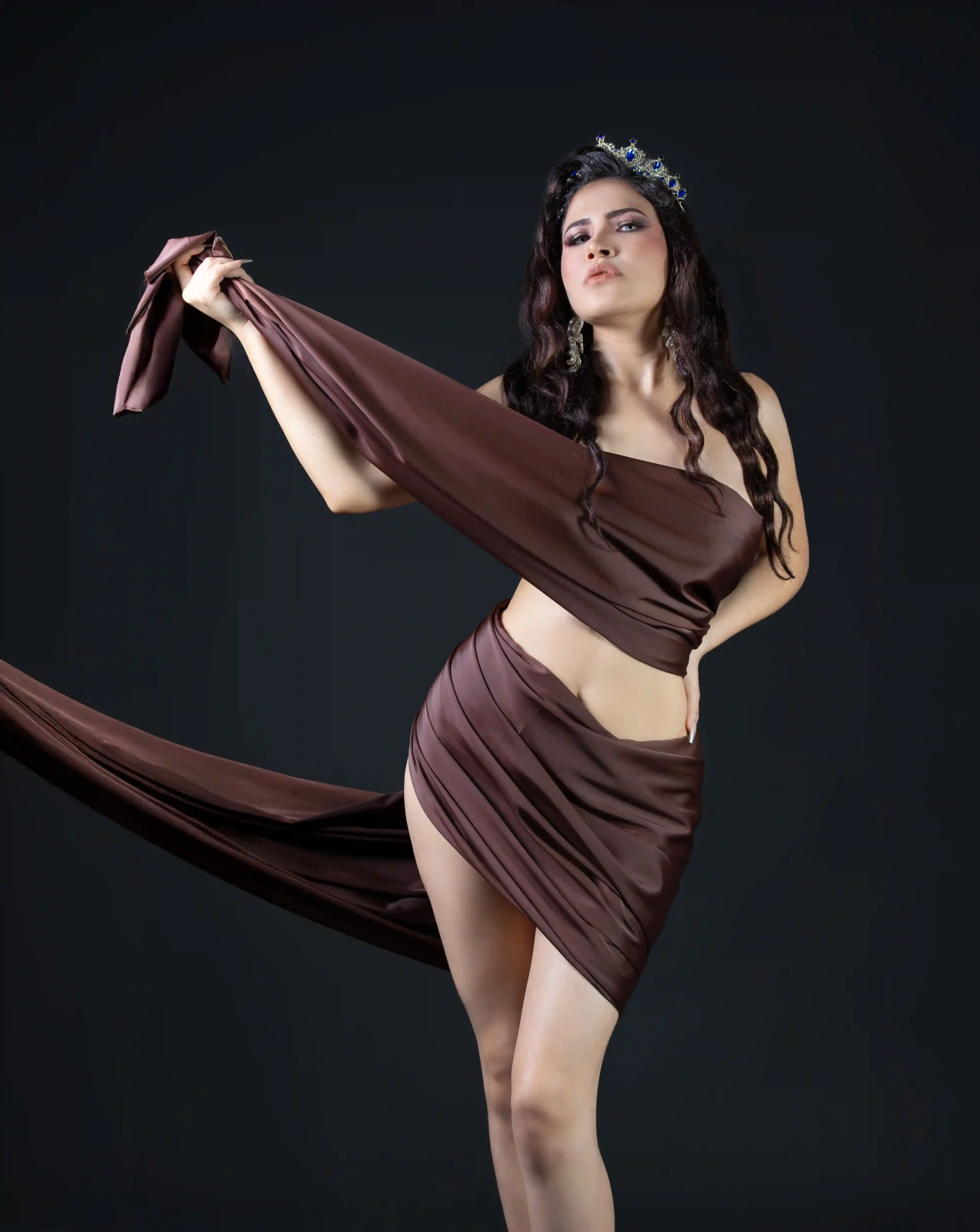
Dress silhouettes at a glance
- Wrap: the tie self-adjusts, so it forgives a waist that changes week to week.
- Fit and flare: the waist is sewn in, and zero effort is required on the way out the door.
- Belted sheath: the most polished for offices, and the most dependent on darts or a belt to earn its waist.
- Shapeless shift: the one silhouette that actively erases the shape, worth keeping only as an open layer.
Jeans and pants
Buy the rise first. A high rise that sits at your natural waist, roughly a 10-inch front rise or more, closes the distance between the waistband and your actual waist, which is where the floating-waistband problem comes from. If jeans gap at the back, curvy-fit cuts from Madewell, Everlane, or Abercrombie and Fitch are patterned with a smaller waist and more room through the hip and thigh, and they solve the gap without a belt fighting the denim all day. For leg shape, bootcut and flare styles throw a little volume below the knee to balance the hip, while straight and skinny cuts simply follow the line you already have.

Democracy Clothing’s fit team warns against the one real miss for this shape, overly baggy or slouchy denim, which reads as shapeless on a defined waist.
Skirts and tops
A high-waisted pencil skirt is the hourglass workhorse, and an A-line that starts at your waist and flares from the hip is the weekend version. Up top, wrap tops, square-neck knits, and anything you can tuck in cleanly beat a long untucked tunic every time. The tuck is not a styling flourish. It is how a balanced top half announces where the waist is.
Rule 4: Buy Fabric That Bends at the Waist
Two dresses with identical cuts can flatter differently on fabric alone. A mid-weight crepe, modal, or rayon jersey bends where your waist bends and sketches the figure-eight. A stiff, boardy cotton holds its own shape and substitutes a rectangle. This is the same weight-over-fiber logic we apply across the site: the weight and drape of the cloth decide the silhouette more than the fiber name on the label. Pinch-test before you buy. Fabric that creases softly in your fist will fold at your waist, and fabric that springs back will tent.
What to Skip, and the Exceptions Worth Breaking
The avoid list is short and situational, not moral. Shapeless shift dresses worn closed. Low-rise jeans that sit below the one feature worth featuring. Head-to-toe volume with no waist marker anywhere. Whittle puts the risk plainly: “Covering up your curves can make your hourglass shape look boxy, bulky, and, sometimes, frumpy.”
And the exceptions, because rules are starting points. An oversized blazer works beautifully over a fitted wrap dress, because the waist still shows underneath. A boxy shirt works half-tucked with a belt at the waist. Volume is fine anywhere a waistline is still visible. The rule is not no volume. The rule is no unmarked waists.
The Garment Cheat Sheet
| Garment | What to look for | Why it works |
|---|---|---|
| Dress | Wrap, fit and flare, or belted sheath | The waistline is built in or tie-adjustable, so it lands on your actual waist |
| Top | Wrap fronts, square or scoop necks, tuckable hems | Open necklines narrow the top half while the tuck marks the waist |
| Jeans | High rise with a 10-inch front rise or more, curvy fit if you gap | Closes the waistband gap at the pattern level instead of with a belt |
| Skirt | Pencil at the natural waist, or A-line flaring from the hip | Follows the figure-eight instead of fighting it |
| Blazer | Single-breasted, darted, cropped at the high hip | Structure with a curve keeps the outline intact |
| Swimsuit | High-rise bottoms, belted or ruched one-pieces | Ruching and belts keep defining the waist in swimwear too |
Who This Framework Is Not For
Three honest exclusions. If you are currently between shapes, after pregnancy, a major weight change, or a hormonal shift, treat everything above as a destination rather than a starting point, and lean on wrap ties and stretch waistbands until your measurements settle. If your job or community calls for volume-first or deliberately unstructured dressing, the hourglass rules are optional tools, not corrections, and a shapeless silhouette on an hourglass body is a valid aesthetic choice. And if measuring yourself turns into a source of stress rather than information, skip the tape entirely and buy by the fit rules you can feel: a waistband that sits where your waist is, and fabric that moves when you do.
If Your Situation Is a Little Different
If you are between an hourglass and a pear: keep the waist rules above and borrow the pear shape’s balancing tricks only where you need them, like detail and color up top on days your hips read wider than your shoulders.
If your measurements recently changed: buy for the waist you have this month. Wrap dresses, paperbag waists, and belted coats all adjust to a moving number, and a tailor can take in a sheath later for less than most people assume.
If you are short on time in the morning: run a two-piece uniform. One wrap dress and one belt for warm days, one high-rise bootcut jean and one tucked square-neck knit for everything else. The hourglass shape does most of the work before you add a single accessory.
Frequently Asked Questions About How to Dress for an Hourglass Body Shape
What is an hourglass body shape in actual measurements?
Bust and hips within about 5 percent of each other and a waist at least 25 percent smaller than both. In inches, that usually lands around 8 to 12 inches of difference between waist and hip, depending on your frame.
Is the hourglass body shape rare?
Yes. In the North Carolina State University analysis of more than 6,300 women, 8 percent fell into the hourglass category, making it the least common of the shapes measured.
What should an hourglass body shape avoid wearing?
Shapeless shift dresses, slouchy low-rise denim, and head-to-toe volume with no waist marker. Each one erases the waist, which is the feature doing all the work. The exceptions are deliberate: volume with a visible waistline underneath still reads as intentional.
What jeans are best for an hourglass body shape?
High-rise cuts first, always. Bootcut or flare legs balance the hip, straight and skinny legs follow the natural line, and curvy-fit versions solve the gaping waistband problem at the pattern level instead of with a belt.
Does the hourglass framework work at every size and height?
It works because it is about ratios, not dress size or height. Petite hourglass figures may skip cropped hems that cut the leg short, and taller frames can carry more volume, but the waist-first logic scales unchanged.
The Waist Is the Whole Story
Most styling advice is about adding something: volume here, structure there, a trick to create a curve you do not have. Dressing an hourglass body shape is the rare opposite case. The balance is already there, and nearly every mistake on the avoid list is a garment that hides it. Buy the waistline first, in construction rather than compression, keep the two halves in balance, and let drapey fabric tell the truth about the middle. Once those habits are in place, the hourglass figure stops being a styling puzzle and becomes what it actually is, the easiest shape in the room to dress.
SOURCES
- North Carolina State University (via Newswise): Fashion Designers Ignoring Shapes of Women’s Bodies, Accessed August 9, 2026
- University of New South Wales Newsroom: Is there really a single ideal body shape for women?, Accessed August 9, 2026
- PLOS ONE: Optimal Waist-to-Hip Ratios in Women Activate Neural Reward Centers, Accessed August 9, 2026
- The Metropolitan Museum of Art: Diane von Furstenberg, Dress, Accessed August 9, 2026
- Simplicity: DVF Wrap Dress: The History and Sewing Patterns, Accessed August 9, 2026
- Democracy Clothing: Body Type 101: Best Jeans for Hourglass Figure, Accessed August 9, 2026
- Niki Whittle, personal stylist: How To Dress An Hourglass Body Shape: A Personal Stylist’s Guide, Accessed August 9, 2026