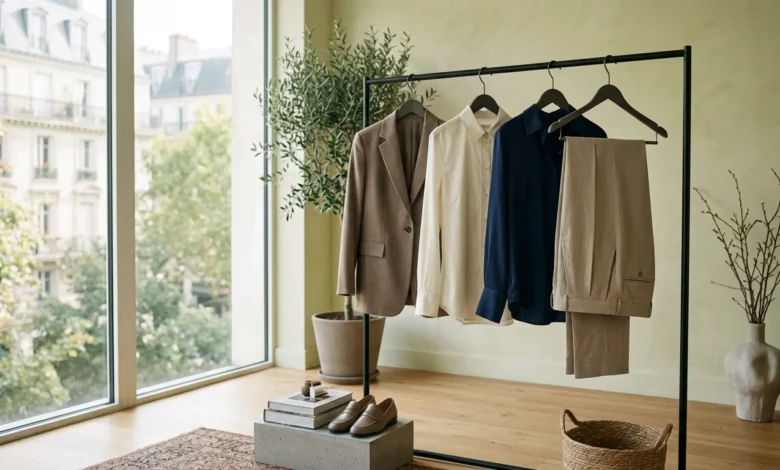
A signature style isn’t built by buying an entirely new wardrobe every season. In fact, people who always look pulled together rarely shop for new trends every month. They do something much simpler: they identify two or three outfit shapes that feel effortless, then repeat them intentionally. Learning how to create a signature style comes down to treating your clothes as a functional system of repeatable formulas rather than a collection of random purchases. When you replace daily impulse shopping with deliberate repetition, dressing becomes quicker and your personal appearance becomes distinct.
A signature style is a personal dressing system built by selecting a few flattering garment silhouettes and repeating them consistently. Rather than chasing seasonal fashion trends, you define your signature style by auditing high-wear closet staples, balancing outfit proportions, building a 3-piece outfit formula, and tailoring key pieces for a custom fit.
What Is a Signature Style (and Why It Isn’t a Static Uniform)?
Signature Style at a Glance
- Personal Style: The exploratory phase—discovering which colors, textures, and silhouettes you naturally prefer.
- Signature Style: The operational phase—selecting your highest-confidence preferences and repeating them as a consistent daily formula.
Personal style is about exploration. It involves discovering what fabrics you enjoy touching, which colors flatter your skin tone, and which cuts feel comfortable. A signature style takes those preferences and turns them into a practical daily routine.
According to fashion editors at Who What Wear and Harper’s Bazaar, a signature style relies on pinpointing a few key shapes and repeating them with confidence, rather than shifting aesthetics every few months. Having a core set of go-to pieces cuts down on morning decision fatigue, making getting dressed faster and more reliable.
This approach is distinct from wearing a single static uniform. It does not mean wearing the exact same black sweater seven days a week unless that genuinely suits your routine. Instead, it relies on repeating structural proportions—like pairing a Relaxed Fit button-down shirt with a structured Straight Fit trouser—across different colors and fabrics. This strategy shares core principles with a Capsule Wardrobe, where a concise set of interchangeable pieces forms the foundation of every outfit, and aligns with the understated, unbranded ethos of Quiet Luxury.
If you are still early in the process of discovering your broader personal style preferences, think of this guide as the operational next step that translates those preferences into a clear, everyday formula.
How to Create a Signature Style: Step 1 (Audit Your Closet)
Most closets contain two distinct categories of clothing: pieces you actually wear every week, and aspirational items bought for a lifestyle you don’t live. Building a signature style starts with separating those two categories.
Pulling your most-worn items out of the closet often reveals surprising patterns. As retail analysts at French Connection and editors at Who What Wear point out, auditing what you wear regularly isolates your genuine comfort triggers, fabric preferences, and preferred cuts. At the same time, identifying what you consistently avoid—what stylists call elimination filtering—is just as valuable as finding what you love. If high-waisted pleated trousers sit untouched because the stiff waistband digs in when you sit at a desk, that detail tells you to remove pleated cuts from your signature formula entirely.
Fabric behavior often dictates how often an item gets worn. A crisp Cotton Poplin shirt retains its clean structure throughout a busy workday, whereas a light Linen Blend top offers a softer, more relaxed drape. Both fit well into building a functional capsule wardrobe, but they send noticeably different visual signals.
The 3-Step Wardrobe Audit Action Plan
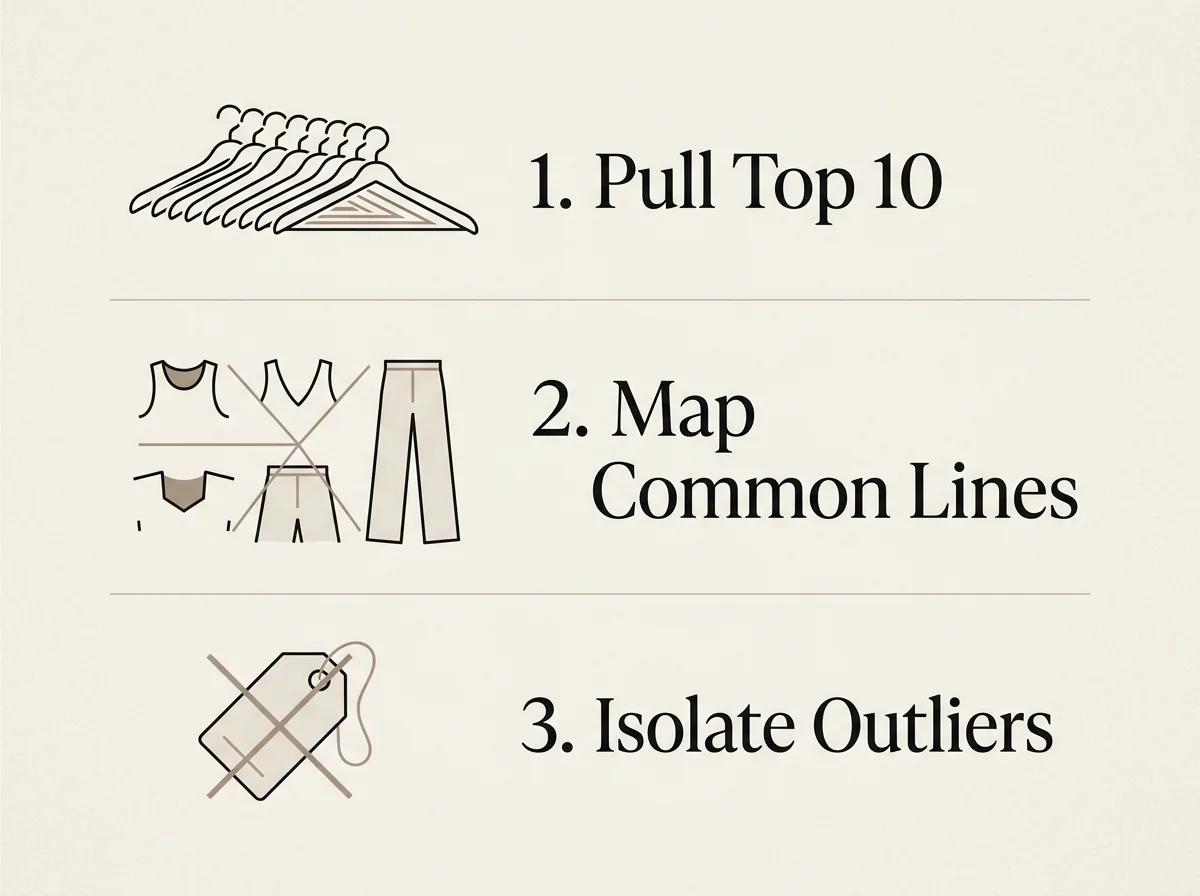
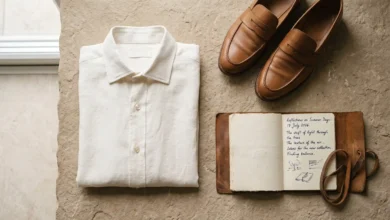
- Pull the Top 10: Select the ten items you wore most often over the past month. Lay them out together on your bed or clothing rack.
- Map the Common Lines: Look for shared traits across those ten pieces. Are the necklines mostly wide or high? Are the trousers structured or fluid? Write down the repeating shapes.
- Isolate the Outliers: Pull five items you haven’t worn in six months. Identify the specific friction point for each—uncomfortable fabric, poor shoulder alignment, or a cut that requires constant re-adjusting.
Step 2: Define Your Signature Silhouette and Proportions
Once you know which individual pieces you reach for, the next phase is combining them into balanced proportions. An outfit looks intentional when the visual weight is balanced across your body.
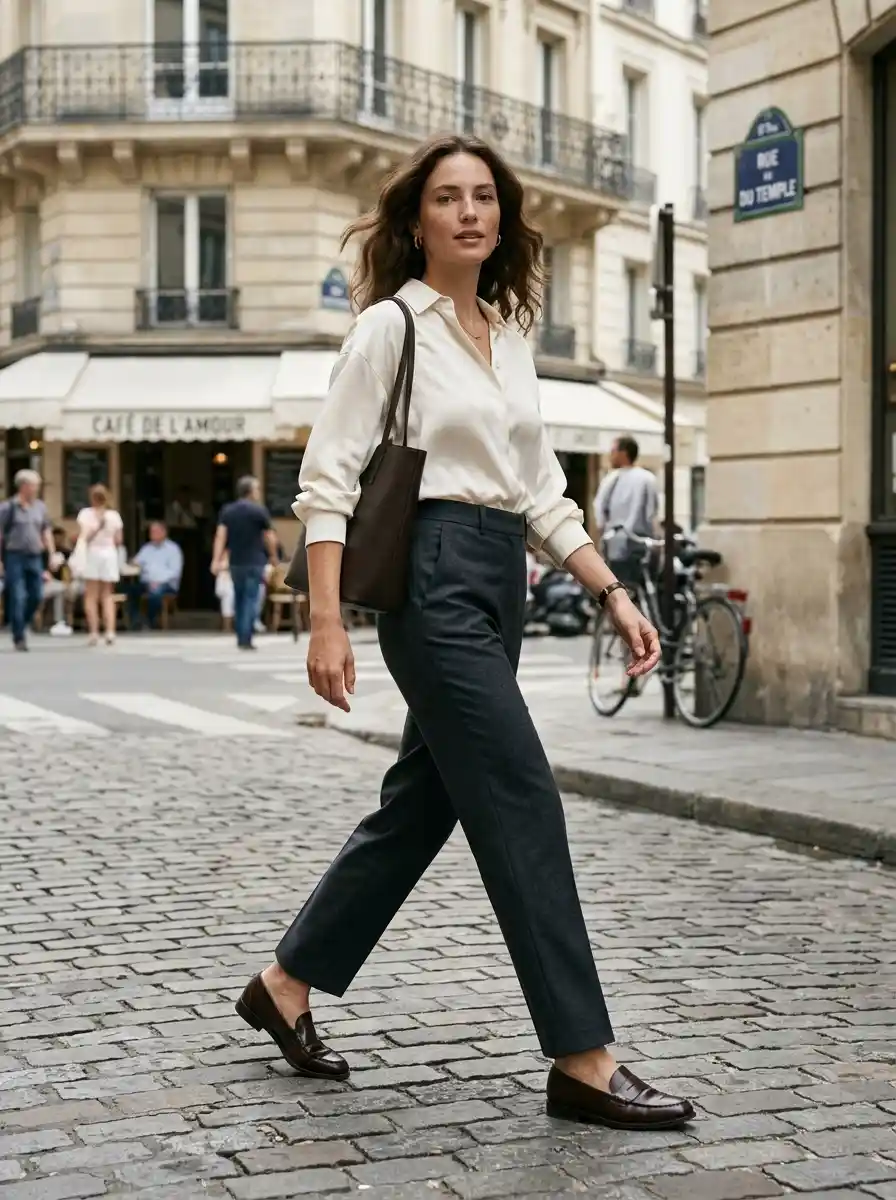
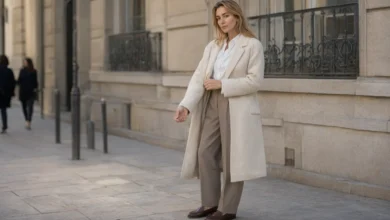
Oversized or relaxed garments look best when at least one part of the outfit anchors the frame. As stylists in Harper’s Bazaar guides point out, pairing a soft Drop Shoulder knit with a structured, straight-leg trouser prevents a slouchy garment from looking shapeless.
Upper body proportions depend heavily on necklines and fabric weight. A wide Boat Neck creates a horizontal line across the collarbones, broadening narrow shoulders, while an A-line skirt flares gradually from the waist to balance broader shoulders. Choosing fluid fabrics like a heavy silk or matte Crepe allows wide-leg trousers to drape smoothly without adding rigid bulk at the hips.
Proportion Balance Cheat Sheet
- Volume Top + Structured Bottom: Pair a loose, drop-shoulder knit with slim or straight-fit trousers to maintain visual grounding.
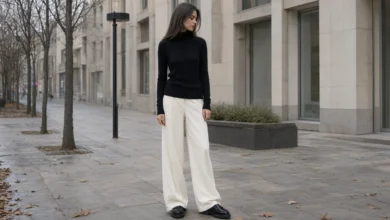
- Fitted Top + Volume Bottom: Pair a tucked, crew-neck top with a wide-leg crepe pant or an A-line skirt to anchor the waistline.
- The Optical Rule of Thirds: Avoid cutting your torso in half with a 1:1 visual ratio. Aim for a 1/3 upper body to 2/3 lower body ratio by tucking in your top or selecting high-waisted bottoms.
These proportion rules apply whether you are dressing for a relaxed Smart Casual weekend or a polished Business Casual office environment. If you want to align these proportions with your natural frame, start by identifying your body shape to see which outline serves as your best baseline.
Step 3: Build a 3-Piece Repeatable Outfit Formula
A 3-piece outfit formula is a simple assembly framework: a base top, a structured bottom, and an anchoring third piece (such as a tailored blazer, a structured belt, or an overshirt).
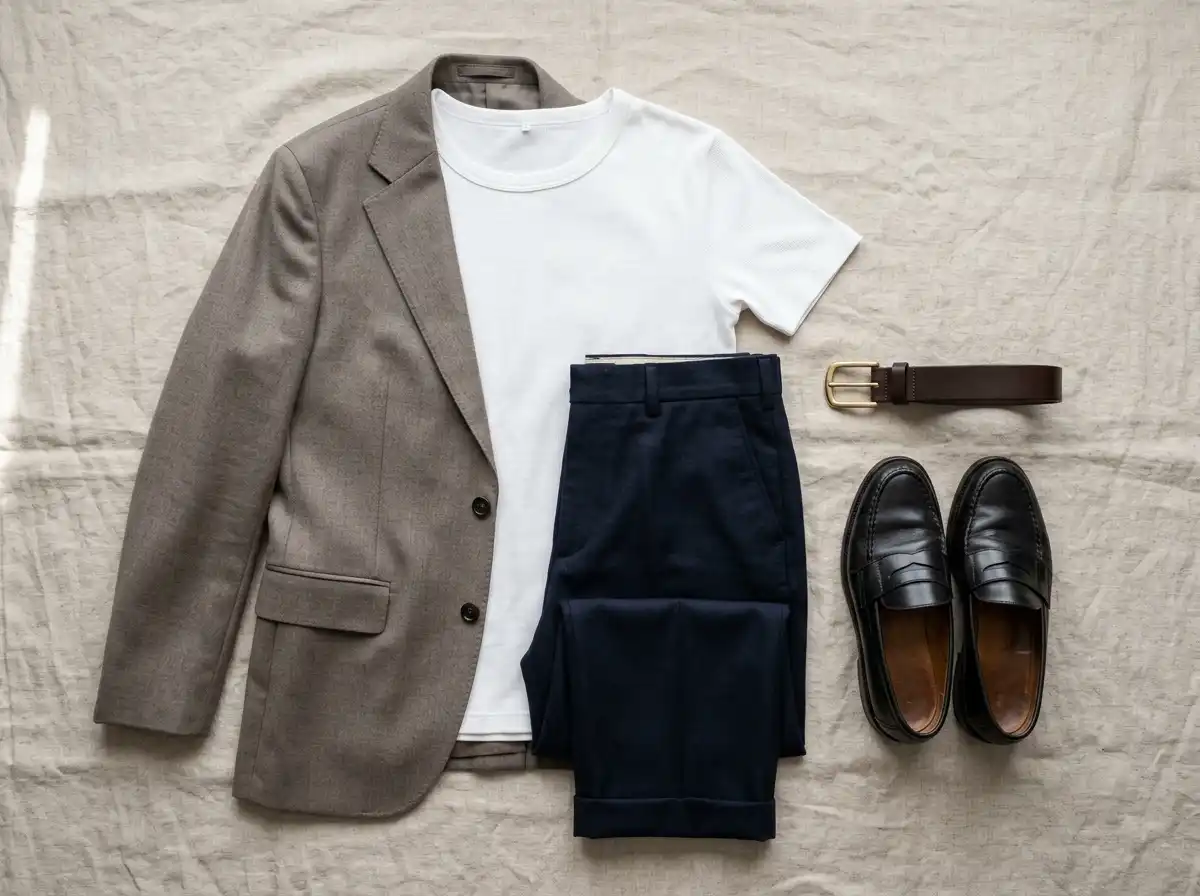
Who What Wear styling analyses demonstrate that recurring visual anchors—like always wearing a structured outer layer or sticking to a defined color palette—give separate outfits a unified look. Re-wearing and restyling core staples in different combinations builds a recognizable aesthetic without requiring a large wardrobe. A dark denim pant paired with a smooth Modal or breathable Rayon top provides a comfortable base, though lightweight modal knits can occasionally pill at the underarm if layered under unlined wool. Adding a structured blazer instantly shifts that base from everyday wear to a meeting-ready outfit.
For professional settings, this 3-piece approach simplifies building a daily business casual dress code that feels consistent all week. Fabric choices like a fluid Satin skirt or matte trouser add subtle texture, giving off the quiet elegance associated with Old Money styling without visible logos. Finish the outfit by choosing structured accessories that complement your chosen proportions.
3-Piece Outfit Decision Matrix
| Aesthetic Focus | Base Top (Piece 1) | Bottom / Base (Piece 2) | Anchoring Layer (Piece 3) | Target Setting |
| Tailored Minimalist | Tucked Crew-Neck Tee | High-Waisted Straight Fit Trouser | Single-Breasted Blazer | Office / Meetings |
| Relaxed Elevated | Breathable Modal Tank | Wide-Leg Crepe Trouser | Unbuttoned Cotton Poplin Shirt | Weekend / Casual |
| Soft Architectural | Fitted Boat Neck Top | Mid-Rise A-line Midi Skirt | Structured Leather Belt & Loafers | Dinner / Events |
Step 4: Refine the Fit with Strategic Garment Tailoring
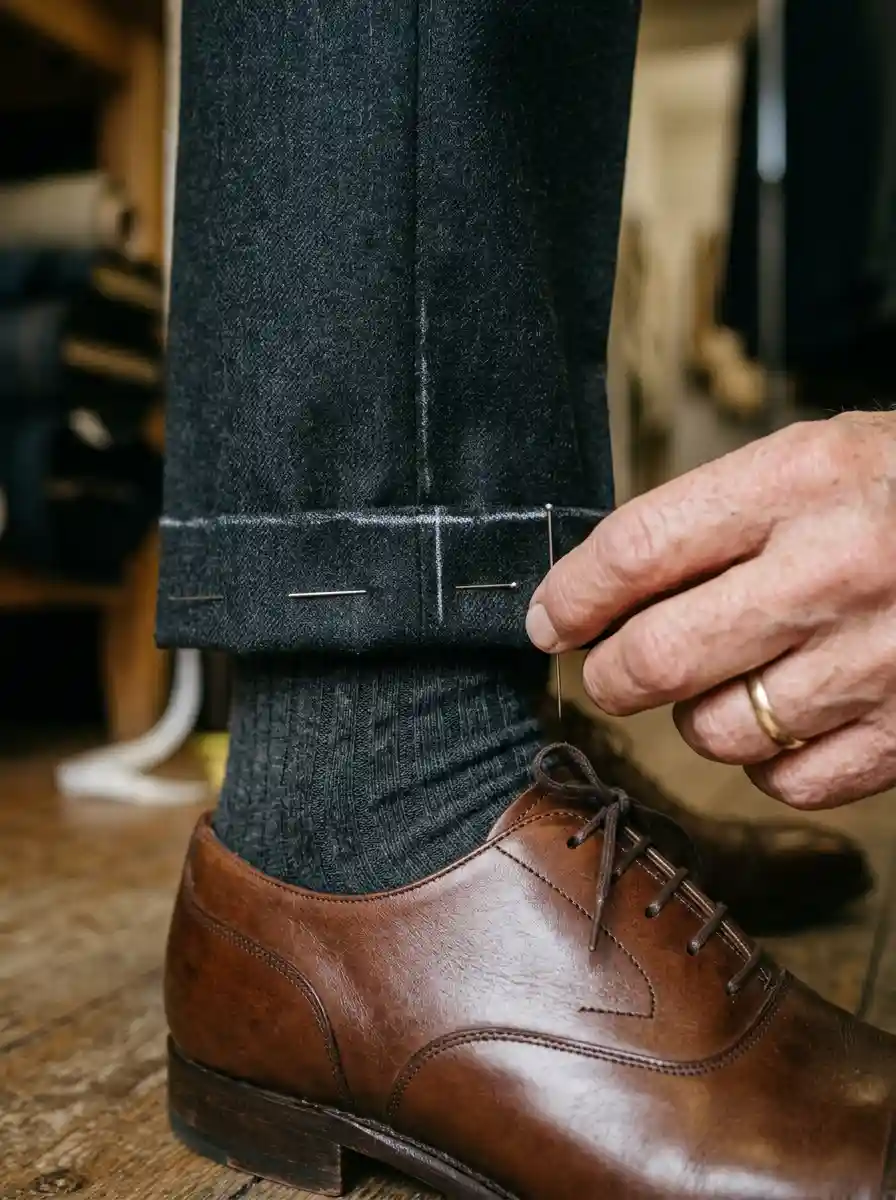
Even a $300 wool trouser will bunch awkwardly at the instep if the break is half an inch too long. Off-the-rack garments are manufactured to standard middle-market dimensions, which means they rarely fit anyone perfectly straight off the rack. Trousers frequently pool over shoe tops, and jackets often gap at the back waist when you sit down.
In a Harper’s Bazaar interview, celebrity stylist Maeve Reilly noted that up to 90% of polished street-style looks rely on custom garment tailoring to achieve their clean lines. The difference between an accidental outfit and a deliberate signature style usually comes down to these small adjustments. A mid-priced trouser that has been hemmed to hit precisely at the top of your shoe looks noticeably more refined than an expensive designer pant that drags along the floor.
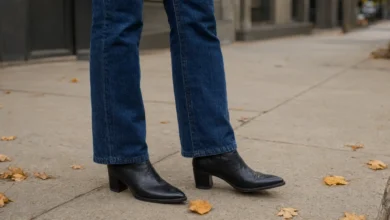
Focus your tailoring budget on three main areas: sleeve lengths, trouser hems, and waist suppression. Adjusting a Regular Fit blazer so the shoulders align naturally while taking in the waist turns a boxy jacket into a sharp signature piece. The same principle applies to denim; when selecting and tailoring rigid denim fit, adjusting the waistband gap makes a Slim Fit or Straight Fit jean look custom-made. This focus on precise fit over brand logos is at the heart of Quiet Luxury.
Essential Tailor Alteration Checklist
- Trouser Hemming: Specify the shoe height you wear most often. Aim for a clean break (skimming the top of the shoe) or a no-break hem (sitting just above the ankle bone).
- Waistband Suppression: Take in the back seam of trousers or jeans to eliminate gapping at the lower back when sitting.
- Sleeve Length Adjustment: Hem jacket sleeves so they end right at the wrist bone, allowing roughly 1/4 inch of your shirt cuff to show.
3 Common Signature Style Mistakes to Avoid
Building a signature style is a process of editing down. Avoiding a few common traps keeps your closet focused and practical:
- Forcing yourself into a social-media aesthetic label: Trying to fit your style into internet trends like “clean girl” or “mob wife” creates a costume rather than a personal style. Focus on shapes and fabrics that fit your actual routine instead of named aesthetic trends.
- Buying statement pieces before securing foundational baselines: A bold patterned coat looks striking in a store, but if you don’t have a reliable neutral pant or plain top to wear underneath it, it will sit unused in your closet. Build your core Capsule Wardrobe baselines first.
- Ignoring your actual daily lifestyle: If your work week consists of working from home or walking on city pavement, buying high-heeled pumps or delicate dry-clean-only tops will only cause frustration. Choose signature pieces that suit your real days.
Frequently Asked Questions About Creating a Signature Style
How do I build a signature style uniform without looking repetitive?
Focus on repeating structural proportions rather than exact garments. You can wear the same Straight Fit trouser silhouette every day while switching between a crisp Cotton Poplin shirt, a fine-knit crew neck, or a soft Linen Blend top. The overall outline stays consistent, but the textures change.
Can a signature style change over time?
Yes. Your signature style should shift naturally as your lifestyle, career, or personal tastes evolve. Revisit your high-wear baseline pieces once a year to adjust your formulas to your current needs.
How many core pieces do I need to establish a signature style?
Most functional signature wardrobes rely on 12 to 15 core clothing pieces (excluding outerwear and shoes) that combine into multiple 3-piece formulas.
Final Checklist: Locking In Your Signature Style
Understanding how to create a signature style isn’t about following strict rules or buying an entirely new wardrobe. It comes down to paying attention to what already works for you, identifying your preferred proportions, and sticking to them with confidence.
Start small: pick one 3-piece formula that feels easy and wear it twice this week. Once you experience how much time and energy a clear outfit formula saves, editing the rest of your closet becomes straightforward.
Sources
Industry Sources
-
Who What Wear UK, How to Find and Define Your Personal Style | Access Date: July 2026 | Source Tier: Tier 5
-
Harper’s BAZAAR UK, How to Find Your Signature Style | Access Date: July 2026 | Source Tier: Tier 5
-
Harper’s BAZAAR UK, Maeve Reilly Style Tips and Tailoring Rules | Access Date: July 2026 | Source Tier: Tier 5
-
French Connection UK, How to Create Your Own Signature Style | Access Date: July 2026 | Source Tier: Tier 5