H&M Brand Guide: Lines, Sizing, Price Positioning, and What’s Actually Worth It
Three garments from three different racks, all tagged medium. One fits like a medium, one fits like a small, and one fits like nothing you have ever owned. If that fitting room moment sounds familiar, you have met the real subject of this H&M brand guide, because the system behind the clothes matters more than the clothes themselves.
H&M is one of the largest clothing retailers on the planet, and its shelves hold some genuinely good garments next to some genuinely disposable ones. The difference is not random. It tracks the retailer’s internal lines, the fiber content printed on the care label, and a sizing system that behaves differently in wovens than it does in knits.
Learn those three dials and the store stops feeling like a lottery.
The short version: H&M is a Swedish retailer founded in 1947 whose quality tracks its internal lines rather than its price tags alone. Shop Basics and Premium Selection for keepers, treat Divided as a season’s fling, size up in wovens and denim, judge every garment by its fiber content instead of its hangtag, and join the free member program before checkout so returns stay free at the store counter.
What H&M Is and How the Group Family Works
Hennes & Mauritz began in 1947, when Erling Persson opened a women’s clothing shop called Hennes in Västerås, Sweden. In 1968 Persson bought Mauritz Widforss, a hunting and fishing outfitter, and the company gained menswear along with the name Hennes & Mauritz. The H&M brand now runs 3,660 stores in 81 markets with online shopping in 62, and it sits inside H&M Group beside a very specific family of sister brands.
Understanding that family is the first step to reading the store correctly. COS and ARKET sit at the top of the H&M Group, offering minimalist wardrobes with higher price points and heavier fabric weights. Weekday and Monki target a younger, street-style demographic. & Other Stories handles premium beauty and feminine tailoring. H&M Group even owns Sellpy, a dedicated secondhand platform, which signals where the company is placing its long-term circularity bets. Most H&M stores across the United States follow the same merchandising approach, but knowing the wider group explains why the flagship brand is engineered purely for volume and speed.
The Lines Inside H&M, Decoded
H&M prices by line first and quality second. Learn five names and the store starts reading like a staff memo.
| Line | Where you will meet it | What it does best | The catch |
| Basics | The wall of tees, tanks and leggings near the entrance | Cotton and modal staples reordered season after season, at prices that undercut almost everyone | The lightest jersey weights feel thin after a few washes, so check the fabric in hand |
| Divided | You will find this in the trend-heavy section with the youngest styling | Trend shapes | Cut small and short even by H&M standards, so treat it as a season’s fling |
| Conscious choice | Green hangtags spread through every other section | Rebuilds regular pieces with at least 50 percent more sustainable materials, like organic cotton or recycled polyester | The tag describes the fiber, not the stitching, so construction still varies |
| Premium Selection | A shorter rail of tailoring, shirting and knits, formerly labeled Premium Quality | Best fabrics in the building, including cashmere, silk, linen and leather | Prices climb quickly, so verify the fiber content before the hangtag flatters you |
| H&M Move | The activewear wall, launched worldwide in 2022 | Gym pieces that reviewers found far more capable than the price suggests | Leggings run snug through the hip |
At a glance: keepers and passes at H&M
- Keepers: linen and cotton wovens, modal and cotton basics, kids and baby, Premium Selection natural fibers.
- Situational: Divided trend pieces, and Conscious choice versions of items you already wanted.
- Passes: shoes that need to last, structured tailoring you expect years from, and heavily synthetic pieces worn against skin all day.
H&M Sizing by Category: Women’s, Men’s, Kids, Jeans, and Bras
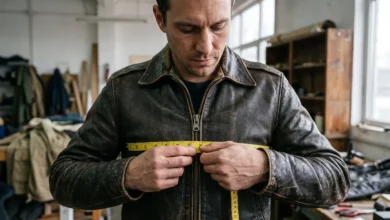
The H&M size chart drifts depending on the garment type. A fit-data read of shopper reports concluded H&M runs true to size on average, while BuzzFeed’s tape-measure check found an H&M size 14 that measured smaller than a size 12 at ASOS and Zara. The pattern underneath the noise is highly category-dependent.
| Category | The General Rule | The Fit Reality |
| Women’s Knits | Hold your size | Tees and sweaters usually fit as expected. |
| Women’s Wovens | Step up one size | Shirts and dresses often run a full size small. |
| Men’s | Mostly true to size | Standard fit applies, though slim cuts can be very narrow. |
| Kids | Runs large | Sized by height in centimeters, often fitting longer and baggier than US brands. |
| Jeans | Size up twice | Denim is notoriously small, with shoppers frequently needing to go up one or two sizes. |
| Bras | Band tight, cup shallow | The band often feels restrictive while the cup lacks depth. |
When shopping for H&M kids clothing, remember that the tags use centimeter ranges like 110 or 116 rather than standard US age sizes [[14], [17]]. Parents consistently report that these garments run large, which is actually a benefit for accommodating rapid growth spurts and extending the hand-me-down lifespan.
H&M Price Positioning: How It Stacks Up Against Zara, Uniqlo, Gap, and Old Navy
Is H&M expensive? No. Is H&M affordable? Yes, but it sits in a specific tier relative to its direct competitors. Understanding where it lands helps you decide whether to pay the H&M price or look next door.
| Retailer | Price Tier | How It Compares to H&M |
| Old Navy | Budget tier | The cheapest option, relying heavily on constant sales and multi-packs. |
| H&M | Mid-tier | A basic cotton tee costs around 13 to 15 dollars, sitting squarely in the middle. |
| Uniqlo | Slightly pricier | Costs a bit more than H&M for basics, but wins on fabric technology and longevity. |
| Zara | Premium fast fashion | Typically 20 to 45 percent more expensive than H&M, charging for high-fashion aesthetics [[25]]. |
| Gap | Heritage pricing | The most expensive of the group for casual wear, leaning heavily on brand legacy. |
Category Breakdown: What to Buy (and Skip) by Department
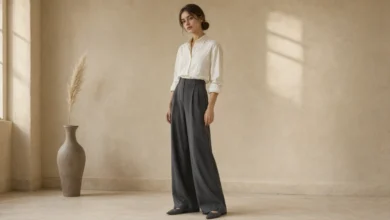
H&M women’s clothing is the core of the business, and it is where you will find the strongest linen and cotton poplin pieces. H&M men’s clothing follows a similar logic, with the smart casual shirting and relaxed fit chinos offering genuine value for building a business casual wardrobe. H&M kids clothing and H&M baby clothing remain the undisputed best value in the building, because the cottons hold up to playgrounds and the prices allow for rapid growth spurts.
Beyond apparel, H&M Home launched in 2009 and has become a reliable stop for seasonal essentials like linen napkins, woven baskets, and cotton throws. H&M Beauty, which launched in 2015 with over 700 products, is best treated as a destination for makeup tools, sheet masks, and basic glosses, rather than complex skincare where formulation matters more than the price tag.
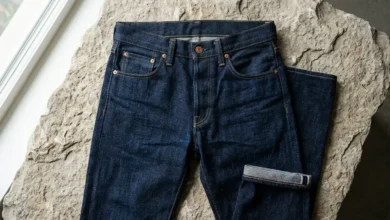
When it comes to H&M accessories, H&M bags, and H&M shoes, the rule of thumb shifts. Buy bags and accessories for seasonal trend testing, but skip H&M shoes if you need them to last more than a single season of occasional wear. For H&M dresses, the best H&M dresses are the unlined linen and cotton midi styles for summer, while heavily synthetic party dresses belong on the pass pile. The best H&M jeans are found in the Premium Selection line for raw and rigid denim, or in the Divided line if you are specifically chasing a cropped, trend-forward silhouette.
Who Should Shop at H&M (And Who Gets the Best Value)
The best age group for H&M splits cleanly by line. Teens and college students dominate the Divided section for cheap trend testing that they will likely discard after a year. Shoppers in their 20s through 50s get the most out of the Basics wall and the Premium Selection rail, where the styling is quieter and the fabrics are meant to last longer.
Who gets the best value? Parents. H&M kids clothing survives playgrounds and hand-me-downs, and the prices accommodate rapid growth spurts without breaking the budget. Budget capsule builders also win here by stocking up on unbranded cotton and linen to fill gaps in their minimalist wardrobes. Who should skip it entirely? Anyone looking for lifetime investment pieces, heavy winter outerwear, or precise orthopedic footwear.
The In-Store Experience: What to Expect
Most H&M stores across the United States follow the same merchandising approach. The front of the store is heavily curated with the newest arrivals and collaborations. The middle sections hold the core collections and the Premium Selection rail. The back of the store is where you will find the fitting rooms and the inevitable clearance racks.
The clearance section can be chaotic, but it is where the best value hides once the initial trend cycle passes. A linen shirt that was full price in May is often deeply discounted by August, and the fabric quality has not changed. Bring the H&M app with you to scan in-store tags, which instantly tells you if your size is available online or at a sister store, saving you a trip to a fitting room that is already at capacity.
How to Read an H&M Label and Spot Premium Selection
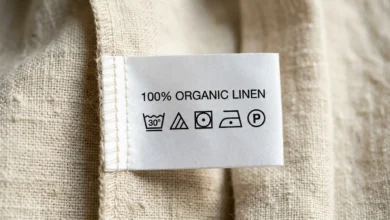
When you pull a garment off the rack, the care label tells the real story. Look for specific fiber names rather than generic blends. Lyocell, often branded as TENCEL, is a semi-synthetic fiber made from wood pulp that drapes beautifully and breathes well, making it a strong choice for warm-weather blouses. Organic cotton uses less water than conventional cotton during farming, and recycled polyester keeps plastic bottles out of landfills, though it still sheds microplastics in the wash and holds body heat more than natural fibers.
Identifying Premium Selection is straightforward once you know what to look for. The label will explicitly state the higher-grade materials like silk, cashmere, or genuine leather. Check the inside seams for French seams or clean overlocked edges, which indicate the garment was built to handle the weight of better fabrics. If the label says 100 percent polyester but the hangtag claims a quiet luxury aesthetic, trust the label and leave it on the rack.
Where H&M Falls Short
Heavily synthetic trend pieces are the first pass. Thin polyester crepe and acrylic knits pill, hold odor and lose their shape inside a season. Structured tailoring is the second. Jackets and blazers at these prices rarely carry the internal canvas that keeps a shoulder line honest for years, so buy them for a season’s silhouette, not a decade. Shoes follow the same logic. And because sizing drifts between seasons, your number at H&M is a starting point for negotiation, not an identity.
None of this is unique to H&M. It is the standard trade-off of fast fashion, and the same pre-checkout habits that protect you anywhere, like the seven fashion buying mistakes we flag in every buying guide, protect you here first.
Common H&M Shopping Mistakes to Avoid
Shopping mistakes at H&M usually happen when the environment overrides the plan. The first mistake is ignoring the H&M sale racks in favor of the H&M new arrivals wall. The new arrivals are priced at full margin, while the sale section is where the best wardrobe staples hide once the initial trend cycle passes. A linen shirt that was full price in May is often deeply discounted by August, and the fabric quality has not changed.
The second mistake is buying an entire minimalist wardrobe in one trip. H&M is best used to fill specific gaps in a capsule wardrobe, not to replace it wholesale. The third mistake involves payment. H&M gift cards are available in denominations from 5 dollars to 300 dollars, and loading a physical or digital card with your exact budget before you enter the store is the most reliable way to enforce a spending limit when the low prices start adding up at the register.
Designer Collaborations, Minus the Hype
The collaboration program began in 2004 with Karl Lagerfeld and has since included Stella McCartney, Versace, Balmain, Mugler and Rabanne, with Glenn Martens landing in October 2025 and a Stella McCartney return plus a WARDROBE.NYC capsule announced for 2026. The pieces are genuinely designed, not licensed leftovers, and the fun is legitimate. The resale value is not a plan. Only a handful of names, mostly the ones that sold out in hours like Balmain in 2015, ever commanded resale premiums, so buy a collaboration because the garment earns a place in your closet at its H&M price, not because you expect it to appreciate.
The Sustainability Question, Answered Plainly
H&M is fast fashion, and no green hangtag changes the volume math. What the retailer can point to is real progress on materials. Its 2024 reporting put 89 percent of materials at recycled or sustainably sourced, with recycled alone at 29.5 percent, and the 2025 report raised recycled to 32 percent, past its 30 percent target, on the road to 100 percent recycled or sustainably sourced materials by 2030. The Conscious choice tag, for its part, means at least 50 percent more sustainable materials in that garment.
The marketing has not always matched the measurement. Norway’s Consumer Authority criticized H&M’s Conscious marketing as misleading in 2019, and a US greenwashing class action targeted the same claims before H&M won dismissal of one suit. The workable rule is to treat the green tag as a fiber note, not a verdict. The care label tells you what the garment is, and the construction tells you whether it will last, which is the only sustainability metric your closet actually feels.
Membership, the App, and Returns for US Shoppers
Membership is free, and the math favors joining before your first order rather than after. Members collect points that convert into a 5 dollar voucher at 250 points, plus member pricing and early access to drops. The H&M app, which has seen millions of downloads globally, is a genuinely useful tool for bridging the gap between H&M online shopping and the physical store. The app allows you to scan in-store items to check if your size is available online, track your loyalty points, and access member-only pricing.
Returns run 30 days from delivery or purchase. In-store returns are always free, while mail-in returns carry a flat fee of 5.99 dollars whether you are a member or not. Most H&M brand guide advice stops at the racks, but the return policy is half the product. Order what you need online, and return the misses at a store counter.
How to Shop H&M in Three Real-Life Situations
If you are building a wardrobe on a tight budget: spend where the fiber is natural and the shape is simple. Linen and cotton wovens, cotton and modal basics, and one or two Premium Selection pieces in natural fiber will outlast a whole Divided haul of trend shapes. Skip anything whose appeal is purely the print.
If you are between sizes and ordering online: order both sizes. The 30-day window and free in-store returns turn a two-size order into a fitting session instead of a gamble. The mail-in fee is the only cost of doing it from the couch, so plan one store trip instead.
If you only ever go for the collaborations: set a one-piece rule and judge it at its H&M price. A collaboration piece that only makes sense as an investment is a lottery ticket with a zipper, and the 20-year history of the program says most of them never appreciate.
Frequently Asked Questions About the H&M Brand Guide
Is H&M true to size?
In knits, mostly yes. In wovens and denim, no. Shopper measurements have found H&M wovens running a full size smaller than equivalent pieces at ASOS and Zara, while jersey pieces run close to true. Hold your size in tees and sweaters, size up once in shirts and dresses, and twice in jeans if you sit between sizes.
Who owns H&M?
H&M is the flagship brand of H&M Hennes & Mauritz AB, a Swedish company listed on Nasdaq Stockholm and still closely tied to the Persson family. Karl-Johan Persson, grandson of founder Erling Persson, chairs the board, and Daniel Ervér has been CEO since early 2024. The group also owns COS, ARKET, Weekday and & Other Stories.
Is H&M luxury?
No, H&M is not a luxury brand. It is a mass-market fast fashion retailer. The Premium Selection line uses better materials like silk and cashmere, but the construction and price point remain firmly in the accessible category.
Is H&M fast fashion?
Yes. H&M is one of the largest fast fashion companies in the world, built on a model of producing high volumes of trend-driven clothing at low prices.
Why is H&M so cheap?
H&M achieves low prices through massive economies of scale. The company operates thousands of stores globally and sources materials in bulk, which drives down the cost per garment.
Does H&M run small?
It depends on the category. H&M jeans and woven dresses notoriously run small, while knitwear and basic tees tend to run true to size. Kids clothing often runs large and long.
Is H&M worth buying?
H&M is worth buying if you know what to look for. The Basics line, linen wovens, and kids clothing offer excellent value, while heavily synthetic trend pieces and structured tailoring are best avoided. Reading clothing labels before checkout ensures you are getting the fabric you paid for.
Is H&M Home good quality?
H&M Home is excellent for seasonal essentials and textile layering. The linen napkins, cotton throws, and woven baskets offer genuine value and fit well into a minimalist home aesthetic. Avoid expecting heirloom furniture or heavy upholstery to last decades at these price points.
Does H&M charge for returns in the US?
Mail-in returns carry a flat fee of 5.99 dollars, deducted from your refund. In-store returns are always free, and the window is 30 days from delivery or purchase. Returning online orders at a store is the move that keeps the policy painless.
What is the difference between Conscious choice and Premium Selection?
Conscious choice describes the fiber, meaning at least 50 percent more sustainable materials like organic cotton or recycled polyester. Premium Selection describes the fabric grade and finish, meaning better materials like silk, cashmere and linen with smarter construction. A garment can be one, both, or neither, which is why the care label beats the hangtag.
The Bottom Line on H&M
No H&M brand guide can tell you what to love, and it should not try. What a guide can do is hand you the dials: line first, fiber second, size third, and the return policy as your safety net. H&M at its best is a place where a 15 dollar cotton tee and a well-priced linen shirt quietly do years of service, and at its worst it is a rack of synthetic shapes that were never meant to last a season.
Know which rack you are standing in front of, and the store becomes what it was always meant to be, affordable fashion with the odds finally in your favor. Start with the Basics wall and one linen piece, and build from what your closet actually lacks.
SOURCES
- Norwegian Consumer Authority (Forbrukertilsynet): H&M: potentially misleading environmental claims in marketing using Higg MSI data, Access Date: August 6, 2026
- H&M Group: History, Access Date: August 6, 2026
- H&M Group: Annual and Sustainability Report 2025, Access Date: August 6, 2026
- H&M Group: H&M now has over 100 million members, Access Date: August 6, 2026
- H&M Group: H&M is proud to announce a collaboration with Stella McCartney, Access Date: August 6, 2026
- H&M Group: H&M launches beauty range this autumn, Access Date: August 6, 2026
- H&M Group: H&M HOME to launch in India this spring, Access Date: August 6, 2026
- H&M US: Return Policy & Methods, Access Date: August 6, 2026
- H&M US: H&M Membership Terms & Conditions, Access Date: August 6, 2026
- H&M US: Premium Selection, Access Date: August 6, 2026
- H&M US: Introducing the Glenn Martens H&M Collection, Access Date: August 6, 2026
- FashionUnited: H&M launching new activewear line to democratise sportswear, Access Date: August 6, 2026
- Vogue: Everything You Need to Know About H&M’s Designer Collaborations, Access Date: August 6, 2026
- BuzzFeed: We Checked And Women’s Clothes Sizes At H&M, Zara, Access Date: August 6, 2026
- The Strategist (New York Magazine): H&M’s Activewear Is Kind Of Great, Access Date: August 6, 2026
- eGifter: H&M Gift Cards Denominations, Access Date: August 6, 2026
- ShopBack: H&M vs Zara vs Uniqlo for US Basics in 2026, Access Date: August 6, 2026