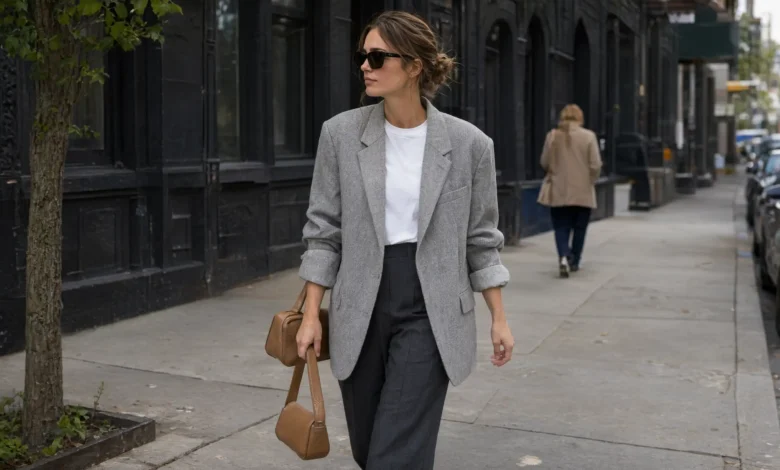
You know the blazer. It hangs past your hips, swallows your wrists, and on the wrong morning makes you look like you raided a larger person’s closet five minutes before your meeting. On the right morning, that same jacket reads as the most intentional thing in the office. The difference between those two outcomes is rarely luck. It is proportion, and proportion is learnable. If you have been wondering how to style an oversized blazer for office work without reading as sloppy, the answer lives in a handful of fit checkpoints and pairing formulas, all of them below.
The timing is good. The relaxed, menswear-inspired jacket is not going anywhere for 2026, although the runways have shifted how it gets worn. Who What Wear’s blazer forecast for the year points to belted iterations at Stella McCartney, paired with matching tailored trousers, and sharply cinched tailoring at Victoria Beckham. Volume, yes, but with a waist. That is exactly the version that survives a workday, and it is the version this guide builds on.
To style an oversized blazer for office work, keep the jacket’s volume as the only volume in the outfit: 1) confirm the shoulder seam extends no more than about three inches past your natural shoulder, 2) wear a fitted base layer such as a slim turtleneck or a tucked poplin shirt, 3) define the waist with a narrow leather belt or a single fastened button, 4) ground the look with straight-leg or matching suit trousers and pointed-toe shoes. Everything else in this article is variation on those four moves.
What Counts as Oversized at Work, and What Is Just Too Big
An intentional oversized blazer is cut that way from the first sketch. The shoulders sit slightly wide but structured, the body is roomy, and the fabric has enough weight to hang clean. A jacket that is simply several sizes too large collapses at the chest and elbows, and no styling trick repairs that. Our guide to the three-inch shoulder rule covers the mechanics in depth. The short version is that the shoulder seam should land no more than about three inches beyond your natural shoulder point, with the sleeve ending at your wrist bone so a shirt cuff or a sliver of skin can show.
Hem length matters as much as shoulder width, especially for shorter women. Jenny Wang, the founder of petite label Petite Studio, told PureWow that “a blazer that ends above the hip or at mid-thigh elongates the legs and prevents the look from appearing bulky.” Wang also recommends structured shoulders and a slightly tailored silhouette to keep the oversized look polished rather than overwhelming. If your jacket’s hem is drifting toward your knee, save it for weekends over leggings.
Not sure whether your jacket is intentionally oversized or accidentally enormous? The collar tells on it. An intentional cut sits flat against the back of your neck and drapes from the shoulder without caving in. If the collar buckles away from your neck or the chest collapses, the jacket is too big, and our blazer fitting checklist will tell you whether tailoring can save it. Shoulder work rarely can.
At a Glance: the three office fit checkpoints
- Shoulder seam: within about three inches of your natural shoulder, not sliding down the arm.
- Sleeve: ends at the wrist bone, pushed to the forearm on purpose rather than by accident.
- Hem: above the hip to mid-thigh at most, and shorter still if you are under about 5 feet 4.
The Proportion Rules That Make the Look Read Professional
Volume on top demands calm underneath. Angela Foster, a petite style coach with more than 20 years in the fashion industry, puts it plainly in PureWow: “Oversized blazers can easily overwhelm petite frames, so what we wear underneath is critical.” The same logic holds at any height. A fitted turtleneck, a slim knit, or a tucked cotton poplin shirt gives the eye a clean, defined shape to hold onto while the jacket does the dramatic work. Glamour’s styling team lands on the same rule from the other direction, balancing the roomy jacket with a more fitted bottom every time.
Foster also works with a 33 to 66 ratio, roughly a third of your visual height above the waist and two thirds below it. You do not need to measure anything to use it. A high-rise trouser with a tucked top gets you there, because the waistline the eye registers sits higher than your actual waist. This is why the same blazer looks sharper with high-rise straight-leg trousers than with a mid-rise pair and an untucked tee.
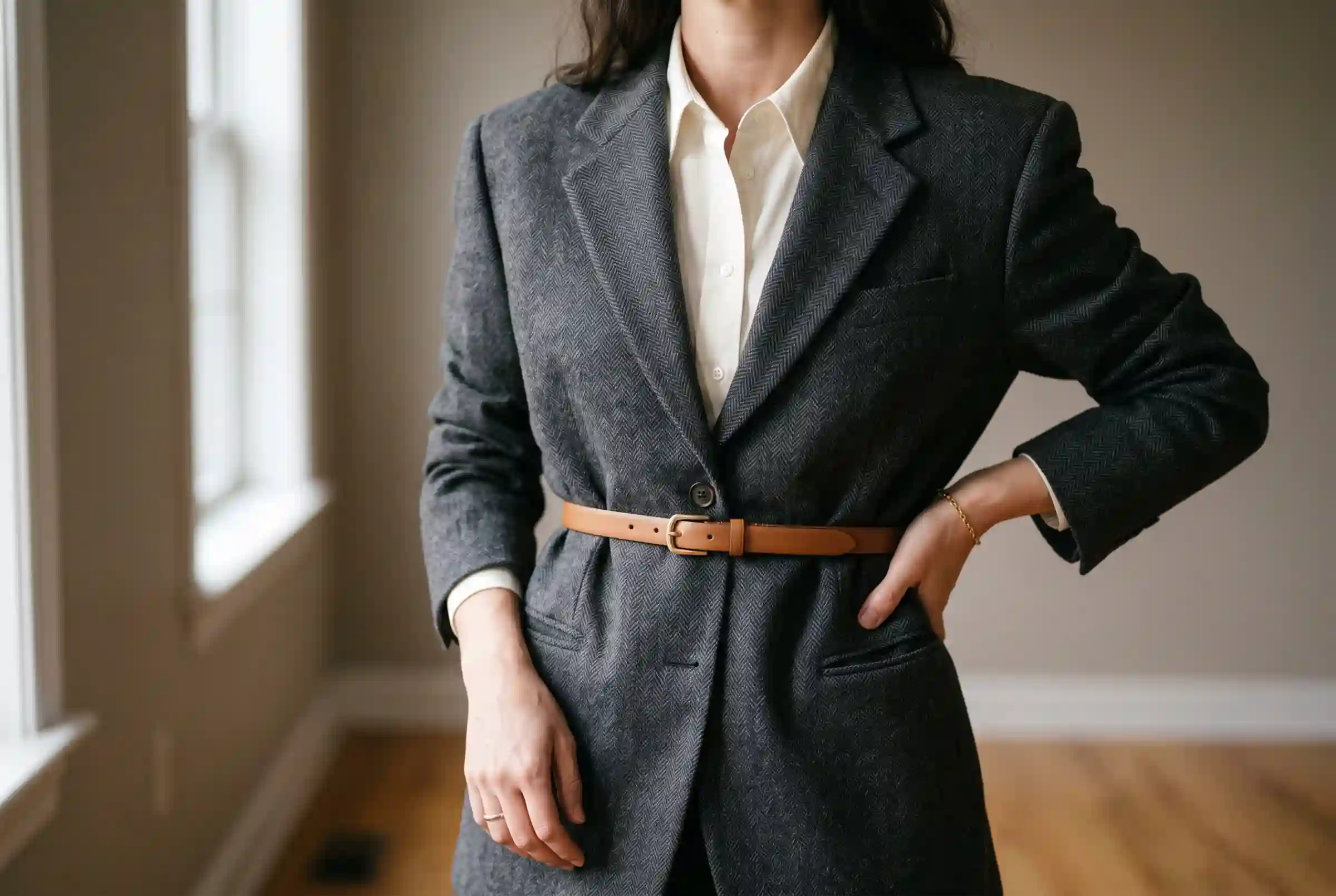
Then give the jacket a waist, or show one. Foster is a fan of belting the blazer itself: “Popping on a belt over a blazer adds definition at the waist, improves the overall proportion and feels unexpected (especially when we wrap the front versus fastening the buttons).” Her caveat is the one worth remembering. Narrow belts work best, and thick ones kill the relaxed vibe. If a belt over the jacket feels like too much for your office, fasten only the middle button while standing, or belt the tucked top underneath and leave the blazer open.
Finally, keep two narrow points visible: a pushed sleeve showing the wrist, and a pointed toe below the hem. Wide jacket plus wide trousers plus a round-toe shoe is three volumes competing. The pointed toe is what makes an oversized blazer with wide-leg trousers read as a column instead of a cube.
How to Style an Oversized Blazer for Office Work: 5 Formulas That Hold Up All Day
Once the fit checkpoints pass, the outfit formulas are mostly rearrangements of the same pieces. These five cover a full work week, and each one keeps the jacket as the single volume in the room.
| Formula | Why the proportion works | Best days |
| The tonal suit: oversized blazer over matching wide-leg suit pants, slim knit underneath | One unbroken color column makes the volume read as tailoring, not borrowing | Client days, presentations, any morning you want zero decisions |
| Fitted turtleneck, straight-leg trousers, blazer worn open, sleek ankle boots | The narrow neck-to-ankle line balances the jacket’s width without any extra styling effort | Your default from October through March |
| Tucked poplin shirt, dark unripped denim, a narrow leather belt worn over the blazer | The belt keeps casual denim looking deliberate under a relaxed cut | Casual Fridays, and any office where our practical read on the modern business casual dress code says dark denim passes |
| Over a shirt dress that ends below the blazer hem, pointed-toe flats | The dress reads as one column, and the hem peeking below the jacket adds length | Transitional weather, when fussy layering feels like too much |
| Cropped boxy knit, high-rise wide-leg trousers, sleeves pushed, blazer as the only volume | The cropped knit marks the waist without a belt, so the wide leg still looks office-appropriate | Creative offices and long desk days |
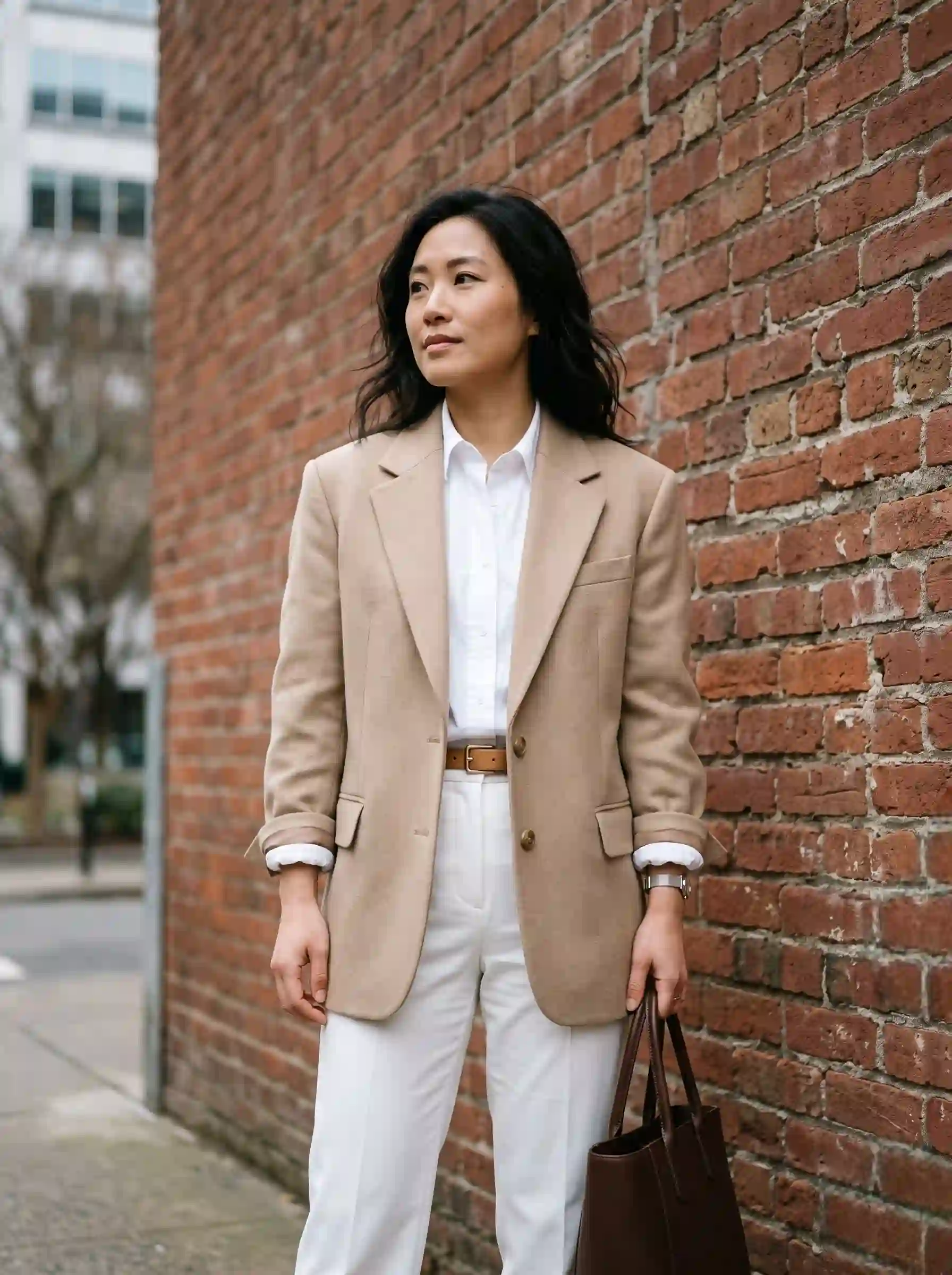
One honest caveat on the wide-leg rows: they are height and proportion dependent. Foster warns that two oversized pieces paired together make petite women look shorter and wider, so if you are under about 5 feet 4, swap the wide-leg pant in any formula for a straight-leg or slim trouser and keep the blazer hem at the shorter end of the range.
Shoes and Small Details That Ground the Volume
Footwear does more quiet work here than anywhere else in the outfit. A pointed-toe flat extends the leg line past a long hem, and a sleek ankle boot on a 2 to 3 inch block heel does the same job in colder months while keeping the silhouette grounded. Chunky sneakers tip the jacket toward costume in a formal room, so save them for the genuinely casual office.
The small details follow one rule: show a narrow point wherever the jacket adds width. Push the sleeves to the forearm so the wrist shows. Keep jewelry quiet and small against the lapel’s scale. Carry a structured tote rather than a slouchy bag, because one soft, shapeless accessory is enough volume for a single outfit.
When an Oversized Blazer Is the Wrong Call
Some rooms still reward a closer cut. Conservative offices in law and finance, courtrooms, and client meetings where your counterparts wear sharp, fitted tailoring are places where a relaxed jacket can read as a costume rather than authority. Keep the oversized piece for the days your calendar allows it.
Weather is the second honest limit. A lined wool oversized blazer on a hot, humid commute arrives rumpled and makes you miserable, so in summer months reach for lightweight fabrics like a cotton poplin or crepe shell, or save the heavy jacket for a cooled office. And if your jacket is too big rather than cut oversized, with the shoulder seam sliding down your arm, no formula above will fix it. That is a tailoring conversation, not a styling one.
If Your Situation Is a Little Different
If you are petite: lean on structure and a shorter hem. Wang’s advice to choose structured shoulders and a hem above the hip exists precisely so the jacket elongates instead of dwarfs. Use the 33 to 66 ratio with high-waisted bottoms, keep the layers underneath slim, and let a narrow belt do the waist work.
If your office leans formal: keep the oversize modest, closer to one or two inches past your natural shoulder, and work in tonal color from neck to ankle. Matte, weighty fabrics like crepe and wool read as tailoring, while thin, shiny synthetics read as fashion week.
If you are rebuilding a work wardrobe: start with one neutral oversized blazer in charcoal, black, or camel, and test it against three outfits you already own before buying a second jacket. The relaxed cut earns its hanger by making simple clothes look considered, so it should pass that test with pieces you already trust.
Frequently Asked Questions About Oversized Blazers at the Office
What is the easiest way to style an oversized blazer for office work?
The tonal suit. Wear the blazer over matching suit pants with a slim knit underneath and pointed-toe flats. One unbroken color column makes the volume read as tailoring, and it requires almost no decision-making on a busy morning.
Are oversized blazers still in style for workwear in 2026?
Yes, with more definition. Who What Wear’s blazer forecast for 2026 points to belted and cinched iterations at houses like Stella McCartney and Victoria Beckham, while Vogue notes the fitted blazer as the year’s refreshed staple. The practical read is that volume remains, but a visible waist is what keeps it current.
What pants look best with an oversized blazer for a professional look?
Straight-leg trousers and matching suit pants are the most reliable, because they hold a clean line under the volume. Wide-leg trousers work when the top underneath is fitted and the waist is marked. Save leggings and distressed denim for weekends unless your office is genuinely casual.
Can you wear an oversized blazer with jeans to the office?
On casual Fridays and in business casual offices, yes, provided the denim is dark and unripped and the rest is polished: a tucked shirt or fitted knit, a narrow belt, and a pointed-toe shoe. In conservative offices, denim under any blazer is still a risk, so watching what your colleagues actually wear beats any guide, including this one.
How should an oversized blazer fit without looking boxy?
Structured shoulders that stay near your natural shoulder line, sleeves ending at the wrist bone, and a hem no lower than mid-thigh. Boxiness usually comes from a too-long hem or a soft, collapsing shoulder, not from the roomy body. Add a waist with a narrow belt or a single fastened button and the shape stops reading as a box.
The Last Word on the Oversized Blazer at Work
The oversized blazer earns its hanger in a work wardrobe for one reason: it makes simple clothes look considered. A fitted turtleneck, straight trousers, and pointed flats are a fine outfit on their own, but add the relaxed jacket and the same pieces read as a point of view. Keep the shoulder honest, keep the base fitted, give the jacket a waist, and the question of how to style an oversized blazer for office work stops being a question at all. Start with the jacket you already own, check its shoulder seam against the three-inch rule this week, and build one formula from the table above before buying anything new.
Sources
Industry Sources
- PureWow: I Asked 2 Petite Fashion Experts How to Wear an Oversized Blazer as a Short Girl, Access Date: August 13, 2026
- Who What Wear: 5 Blazer Trends I’ll Be Wearing in 2026, Access Date: August 13, 2026
- Glamour: How to Style an Oversized Blazer With Everything in Your Closet, Access Date: August 13, 2026
- Vogue: From Blazers to Loafers, How to Style Your Everyday Essentials in 2026, Access Date: August 13, 2026