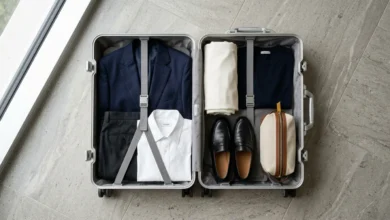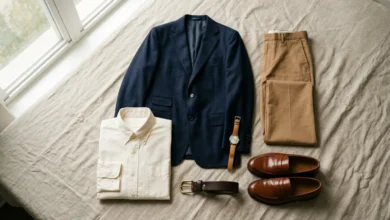
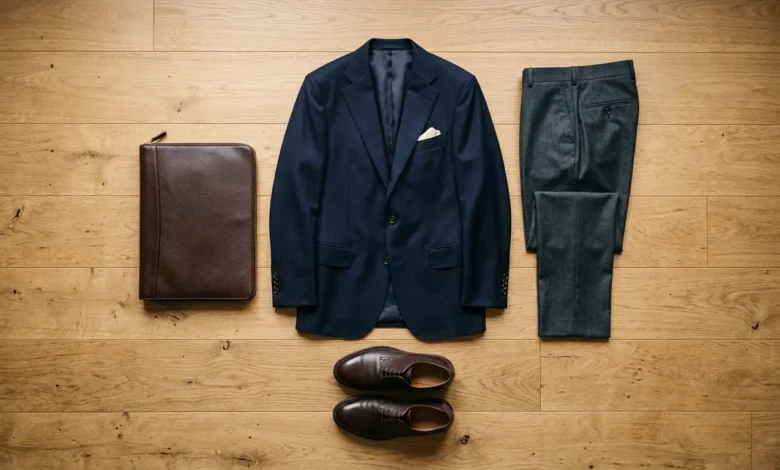
Standing in front of a closet trying to balance professionalism with a company’s laid-back culture is a familiar frustration. Overdress, and you risk looking like you do not understand the team environment. Underdress, and you signal that you do not take the opportunity seriously. Deciding exactly what to wear to a job interview requires looking past outdated rulebooks and focusing on the specific culture of the hiring company. Your clothing acts as a communication tool before you ever answer the first question.
To determine your interview outfit, follow a 4-step process:
- Identify the company’s daily dress standard through their corporate site or networking contacts.
- Apply the plus-one rule by dressing one level more formal than the daily employee baseline.
- Select structured fabrics like worsted wool or ponte knits over relaxed materials like jersey or denim.
- Stick to solid, neutral colors like navy or charcoal to keep the focus on your qualifications rather than your wardrobe.
The Plus-One Rule Explained
A frequent misconception is that a casual workplace means casual interview attire. According to a Robert Half Technology survey, 46 percent of executives reported that a formal business suit remains a candidate’s most appropriate choice, even when the company itself operates casually.
While a full suit is not mandatory for every single industry today, the safest baseline approach is the plus-one rule. This method involves observing what employees wear on a normal Tuesday and refining your outfit by one tier of formality. If the engineering team wears t-shirts and jeans, a collared button-down shirt paired with chinos strikes the right balance. If the office baseline is a basic sweater and slacks, adding a tailored blazer completes the requirement.
To execute this correctly, you need accurate intelligence on the company. Reviewing the corporate About page can provide clues, but be careful to distinguish between actual employee photos and purchased stock photography. Searching the company on professional networks and looking at candid photos from recent office events provides a much more accurate picture of their real daily dress code.
Fabric and Construction: What Reads as Professional
The material of your clothing communicates intent just as loudly as the cut. A beautiful silhouette falls flat if the fabric wrinkles aggressively during the car ride to the office.
Hiring managers notice these details. Multiple recruiting surveys, including data aggregated by Zety, note that 65 percent of hiring managers consider clothing a deciding factor between two equally qualified candidates. A structured garment shows preparation and respect for the meeting.
At a Glance: Interview Fabric Selection
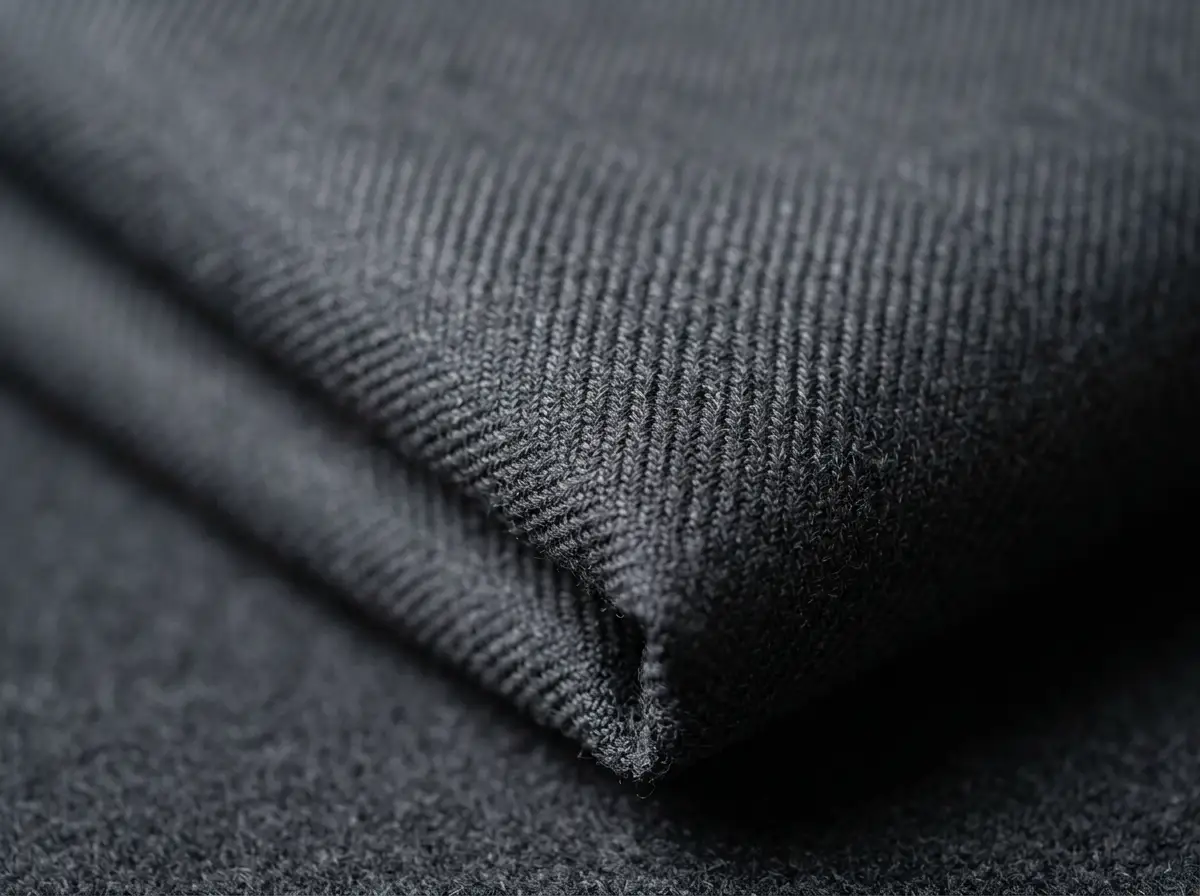
- Opt for: Worsted wool, ponte knit, and cotton poplin. These hold their shape and resist severe wrinkling.
- Skip: Jersey cotton, heavy fleece, and unlined linen. Soft leisure fabrics look like weekend wear and crush easily the moment you sit down.
When building an interview outfit, rely on four-season fabrics. Brands that focus on reliable workwear, such as Theory or J.Crew, rely heavily on worsted wool because it breathes under pressure while maintaining crisp lines. Worsted wool is spun tightly, giving it a smooth finish that resists the friction pilling common in cheaper synthetics.
If you prefer cotton, look for a poplin weave rather than an oxford cloth. Poplin has a tighter, smoother surface that sits neatly under a jacket. Oxford cloth carries a rougher texture that naturally leans casual. When evaluating cotton shirts, consider the fabric weight. A 120 grams per square meter summer weave feels light but wrinkles instantly under a seatbelt. A heavier 200 grams per square meter poplin holds its press through a morning commute, ensuring you walk into the lobby looking exactly as crisp as when you left home.
Industry-Specific Expectations
Different fields carry distinct expectations. A successful outfit in one sector might read as entirely out of touch in another. Use this breakdown to align your wardrobe choices.
| Industry Type | Employee Baseline | Your Plus-One Interview Outfit |
| Corporate Finance and Law | Business formal (suits, conservative ties, closed-toe pumps). | A well-tailored dark suit, conservative shirt or blouse, and polished dress shoes. |
| Tech and Startups | Casual (jeans, sneakers, t-shirts). | Dark denim or chinos, a structured blazer, and clean loafers or leather flats. |
| Creative and Media | Trend-conscious smart casual. | Tailored separates that show some personality, like a subtle patterned blouse or a modern wide-leg trouser. |
Corporate Finance and Law
Traditional sectors still expect traditional business formal attire. This means a well-tailored dark suit in navy, charcoal, or black. For men, pair the suit with a conservative tie and polished leather oxfords. For women, a tailored skirt suit or pant suit worn with closed-toe pumps or leather flats remains the standard. Avoid distracting patterns or loud accessories. The goal in these industries is uniformity and extreme attention to detail.
Tech and Startups
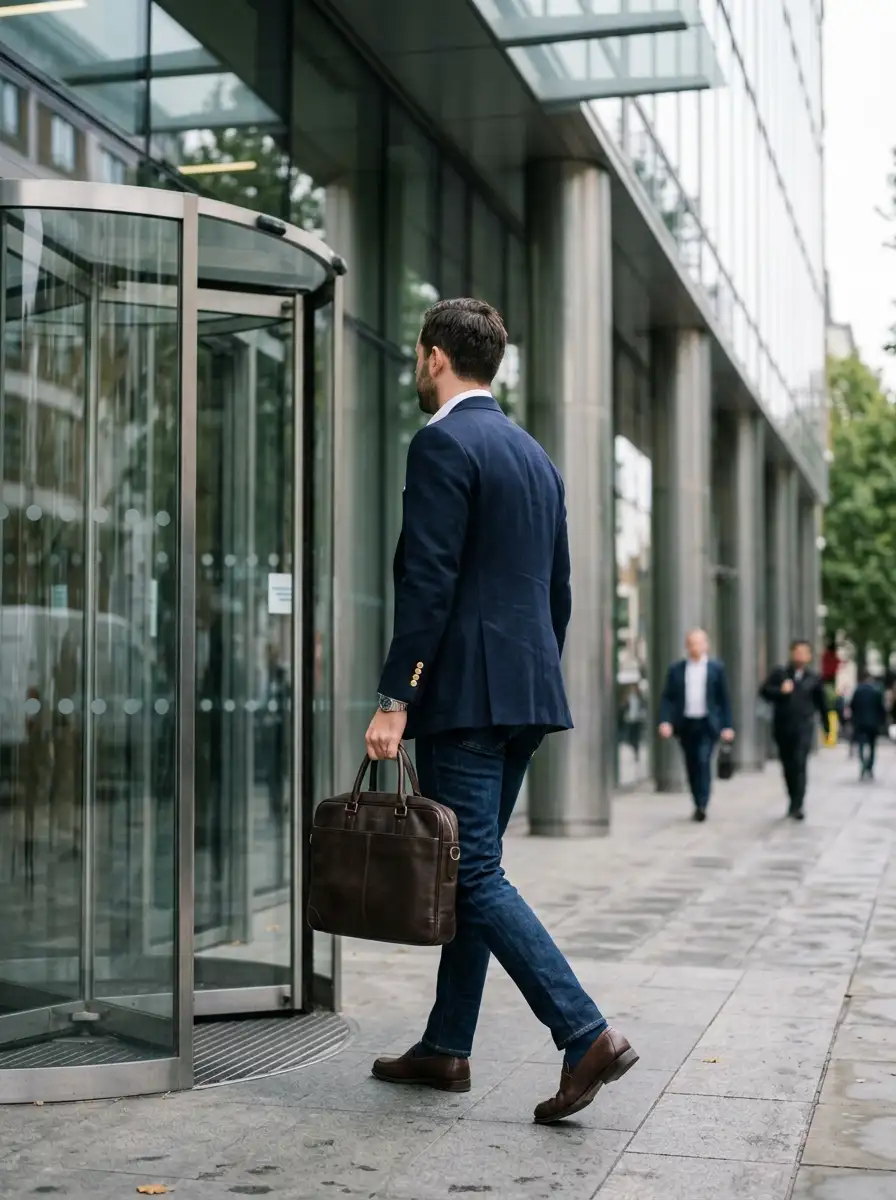
The technology sector famously rejects corporate suits, but showing up in a hoodie is a mistake. This is where understanding the business casual dress code becomes highly practical. Opt for dark, unripped denim or crisp chinos. Pair them with a structured blazer and clean loafers or leather flats. The blazer provides the necessary authority for an interview, while the denim signals that you understand their relaxed culture.
Creative and Media Roles
Creative fields require you to demonstrate some level of personal taste without crossing into weekend wear. Trend-conscious smart casual is the target. Tailored separates that show aesthetic awareness work well here. A subtle patterned blouse, a modern wide-leg trouser, or a distinct architectural shoe shows style without sacrificing professionalism. Even here, stick to high-quality fabrics and ensure everything fits precisely.
Trades and Field Roles
If you are interviewing for a construction management, engineering field role, or skilled trade position, a three-piece suit looks highly out of place. Lean into clean, durable workwear instead. A fresh collared shirt, heavy-duty khakis or clean canvas work pants, and spotless boots show that you are ready for the actual environment.
Color Psychology and Focus
Color choice dictates where the interviewer looks. Bright, high-contrast patterns draw the eye away from your face and toward your clothing.
Navy blue is widely considered the most reliable color for an interview. It communicates authority and confidence without the harshness of solid black. Charcoal gray is an equally strong choice that flatters a wide range of skin tones.
If you want to introduce color, do it through base layers rather than the primary outerwear. A pale blue or soft sage green shirt under a navy blazer adds warmth without causing a distraction. Keep your wardrobe essentials neutral, allowing your answers to take center stage.
Navigating Remote Interviews
Video interviews introduce an entirely different set of technical constraints. Camera lenses flatten textures and distort colors. A stark white shirt can blow out the exposure on a standard webcam, making you look like a glowing silhouette. A completely black top often blends into a dark room background, creating a floating-head effect.

Solid jewel tones like navy blue, emerald green, or burgundy translate clearly on video. Avoid tight stripes or houndstooth patterns. These fine geometric shapes cause a moiré effect on digital sensors, resulting in a distracting, vibrating pattern on the interviewer’s screen.
Always maintain the same lower-body standards as an in-person meeting. Standing up to adjust a power cord or grab a portfolio while wearing sweatpants immediately breaks the professional illusion. Treat a remote interview as a physical meeting that simply takes place on a screen.
Garment Maintenance and Invisible Details
A strong interview outfit fails if it is poorly maintained. Hiring managers notice scuffed shoes, missing buttons, and frayed hems.
Before the interview, execute a thorough garment inspection. Check for friction pilling under the arms of sweaters or blazers. Polish leather shoes to remove commuter scuffs. Ensure your trousers are hemmed to the correct length. A trouser hem that drags on the floor immediately looks borrowed or poorly considered. For women’s trousers, the hem should break cleanly over the shoe without bunching.
Frequently Asked Questions About What to Wear to a Job Interview
Should I wear a tie to a modern job interview?
If the company leans conservative, a tie is expected. For casual or tech environments, a collared shirt paired with a well-fitting blazer looks polished without feeling aggressively formal.
Are jeans acceptable interview attire?
Denim is only appropriate if you know for a fact the company is highly casual. Even then, choose dark, unripped denim with a straight fit, and pair it with a tailored jacket to upgrade the look.
Does a capsule wardrobe work for interview outfits?
Yes. Relying on a capsule wardrobe ensures you have neutral, high-quality basics ready to go. A strong foundational blazer and tailored trousers can easily adapt to almost any interview scenario with minimal stress.
Can I wear open-toe shoes to an interview?
Closed-toe footwear remains the professional standard across almost all industries. Leather flats, loafers, oxfords, or low pumps are safe choices that do not draw unnecessary attention.
What if I overdress for the interview?
If you arrive in a suit and the entire office is in t-shirts, you can casually remove your jacket and tie to soften your appearance. It is much easier to dress down a formal outfit in the moment than it is to dress up a casual one.
The primary goal of your interview outfit is to remove itself as a distraction. You want the hiring manager focusing entirely on your skills, your experience, and your answers. By researching the company culture, choosing structured fabrics, and leaning slightly more formal than the daily baseline, you communicate respect for the opportunity. An intentional outfit lets your actual qualifications do the talking.
Industry Sources
- Robert Half: When Dressing for an Interview, Know the Do’s and Don’ts, Accessed July 2026.
Research Sources
- Zety: What to Wear to an Interview: Outfits for Women & Men, Accessed July 2026.
- Coursera: What to Wear to an Interview (And What Not to Wear to an Interview), Accessed July 2026.