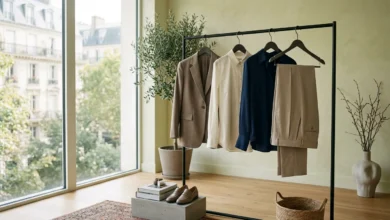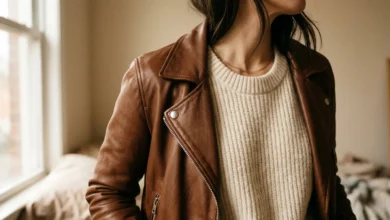
Buying a blazer two sizes larger isn’t how you get an intentional oversized look. It’s how you get sagging armholes, a gaping collar, and sleeves that swallow your hands. True oversized tailoring relies on deliberate proportion balance. You want the shoulder architecture to hold its frame while the body drapes freely.
When you learn how to style oversized blazers, the focus shifts from hiding your frame to balancing scale. A relaxed jacket works best when paired with grounding elements beneath it. That might mean a tucked jersey top, exposed wrists, or a straight-leg denim hem that anchors the lower half.
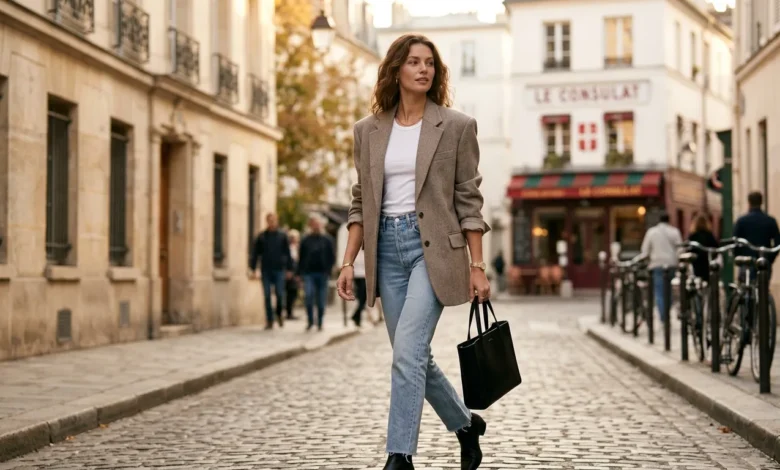
To style an oversized blazer without drowning in fabric, balance top-heavy volume with a fitted base layer and grounded bottom pieces. Pair structured relaxed tailoring with straight-leg denim, high-waisted trousers, or mini hemlines. Keep your waist definition clear by tucking inner layers or adding a belt, and push sleeves up to expose your wrists.
The Core Rule: Engineered Oversized vs. Sizing Up
There is a distinct mechanical difference between an intentionally oversized jacket and a standard fitted jacket that is simply too big. Fast-fashion sizing guides often suggest buying one or two sizes up in traditional blazers to achieve a slouchy aesthetic. That advice ignores basic pattern drafting.
An engineered oversized blazer is cut in your actual size. The pattern maker intentionally broadens the shoulder points, drops the armholes slightly, and expands the chest circumference while keeping the neck roll stable. The collar sits clean against your neck, and the shoulder pads extend just enough to create an intentional boxy drop.
Why Sizing Up Standard Blazers Fails at the Neckline
Sizing up in a standard jacket disrupts the proportions you cannot easily fix without heavy tailoring. When you buy a standard blazer two sizes too large, the back collar lifts away from your neck, creating an awkward gap. The shoulder pads hang past your natural arm pivot point, dragging the upper sleeve downward into deep fabric folds.
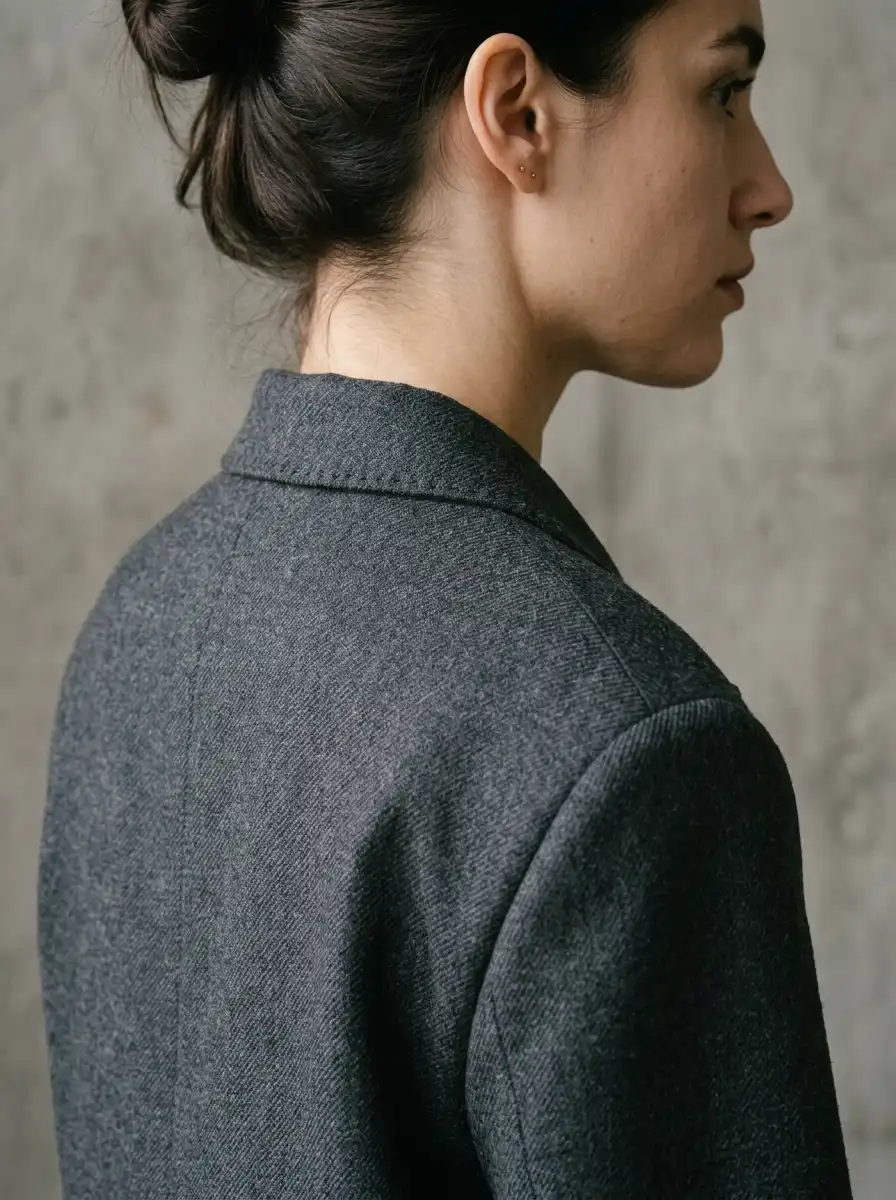
Lower armholes on an upsized traditional jacket also restrict arm movement. When you raise your hands, the entire jacket shifts upward, bunching at the waist. True relaxed tailoring accounts for this volume in the chest canvas and sleeve cap, allowing the fabric to drape smoothly down your back without pulling.
4 Concrete Formulas to Style an Oversized Blazer
Balancing relaxed outerwear comes down to contrasting volume with structure. You do not need to wear clingy clothes underneath, but you do need clear anchor points where the eye recognizes your frame.
1. Straight-Leg Denim and a Fitted Base Layer
Pairing a boxy jacket with medium-wash straight denim creates a clean everyday proportion. A fitted ribbed tank top or tucked cotton crewneck provides an immediate visual anchor at the waist.
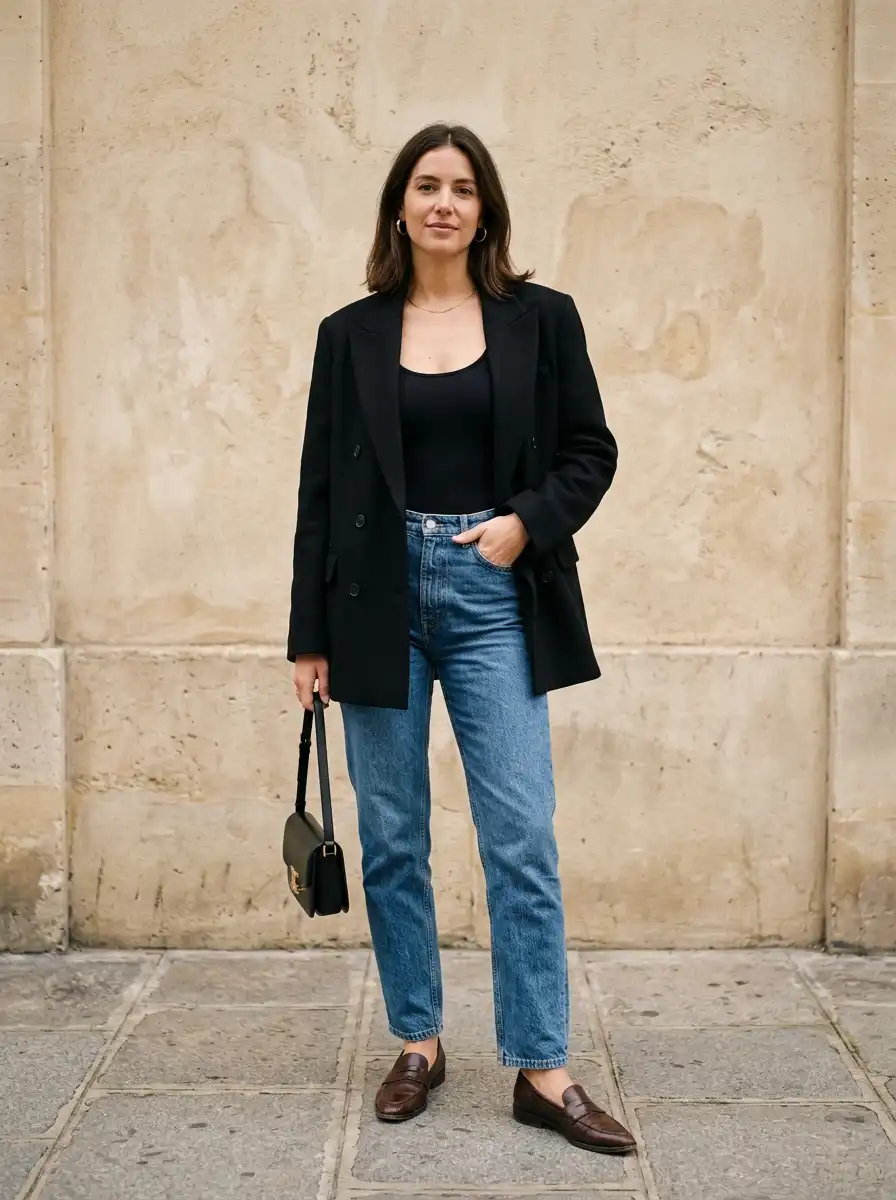
The Straight Fit of the denim continues down to the ankle without clinging, offering a grounded vertical line that balances the broad shoulders above. Leaving the jacket unbuttoned allows the vertical line of the inner top to show, extending your silhouette from neck to hemline.
+--------------------------------------------------------+
| PROPORTION CHECKLIST: DENIM LOOK                       |
+--------------------------------------------------------+
| [ ] Inner top tucked into high-rise waistband          |
| [ ] Denim hem hits at the top of the foot or ankle     |
| [ ] Sleeve length pushed up slightly to reveal wrists  |
+--------------------------------------------------------+
2. High-Waisted Wide Trousers with Grounded Footwear
Volume-on-volume styling works well when you keep the waist placement crisp and clear. Choose high-waisted tailored trousers in a fluid drape. A sleek bodysuit or lightweight crewneck sweater keeps the upper body trim beneath the open jacket front.
This approach aligns neatly with modern business casual requirements by replacing stiff suit sets with relaxed tailoring. Pointed-toe flats or low leather loafers extend the leg line beneath full-length trouser hems, preventing the lower half from dragging.
3. The Mini Skirt or Slip Dress Contrast
Combining heavy tailoring with a shorter hemline relies on length alignment. An oversized jacket that hits at the mid-thigh works especially well over a tailored mini skirt or a silk slip dress.
The jacket hem should sit within two inches of the skirt hemline, or slightly exceed it. This creates a clean outer shell while exposing the legs, offsetting top-heavy fabric weight with lower-body lightness. Leather knee-high boots or simple leather loafers complete the outfit without cluttering the hemline.
4. Waist Definition via Belting and Exposed Wrists
If you prefer a defined waist without swapping your oversized jacket for a fitted style, add a medium-width leather belt directly over the jacket button stance. Cinching the natural waist transforms the boxy shape into a soft hourglass while retaining relaxed shoulder volume.
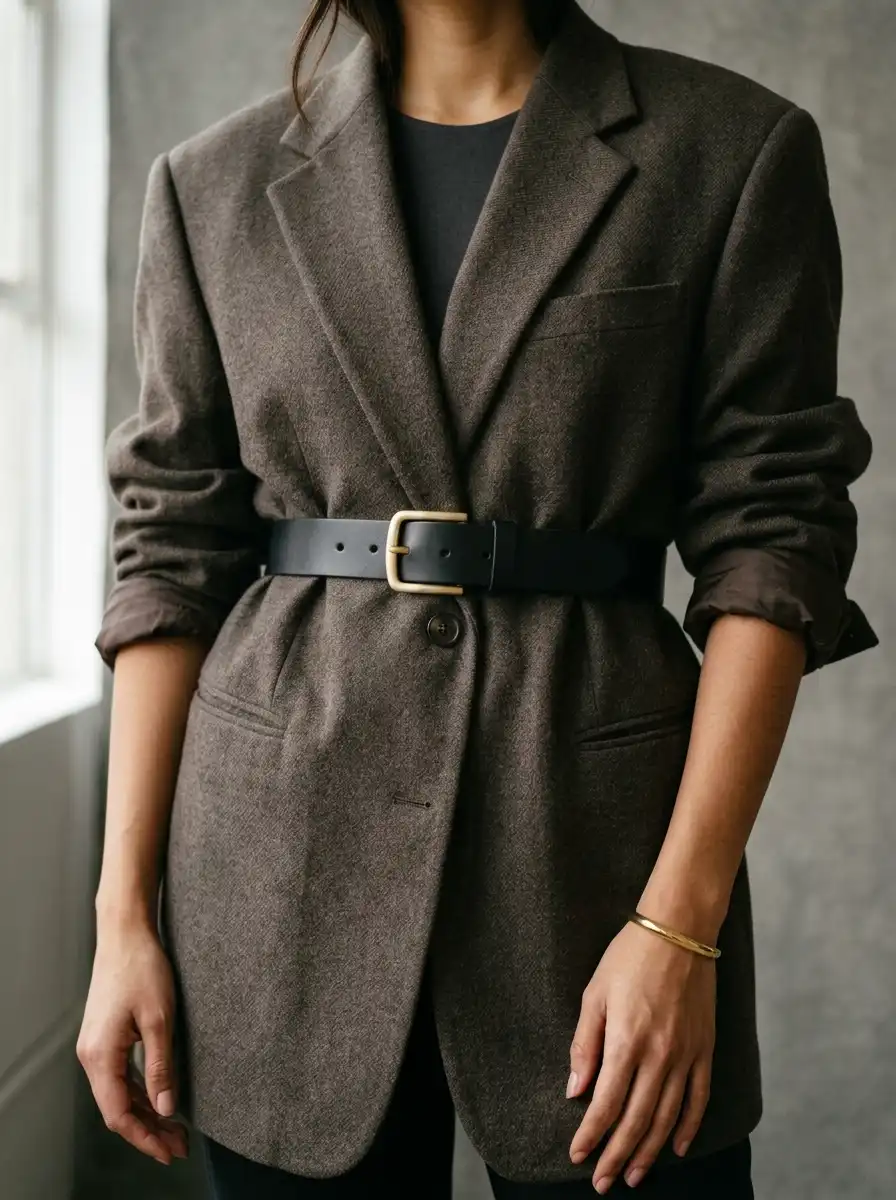
Rolling or pushing the sleeves back toward your mid-forearm is another simple adjustment. Exposing the wrist provides a narrow visual break that keeps long tailored sleeves from overwhelming smaller frames.
Fit and Fabric Architecture: What to Look For
How a jacket drapes depends on fabric weight and internal construction. Heavy wool twill creates crisp geometric lines, while softer fiber blends skim the body.
A heavy wool twill jacket features structured internal canvas construction. The fabric holds a boxy frame independently, making it a great option for structural winter looks.
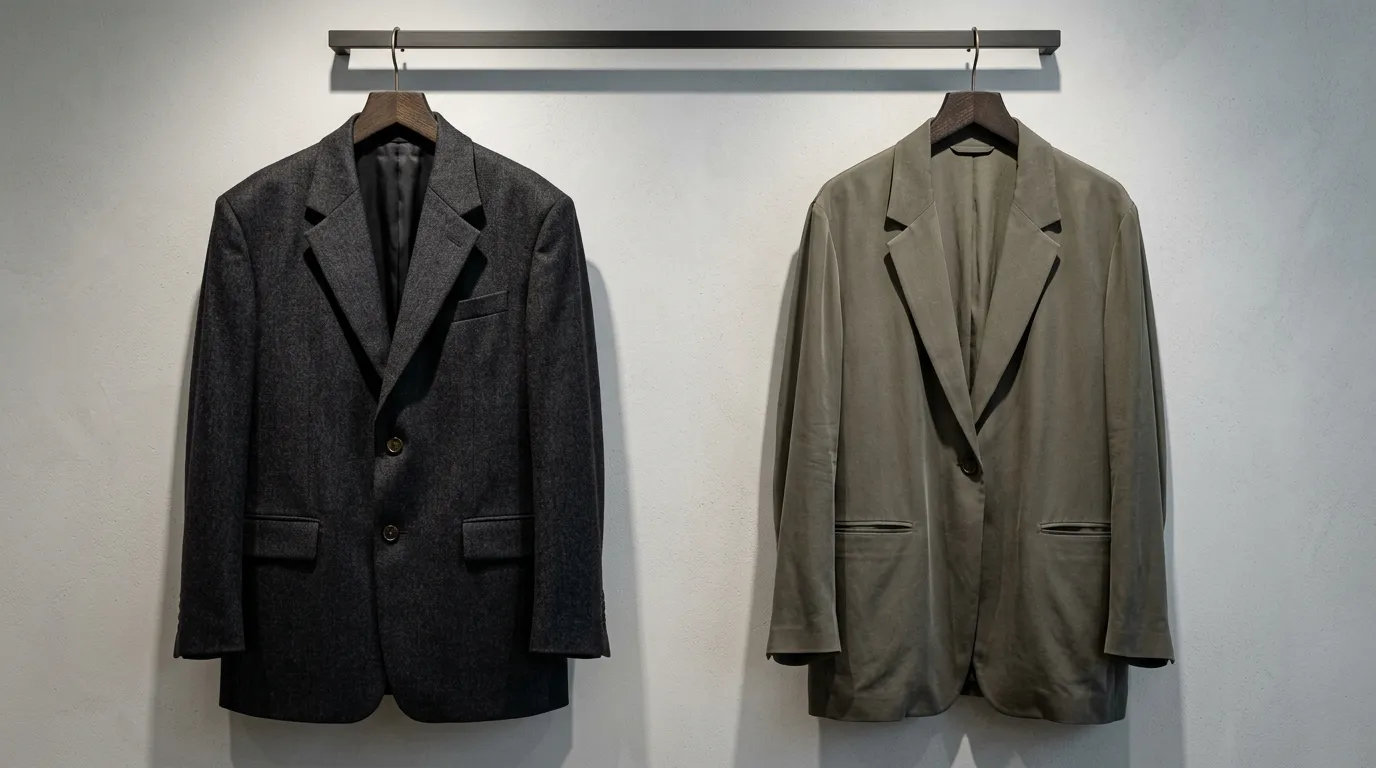
A Rayon or Modal blend offers a fluid drape that conforms gently to your shoulders. These softer textiles fall closer to the ribs, reducing bulk if you plan on layering rules for seasonal transitions under mid-weight knits or collared shirts.
Shoulder Seam Drop and Sleeve Length Limits
Pay close attention to where the shoulder seam lands. On an engineered relaxed fit jacket, the shoulder point drops between 1 and 3 inches past your natural shoulder bone. Anything beyond 3 inches causes the sleeve cap to pucker and drag down your biceps.
Sleeve hems should rest right at your thumb joint when your arms hang straight down. If the sleeve completely covers your knuckles, it signals that the jacket is simply oversized in length rather than properly proportioned across the chest.
Common Proportion Mistakes That Drown Your Frame
The most frequent styling error is pairing wide, unstructured pieces across every layer simultaneously. Wearing a heavy oversized jacket over an untucked boxy sweater with loose mid-rise jeans buries your proportions under excess fabric.
Another issue involves length proportions on shorter body types. For smaller frames, an oversized jacket works best when the hem lands at the high hip or upper thigh rather than extending down toward the knee.
Pairing shorter hemlines with monochrome bottom layers creates a continuous visual line, preventing broad shoulder padding from compressing your height. When you focus on building a balanced capsule wardrobe, select one structured relaxed blazer in a rich charcoal or taupe that coordinates easily across straight denim and slim trousers.
Frequently Asked Questions
Should I buy my normal size in an oversized blazer?
Yes. Intentionally designed oversized blazers are engineered in standard sizing with expanded shoulder points, wider chest panels, and roomier armholes. Buying your true size preserves collar stability against your neck while delivering a relaxed drape.
How do you style an oversized blazer casually?
The most reliable casual combination pairs an unbuttoned oversized blazer with a tucked white jersey t-shirt, straight-leg denim, and leather loafers or clean retro sneakers. Pushing the blazer sleeves up to reveal your wrists adds an effortless finishing detail.
How can petite frames wear oversized blazers without looking swallowed?
Petite frames benefit from choosing oversized jackets with hemlines ending at the upper hip or mid-thigh. Keep the inner base layer fitted and tucked into a high-waisted bottom to establish clear waist height, and stick to a single color family across your top and pants.
Mastering Relaxed Tailoring
Learning how to style oversized blazers comes down to managing contrast rather than hiding your body under heavy layers. When you anchor relaxed tailoring with a tucked top, straight-leg trousers, or exposed wrists, the extra volume looks deliberate and polished. Focus on clean shoulder construction and fabric drape, and let the relaxed silhouette carry the outfit.
Sources
Research Sources
- Harper’s BAZAAR UK: Best Oversized Suits for Women – How to Style the Suit (Access Date: July 20, 2026 | Source Tier: Tier 5)
- Harper’s BAZAAR: The Best Oversized Blazers Are Officially Staples (Access Date: July 20, 2026 | Source Tier: Tier 5)
- InStyle Germany: Modetrend Oversize Blazer Richtig Kombinieren (Access Date: July 20, 2026 | Source Tier: Tier 5)
- Who What Wear: Blazer Trends and Outfit Guides (Access Date: July 20, 2026 | Source Tier: Tier 5)
Industry Sources
- StylePal Editorial: How to Wear an Oversized Blazer (Access Date: July 20, 2026 | Source Tier: Tier 5)
- NA-KD Magazine: How to Style Blazer and Pants (Access Date: July 20, 2026 | Source Tier: Tier 5)