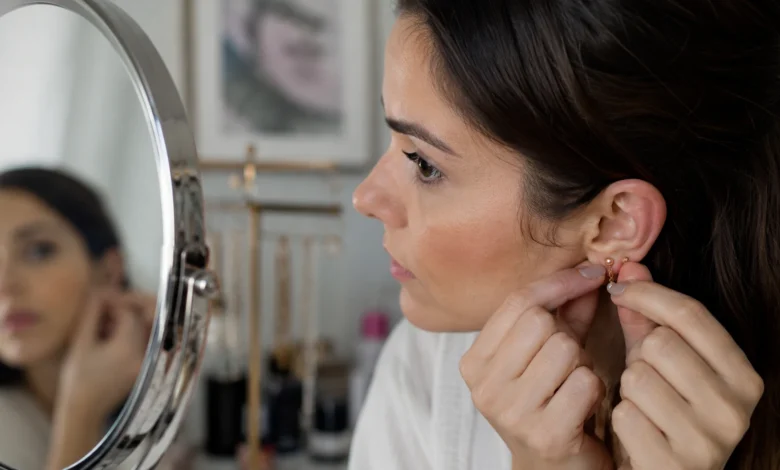
The card said hypoallergenic, which is why the pair went home with you, and why your earlobes are itching two days later. That gap between the label and the skin is where most nickel surprises live, and closing it is the real answer to how to tell if earrings are actually nickel-free: not by reading the packaging, but by testing the metal and knowing which alloys keep their word.
Nickel is the single most common contact allergen in patch-test clinics, and in the United States there is no federal definition stopping a manufacturer from printing nickel-free on plated studs that leach nickel by lunchtime. The label is marketing. The metal is the data.
The good news is that both halves of the problem are learnable in an afternoon. A spot test kit costs about as much as the earrings themselves, and the safe-metal list is short enough to memorize.
To tell if earrings are actually nickel-free, run a dimethylglyoxime spot test on the posts and backs, read any pink within a minute as nickel leaching, and confirm the exact metal, because implant-grade titanium, niobium, and 18k gold pass while plated base metals and most surgical steel do not. In the US, treat the words hypoallergenic and nickel-free on a card as marketing until the seller can show a nickel-release test result.
What the Label Can and Cannot Tell You
In the United States, hypoallergenic has no legal definition when it appears on jewelry. The FTC’s Guides for the Jewelry, Precious Metals, and Pewter Industries, the federal document that polices how metal quality gets claimed, is occupied with karat stamps and silver content, and it never defines hypoallergenic or nickel-free. Any card in any display case can carry both words without a single test behind them.
Europe took the opposite route. Under REACH Annex XVII, entry 27, posts for pierced ears sold in the EU must release less than 0.2 micrograms of nickel per square centimeter of skin contact per week, and other jewelry in prolonged contact less than 0.5, measured by the EN 1811 laboratory method. Notice what that standard regulates. It is not the nickel inside the metal, but the nickel that escapes toward your skin.
That distinction is not academic. Denmark began restricting nickel release in 1990, and when researchers patch-tested Danish women before and after the rule, nickel allergy fell from 15.6 percent among women pierced before regulation to 6.9 percent among women pierced after it, a result published in the New England Journal of Medicine. Regulation aimed at release works, which is exactly why the release number, not the label adjective, is the figure worth asking a seller for.
And the problem is big enough to regulate. Nickel has been the most common positive patch-test allergen for decades, the American Contact Dermatitis Society named it the 2008 Contact Allergen of the Year, and North American patch-test clinic data averaged a 17.5 percent nickel sensitivity rate across twenty years.
At a glance
- US cards: hypoallergenic and nickel-free carry no legal definition, so the words prove nothing on their own.
- EU rule: piercing posts must release less than 0.2 micrograms of nickel per square centimeter per week, and other skin-contact jewelry less than 0.5.
- The practical read: a compliant pair can still contain nickel, it just cannot leach much of it.
How to Tell If Earrings Are Actually Nickel-Free Before They Touch Your Skin
The tool is a dimethylglyoxime spot test, sold in the US under names like Nickel Alert for roughly ten to fifteen dollars. Dimethylglyoxime, or DMG, is the same chemistry professional labs use as a first-pass screen, and it turns pink in the presence of free nickel. The home version works like this:
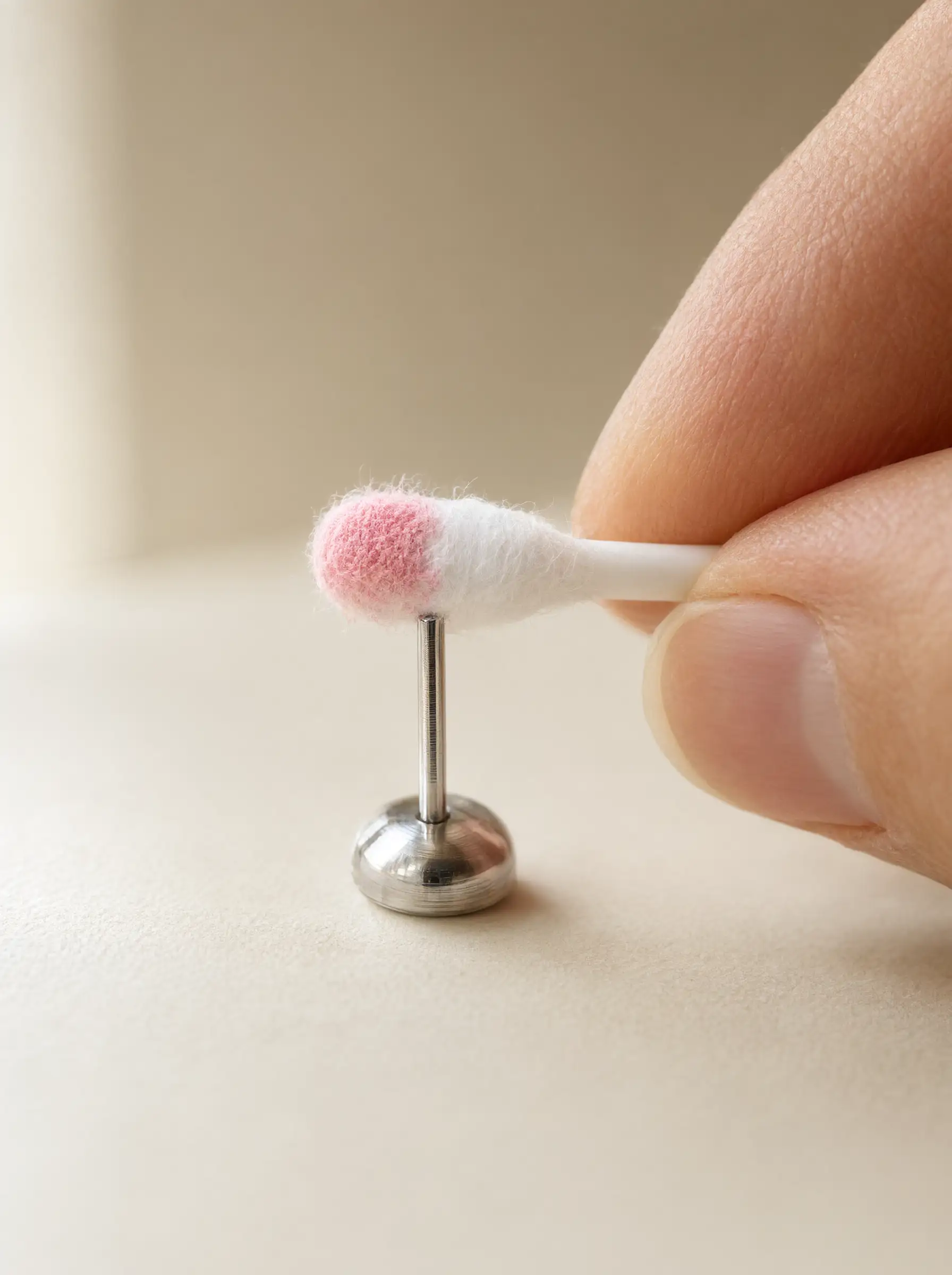
- Put two or three drops of the solution on a cotton swab.
- Rub the swab firmly over the post and the back for about 30 seconds, the parts that actually sit against your skin.
- Read the swab in good light. Any pink or red blush is a positive, meaning the metal is releasing nickel.
- No color change means the piece releases nickel below the test’s detection threshold, which is good enough for most sensitive ears.
Two refinements make the test honest. Swab the friction points, meaning the post tip and the edges of the back, because that is where plating wears and base metal shows, and a brand-new plated pair can swab clean on its shiny surface and still leach nickel a month in, so retest anything plated after a few wears. And run the test before the pair earns a full day of wear, since earrings are one of the few personal purchases you cannot always return once worn.
What the kit will not do is quantify. It tells you nickel is escaping, not how much, and a person at the severe end of the spectrum can react to release a swab cannot see. If a dermatologist’s patch test has already confirmed a strong nickel allergy for you, pair the spot test with a metal list you trust, not with the kit alone.
The Magnet Test and Other Folk Checks That Fail
The magnet trick circulates because nickel is technically ferromagnetic, but only weakly, and alloying changes the picture entirely. Many nickel-heavy alloys produce no pull you can feel, and a few nickel-free metals will tug at a strong magnet. A refrigerator magnet held to a post is a coin flip dressed up as a method.
The green-skin check fails in the other direction. A green or gray tint on your skin is copper doing that, not nickel. Nickel’s signature is the slow burn: itch, redness, and a bumpy rash that shows up 12 to 48 hours after contact and can linger for weeks. If your earlobes turn green but never itch, you likely own a copper alloy with a nickel question still open.
Price is the third unreliable proxy. Gold plating over a nickel-containing core is standard construction in fashion jewelry at nearly every price point, and a higher tag usually buys a thicker flash of plating, not a cleaner core.
The Metals That Actually Pass, and the Ones That Fake It
Read the table as a sorting tool, not a verdict on any single pair, since alloy recipes vary by caster.
| Metal | Nickel content | How sensitive ears usually handle it |
| Implant-grade titanium, ASTM F-136 | None | The benchmark. The standard covers surgical implants, so the metal is verified nickel-free rather than marketed that way. |
| Niobium | None | Titanium’s quiet sibling, anodized to color without dyes or plating. |
| Platinum | Effectively none | The safest precious metal in the case, and priced like it. |
| 18k and 24k yellow gold | Trace to none | Usually fine, because the higher the karat, the less alloy metal sits against your skin. |
| 14k yellow gold | Varies by alloy | Fine for most people, worth asking what the other 42 percent is, since some casters use nickel. |
| White gold | Often alloyed with nickel | The trap in the fine-jewelry case. The palladium-alloyed version is the safe one. |
| Sterling silver, 925 | None, but copper-heavy | Nickel is not the issue here, though a small subset of ears reacts to the copper or the tarnish. |
| Surgical steel 316L | 10 to 14 percent | Usually tolerated, because release runs far below the EU limit. Severely sensitive skin is the exception. |
| Gold-plated base metal | Unknown core | The coating wears at the post tip and exposes whatever sits underneath. Assume nickel. |
| Unmarked fashion alloy | Assume yes | The default construction for most low-price earrings, and the usual suspect behind a flare-up. |
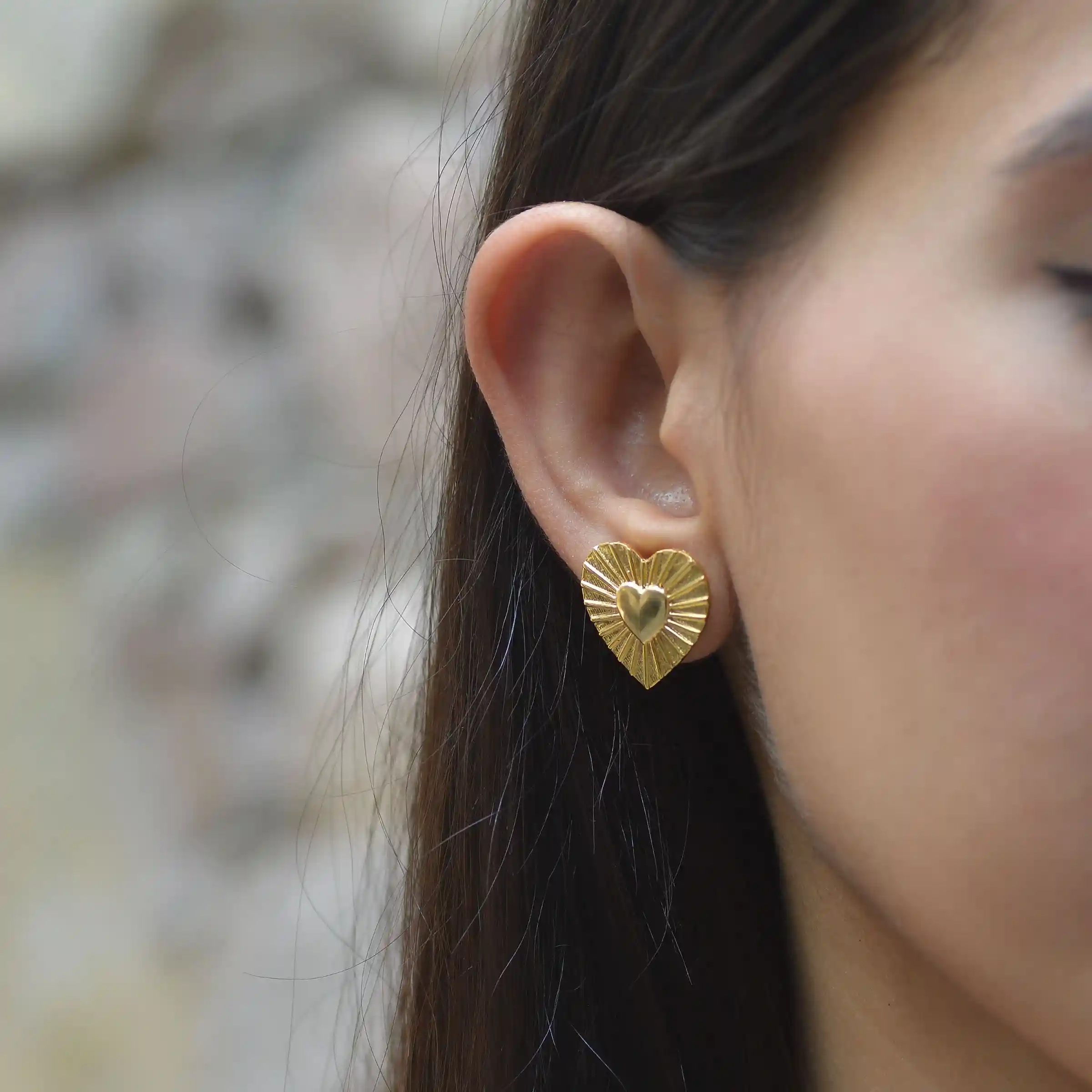
The surgical steel row deserves a sentence of its own, because it is the most misunderstood metal in the display case. 316L is genuinely 10 to 14 percent nickel, and it is still the right budget answer for most sensitive ears, because the nickel sits locked in a stable alloy that releases far less than the EU’s 0.5 limit. The people it fails are the ones at the severe end of the allergy spectrum, which is why it earns a usually-fine rather than a guarantee.
White gold is the quiet trap in fine jewelry. Much of it is whitened with nickel, so a pair of 14k white gold studs can out-leach a surgical steel pair while costing forty times more. The safe version is white gold alloyed with palladium, and any jeweler worth the counter time can tell you which recipe a pair uses. If you already rotate between gold and silver pieces, this is the one alloy question worth adding to that routine.
Why a Clean Test Still Sometimes Ends in Itch
A clean swab rules out nickel leaching at that moment, not every possible reaction. Cobalt and chromium travel with nickel in many alloys and provoke their own dermatitis, and a meaningful share of nickel-allergic people react to cobalt as well. Then there is plain irritation, which is not an allergy at all: a back screwed on too tight, friction from a heavy drop, or a piercing that is still healing can all produce redness the spot test will never explain.
Timing also matters. A plated pair that swabs clean in week one is a different object in week twelve, once the flash wears at the post tip. If a pair you have worn happily for months suddenly irritates you, the metal underneath may finally be showing.
The Barrier-Coating Stopgap
For the fashion pair you love and cannot verify, a barrier lacquer is the honest middle ground. Products like Nickel Guard paint on clear, seal the metal, and wear off, so plan to reapply every week or two of regular wear and skip them entirely for healing piercings. Board-certified dermatologist Dr. Shilpi Katta describes the approach as “a protective lacquer that’s similar to nail polish but without potential allergens.” It is a truce, not a treaty, and it turns a once-a-season treat pair into a manageable one.
Choosing Your Next Pair, Starting From Where You Are
If you are healing a fresh piercing: implant-grade titanium stamped ASTM F-136 or pure niobium, and nothing else, until the channel closes. This is the one situation where the standard’s name on the listing matters more than the price.
If you are rebuilding on a budget: surgical steel from a seller that publishes its nickel-release numbers, or medical-grade plastic studs, both pass for most people at a fraction of the cost of precious metal. Spot-test anything thrifted or inherited before it earns a full day of wear, the same habit as giving the same pre-checkout inspection you would give a seam or a zipper on any other purchase.
If you have reacted before and want zero drama: titanium, niobium, or platinum, with palladium-white or high-karat yellow gold as the dressy exception. Skip plating altogether, because a coating is a countdown.
If fashion earrings are the whole point for you: keep the trend pairs and demote them to short evenings with a barrier coat, while one verified safe pair handles everyday wear. It is the same logic as anchoring a jewelry rotation to a few reliable pieces and letting one bold pair do the talking.
Frequently Asked Questions About Nickel in Earrings
How do you test earrings to see if they have nickel?
Use a dimethylglyoxime spot test such as the Nickel Alert kit. Put two or three drops on a cotton swab, rub the post and back for about 30 seconds, and read any pink or red color as nickel leaching. No color change means the piece releases nickel below the test’s detection threshold.
Do nickel-free earrings really contain no nickel?
Not always. In the US the term is unregulated, so it can be printed on any card. In the EU, nickel-free effectively means the piece releases less than 0.2 to 0.5 micrograms of nickel per square centimeter per week under EN 1811, a trace amount most sensitive skin tolerates, not zero nickel.
Does a magnet test work to detect nickel in earrings?
No. Nickel is only weakly magnetic, and many nickel alloys show no pull at all while some nickel-free metals do. A magnet tells you almost nothing about the nickel content of a finished earring, which is why labs use chemistry, not magnets.
Is surgical steel 100 percent nickel free?
No. Surgical steel 316L is 10 to 14 percent nickel by weight. It usually passes for sensitive ears because the nickel is locked in the alloy and releases very little, well under the EU limit, but highly sensitive people can still react, so it is a good budget option, not a guarantee.
What metals are safest for nickel allergy earrings?
Implant-grade titanium stamped ASTM F-136, niobium, and platinum contain no nickel at all. 18k and higher yellow gold and palladium-alloyed white gold are also safe for most people. The metals to watch are plated base metal, mystery fashion alloys, and nickel-alloyed white gold.
The Two-Minute Habit That Ends the Guesswork
Knowing how to tell if earrings are actually nickel-free collapses a scary-sounding problem into two ordinary habits: swab the post before a new pair earns a full day, and buy the metal name, not the adjective on the card. Titanium, niobium, platinum, and the right golds keep their word, and the rest of the display case gets exactly as much trust as a ten-dollar spot test allows. Your earlobes, for what it is worth, will notice the difference within a month.
Sources
- U.S. Federal Trade Commission: Guides for the Jewelry, Precious Metals, and Pewter Industries, 16 CFR Part 23, Accessed August 16, 2026
- Danish Environmental Protection Agency: Fact Sheet: Nickel, Accessed August 16, 2026
- New England Journal of Medicine: Nickel Allergy in Danish Women before and after Nickel Regulation, Thyssen et al., 2009, Accessed August 16, 2026
- American Academy of Pediatrics, Pediatrics: Nickel Allergic Contact Dermatitis: Identification, Treatment, and Prevention, Accessed August 16, 2026
- Journal of the American Academy of Dermatology: Epidemiology of Nickel Sensitivity, North American Contact Dermatitis Group data, Warshaw et al., 2019, Accessed August 16, 2026
- PMC: Management of Contact Dermatitis Due to Nickel Allergy, Torres and Freeman, 2009, Accessed August 16, 2026
- ASTM International: F136 Standard Specification for Wrought Titanium-6Aluminum-4Vanadium ELI Alloy for Surgical Implant Applications, Accessed August 16, 2026
- Nickel Institute: Nickel and Nickel Allergic Contact Dermatitis, Accessed August 16, 2026
- NoNickel, maker of Nickel Alert: How to Safely Test for Nickel in Metal Items, Accessed August 16, 2026
- Dermatology Times: Nickel Named Allergen of the Year, ACDS, Accessed August 16, 2026
- Dr. Shilpi Katta, board-certified dermatologist: If You Are Allergic to Nickel, Try This Kind of Jewelry, Accessed August 16, 2026