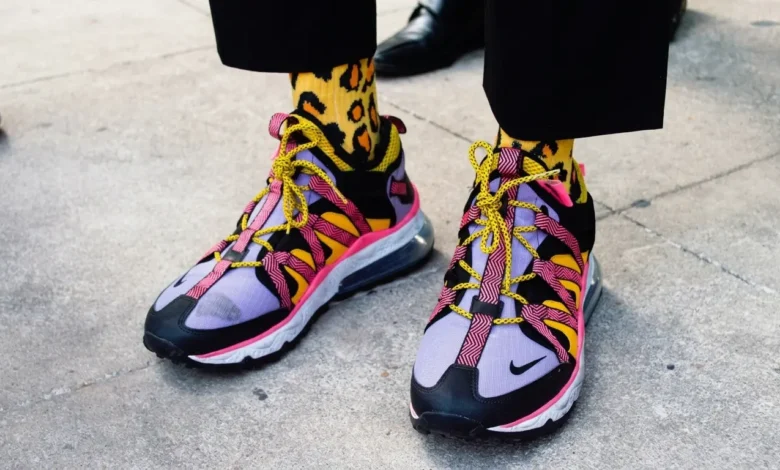
A pair of Adidas Sambas doesn’t clear a room anymore. It fades into it. That’s the real story behind what sneakers are trending in Gen Z fashion right now: the shoe that defined the last three years of low-profile style is losing its grip, and no single silhouette has stepped in to replace it outright. Instead, the rotation has split into several directions at once, and the split says more about how this generation shops than any one shoe could.
Nike and Adidas still dominate the raw numbers. Piper Sandler’s fall 2025 Teen Survey, which polls close to 11,000 U.S. teens twice a year, put Nike’s footwear mindshare at 46 percent and Adidas at 14 percent, with New Balance at 8 percent and On Running overtaking Hoka for the first time in six survey cycles. But mindshare and heat are different measurements. The brands actually moving on TikTok and the resale market this year are smaller, faster-growing, and considerably less predictable than the two names at the top.
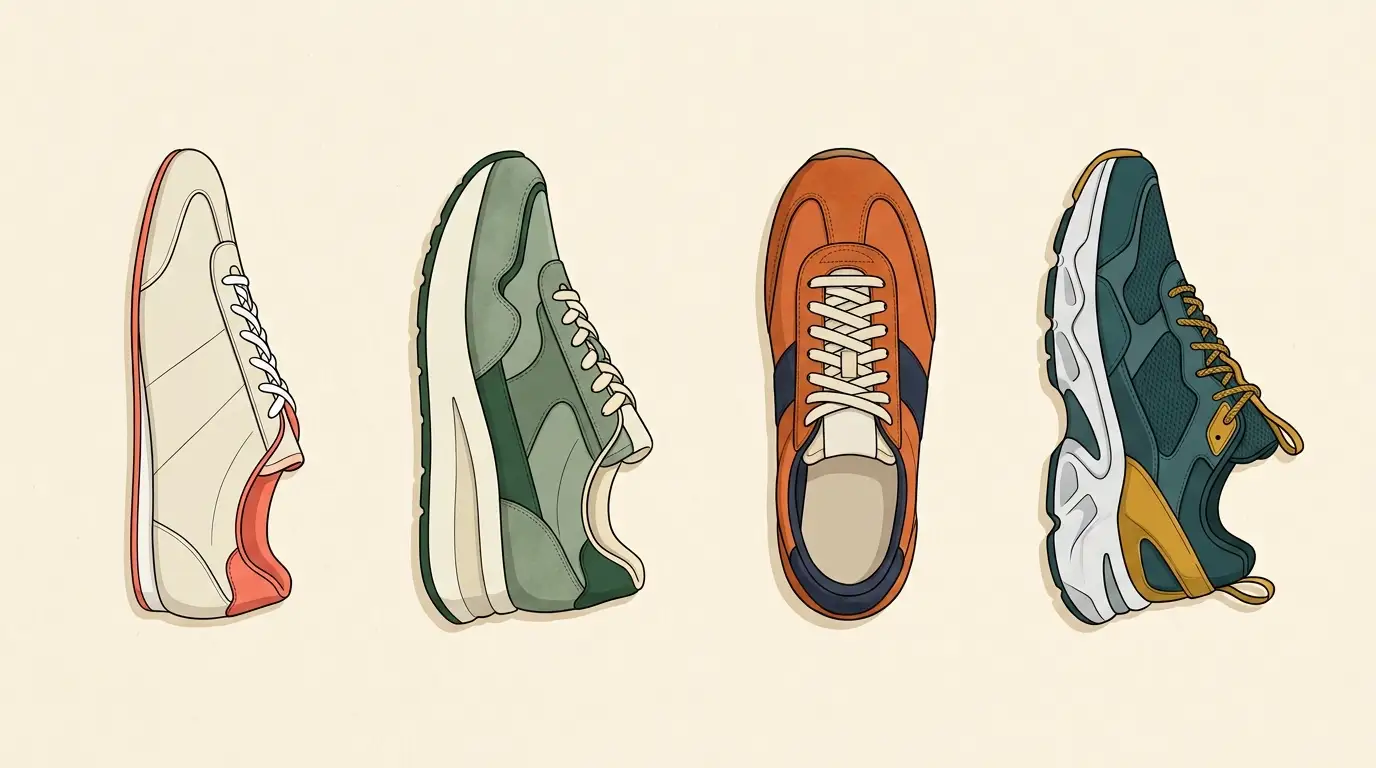
The short version: Gen Z’s 2026 sneaker rotation isn’t one trend, it’s four. First, ultra-flat motorsport-style sneakers led by the Puma Speedcat, which saw search demand jump more than fivefold in a single month. Second, a wedge sneaker revival pulled from the early 2010s, fronted by Puma’s own Speedcat Wedge and picked up by contemporary labels like Isabel Marant and Tory Burch. Third, the retro Adidas styles that filled the gap once Samba fatigue set in, namely the SL72 and Spezial. Fourth, resale-driven technical names such as Mizuno and Maison Mihara Yasuhiro, which grew faster than any legacy sneaker brand on the secondary market in 2025. None of these has knocked Nike and Adidas off the top of the mindshare charts, but together they show where the cultural energy is actually headed.
Nike and Adidas Still Win the Numbers, the Story Is in Who’s Catching Up
Teen spending pulled back overall in 2025. Piper Sandler’s survey found self-reported annual spending fell 6 percent year over year to $2,213, and the firm’s lead footwear analyst, Anna Andreeva, noted that even with the pullback, the underlying athletic category held its footing. She described the trend as one that “suggests the athletic cycle is still robust,” pointing to gains at Adidas, New Balance, On, and Asics even as Nike’s mindshare stabilized after several down periods. That stabilizing is worth sitting with. Nike didn’t grow so much as stop shrinking, and the actual growth in this cycle belongs to the second and third-tier brands chipping away underneath it.
This matters for how you read every other number in this piece. A brand can hold the top mindshare spot and still be the least interesting story in the room. That’s exactly what’s happening with Nike and Adidas in 2026: they’re the baseline everyone is measured against, not the source of what’s actually new.
Why the Samba Backlash Actually Happened
Trend cycles usually die from the same cause: too many people wearing the same thing at the same time. That’s what happened to the Samba. The shoe went from a scarce, fashion-forward pick in South Korea and Japan to a shoe sold at nearly every mall retailer in the country, and once availability stopped being a signal of taste, a large share of Gen Z buyers moved on. It’s a pattern this outline of how fashion trends spread gets at directly: the same visibility that makes a trend explode is usually what kills it a year or two later.
Adidas saw this coming and had a replacement ready before the Samba fully cooled. The SL72 and Spezial picked up the slack, offering a familiar low-profile shape with slightly less internet baggage attached. Both read as an evolution of the same silhouette family rather than a hard pivot, which is exactly why they worked as a landing spot for buyers who still wanted the Samba’s proportions without the Samba’s ubiquity.
The resale market shows a second, less obvious layer to this story. Limited Samba collaborations with the London designer Wales Bonner never actually lost their premium. Several Wales Bonner x Samba colorways that retailed between roughly $160 and $200 are currently asking $500 or more on StockX, some pushing past $550. That gap tells you the base Samba cooled while the scarce version of the same shoe did not, which is the clearest evidence that Gen Z’s disillusionment was never with the silhouette itself. It was with how common it got.
The Puma Speedcat Proved Flat Still Beats Chunky
If one shoe absorbed the energy that left the Samba, it’s the Speedcat. Puma’s ultra-low, motorsport-inspired racing shoe, first built for Formula 1 drivers in the late 1990s, spiked 523 percent in search demand during a single month in 2024 according to the fashion search platform Lyst, with the red colorway alone climbing 1,588 percent month over month. That number held up. By 2026 the Speedcat has settled into a genuine wardrobe staple rather than a one-season spike, retailing around $110 and showing up on Rihanna, Troye Sivan, Emily Ratajkowski, and Dua Lipa well before most retailers restocked it.
Lyst’s Katy Lubin, the company’s VP of brand and communications, tied the shoe’s return directly to the broader Y2K wave moving through Gen Z style, saying the revival “aligns perfectly with the Y2K revival” now showing up across younger shoppers’ closets. On Puma’s side, Gregor Abenstein, the brand’s senior director of select, has said the relaunch wasn’t a lucky guess so much as a slow build, describing the rollout as “a bigger incubation plan” that started with limited placements before scaling wider once early signals looked right.
What’s notable is how little cushioning the shoe actually offers. The Speedcat is thin-soled by design, which is part of the appeal against a decade of chunky dad sneakers, but it’s not built for standing all day on concrete. That’s a real trade-off worth knowing before buying, not just a footnote.
Wedge Sneakers Are Back, and Almost Nobody Called It
Wedge sneakers were an It-girl staple in the early 2010s, then disappeared for the better part of a decade. They’re back, and the reintroduction is coming from an unlikely source: Puma’s own Speedcat Wedge, released in late 2025 and already the brand’s most-searched model since launch. Actor Rachel Sennott, star of the Gen Z-coded series I Love LA, wore a suede two-tone pair during the Sundance Film Festival, and the style sold out fast enough that Nordstrom became one of the few retailers still holding a leather version in stock.
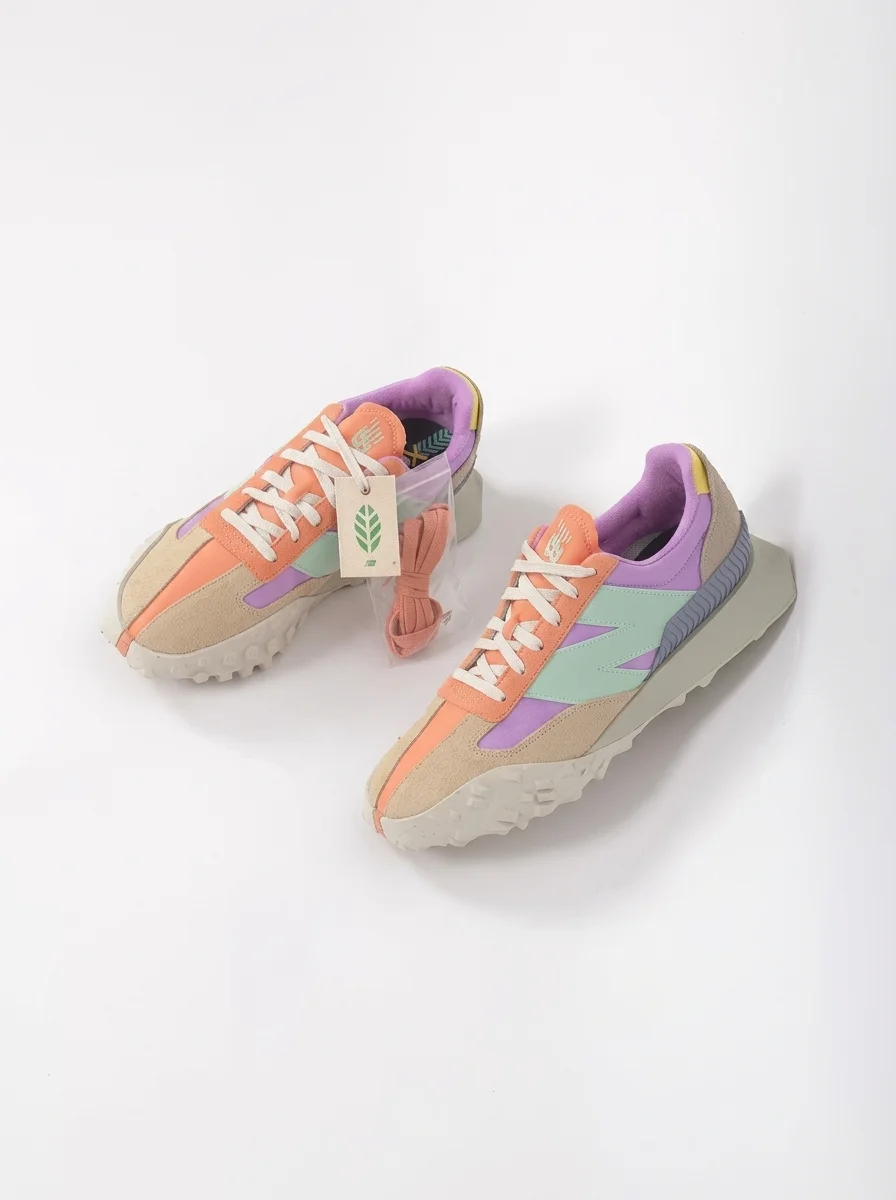
Puma isn’t alone in the wedge lane. Chloé, Tory Burch, Veronica Beard, and Isabel Marant, whose original 2010s wedge sneaker started the whole category, have all reintroduced wedge styles for spring 2026. Puma followed its own wedge with four new suede colorways releasing April 1 at $120 each, timed for warmer weather.
The Resale Market Is Quietly Pointing at Different Brands
StockX’s seventh annual Current Culture Index, released in January 2026, found that Nike, Jordan, Adidas, New Balance, and Asics have topped its best-selling sneaker brand list for three straight years, with Nike and Jordan showing early signs of recovery after a soft patch, average resale prices up 5 percent and 6 percent year over year, respectively. But the fastest-growing names on the platform weren’t any of those five.
Mizuno posted 124 percent sales growth in 2025, driven largely by lifestyle-leaning models like the MXR and the Wave Prophecy Moc, while the Japanese label Maison Mihara Yasuhiro followed close behind at 91 percent growth. StockX CEO Greg Schwartz framed 2025 as a year “shaped by a number of standout releases” rather than one dominant trend, which matches what the sneaker rotation actually looks like on the ground.

This is worth separating from hype. A shoe spiking on the resale market isn’t the same as a shoe becoming a Gen Z staple. It’s an early signal, and early signals move fast in both directions. Whether Mizuno’s momentum turns into a lasting foothold or fades the way plenty of resale darlings have before them is genuinely an open question right now, not a settled one.
At a glance: where the four directions sit right now
- Ultra-flat motorsport (Puma Speedcat): the most proven of the four, already past its spike and holding steady as a staple.
- Wedge revival (Speedcat Wedge, Isabel Marant, Tory Burch): early and fast-moving, best treated as a trend rather than an investment piece yet.
- Post-Samba Adidas retro (SL72, Spezial): the safest long-term bet for anyone who liked the Samba’s shape but not its saturation.
- Resale-driven technical (Mizuno, Maison Mihara Yasuhiro): highest upside, highest risk, and not yet proven outside a niche resale audience.
| Silhouette | Example Pairs | Typical Retail Price | Why It’s Moving |
|---|---|---|---|
| Ultra-flat motorsport | Puma Speedcat OG | $110 | A genuine alternative to years of chunky dad sneakers, backed by sustained celebrity wear rather than a single moment |
| Wedge revival | Puma Speedcat Wedge, Isabel Marant | $120 to $300+ | Riding the broader 2010s nostalgia wave that’s already pulled back low-rise jeans and chunky highlights |
| Post-Samba retro | Adidas SL72, Spezial, Campus 00s | $100 to $130 | Offers Samba-adjacent proportions to shoppers who want out of an oversaturated silhouette |
| Resale-driven technical | Mizuno Wave Prophecy Moc, Maison Mihara Yasuhiro | $150 and up, often higher on resale | Growing fastest on secondary markets, though still mostly a niche or resale-first audience rather than mainstream |
Who This Rotation Isn’t For
If you’re building a five-year wardrobe rather than a five-month one, most of this list is not where your money should go first. The wedge revival in particular is early enough that betting heavily on it now carries real risk of looking dated once the cycle turns, which trend cycles reliably do. The resale-driven names carry a different risk: paying a premium for scarcity before knowing whether the demand holds past this year. If you want a sneaker that still works in three years, the post-Samba Adidas retros and the Speedcat are the safer picks of the four. The other two are trends to watch, not staples to build around yet.
Proportion matters more than the shoe name here too. A flat motorsport sneaker reads differently under straight-leg jeans than it does under something baggier, the same way sneaker choice interacts with denim fit in general. If you’re already working out which denim silhouette actually fits your frame, that decision should come before the sneaker one, not after.
Need One Pair That Does It All?
Go with a post-Samba Adidas retro or the Speedcat OG. Both sit under $130, both work with a wide range of denim and trouser silhouettes, and both have already been tested by a full cycle of wear rather than a single viral month.
Like the Trend, But Don’t Want to Overspend?
Wait on the wedge sneakers. Prices on the designer versions run well past $300, and the category is young enough that a slower, cheaper entry point will likely show up within a season or two, the way most nostalgia revivals do once the initial designer wave passes.
Buying for the Resale Value?
Treat Mizuno and Maison Mihara Yasuhiro as a bet, not a basic. The growth is real, but so is the risk that a resale-first audience never becomes a mainstream one. Buy because you like the shoe, not because the percentage growth looks impressive on a chart.
Frequently Asked Questions About Gen Z Sneaker Trends
What sneakers are trending in Gen Z fashion right now?
The rotation splits four ways: ultra-flat motorsport styles like the Puma Speedcat, wedge sneakers making a 2010s comeback, post-Samba Adidas retros like the SL72 and Spezial, and resale-driven technical names such as Mizuno and Maison Mihara Yasuhiro.
Are Adidas Sambas still in style in 2026?
The base Samba has cooled after years of mass distribution, and Adidas has shifted marketing weight toward the SL72 and Spezial. Scarce collaborations, particularly with Wales Bonner, still command a real resale premium, which suggests the silhouette itself remains desirable even as the everyday version feels overexposed.
Why are wedge sneakers coming back?
They’re part of a broader early-2010s revival that’s also brought back low-rise jeans and other It-girl staples from that era. Puma’s Speedcat Wedge and reissues from Isabel Marant, Chloé, and Tory Burch have driven most of the current momentum.
Is the Puma Speedcat worth buying at retail versus resale?
At around $110 retail, it’s reasonably priced for a shoe that’s held its relevance since 2024 rather than fading after one season. Resale prices spike on specific colorways, so retail is generally the better entry point unless a particular color is already sold out everywhere.
What’s actually replacing the Samba for Gen Z?
No single shoe has replaced it outright. The SL72 and Spezial absorbed buyers who wanted a similar shape, while the Speedcat and the emerging wedge trend pulled attention toward a different silhouette altogether.
Final Vardic
The honest answer to what sneakers are trending in Gen Z fashion is less tidy than a single winning shoe, and that’s the more useful takeaway. This generation isn’t loyal to one silhouette so much as it’s loyal to whatever still feels specific to them once everyone else has caught on. That’s why the Samba cooled, why the Speedcat held, and why the next few resale reports are worth another look before betting on Mizuno or a wedge sneaker becoming the next default. Check back on the numbers in a season, not a week. Trend data moves fast, but it rarely moves in a straight line.
SOURCES
Official Sources
- StockX: StockX’s Current Culture Index Highlights 2025’s Biggest Winners, Reveals Predictions for 2026, Accessed July 27, 2026, Tier 1
- StockX: Buy and Sell Wales Bonner, Accessed July 27, 2026, Tier 1 (live marketplace pricing data)
- Piper Sandler: Piper Sandler Completes 50th Semi-Annual Teen Survey, Accessed July 27, 2026, Tier 1
- Lyst: Product Anatomy: Puma Speedcat, Accessed July 27, 2026, Tier 1
Industry Sources
- WWD: Nike Remains Top Footwear, Apparel Brand in Piper Sandler Teen Survey, Accessed July 27, 2026, Tier 2
- SGB Media: Athletic Brands Still Scoring with Teens, Accessed July 27, 2026, Tier 2
- SneakerNews: PUMA Speedcat Wedge April 2026 Colorways, Accessed July 27, 2026, Tier 2
- EnVi Media: The Puma Speedcat: Reviving Puma’s Best-Selling Sneaker, Accessed July 27, 2026, Tier 2
- Who What Wear: In 2026, Gen Z Is Wearing the Sneaker Trend All the It Girls Wore in 2012, Accessed July 27, 2026, Tier 2
Additional Reading
- FashionBeans: Adidas Is Building Its Most Interesting Year Yet, Accessed July 27, 2026, Tier 3