

When photos surfaced online following Brazil’s World Cup run, speculation surrounding a Vini Jr chin surgery quickly went viral. The reality is far less invasive: Vini Jr opted for non-surgical chin harmonisation using targeted dermal fillers to refine his lower profile.
This shift in lower-face aesthetics shows how modern male grooming relies on precise, non-invasive techniques rather than hospital operations. Understanding how temporary injectables differ from permanent bone restructuring separates viral noise from clinical fact.
Following Brazil’s World Cup run, Vinícius Júnior underwent a non-surgical facial harmonisation procedure performed by dermatologist Dr. Alessandro Alarcão in Goiânia, Brazil. The treatment used high-viscosity hyaluronic acid dermal fillers injected deep along the chin and jawline boundary to create lower-face projection without invasive bone surgery, general anesthesia, or extended recovery downtime.
The Vini Jr Chin Surgery Rumors: What Reports Actually Confirm
The public discussion surrounding the Brazil international began during his visit to Goiânia, where local media documented his appearance at a fitness event. Observations focused on a sharper jawline and increased lower-face projection compared to his mid-season profile.
Rather than checking into a hospital for a surgical Vini Jr chin surgery, reports confirmed the athlete visited dermatologist Dr. Alessandro Alarcão for a non-surgical facial treatment. The procedure focused on lower-face refinement using hyaluronic acid injections along the chin and jawline boundary.
This rapid public attention illustrates how digital loops turn celebrity transformations into instant trends, converting a standard in-office appointment into a viral topic across international sports media.
Chin Harmonisation vs. Plastic Surgery: How Non-Surgical Fillers Work
To understand Vini Jr’s updated profile, it helps to distinguish non-surgical treatments from plastic surgery. Chin Harmonisation is a non-surgical, minimally invasive aesthetic procedure using dermal fillers or biostimulators to reshape, project, and define the chin and jawline.
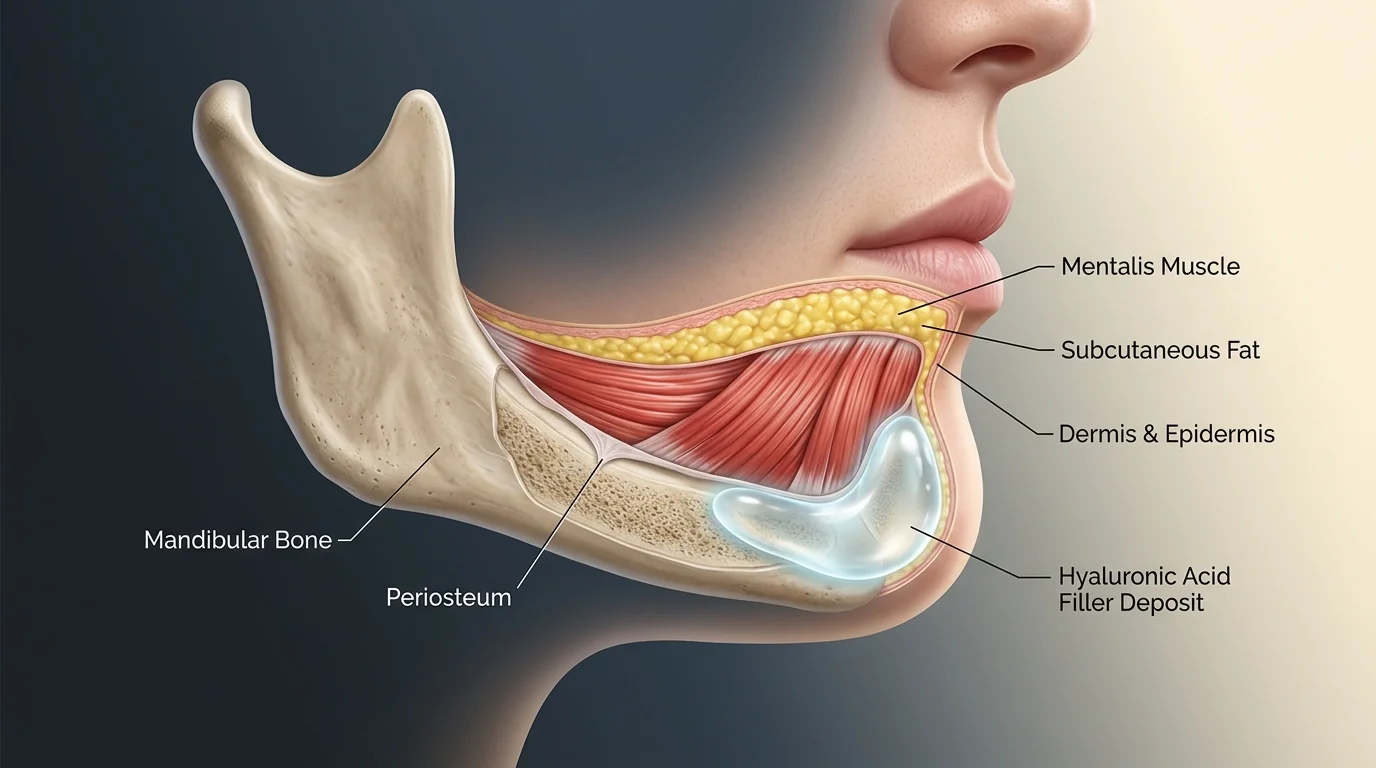
A Dermal Filler is an injectable gel—commonly composed of hyaluronic acid—used to add volume, enhance contours, and modify structural appearance temporarily. During a lower-face treatment, a practitioner injects high-viscosity hyaluronic acid deep against the periosteum, which is the membrane covering the mandibular bone. This creates a firm base that pushes the soft tissue forward, increasing forward projection or lengthening a short chin without making a single incision. For the first few days, the treated area often feels unusually firm or slightly tight when chewing, an asymmetric tactile detail that surprises first-time patients before the product settles into natural facial movement.
Myth vs. Fact: Lower-Face Procedures
- Myth: Defining a jawline always requires cutting or shaving the jawbone.
- Fact: High-G-prime dermal fillers placed deep along the bone simulate structural projection without altering your underlying skeletal framework.
Dermal Fillers vs. Genioplasty: The Structural Differences
When spectators speculate about celebrity jaw changes, they often confuse injectable treatments with invasive surgical procedures. Genioplasty is a surgical procedure that reshapes or repositions the physical chin bone (osteotomy) or uses an implant to alter chin projection. Meanwhile, Orthognathic Surgery is a surgical procedure that repositions upper or lower jawbones to correct structural skeletal misalignments and bite mechanics.
| Feature / Parameter | Non-Surgical Chin Harmonisation (Fillers) | Surgical Genioplasty or Implant |
| Invasiveness | Minimally invasive (needle or cannula) | Surgical (incisions inside mouth or under chin) |
| Anesthesia | Local topical numbing cream | General anesthesia or heavy sedation |
| Procedure Duration | 20 to 30 minutes in-office | 1 to 2.5 hours in an operating room |
| Recovery Downtime | 24 to 48 hours (minor swelling) | 7 to 14 days (strict soft diet, compression) |
| Longevity | 9 to 18 months (temporary) | Permanent (unless implant is removed) |
| Reversibility | Reversible via hyaluronidase enzyme | Requires secondary surgical revision |
Reversibility and Recovery: Why In-Office Treatments Differ
The practical appeal of non-surgical chin augmentation lies in its low recovery barrier and safety profile. Because hyaluronic acid is a sugar molecule found naturally in human connective tissue, the body tolerates it well.
Post-treatment guidelines after chin filler are straightforward:
- First 24 Hours: Keep the head elevated, avoid pressing on the lower face, and skip intense workouts to minimize localized swelling.
- First 48 Hours: Stay away from saunas, direct steam, and alcohol, which expand blood vessels and increase bruising along injection points.
- Long-Term Safety Net: If a patient dislikes the projection or experiences asymmetrical swelling, a medical provider can inject hyaluronidase. This enzyme breaks down hyaluronic acid within hours, dissolving the gel completely.
Longevity and Touch-Up Cycles: How Long Do Results Last?
Non-surgical lower-face contouring is inherently temporary. Over time, naturally occurring enzymes in the body slowly metabolize the cross-linked hyaluronic acid gel, causing the chin to return to its original baseline shape.
- Months 1–3: Initial settlement phase. Minor swelling subsides within the first week, revealing the true firm contour of the filler bolus.
- Months 6–12: Peak stability phase. High-density hyaluronic acid formulas maintain their structural shape against facial muscle movement.
- Months 12–18: Reabsorption phase. The filler gradually degrades, prompting patients to schedule minor touch-up appointments if they wish to maintain projection.
For public figures like professional athletes, temporary injectables offer a controlled way to test structural changes without committing to permanent surgical implants. This reflects broader consumer habits when evaluating temporary aesthetic shifts versus lasting changes, choosing flexible upkeep over irreversible alterations.
Facial Proportion Science: Who Chin Harmonisation Realistically Suits
Facial aesthetics rely heavily on Proportional Balance—evaluating facial feature relationships (lower-face projection relative to lips and nose) objectively, focusing on harmony rather than artificial standards.
When a practitioner evaluates a lower-face profile, they assess the relationship between the tip of the nose, the lips, and the furthest point of the chin.
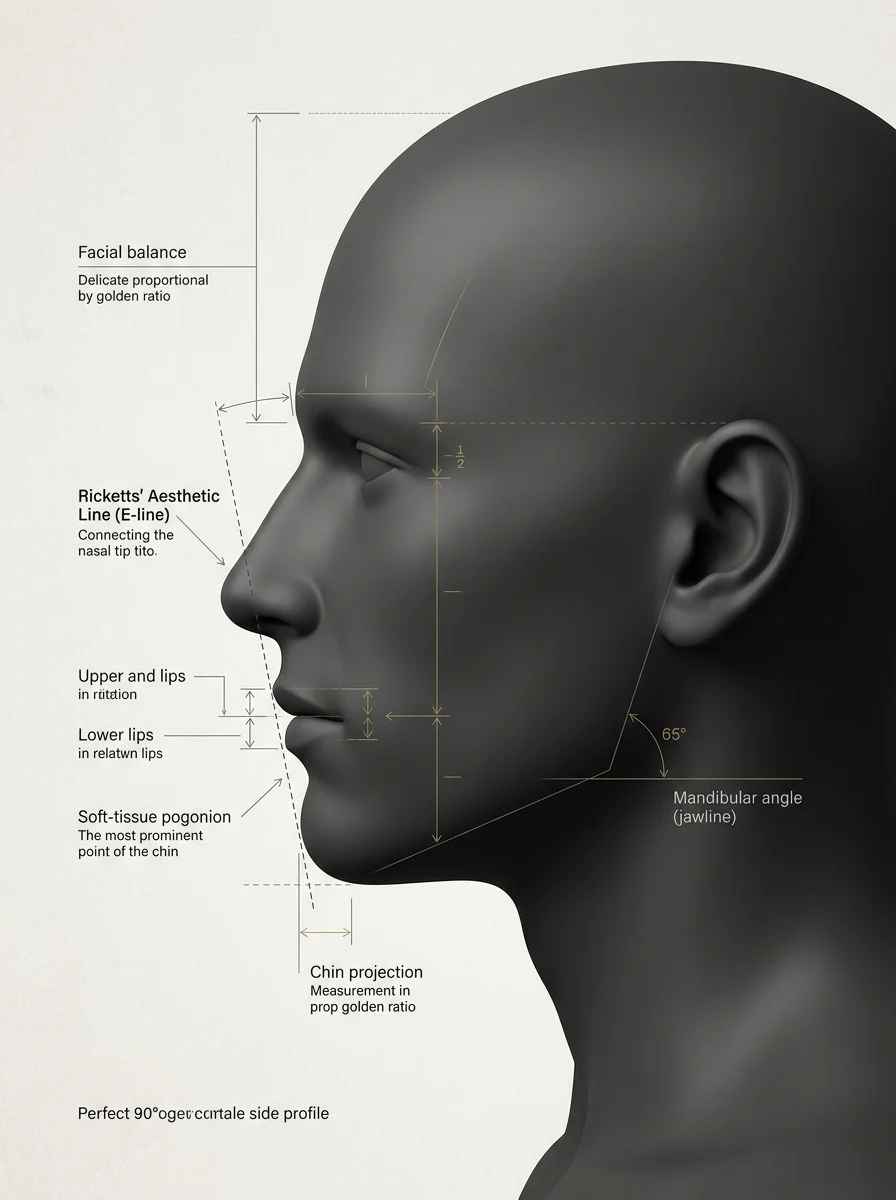
- Ideal Candidates for Fillers: Individuals with mild chin weakness, slight asymmetry, or a desire for minor lower-face definition. Fillers add up to several millimeters of forward or downward projection efficiently.
- Candidates Requiring Surgery: Individuals with severe retrognathia, which is a severely receded lower jaw that affects bite alignment or airway spacing. In these structural cases, injectable gel cannot replace the functional support of orthognathic bone repositioning.
Understanding these structural boundaries mirrors the core principles of understanding structural proportion balance, where lasting success comes from working with your natural frame rather than forcing an incompatible structure.
Frequently Asked Questions About Vini Jr’s Procedure
Did Vini Jr get plastic surgery on his chin?
No. Despite widespread rumors about a Vini Jr chin surgery, reports from Goiânia, Brazil confirm Vinícius Júnior underwent non-surgical facial harmonisation using hyaluronic acid dermal fillers performed by a dermatologist, not invasive bone surgery.
Is chin harmonisation permanent?
No. Chin harmonisation performed with hyaluronic acid fillers typically lasts between 9 and 18 months before the gel is naturally absorbed by the body. Maintaining the profile requires periodic touch-up injections.
Does getting chin filler hurt?
Most patients report mild discomfort. Practitioners apply topical numbing cream before injecting, and modern dermal fillers contain lidocaine mixed directly into the gel to numb the area during administration.
Can chin filler be removed if you do not like the result?
Yes. Hyaluronic acid fillers can be dissolved using an injectable enzyme called hyaluronidase, which breaks down the filler gel within 24 to 48 hours without harming natural facial tissue.
The Bottom Line on Lower-Face Balancing
The online interest and debate surrounding the Vini Jr chin surgery topic highlights how accessible non-surgical grooming options have become. By choosing chin harmonisation over invasive plastic surgery, the footballer achieved a defined lower profile with zero athletic downtime. Whether exploring subtle contouring or simply seeking to understand viral trends, grounding your expectations in anatomical facts remains the best approach to modern aesthetics.
Sources
Industry Sources
- CNN Brasil, Harmonização facial de Vini Jr. divide opiniões na web; veja antes e depois | Access Date: July 20, 2026 | Source Tier: Tier 5
- Veja, Vini Jr. surpreende com harmonização facial: veja antes e depois | Access Date: July 20, 2026 | Source Tier: Tier 5
- Centre for Surgery, How Long Does Chin Augmentation Last? | Access Date: July 20, 2026 | Source Tier: Tier 6
- Dallas Surgical Arts, Genioplasty in Dallas | Access Date: July 20, 2026 | Source Tier: Tier 6
- Marina Aesthetics, Long-Term Side Effects of Fillers & Reversibility | Access Date: July 20, 2026 | Source Tier: Tier 6