
There is a specific kind of dressing-room moment every woman under 5’4″ knows. The blouse that fits in the shoulders but hangs like a tunic. The trousers with a waistband that sits fine and a hem that pools on the floor. You leave with two bags, one for the closet and one for the tailor. Most wardrobe essentials for petite women fail at exactly this point, because they are written as shopping lists when the real problem is proportional.
Regular sizing is drafted for frames around 5’5″ to 5’7″. Petite cuts run on a different pattern block, with a shorter rise, a narrower shoulder, a higher armhole, and a higher knee point. Once you know which points on a garment are worth paying to get right and which are a 20 dollar fix, the essentials list gets shorter and a lot more reliable.
That filter is this guide. It covers what a petite cut actually changes, the pieces that earn their hanger on a petite frame, and the honest exceptions, including the readers who should skip petite sizing entirely.
The wardrobe essentials for petite women are the core capsule pieces bought in true petite proportions: 1) a straight-leg jean with a 25 to 27 inch inseam, 2) a cropped structured blazer, 3) shorter-rise tailored trousers, 4) a wrap or fit-and-flare dress, 5) fitted tops that stay tucked, 6) pointed-toe shoes, and 7) a tailor with a standing hem budget. Buy the shoulder, rise, and armhole correct first, because those are the points a tailor cannot fix, and pay for hems later.
What Petite Sizing Actually Changes (and What It Can’t Fix)
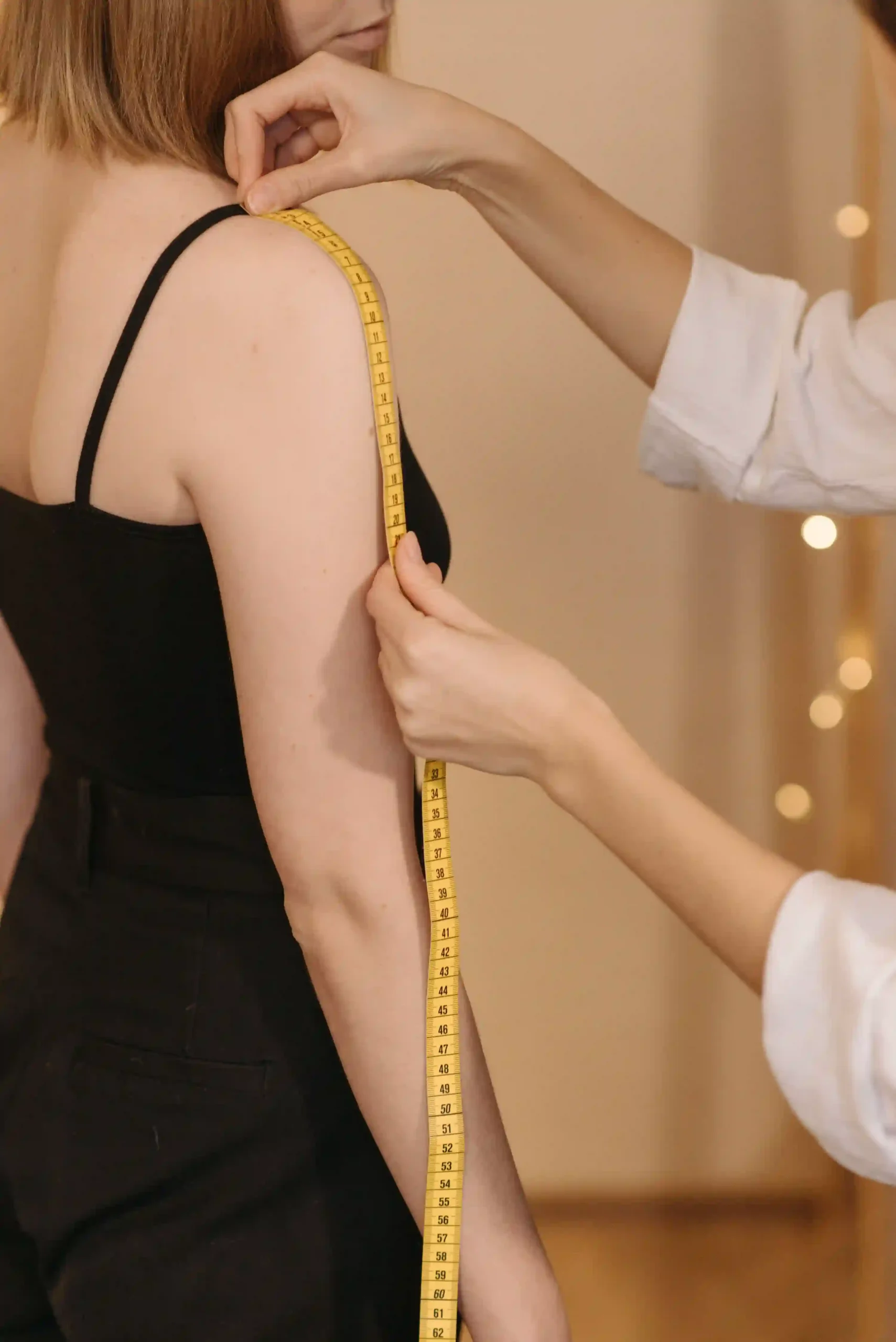
The industry draws the petite line at 5’4″ and under, and the Macy’s fit guide spells out what that changes in the pattern: tops cut shorter from neck to waist with narrower shoulders and higher armholes, and bottoms with a shorter rise, an inseam about two inches shorter, a higher knee position, and a slimmer leg opening.
The height cutoff gets all the attention, but the proportions are the real story. The CDC’s national body-measurement data puts the average American woman at 63.5 inches, about 5’3.5″, which means the average reader already falls inside the petite range even if she has never set foot in the section.
It also means plenty of readers should skip it. Stylist Hallie Abrams, who writes The Wardrobe Consultant, draws a line between “true petite” and simply short: if only your hems and sleeves run long while the waist and shoulders fit, regular sizing plus a tailor will serve you better, because the rise and the armhole are, in her words, the areas that are hardest to tailor. Petite is a proportion spec, not a weight spec, and it runs across every dress size.
| Garment | Regular cut on a petite frame | Petite cut |
| Blazer | Shoulder seam slides down the upper arm and the sleeve covers the wrist | Seam sits on the bony shoulder point, sleeve ends at the wrist bone |
| Straight-leg jean | Needs a 15 to 30 dollar hem before first wear | Inseam lands at the ankle out of the bag, and the rise sits without pooling |
| Poplin shirt | Hem falls mid-thigh and reads as a tunic | Body is cut shorter from neck to waist, so untucked still ends at the hip |
| Sheath dress | Low armhole shows the bra line at the side | Higher armhole and a smaller waist keep the line clean |
At a glance: petite cut, or regular plus a tailor?
- Petite cut wins when the shoulder, rise, or armhole is wrong in regular, since those alterations are expensive or impossible.
- Regular wins when only the length is off, because a 15 to 30 dollar hem is the least expensive fix in tailoring.
- Cropped and ankle cuts split the difference for in-between frames. They are designed to end above the problem area.
The Wardrobe Essentials for Petite Women, Piece by Piece
A straight-leg jean with a true petite inseam
The leg line does the work. A straight or slim straight cut runs hip to ankle without breaking, which flatters a shorter frame more reliably than a dramatic wide leg. If you love width, keep the fabric fluid, around 150 to 220 GSM, so the column stays narrow instead of swallowing you.
Shop the inseam, not the label. True petite jeans land between 25 and 27 inches. Jean Wang, who runs the site Extra Petite at just under five feet, measured the Levi’s Ribcage ankle jean at a 27 inch inseam in her review, and Levi’s cuts its petite line for women 5’4″ and under. On rise, match your torso rather than the trend. A high rise lengthens the leg, but a short torso usually balances better in a mid rise.
A cropped blazer with a real shoulder
The shoulder seam is the one point a tailor cannot move, so it is the first thing to check on any jacket. A petite cut narrows the shoulder and shortens the sleeve so the seam lands on the bony point instead of sliding down your arm. This piece is also the backbone of a petite work wardrobe, since every office formula below the executive floor runs on a jacket.
Look for a body that ends at the high hip, which raises the visual waistline without a belt. If you love an oversized blazer, keep it intentional: one volume piece over a fitted base, with enough structure that the shoulder does not collapse. That version still works on a small frame.
Tailored trousers bought by rise first
Trouser fit on a petite frame is a rise conversation before it is an inseam conversation. A pooled hem is usually a pattern-block failure, not a body failure, which is why our petite wide-leg trousers buying guide is built around rise charts and fabric weight: fluid 150 to 220 GSM for the narrowest column, structured 220 to 300 GSM when you want a pressed line.
In practice, buy the waist and rise correct off the rack, and treat the hem as a routine errand.
A wrap or fit-and-flare dress
A wrap or fit-and-flare dress suggests a waistline through construction, a tie, a seam, a little ruching, rather than through compression. That matters on every frame, and especially on a petite one, where a shapeless shift can read as a tent and heavy shapewear adds visible lines under thin fabric.
On hemlines, go above the knee or choose a midi with real movement. The exact middle of the calf is the one spot that cuts the leg in half.
Fitted tops that stay tucked
Untucked is where petite outfits lose their line. A shirt that ends mid-thigh reads as a tunic on a 5’2″ frame, which is why fitted knits, bodysuits, and poplin shirts cut shorter from neck to waist earn their hanger. The five anchors in our core wardrobe essentials guide all pass this same test.
Color does quiet length work too. Keeping roughly 70 percent of an outfit in one dominant family, with the rest as accent, keeps the eye moving up instead of stopping at every seam.
Pointed-toe shoes and the tonal trick
A pointed toe extends the leg line by a few honest inches, and a two to three inch block heel stays walkable, which is the pairing this site recommends across categories. The second trick is tonal: pairing shoes with same-colored bottoms is, in Wang’s words, the easiest and most effective tip she knows, and it is the reason nude shoes survive every trend cycle.
For the full rotation, the six-pair shoe capsule blueprint covers which of these earn a slot, and which statement pairs live outside the core math.
A tailor, budgeted like an essential
Every good essentials list quietly assumes a tailor, so this one names the line item. A basic pant hem runs 15 to 30 dollars at most US tailors, and an original-hem denim job runs 25 to 45, which is real money that belongs in the checkout math. A final-sale blazer that needs shoulder work was never a deal. A 20 dollar hem on a regular blouse usually is.

The tailor is also the diagnostic. Two weeks of noting which pieces fail at the hem and which fail at the rise tells you whether you are true petite or just short, and that answer decides where you shop next.
What to Skip, and the Honest Exceptions
Most petite style advice is an avoid list, and most avoid lists are too strict to survive real life. Here is the version with the exceptions attached.
- Head-to-toe volume. One oversized piece over a fitted base reads intentional. Three at once swallow the frame.
- Ankle straps and mid-calf hems, the two classic line-breakers. Both stop being a problem when the strap or the shoe matches the hem color, or when the midi has a slit.
- Stacking every lengthening trick at once. High rise plus tuck plus belt plus cropped jacket on a short torso compresses exactly the space you were trying to create. Pick one waist signal per outfit.
- Petite sizing itself, if you are short but not proportion-petite. Abrams’ fix for that frame is cropped styles, jewel sleeves, and regular rises, not the P section.
Where to Start, Depending on What You Already Own
If you are building from zero: start with the four that fix the most lines, the petite-inseam jean, the cropped blazer, the pointed-toe shoe, and the tailor relationship. Add everything else only after a closet audit, because the count should follow your decisions, not the other way around.
If you already own a closet of regular sizes: re-hem before you replace. A 20 dollar hem converts most regular trousers and skirts, and the pieces that fail at the rise or armhole are the ones to repurchase in petite as they wear out.
If the budget is tight this season: spend on the shoulder and the weekly shoe, and thrift the blazer if you can, since tailoring is where secondhand jackets earn their keep. Skip the petite premium on tees and use a front tuck instead.
Frequently Asked Questions About Petite Wardrobe Essentials
What height is considered petite for clothing?
The industry cutoff is 5’4″ and under. Because petite is a proportion spec rather than a height verdict, some brands extend petite cuts to anyone with a shorter torso or shorter arms, and the CDC’s measured average for American women, 63.5 inches, puts the typical reader right inside the range.
Is petite sizing based on height or weight?
Height and proportion, never weight. Petite sizing adjusts the rise, armhole, shoulder, and knee points on a pattern, and it runs across the full range of dress sizes.
What is the difference between petite and short sizing?
Short sizing trims length only. A true petite cut also shortens the rise, narrows the shoulder, raises the armhole, and moves the knee point up. If your only issue is hem length, regular or cropped pieces plus a tailor will usually fit you better than petite.
How many pieces should a petite capsule wardrobe have?
The same math as any capsule. The number follows your closet audit, not the other way around, and roughly 20 to 25 slots per season is a workable default. Wardrobe essentials for petite women change nothing about the count and everything about the cut of each slot.
What jeans are best for petite women?
A straight or slim straight leg with a true petite inseam, usually 25 to 27 inches, and a rise matched to your torso. High rise lengthens the leg line, but if your torso runs short, a mid rise of about 8 to 10 inches of front rise balances the outfit better.
Start With the Points You Can’t Alter
The shortest version of wardrobe essentials for petite women is this: buy the points a tailor cannot touch, and pay for the rest later. Shoulder, rise, armhole, knee point. Those four decide whether a piece reads as made for you, and they are exactly the four a petite cut adjusts.
So the next step is small and free. Pull three pieces out of your closet this week and note where each one fails: hem, rise, or shoulder. That one exercise tells you whether to shop the P section, the cropped rack, or the tailor, and every purchase after it gets quieter and more certain.
Sources
Official Sources
- CDC National Center for Health Statistics: Body Measurements FastStats, Access Date: August 16, 2026
Industry Sources
- Macy’s: Petite Size and Fit Advice, Access Date: August 16, 2026
- Levi’s: Petite Clothing and Jeans for Women, Access Date: August 16, 2026
Additional Reading
- Extra Petite: How to Look Taller, Petite Styling Tips, Access Date: August 16, 2026
- The Wardrobe Consultant: Are You a True Petite, or Just Short?, Access Date: August 16, 2026
- Pier Cleaners: A Simple Guide to Clothing Alteration Prices and What Affects Them, Access Date: August 16, 2026