There is a particular kind of quiet in a fitting room when you realize the third thing you have tried on is the same mistake as the first two, in a different shape. The tag says 40 dollars. Your phone says there is a code for an extra 20 percent off. None of that matters, because the shoulder seam sits an inch off and the fabric feels like paper against your wrist. Learning how to shop smarter means putting a short framework between the rack and the register, so the clothes that come home are the clothes that get worn.
This page collects the buying framework TrendTome applies across every garment guide we publish, from denim to silk blouses, into one place. It borrows from cost-per-wear math, a 2015 sustainability campaign, federal labeling law, and the habits of people who inspect seams for a living. It is a filter, not a lifestyle, and it works in order: the first two steps happen at home, and the last three happen in the store or on the product page.
To shop smarter for clothes, follow a five-step buying framework: 1) audit your closet and write a gap list before you browse, 2) pass every candidate through the 3-outfit rule and the 30 wears test, 3) judge fabric by weight and fiber content instead of brand name, 4) run a 60-second construction check on seams, stitching, and buttonholes, and 5) price the whole purchase, including the return policy and any tailoring, before you pay. A piece that fails a step is not a deal at any discount.
Why So Many Purchases Fail in the First Year
The numbers on returned clothing are large enough to be a symptom rather than a coincidence. Retailers expect 15.8 percent of all sales to come back in 2025, and the National Retail Federation puts the online share at 19.3 percent. Clothing is the most returned category in retail: 26 percent of U.S. consumers returned clothing they bought online in 2025, and industry tallies place apparel return rates somewhere between 20 and 40 percent of orders.
Returns are only the visible half. The Ellen MacArthur Foundation found that between 2000 and 2015, clothing production doubled while the number of times a garment gets worn before it is discarded fell by 36 percent. Clothes are being bought more and worn less, and the gap between those two lines is where the money goes. The failure usually happens at selection, long before the register, when a piece is bought for a fantasy wardrobe instead of the one that actually hangs at home.
Step 1: Write the Gap List Before You Browse
Every buying guide on this site starts with the same instruction, and it starts here too: audit first, shop second. Pull everything out, or at least everything from the last two seasons, and sort it into worn-on-repeat, worn-once, and never-worn. Treat the never-worn pile as data about how you actually buy. It tends to reveal one repeated error, like sale purchases in a size that does not fit or pretty tops with nothing to wear under them.
The gap list is the opposite of that pile. It names what your current wardrobe cannot do, in plain sentences: a white top that is not see-through, trousers that survive a nine-hour day, a layer for air-conditioned offices. Keep it to five or seven lines, and keep it to gaps rather than wishes. If your palette needs one, the site’s running recommendation is a roughly 70 percent dominant, 30 percent accent split, because a gap list written against a coherent palette produces pieces that combine on arrival. The audit and the list are the same first step we build into the four-step capsule method, and they are the reason a capsule holds together while a spree falls apart.
Step 2: Put Every Candidate Through the Wear Tests
The gap list gets you to the right rack. The wear tests decide whether the piece in your hand deserves the gap.
The 3-Outfit Rule
Before buying, name three complete outfits the candidate makes with clothes you already own, not clothes you plan to buy. If you cannot name three, the piece is not filling a gap. It is arriving with homework, and the homework is more spending. This is the fastest test in the framework and the one most often skipped, and skipping it is how a 30 dollar skirt turns into a 120 dollar project.
The 30 Wears Test
The 30 wears test was conceived in 2015 by Livia Firth, co-founder of the sustainability consultancy Eco Age, together with journalist Lucy Siegle, as a one-question checkpoint: will you wear this at least 30 times? It is a deliberately blunt instrument. It does not ask whether the piece is beautiful or on trend. It asks whether your actual life contains 30 occasions for it.
Like any blunt instrument, it needs honest exceptions. A wedding guest dress you will wear twice is not a failure if you buy it with that math in mind, and our wedding coverage says renting is the smarter call for a one-off formal invite. Occasion wear is priced per memory, not per wear. The test exists to catch the everyday pieces that quietly get worn twice, not to police the dress you buy for your sister’s wedding.
Cost Per Wear Does the Final Math
Cost per wear is the price divided by the number of times you will realistically wear the piece. It is the only price that predicts how a purchase feels a year later, and it inverts the sticker more often than people expect.
| Piece | What you pay | Realistic wears | How it reads a year later |
|---|---|---|---|
| Tailored blazer, worn twice a week | 220 dollars | 120 over four years | About 1.80 dollars a wear, the keeper |
| Straight-fit jeans in mid-weight denim | 90 dollars | 80 and counting | About 1.10 dollars a wear, quietly excellent |
| Blouse with an itchy collar | 45 dollars | 5, then retired | 9 dollars a wear, fine shirt, wrong collar |
| Trend top bought for one party | 25 dollars | 2 | 12.50 dollars a wear, the priciest row in this table |
The last two rows are the point. The inexpensive top is the expensive purchase, and nothing about its sticker warned you. When a piece you love fails the math, the fix is usually wearing it more, not spending less, which is exactly what the 30 wears test predicts before you pay.
At a glance: buy versus skip.
- Buy when it passes the 3-outfit rule with clothes you already own.
- A cost per wear under about two dollars across a realistic wear count also earns a yes.
- Skip fabric that is thinner than the garment’s job.
- If it only works after you buy more clothes to go with it, put it back. That is the gap list’s whole point.
Step 3: Judge the Fabric, Not the Logo
Brand names tell you who marketed a garment. Weight and fiber tell you how it will behave. Fabric weight is written in grams per square meter, or GSM, and in ounces per square yard for denim, and it is the single most reliable predictor of whether a piece drapes, lasts, and holds its shape. The site’s standing rule is weight over fiber name: a 130 GSM linen blend out-performs a flimsy 90 GSM one in the same fiber, and a heavy synthetic can outlast a thin natural.
| Garment | Weight that tends to hold up | What to feel for in the hand |
|---|---|---|
| Cotton poplin shirt | 110 to 140 GSM | Crisp and opaque, no shadow of your hand behind it |
| Linen blend trousers | 130 to 160 GSM | Dry texture with some body, wrinkles that fall soft rather than sharp |
| Satin slip skirt | 120 to 150 GSM | It should fall straight off the hanger, not cling to it |
| Silk blouse | 18 to 22 momme | Opaque at the shoulder seam, and matte crepe de chine if it is for the office |
| Everyday denim | 10 to 14 ounces per square yard | Stands up on its own when folded, with no cardboard crackle |
The label is where the law steps in. The FTC’s Textile Rule requires fiber content disclosure on most apparel, and the Care Labeling Rule requires permanent care instructions, so the tag you are holding is a regulated document, not marketing copy. Our guide to reading clothing labels in plain English walks through both. Certifications deserve the same reading. OEKO-TEX Standard 100 means the finished fabric was tested against a list of harmful substances, GOTS certifies organic fiber plus environmental and labor criteria along the production chain, and Fair Trade Certified audits labor conditions. They are verified claims with published criteria, which is more than a brand’s in-house green tag can promise.
Step 4: The 60-Second Construction Check
Construction is the part of a garment you can inspect with two hands and decent light, no expertise required. Run these checks in any order.
- Seam finish. Look inside. French seams and flat-felled seams enclose the raw edge and survive years of washing, while a raw edge with a loose overlock thread is a garment built to a deadline. On a silk blouse, French seams and a couple of inches of wearing ease are the line between a keeper and a seam that slips by summer’s end.
- Stitch density. Count stitches along one inch of seam. Shirtmakers quality-check fine wovens at roughly 14 to 18 stitches per inch, and denim specialists reading heavy seams look for a tight, even 10 to 12, per Heddels’ breakdown of why stitches per inch matters. Sparse or wavy stitching is a seam that opens at the first pull.
- Pattern matching. Where a print crosses a side seam or a pocket, the lines should meet. Matching costs fabric and time, so matched patterns are a quiet signal that somebody paid attention.
- Buttonholes and hardware. A buttonhole should be stitched tight on all four sides with no fraying threads, and a spare button sewn to the care label is a small flag of care.
- The pull test and the light test. Give a seam a gentle sideways tug and watch whether the stitches gap, then hold the fabric to the light and look for thin spots at knees, elbows, and the seat.
- Hem allowance. Flip the hem. An inch or more of spare fabric inside means a tailor can let it down later, which turns a good piece into a long one.
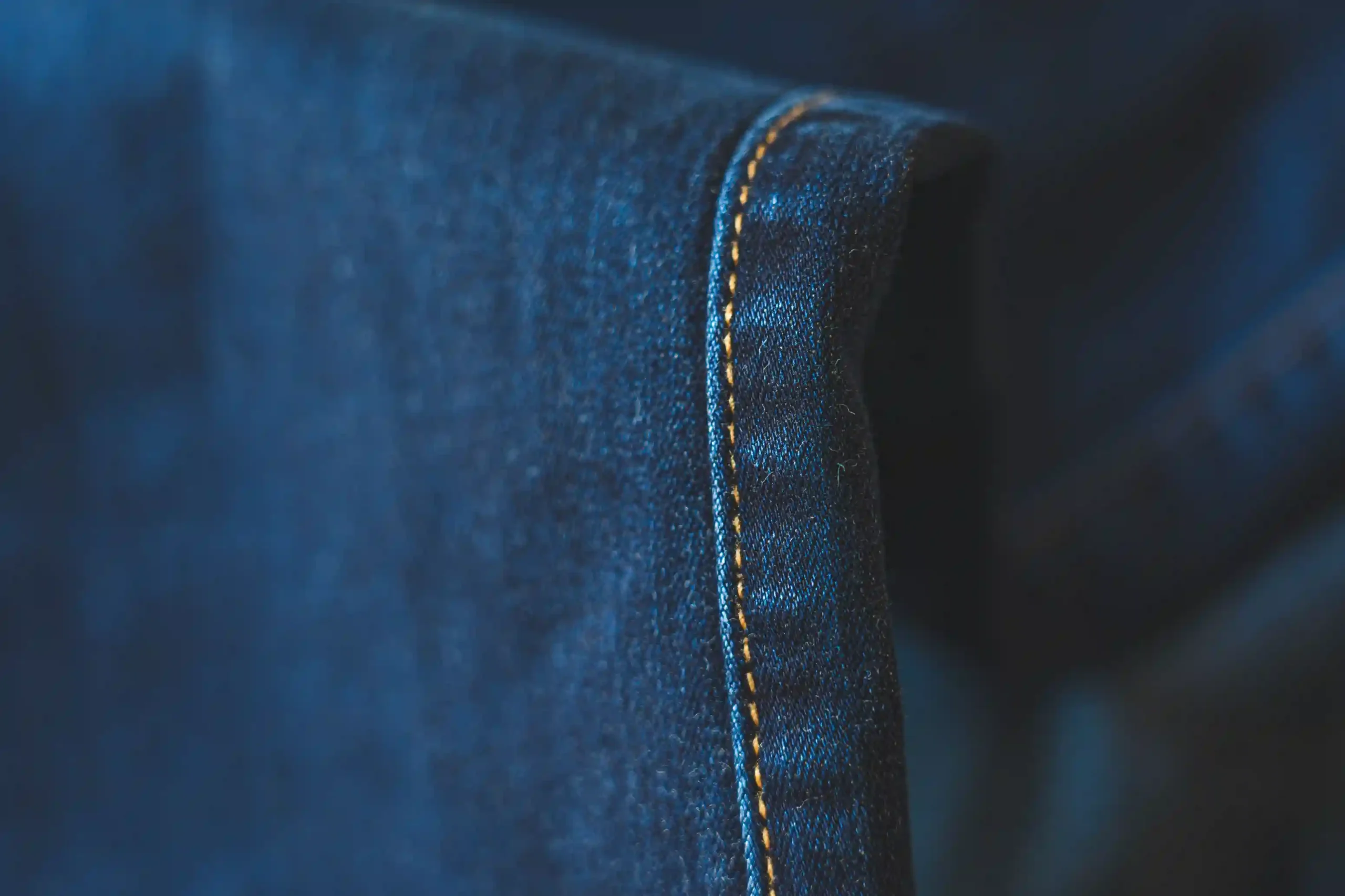
None of these checks takes more than a few seconds, and together they are the inspection that replaces a return policy when you buy final sale or vintage, the same logic our seven pre-checkout buying mistakes guide builds its list around.
Step 5: Price the Exit Before You Pay
The last step happens at the register, and it is the one shoppers skip most. A purchase has three costs, not one: the sticker, the tailoring, and the exit. The exit is the return policy, and a final-sale discount on a garment that does not fit is not a discount, because the money is gone either way. Check the policy before the price and treat a restrictive one as a surcharge. The same goes for compare-at pricing, since a markdown only means something against the piece’s real price history, which is why the sale-price tests start with the retailer’s history instead of the red tag.
Tailoring is the second cost, and it is usually a bargain. Off the rack plus 60 to 100 dollars of alterations routinely beats made-to-measure for standard proportions, per our shoulder-first blazer buying guide, because the shoulder is the one point a tailor cannot fix and everything else is affordable. Budget the hem and the waist darts at the moment of purchase and the sticker price you are comparing is the honest one.
Who This Framework Is Not For
A framework should say where it stops working. If your job or school enforces a strict uniform or dress code, your real buying document is that code, and most of the wear tests collapse into compliance checks. If your budget is genuinely tight right now, the first move is working what you already own, because the audit routinely turns up unworn pieces that fill the gap for free.
If the piece is occasion-only, rent it or buy it secondhand and skip the 30 wears question entirely. And if shopping is your recreation, that is a hobby, and hobbies are allowed to ignore cost per wear on purpose. The framework is for the everyday 90 percent of the wardrobe, the share that decides whether you feel dressed.
When Your Starting Point Changes the Order
The five steps stay the same, but life changes which one carries the weight.
If You Are Rebuilding After a Size or Life Change
Resist the full-replace impulse and rebuild with one season of proof first. Buy the five to seven gap-list pieces that serve the life you actually have now, let the 3-outfit rule run against the new wardrobe, and let the next season’s list come from what you reached for. Bridge pieces bought secondhand keep the experiment inexpensive while the picture clears.
If You Are Short on Time
Compress the framework to its two strongest filters: the gap list at home and the return policy at the register. Buying from lines whose sizing you already know is a legitimate time tax cut, and cost per wear does its usual work on the staples you reorder without thinking.
If Your Budget Is Tight but Your Wardrobe Is Not
Spend where alteration cannot help you and save where it can. Thrift channels own blazers, knits, and skirts, off-price racks own trousers and shoes, and mass retail owns tops, which is the channel order our budget workwear pricing lands on. The blazer and the shoes you wear weekly are the spend pieces even on a lean budget, because their cost per wear absorbs the price and a flimsy version absorbs your patience instead.
Frequently Asked Questions About Shopping Smarter for Clothes
What is the 3 outfit rule when shopping for clothes?
The 3 outfit rule asks you to name three complete outfits a new piece makes with clothes you already own before you buy it. If you cannot name three, the piece will likely sit unworn or force extra purchases to make it work.
How do you calculate cost per wear for a garment?
Divide the total price, including any tailoring, by the number of times you realistically expect to wear it. A 220 dollar blazer worn 120 times costs about 1.80 dollars per wear, while a 25 dollar top worn twice costs 12.50 dollars per wear.
What is the 30 wears test in sustainable fashion?
The 30 wears test is a buying checkpoint conceived in 2015 by Livia Firth and Lucy Siegle that asks whether you will wear a garment at least 30 times before buying it. It is meant to slow impulse purchases, with honest exceptions for true occasion wear.
How can you tell if a fabric is high quality?
Check the weight in grams per square meter against the garment’s job, hold it to the light for thin spots, feel whether it drapes or clings, and read the fiber content on the FTC-regulated label. Weight and construction predict behavior better than brand or price.
How do you avoid buying clothes you never wear?
Audit your closet first, write a short gap list, and run every candidate through the 3-outfit rule, the 30 wears test, and a cost-per-wear check before paying. Shoppers who want to shop smarter for clothes also confirm the return policy last, so a miss does not become a sunk cost.
Shop Smarter and the Rest Follows
None of the five steps is complicated, and that is the point. A gap list written at home, two wear tests, a fabric weight, a minute of seam checks, and a return policy read before the card comes out: together they turn a wardrobe from a series of impulses into a series of decisions. The clothes get worn more, the returns get rarer, and the cost per wear of everything you own starts to fall. That is what it means to shop smarter for clothes, and it is a framework that pays for itself one kept piece at a time. Start with the audit this weekend, and let the next purchase be the first one that had to pass.
Sources
Official Sources
- Federal Trade Commission: Care Labeling of Textile Wearing Apparel and Certain Piece Goods, 16 CFR Part 423, Access Date: August 17, 2026
- Federal Trade Commission: Textile Fiber Rule, 16 CFR Part 303, Access Date: August 17, 2026
Research Sources
- Ellen MacArthur Foundation: Rethinking Business Models for a Thriving Fashion Industry (published 2023, drawing on the 2017 A New Textiles Economy report data), Access Date: August 17, 2026
Industry Sources
- National Retail Federation: Consumers Expected to Return Nearly 850 Billion Dollars in Merchandise in 2025, Access Date: August 17, 2026
- National Retail Federation: 2025 Retail Returns Landscape, Access Date: August 17, 2026
- Heddels: Stitches per Inch: What It Is and Why It Matters (published 2015, technical mechanics, not trend-dependent), Access Date: August 17, 2026
- Harper’s Bazaar UK: From 30 Wears to 30 Years: How Long Should Our Clothes Last?, Access Date: August 17, 2026
- Capital One Shopping: Average Retail Return Rate, 2026 Data, Access Date: August 17, 2026
- Wessi Wholesale: Checking Stitch Density: Quality Control for Bulk Shirt Orders, Access Date: August 17, 2026