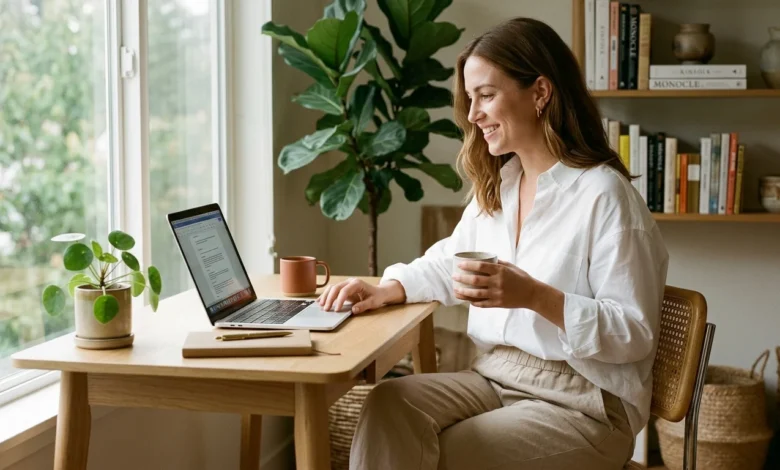
It is 8:55 AM, and your first video meeting starts in five minutes.
You face a familiar dilemma: stay in the faded sweatshirt you slept in, or pull on rigid zipped trousers that dig into your waist by noon. Neither option works well. Finding practical work from home outfit ideas requires a different formula, one that balances top-half camera structure with bottom-half desk comfort.
When you work remotely, clothes perform two distinct jobs at the same time. Above the desk, your outfit communicates professionalism to colleagues through a webcam frame. Below the desk, your clothes must accommodate eight hours of sitting, shifting postures, and continuous movement. Striking that balance does not mean buying a new closet or enduring stiff tailoring at home. It means understanding how fabrics drape, how collars frame the face, and how waistbands react when you sit.
Effective work from home outfit ideas balance top-half camera structure with bottom-half desk ergonomics. Pair structured upper layers like cotton poplin shirts, boat neck tops, or fine-knit cardigans with flexible bottoms like elasticated pull-on trousers or jersey pants. This combination provides professional framing for video calls while ensuring midsection comfort during long hours sitting at a home desk.
The WFH Style Dilemma: Why Pyjamas and Rigid Suits Both Fail
Remote work removed the physical boundary between home and office, but it also scrambled our dressing habits. For a long time, advice split into two extremes. One side urged us to put on full formal suits every morning to maintain discipline. The other side suggested giving up entirely and staying in fleece sweatpants.
Both approaches miss how clothes affect our day. Pure loungewear leaves you feeling unprepared when an unexpected video call pops up. On the other hand, rigid office tailoring creates physical friction against your chair, turning simple desk work into a tiring experience.
Enclothed Cognition: How Your Wardrobe Dictates Remote Productivity
The clothes you wear change how you think and work. In a 2012 study published in the Journal of Experimental Social Psychology, researchers Hajo Adam and Adam Galinsky introduced the concept of enclothed cognition. Their tests demonstrated that wearing garments with specific psychological meaning systematically alters the wearer’s focus and task performance.
When you spend your workday in sleepwear, your brain receives continuous rest signals. Putting on real, intentional clothes acts as a clear mental boundary between leisure hours and focused work. You do not need a rigid suit to trigger that focus. You simply need garments that feel deliberate.
The Video-Call Reality: Balancing Camera Framing with Desk Ergonomics
Webcams show a tight, cropped view. A meeting participant sees your shoulders, collarbone, and face, while everything below your ribcage remains hidden. Because of this framing, your top half carries all the visual weight of your outfit.
A structured collar, a clean crew neck, or a defined shoulder seam gives you a presentable appearance on camera. Beneath the desk, physical comfort takes priority. You need flexible waistbands and breathable textiles that move with your body as you change positions throughout the day. Balancing these two needs lets you build a personal routine that feels as polished as standard business casual dress code baselines without suffering through stiff waistbands at home.
4 Practical Work From Home Outfit Ideas
To make remote dressing effortless, rely on repeatable formulas rather than guessing every morning. These four combinations pair structured upper layers with flexible bottoms, giving you a camera-ready look that remains comfortable all day.
| Outfit Formula | Top-Half Structure | Bottom-Half Fit | Primary Use Case |
| The Classic Button-Down | Crisp Cotton Poplin shirt | Relaxed Fit pull-on trousers | External client presentations and formal video calls |
| The Knit Set | Fine-knit cardigan | Straight Fit jersey pants | Internal team syncs and dedicated focus days |
| The Structured Layer | Boat Neck top with a knit blazer | Drawstring Crepe trousers | Executive reviews and high-visibility meetings |
| The One-Piece Solution | Modal or Rayon shirt dress | Self-fabric soft tie waist | Warm-weather remote work and quick morning prep |
Formula 1: The Cotton Poplin Shirt and Relaxed Pull-On Trouser
A button-down shirt remains the fastest way to look put-together on camera. Choose Cotton Poplin, a crisp, lightweight plain-weave cotton that holds its structure around the collar and placket without feeling heavy. Look for a Relaxed Fit, which is cut with extra room throughout the torso rather than tailored close to the waist. This cut prevents the fabric from pulling tight across your back while you type.
Pair this crisp top with a pull-on trouser made from a structured woven fabric with an elasticated waistband. The contrast between the sharp collar and the easy waistband gives you a clean look for video calls while letting you sit comfortably all afternoon.
Formula 2: The Fine-Knit Cardigan and Straight-Fit Jersey Pant
A fine-gauge knit offers structured softness. Instead of an oversized, heavy sweater that can look sloppy on camera, select a lightweight cardigan with ribbed cuffs and a defined V-neck or crew neck. Buttoning the cardigan fully turns it into a standalone top with clean, understated lines.
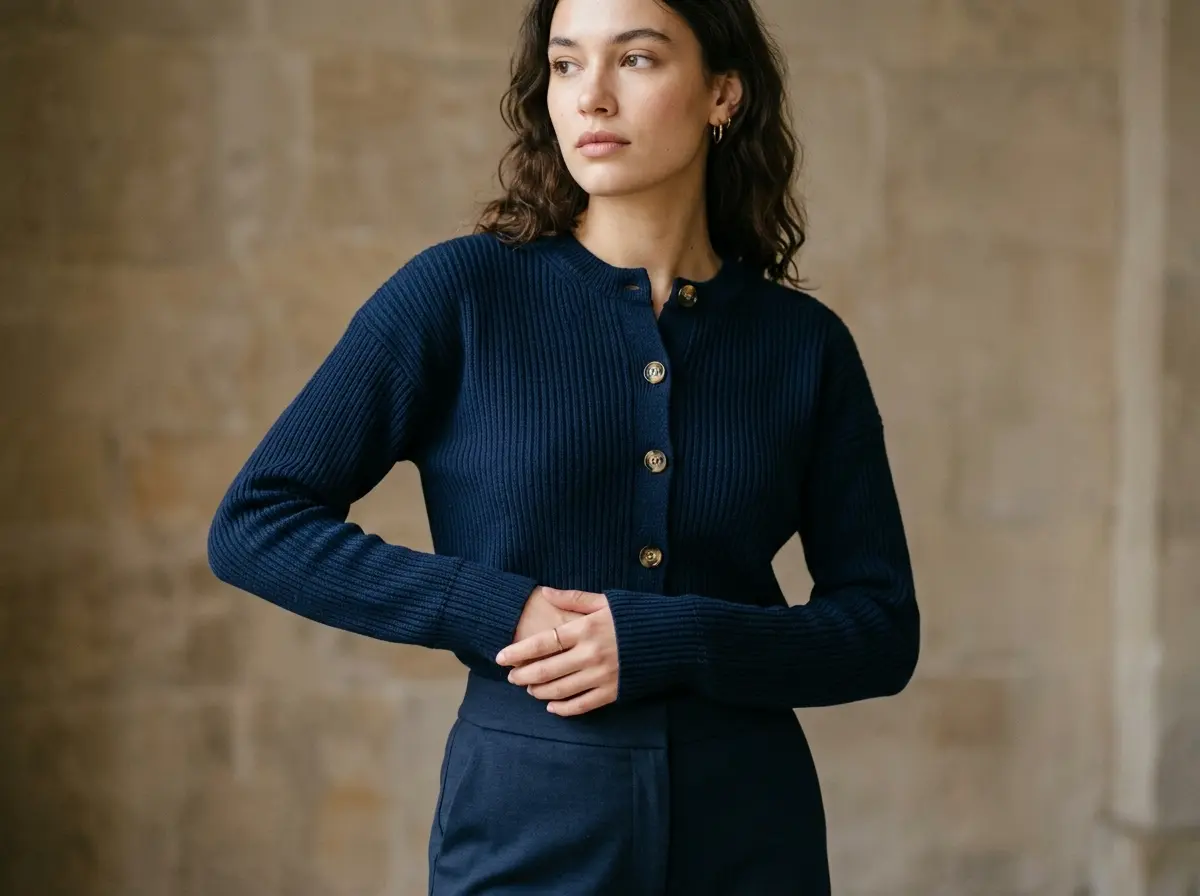
Look for a Drop Shoulder cut, where the shoulder seam sits slightly below your natural shoulder point. This design provides extra movement through your arms without adding bulk. Complete the look with trousers in a Straight Fit, maintaining a consistent width from waist to hem. In a matching neutral tone like navy, charcoal, or oatmeal, this monochrome set matches the ease of a tracksuit while looking deliberate on camera.
Formula 3: The Boat Neck Top and Tailored Knit Blazer
When your schedule includes high-stakes video meetings, adding a soft outer layer elevates your appearance instantly. Start with a fitted top featuring a Boat Neck, a wide, shallow neckline that runs horizontally toward both shoulders. This clean horizontal line frames your collarbones nicely on camera.
Instead of a stiff, woven jacket, layer an unlined sweater blazer over your top. Unstructured knit blazers give you the sharp lapels and shoulder shape of traditional tailoring, but their flexible knit fabric yields to your movements when you reach for a keyboard or phone. If you want to learn more about layering soft jackets over everyday tops, explore our guide on styling oversized blazers with softer layers.
Formula 4: The Shirt Dress with a Soft Waist Tie
One-piece dressing removes the guesswork from matching tops and bottoms. A shirt dress made from Modal (a soft semi-synthetic fiber derived from beech tree pulp) or Rayon (a breathable cellulose fiber with a fluid drape) gives you a neat, presentable look with minimal effort.
A shirt dress combines the collar and button placket of a woven shirt with the relaxed comfort of a skirt. Choose a style with a soft fabric tie waist rather than a rigid belt. You can loosen or adjust the soft tie while sitting at your desk, maintaining a flattering shape on camera without squeezing your midsection.
Bottoms for Sitting: How to Choose Pants That Don’t Pinch
The biggest mistake in remote dressing is wearing trousers designed exclusively for standing up. When you sit down, your hips expand, your lower back flattens, and your abdomen shifts forward. Trousers that feel comfortable while you stand in front of a mirror can quickly pinch and bind once you sit at a desk.
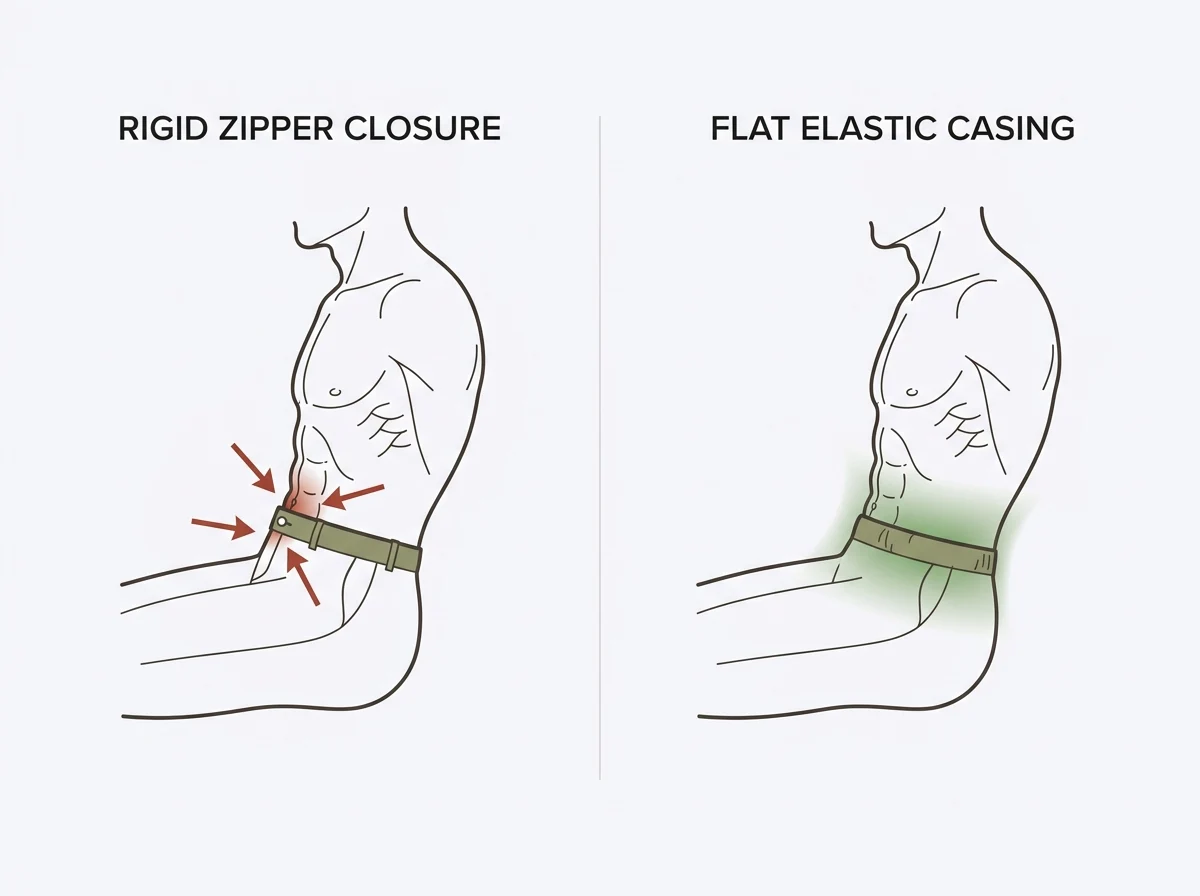
Zipper Closures vs. Elastic Casings: Seated Posture Mechanics
Traditional trousers feature a rigid waistband, a metal zipper, and a firm front button. While sitting, that rigid metal hardware pushes directly into your midsection. Over several hours, this concentrated pressure causes discomfort, poor posture, and unnecessary fatigue.
For home desk work, choose trousers with flat-front elastic casings or hidden drawstring waistbands. A flat-front waistband stays smooth against your stomach under tucked-in shirts, while the elastic back stretches naturally as your posture shifts. If you prefer classic denim on days you leave the house, review our recommendations for buying denim with proper stretch retention to find pairs that remain comfortable when seated.
Stretch Fabrics: Modal, Rayon, and Crepe Blends
Fabric choice determines whether flexible trousers retain their shape or bag out at the knees after two hours. Plain jersey knit cotton often loses its form quickly, sagging around the seat and knees by midafternoon.
Instead, choose woven or knitted blends that include Crepe (a fabric with a crinkled, matte surface texture) or a Linen Blend (linen mixed with cotton or viscose for drape and reduced creasing). Adding Modal or Rayon provides a soft, cool hand-feel against your skin, while a small percentage of elastane helps the fabric bounce back after long hours in an office chair.
Camera-Ready Accessories: Finishing Touches for Virtual Meetings
Accessories offer an easy way to elevate a simple outfit before stepping into a video call. Because webcams compress depth and alter lighting, choosing the right small details makes a noticeable difference.
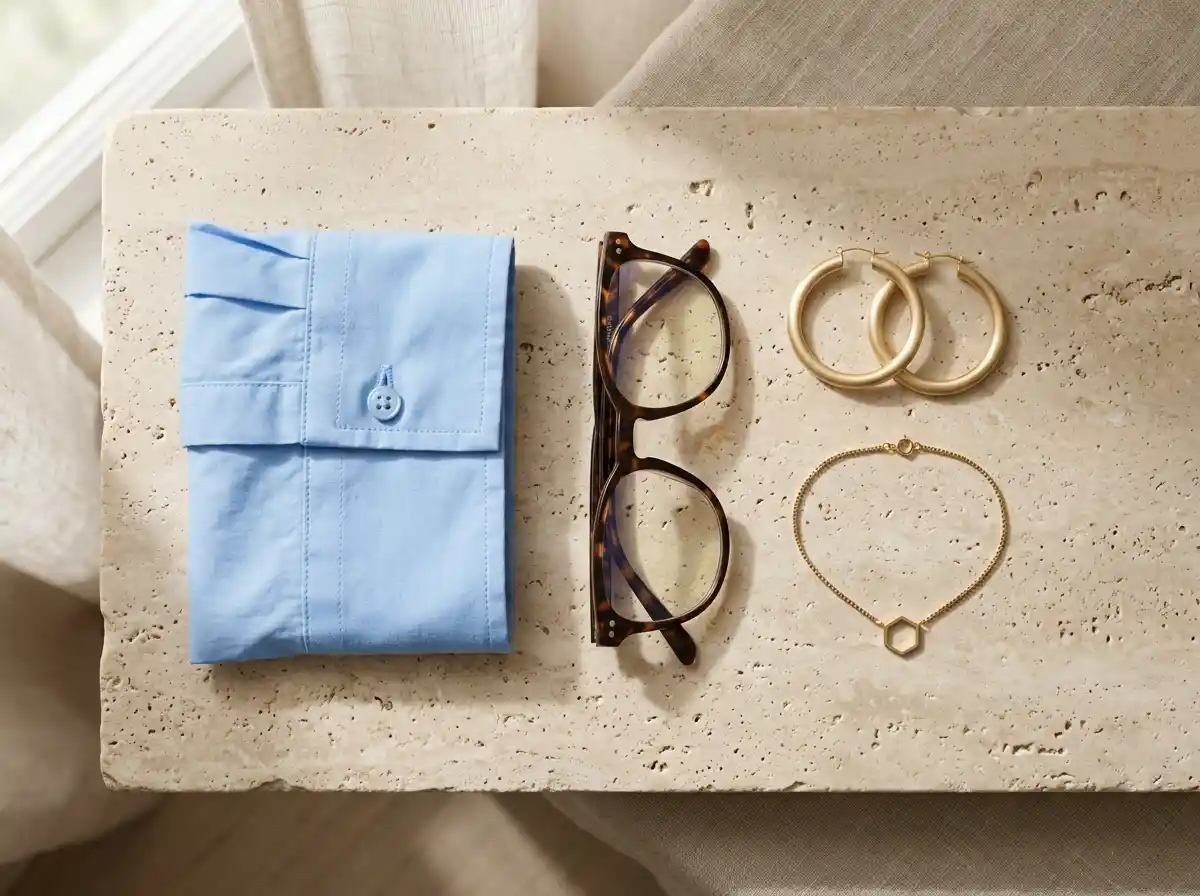
- Earring scale: Small to medium gold or silver hoop earrings (around 20mm to 30mm in diameter) bring warm light toward your face without swinging into your laptop camera.
- Necklace length: Select short chains or pendant necklaces that rest cleanly above your top’s neckline. Long necklaces can catch on your desk edge or tap against your desktop microphone, creating distracting noise during calls.
- Glasses and reflection: If you wear blue-light or prescription glasses, angle your desk lamp slightly to the side rather than directly behind your monitor to prevent harsh lens glare on camera.
- Sleeve styling: Push or fold your shirt sleeves up to your mid-forearms. Exposing your forearms creates an intentional, active look on camera that prevents oversized tops from overwhelming your frame.
Weekly Versatility: Rotating WFH Staples Without Overbuying
Building a practical remote wardrobe does not require an overflowing closet. A small, carefully chosen collection of interchangeable pieces gives you a week of varied outfits while keeping your morning routine simple.
       [ 1 Cotton Poplin Shirt ]       [ 1 Fine-Knit Cardigan ]
                   \                       /
                    \                     /
    [ 1 Pull-On Trouser ] <---> [ 1 Straight-Fit Jersey Pant ]
                    /                     \
                   /                       \
       [ 1 Boat Neck Top ]         [ 1 Soft Shirt Dress ]
Start with five foundational items: one Cotton Poplin button-down, one fine-knit cardigan, one Boat Neck top, one pair of woven pull-on trousers, and one pair of straight-fit jersey pants. By swapping tops and bottoms throughout the week, you create six distinct combinations from just five pieces. This approach aligns with the core principles of building a streamlined capsule wardrobe, helping you focus on quality fabrics and thoughtful fits rather than chasing short-lived trends.
Frequently Asked Questions About Remote Workwear
What are the easiest work from home outfit ideas for video calls?
The most reliable combination is a crisp Cotton Poplin button-down shirt paired with high-waisted pull-on trousers. The structured collar gives you an immediate professional appearance on camera, while the flexible waistband keeps you comfortable while sitting at your desk all day.
Should I wear real jeans or pull-on trousers when working from home?
Pull-on trousers made from crepe, heavy jersey, or modal blends are generally better for long hours at a desk. Traditional rigid denim with metal buttons can pinch your midsection when seated. If you prefer jeans, choose pairs with at least two percent elastane and a flexible waistband.
Does getting fully dressed for work at home actually increase productivity?
Yes. Psychological research on enclothed cognition shows that wearing clothes associated with focus alters your mental state and attention. Changing out of sleepwear creates a clear boundary between your personal time and your workday, helping you stay engaged.
What shoes or house slippers look appropriate for remote work environments?
Choose structured indoor footwear like leather slides, suede mules, or soft house loafers. They provide light arch support on hard floors while keeping your feet warm, helping you feel fully dressed even if your shoes never appear on camera.
Finding Your WFH Balance
Dressing for remote work is not about following strict office rules or settling for worn-out loungewear. It is about choosing clothes that support your day. By combining camera-ready tops with flexible, ergonomic bottoms, you build a routine that respects both your professional presence and your physical comfort.
Focus on breathable fabrics, flat waistbands, and clean necklines that frame your face on camera. When your clothes fit well and feel good, sitting down to work becomes the easiest part of your morning.
Sources
Official & Research Sources
- Journal of Experimental Social Psychology | Enclothed Cognition (Hajo Adam & Adam D. Galinsky) | Access Date: July 2026 | Source Tier: Tier 4
Industry Sources
- Who What Wear | 11 Work-From-Home Outfits Fashion Editors Rely On | Access Date: July 2026 | Source Tier: Tier 5
- Harper’s Bazaar | The Cozy Winter Outfit Ideas Fashion Editors Are Wearing | Access Date: July 2026 | Source Tier: Tier 5
- Who What Wear | What to Wear on Camera: 7 Simple Fashion Rules | Access Date: July 2026 | Source Tier: Tier 5
- C&A Professional Fashion Guide | Work-From-Home Outfit Tips & Wardrobe Essentials | Access Date: July 2026 | Source Tier: Tier 3 / Tier 5