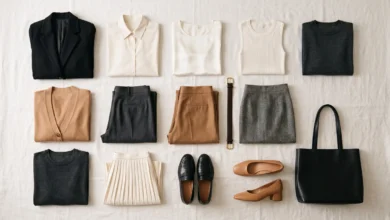

The set arrived on a Saturday and looked right for everything on your calendar except Monday. A matching blazer and trouser in a warm tan, cut cleanly, priced sensibly. Then the weekend ends and you are holding both pieces in front of the mirror, wondering whether a co-ord set can walk into your office without reading as a costume. It can, and how to style a co-ord set for the office mostly comes down to treating the set like suiting instead of like a trend.
The matching part is the least important part. A blazer and trouser cut from the same bolt of fabric is, functionally, a suit sold in two pieces, and suits pass at work. What decides whether your set reads as one is the weight of the fabric, the quiet of what goes underneath, and the shoes on your feet.
Here is the whole method, then the details.
To style a co-ord set for the office, treat it as suiting: 1) check that the fabric is structured enough to hold a pressed line, roughly 220 to 300 grams per square meter, 2) keep the layer under the blazer matte and quiet, 3) ground the set with closed-toe leather shoes and a structured bag, 4) split the set into separates across the week so both pieces earn their keep.
Can You Wear a Co-ord Set to the Office?
Most American offices already answered this question without asking it. Gallup’s polling puts 41 percent of U.S. workers in business casual, and among women the share rises to 51 percent, while YouGov found just 7 percent of workers still showing up in a full suit. The bar in most buildings is not formalwear. It is clothing that looks deliberate.
That is good news for the co-ord set, because two tailored pieces in one cloth is a register most offices already accept. Whether your building accepts it is a local question, and The Business Casual Dress Code, Practically Explained makes the same point we make here: the written policy matters less than what the people one rung above you wear on a meeting day. Watch that for a week before you decide what the set can do.
Forecasters disagree about the set’s future, and the disagreement is useful. Corporate fashion forecaster Maya Bluthenthal ruled matching sets out entirely in her 2026 predictions, while Who What Wear named power suiting one of the six office trends defining workwear in 2026. Both readings hold at once. The trend cycle moves on, and the garment logic underneath it predates the cycle. Buy the logic, not the trend.
Harper’s Bazaar’s workwear edit makes the visual case plainly: “The combination of a laid-back button-up and pants always looks more put-together when they’re a matching set.”
The set at a glance
- Passes: a structured shoulder, a matte fabric that holds a crease, a hem that meets a closed-toe shoe.
- Passes with care: a linen blend in a creative office, June through August.
- Fails: rib knit, satin shine, a drawstring waist, loud prints head to toe.
The Fabric Check Comes First
Fiber name gets the attention and fabric weight does the work. Weights below are in grams per square meter, the number on most fabric specs, and the same variable this site tracks everywhere from summer linens to winter knits. A poly-viscose blend is one of the most common choices in affordable suiting and professional separates, and it earns that spot honestly, holding a crease, shrugging off wrinkles, and costing less than wool. A linen blend can be twice the price and still slump by two in the afternoon.
| Fabric | Typical weight | Office verdict |
| Poly-viscose suiting | 220 to 280 | The workhorse. Holds a pressed crease and shrugs off wrinkles, which is why it dominates affordable workwear. |
| Matte crepe | 200 to 260 | Reads a half-step dressier than poly-viscose, and the matte surface keeps it from drifting into evening wear. |
| Linen blend | 180 to 240 | Fine in creative offices and hot months. The wrinkle is the price of admission. |
| Cotton twill or poplin | 150 to 220 | Crisp in a structured cut, casual in a soft one. Judge the shoulder, not the label. |
| Rib knit or satin | Usually under 150 | Leave it for weekends. Cling and shine read as lounge or evening, not work. |
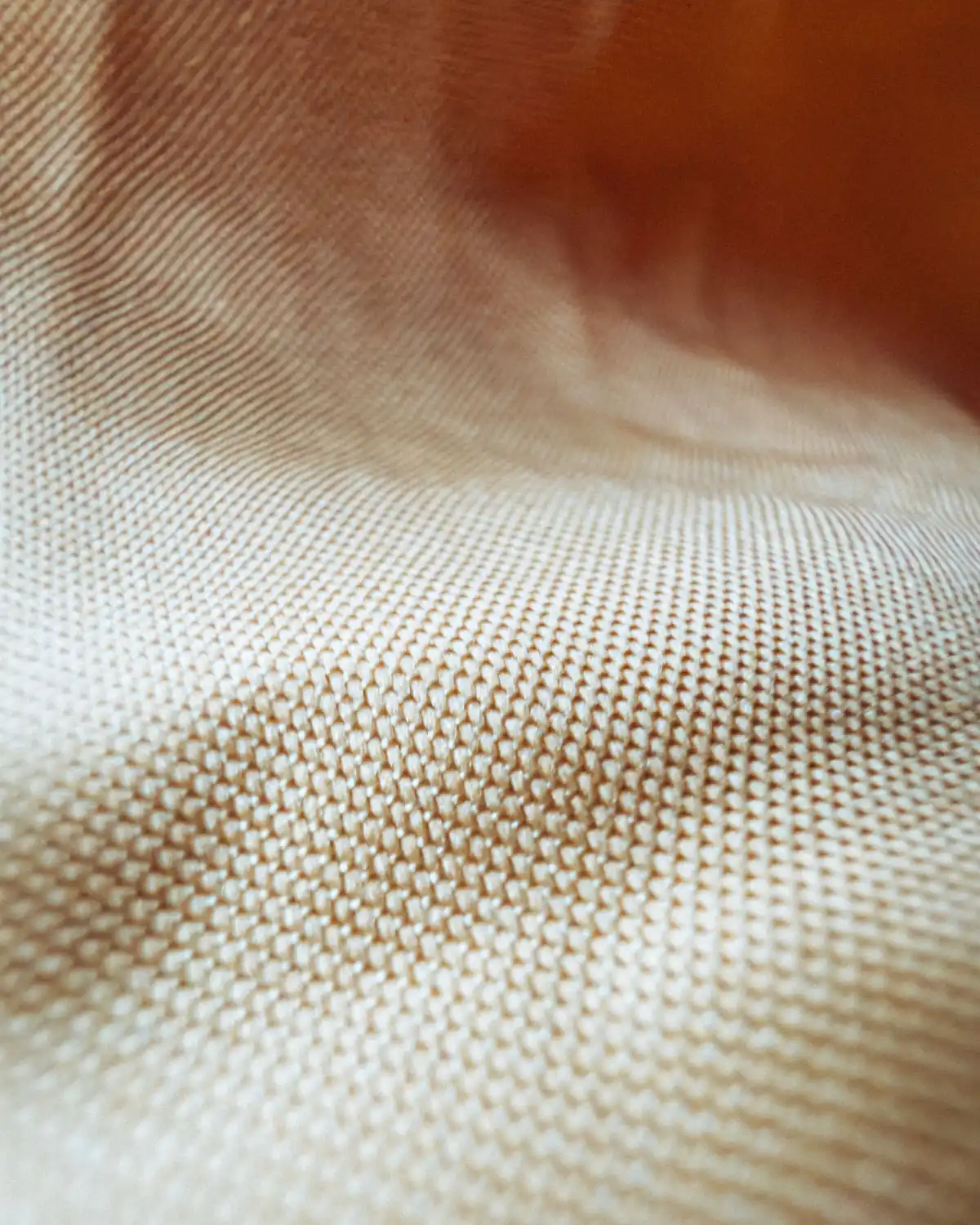
Two checks settle it in the fitting room. The crease test: pinch the trouser leg and let go, and if the fabric springs back without a memory of your fingers, it will hold a pressed line through a workday. The shoulder test: the blazer shoulder should keep its shape when your arms hang, because a soft shoulder turns tailoring into cardigan territory. If both pass, the set will photograph as suiting even in a modest blend.
A linen blend deserves a sentence of its own. It wrinkles, and that wrinkle is the trade for how cool it keeps you, which is exactly the calculus in our technical guide to hot-weather fabrics. In a creative or business casual office in summer it passes without complaint. In a formal one, save it for the weekend.
Four Formulas That Read as Workwear
Same set, four different days. Each formula below assumes a structured set in a neutral, and each keeps the loud-note count at zero or one.
The client meeting formula
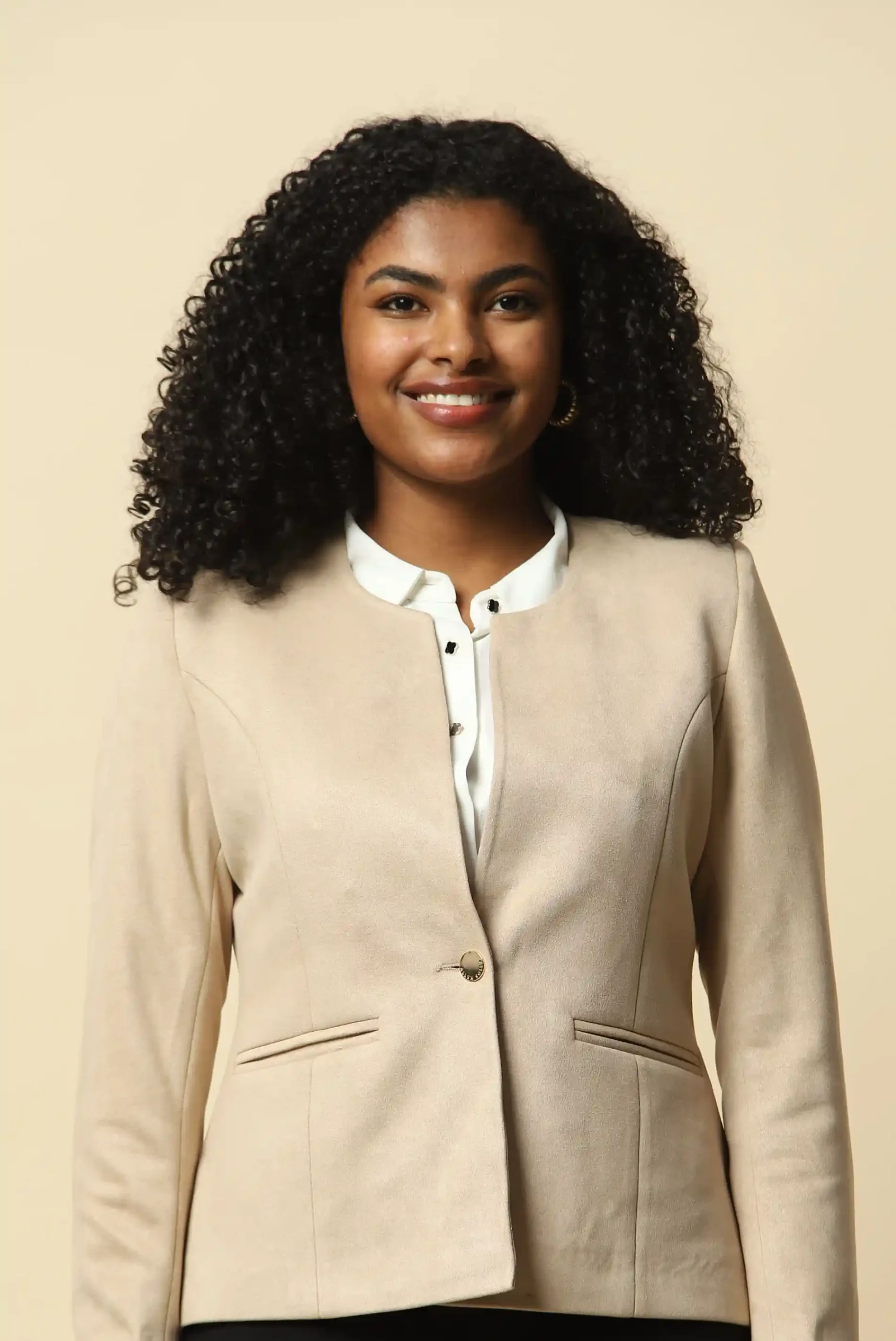
Wear the set as a set, over a white or cream cotton poplin shell buttoned to the second button from the top. Closed-toe leather does the grounding, and the most reliable version is a pointed toe on a two-to-three-inch block heel, the same pairing we stand behind in our ankle boot pairing guide. Add a structured tote in one leather neutral and jewelry in a single metal family. Button the blazer standing, open it seated. This is the set doing its full suit impression, and it holds up across a conference table.
The everyday desk formula
Same set with quieter company. A fine-gauge merino crew or a plain white cotton tee under the blazer, loafers instead of heels, the same tote. Nothing competes with the match, so the match reads as a uniform in the good sense.
The business casual Friday formula
Split the set. The trousers take a knit polo and a different jacket, or the blazer goes over dark, unripped denim in a building where denim passes situationally. Splitting is also how the set stops being a costume and starts being two staples, which is the whole argument two sections down.
The desk-to-dinner formula
Swap the poplin for a silk camisole, add one statement earring with everything else quiet, and let a block heel replace the loafer. One loud note, total.
What Goes Under the Blazer
Three things keep the underside quiet. Matte over shine, because a satin cami under a matte set is an evening signal, so save silk for the after-hours swap and lean on poplin and fine merino before six. A clean tuck, because the waistband of a work trouser should read as a straight line, which rules out paperbag and drawstring waists for the office even when the fabric is right. And no competing print, because the match is already the statement, and a striped shirt underneath splits the outfit’s attention in half.
Shoes, Bag, and Jewelry: Keep the Rest Quiet
Closed-toe leather is the floor, meaning a pointed pump, a leather loafer, or a block heel in the two-to-three-inch range. Strappy sandals and running sneakers pull the set toward the weekend even in casual buildings. The bag should stand up on its own bottom, which is the entire argument for a structured tote. For jewelry, borrow our rule for mixing gold and silver, one dominant metal at roughly 70 to 30 over a supporting one, and when in doubt, less. A set this coordinated makes even small hoops read as intentional.
Break the Set Across the Week
A co-ord set is two garments bought in one transaction, and cost per wear is the only price metric that matters in a work wardrobe, the same math we apply in our guide to building a capsule wardrobe. Run the numbers on a 240 dollar set worn together twice a week for ten weeks, then each piece worn separately fifteen more times. That is fifty wears, or about 4.80 dollars a wear, which beats most dresses in the same closet. Worn matched forever, the same set manages twenty wears at 12 dollars each and quietly becomes one of the more expensive things you own.
Splitting also solves the repetition problem. In an office that sees you five days a week, a set worn matched every Tuesday becomes a uniform in the bad sense. Split across the week, the blazer and trouser read as separate staples that nobody has ever seen together.
When a Co-ord Set Is the Wrong Call
A few situations call for a different purchase. In conservative, client-facing rooms where a matched worsted suit is the floor, like court, some finance floors, and formal consulting settings, a fashion co-ord can land as a costume of a suit rather than the thing itself. A set under about 150 grams per square meter that clings or shines belongs to the weekend no matter the cut. Uniform dress codes override everything on this page. And if you know, honestly, that you will never split the set, skip it, because a matched-only set is a dress with extra steps and your budget is better spent on separates that pair three ways.
Matching the Set to Your Actual Week
If your office runs business casual: live in the everyday desk formula and split on Fridays. Tan, olive, chocolate, and navy all pass without effort.
If you present to clients or sit in formal meetings: keep the set in charcoal or navy, use the meeting formula whole, and save the split for days without an audience.
If you are rebuilding a work wardrobe on a tight budget: one neutral set is a faster foundation than four separate experiments, because it arrives pre-matched and then doubles into separates. Run the same audit-first logic we apply in our complete buying framework before it joins the cart.
Frequently Asked Questions About Co-ord Sets at Work
Can I wear a co-ord set to the office?
Yes, in most American business casual offices, provided the fabric is structured enough to hold a pressed line and the shoes are closed-toe leather. Watch what colleagues one level above you wear on meeting days and match that register.
Are co-ord sets considered business casual?
A structured blazer and trouser set in a matte fabric sits comfortably in business casual. The same cut in rib knit or shiny satin does not. The fabric and shoulder, not the matching, decide the category.
What fabric is best for a work co-ord set?
Poly-viscose suiting or matte crepe in the 220 to 300 grams per square meter range holds a crease and resists wrinkles. A linen blend works in creative offices and hot months if you accept the wrinkle.
What shoes go with a co-ord set for work?
A pointed-toe pump, a leather loafer, or a block heel in the two-to-three-inch range. Closed-toe leather grounds the set, while strappy sandals and sport sneakers pull it toward the weekend.
How do I transition a co-ord set from office to evening?
Swap the daytime shell for a silk camisole, add one statement earring with everything else quiet, and change loafers for a block heel. One loud note is the ceiling.
The Bottom Line
Every rule above reduces to one question you can ask in the fitting room, which is whether these two pieces would pass on their own. If the blazer works over denim and the trouser works with a knit, the match is a bonus rather than a crutch, and styling a co-ord set for the office stops being a trend question at all. Run the fabric check, pick one formula for this week, and let the set earn its keep one wear at a time.
Sources
Research Sources
- Gallup: Casual Work Attire Is the Norm for U.S. Workers, Access Date: August 22, 2026
- YouGov: The death of business attire? Just 7% of workers wear a suit to work, Access Date: August 22, 2026
Industry Sources
- Who What Wear: 6 Office Outfit Trends That’ll Define Workwear in 2026, Access Date: August 22, 2026
- Harper’s Bazaar: 29 Summer Outfits You Can Actually Wear to Work, Access Date: August 22, 2026
- Arcus AG: What Is Polyester Viscose Fabric Best For in Fashion?, Access Date: August 22, 2026
- Massimo Dutti: Women’s Suits, Access Date: August 22, 2026 (price reference only)
- Quince: Blazers for Women, Access Date: August 22, 2026 (price reference only)
Additional Reading
- Maya Bluthenthal: 2026 Corporate Fashion Predictions, Access Date: August 22, 2026