The Wrong Shoe Theory: 4 Examples That Actually Work
You put together a perfectly logical outfit. A structured blazer, a crisp cotton poplin shirt, and tailored trousers. You reach for a matching leather pump. You look in the mirror, and the result feels entirely flat. It looks like a uniform instead of personal style. This is exactly the problem the wrong shoe theory solves.
Coined by stylist Allison Bornstein and detailed in her 2023 book Wear It Well, the premise is simple. You choose the footwear that feels like the exact opposite of your clothing. Instead of finishing a look with the expected matching piece, you intentionally pick the shoe that creates the most visual friction.
The wrong shoe theory works by introducing visual contrast to an outfit through unexpected footwear choices. To test it, rely on four primary combinations. First, pair tailored trousers with technical running sneakers. Second, match delicate slip dresses with heavy rubber-soled boots. Third, wear structured leather loafers with casual sweatpants. Fourth, anchor a formal suit with minimalist flat sandals. This deliberate mismatch forces a basic outfit to look intentional.
Why Deliberate Mismatching Beats Perfect Matching
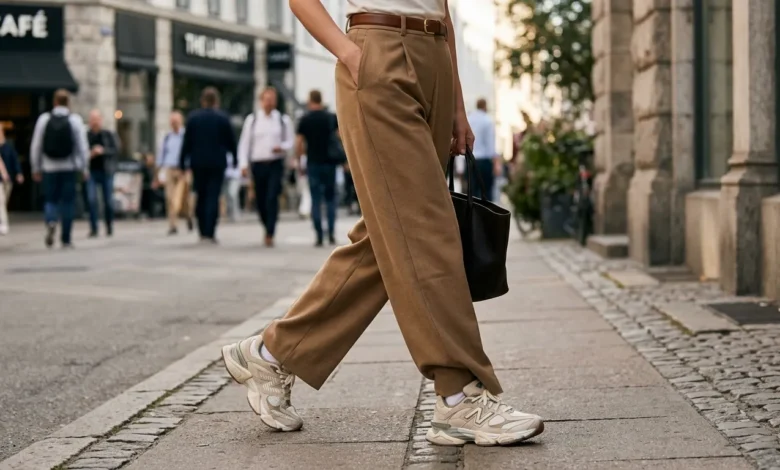
Matching everything creates a costume effect. Friction makes clothing look lived-in. When you pair a straight fit linen blend trouser with a mesh running sneaker, the contrast highlights the texture of both pieces. This approach directly supports the core rules of how to mix textures in an outfit by breaking up the predictable lines of a matching set.
It also expands how often you can wear the items you already own. You no longer need a dedicated pair of formal shoes for every formal dress. By breaking the conventional rules of occasion wear, you get more daily utility out of your closet.
At a Glance: The Core Contrasts
- Formal clothing grounded by athletic footwear.
- Lightweight delicate fabrics anchored by heavy winter boots.
- Soft casual loungewear structured by rigid leather shoes.
4 Reliable Wrong Shoe Theory Examples
The easiest way to understand this styling method is to see it applied to everyday categories. Here is how the expected rules compare to the intentional mismatch.
| Outfit Category | Expected Footwear | The Deliberate Mismatch | Why It Works |
|---|---|---|---|
| Tailored suits | Leather oxfords | Mesh running sneakers | Heavy foam soles ground the sharp tailoring. |
| Silk dresses | Strappy heels | Thick rubber boots | The aggressive tread removes the eveningwear feel. |
| Fleece sweatpants | Athletic slides | Rigid penny loafers | A structured leather shape forces the soft fabric to look intentional. |
1. Tailored Trousers and the Technical Sneaker
Instead of a leather oxford or a sleek minimalist sneaker, you wear a mesh running shoe with a thick foam midsole. Brands like Asics and New Balance built these shoes entirely for function. They feature reflective panels, mesh toe boxes, and exaggerated arch supports.
The visual weight of a running shoe grounds the crisp lines of a wool trouser. This combination works exceptionally well for navigating the modern business casual dress code. The trick is to let the trouser hem break slightly over the top of the sneaker. This prevents the shoe from looking entirely disconnected from the leg line.
2. The Delicate Dress and the Heavy Boot
A silk or satin slip dress naturally calls for a strappy heel. Replacing that heel with a thick leather combat boot completely changes the balance. A classic leather boot with a heavy rubber lug sole pulls the delicate fabric down to earth.
This prevents a daytime dress from looking like formal eveningwear. The physical weight of the leather boot contrasts against the light weight of the silk. It is a highly practical choice for city walking, allowing you to wear summer dresses well into the cooler autumn months.

3. Casual Sweats and the Structured Loafer
Most people default to sneakers or slides when wearing fleece sweatpants. Adding a rigid leather penny loafer introduces instant structure to soft loungewear. A classic loafer, which often retails around 175 dollars, carries an inherent association with academic or corporate uniforms.
The rigid leather forces the sweatpants to look like a deliberate styling choice rather than a lazy morning default. Showing a small sliver of the ankle between the hem of the sweatpant and the top of the loafer helps balance the heavy leather.
4. The Power Suit and the Minimalist Sandal
A full matching suit carries heavy corporate associations. Swapping a closed-toe heel for a flat leather thong sandal strips away that corporate stiffness. This is a common strategy in relaxed luxury styling.
It signals that you are wearing the suit for your own enjoyment rather than a workplace requirement. A thin leather sole offers almost no visual weight, allowing the structure of the oversized blazer and wide-leg trouser to command all the attention.
When the Wrong Shoe Stays Wrong
This concept relies on styling friction, not poor maintenance. A beaten-up, dirty running shoe does not add intentional contrast to a tailored suit. It just looks like you forgot to change your shoes after commuting. The footwear must be clean and in good condition to signal that the mismatch was a deliberate choice. If the shoe is falling apart, it creates the wrong kind of friction.
If You Are Testing This Concept Today
- If You Work in a Casual Office: Swap your usual office flats for a pair of retro athletic sneakers. Pair them directly with your standard work trousers.
- If You Walk Everywhere: A chunky combat boot paired with lightweight summer skirts provides durability without sacrificing style.
- If You Are Maximizing a Small Closet: Using this theory makes your formal pieces work for the weekend. This is a core strategy when figuring out how to build a capsule wardrobe because it drastically increases your outfit combinations.
Frequently Asked Questions About the Wrong Shoe Theory
What is the wrong shoe theory?
The wrong shoe theory is a styling method that encourages pairing an outfit with the most unexpected footwear possible. It relies on visual friction to make a standard outfit look more personal and intentional.
Who created the wrong shoe theory?
Stylist Allison Bornstein popularized the concept, officially naming it and detailing the framework in her 2023 book Wear It Well.
Does the wrong shoe theory work in a corporate office?
It depends strictly on your office environment. Traditional corporate offices often require matching, conservative footwear for safety and professional standards. This theory is better suited for creative offices or weekend wear.
Do I need to buy new shoes to test this?
Absolutely not. The entire premise relies on using categories of shoes you already own and pairing them with garments you normally keep them separated from.
Moving Past the Perfect Match
The wrong shoe theory proves that personal style often lives in the imperfections. Perfect matching rarely leaves room for personality. By intentionally choosing the footwear that seems out of place, you force people to look at the whole outfit with fresh eyes. Start with a combination you already own, embrace the friction, and wear it with confidence.
Sources
Official Sources Chronicle Books: Wear It Well: Reclaim Your Closet and Rediscover the Joy of Getting Dressed, Access Date: July 2026
Industry Sources Harper’s Bazaar: Why the Wrong Shoe Theory Is the Ultimate Styling Hack, Access Date: July 2026 Vogue: How Allison Bornstein’s ‘Wrong Shoe Theory’ Can Transform Your Wardrobe, Access Date: July 2026