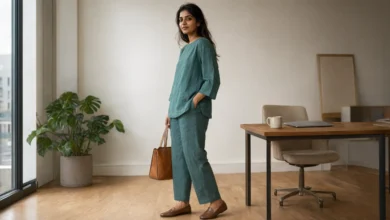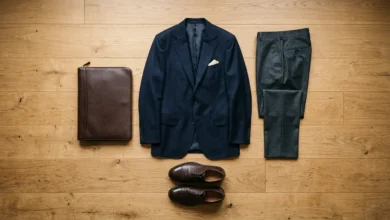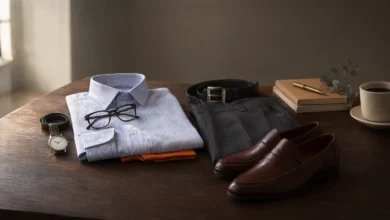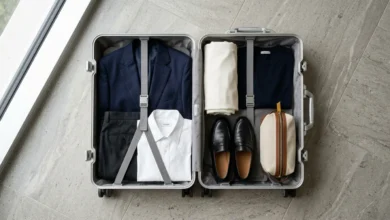
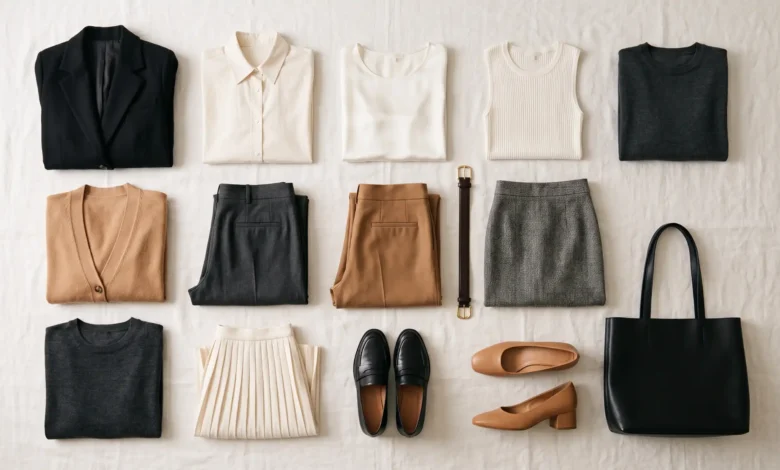
The Sunday night before a first day at a new job is when most work wardrobes get panic-built, usually at full price, usually from a mall rack, and usually with pieces that never see week three. There is a better order to it, and learning how to build a business casual capsule wardrobe on a budget is that order, because a short list of neutral pieces bought in a specific channel sequence covers every day on the calendar without touching the rent.
Done right, the budget version ends up sharper than the full-price version. The constraint forces a neutral color palette and mix-and-match workwear where every bottom pairs with every top, so what lands in your closet is a small grid of versatile clothing items with a cost per wear you can actually defend.
The budget part matters more than people admit. The average American consumer unit spent 2,001 dollars on apparel and services in 2024, per the U.S. Bureau of Labor Statistics, which means a from-scratch work wardrobe can quietly eat a tenth of a year’s clothing budget in one weekend if you let it. This guide is the plan for not letting it: a build order, a split between thrift, off-price, and full-price channels, and honest numbers for what each piece should cost.
To build a business casual capsule wardrobe on a budget, follow this order: 1) audit what you already own and keep only pieces that fit and pass a fabric check, 2) lock a palette of two base neutrals plus two supporting colors, 3) buy the gaps in the order bottoms, then layers, then tops, 4) shop thrift stores first, off-price second, and full-price last, 5) rank every purchase by cost per wear instead of sticker price.
Know the Dress Code You Are Actually Building For
Business casual is not one dress code. It is a range that runs from a conservative client-facing office where denim never happens to a studio where dark, unripped jeans pass three days a week. Before you spend anything, spend one week observing the five people whose judgment actually matters at your workplace, because their outfits are a more reliable document than any written policy. Our practical breakdown of the modern business casual dress code goes deeper on reading a room, including when dark denim earns its hanger and when it does not.
Build for the version of the code you observed, not the version you wish you had. A capsule bought for a conservative office still functions in a relaxed one. The reverse is rarely true, and the fix costs another shopping trip.
The Piece Count That Keeps the Budget Honest
Capsule math has a few named starting points worth knowing. Caroline Rector’s Un-Fancy method, the project that popularized the term, runs 37 pieces per season including shoes and outerwear. The Wardrobe Consultant’s corporate capsule lands at 22 pieces for more than fifteen outfits. A work-only capsule can run leaner than both, because it does not have to cover weekends: four bottoms, six tops, two layers, and two to three pairs of shoes, roughly fourteen pieces that produce more than fifteen distinct office outfits once you count layering swaps.
The discipline is in the ratios, not the total. Tops outnumber bottoms because tops read as new outfits while bottoms read as repeats. Layers multiply everything underneath them. Shoes, which carry the most cost per piece, stay capped at three pairs until the capsule proves itself. The four-step capsule method in our pillar guide covers the audit and palette work in more depth, so I will keep this version short.
| Category | Count | Job in the capsule | Best budget channel |
| Bottoms | 4 | Two trousers, one skirt, one dark denim if your office allows it | Off-price racks, thrift for wool skirts |
| Tops | 6 | Two button-downs, two shells or fine knits, two softer blouses | Mass retail and factory stores |
| Layers | 2 | One structured blazer, one cardigan or knit blazer | Thrift first, always |
| Shoes | 2 to 3 | A flat or loafer plus a low block heel or bootie | Off-price |
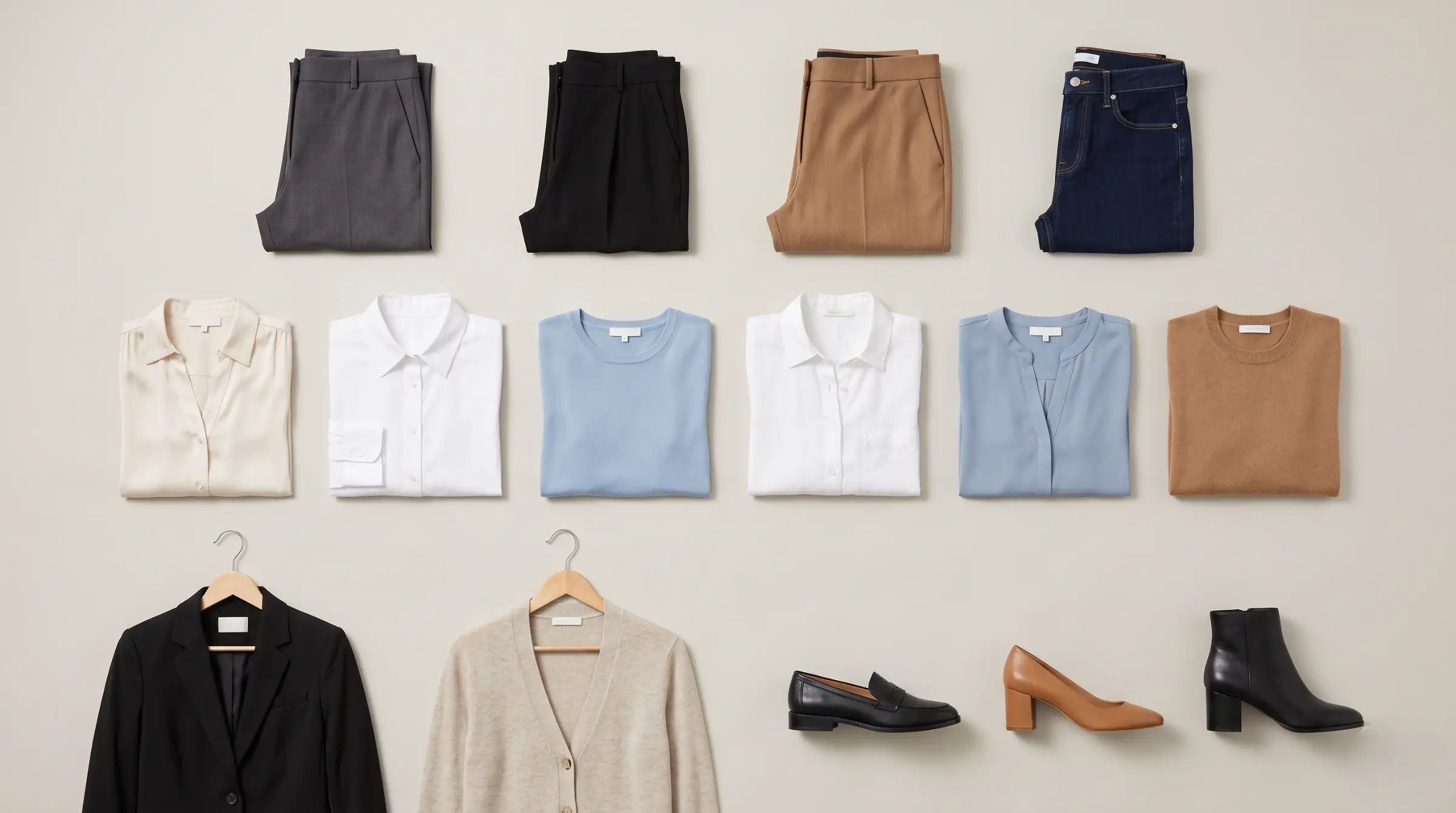
Four bottoms times six tops is twenty-four pairings before a single layer enters the picture. You will not wear all twenty-four, but you only need fifteen that feel like real outfits, and this grid clears that bar with room to spare.
Where to Spend and Where to Save
Cost per wear is the only price tag that tells the truth. Divide what you paid by the number of times you wear the piece, and the hierarchy inverts. A 90 dollar blazer worn twice a week for a year works out to under a dollar a wear. An 18 dollar top that pills and loses its shape after eight wears costs 2.25 dollars a wear, more than double the blazer. Budget dressing fails when the savings get spread evenly across every piece instead of aimed at the ones that wear out slowly anyway.
At a glance: the spend and save split
- Spend on the structured blazer and the shoes you wear weekly, because construction is the one thing you cannot find at thrift prices without checking fifty racks.
- Spend on the trousers you will wear every week, then budget 20 to 40 dollars of tailoring so off-price pairs fit like they were cut for you.
- Save on tops, shells, and prints, the pieces that read as new and wear out fast anyway.
- Save on accessories that chase a trend, where thrift and mass retail perform just as well as designer.
The blazer deserves one extra rule. Shoulders are the single point a tailor cannot fix, so buy for the shoulder seam and let the waist get taken in afterward, which is exactly the doctrine behind our six-point blazer fit checks. A 7 dollar thrift blazer with correct shoulders plus 30 dollars of alterations beats a 150 dollar off-the-rack blazer with collapsed shoulders every time.
Vivienne Westwood summed up the whole philosophy on her own sustainability page: “Buy less, choose well, make it last.” On a budget, that sentence is a shopping order, not a slogan.
The Shopping Order: Thrift First, Off-Price Second, Full-Price Last
Every channel below has a job, and the budget works because each piece gets bought where its category is strongest, not because one store does everything.
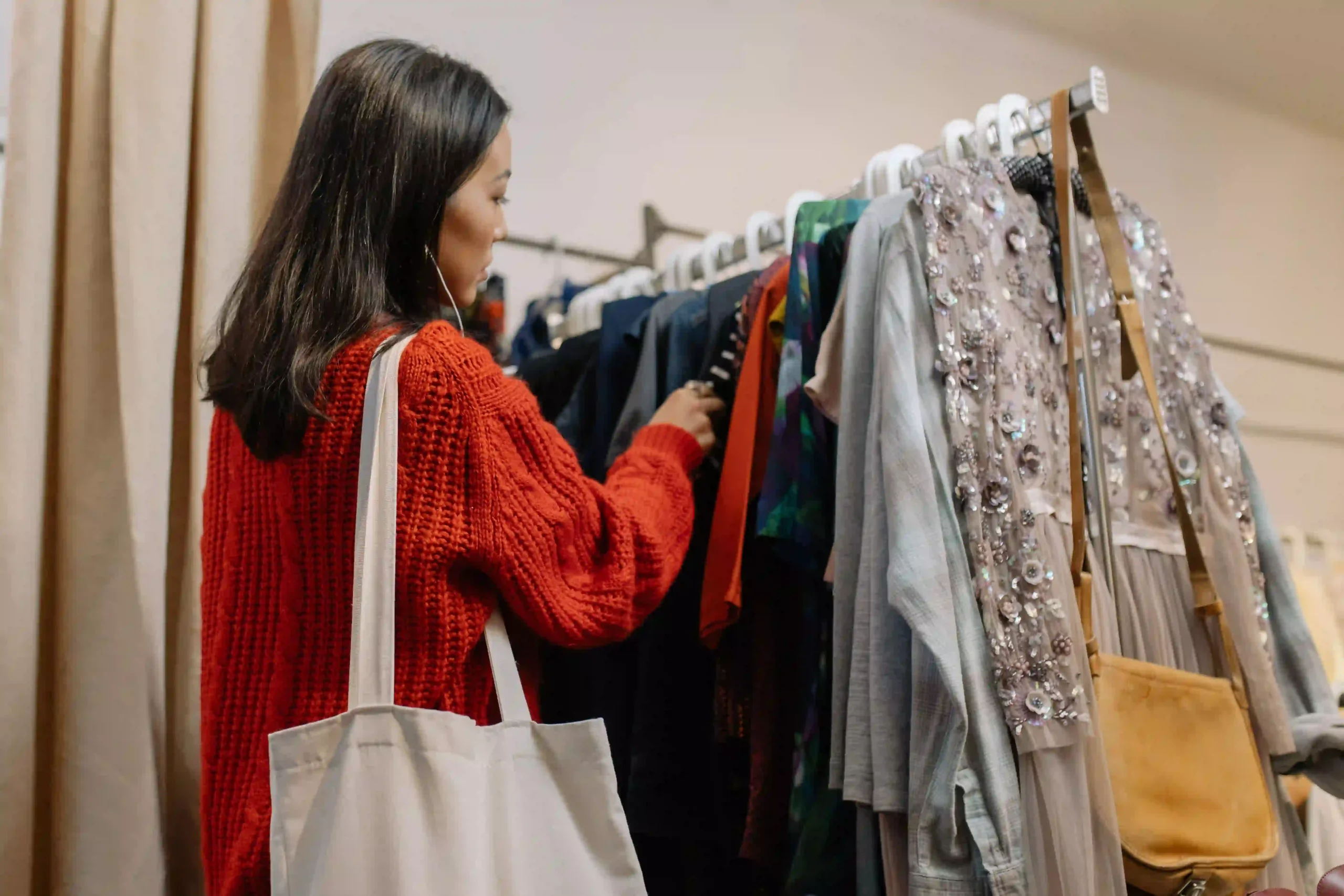
Thrift Stores: Blazers, Knits, and Skirts for Under 10 Dollars
Secondhand is the strongest channel for structured and knit pieces, because those are the categories where the original owner already paid the depreciation. Regional Goodwill price lists show why this works: women’s blazers at 5.99 dollars in one region and jackets at 5.29 dollars in another. The global secondhand market is projected to reach 393 billion dollars by 2030, growing about twice as fast as overall apparel, per thredUp’s 2026 resale report, which is a big part of why the racks are better stocked than they were five years ago.
Check shoulders and underarms on blazers, pilling and cuffs on knits, and zippers on skirts. Skip used shoes entirely, and skip anything that needs more than a basic alteration, since the fix has to cost less than the garment.
Off-Price: Trousers and Shoes at 20 to 60 Percent Below Full Price
TJX, the parent of TJ Maxx and Marshalls, states its model plainly: comparable merchandise priced 20 to 60 percent below full-price retailers, every day. Nordstrom Rack advertises up to 70 percent off top brands. These are the channels for trousers, shoes, and dresses, the categories where you want current construction and consistent sizing but do not need full-price branding.
One warning from the buying-desk side of this site is that the compare-at tag is a claim, not a fact. If a rack price only looks good against an inflated original, it is not a deal. Check the return policy before you commit, because a final-sale trouser that does not fit is not a discount at all.
Factory Stores and Mass Retail: Tops and Fill-Ins
Banana Republic Factory, Target’s Universal Thread, and Amazon Essentials are the top tier of the capsule, where 15 to 30 dollar pieces do the job. Know what you are buying: factory stores stock made-for-outlet merchandise a notch below mainline construction, and the distinction is real enough that deal sites track the tags. Personal stylist Alison Gary of Wardrobe Oxygen makes the case for shopping it anyway, writing that the Factory fit “seems to work better with my grown woman body” than the mainline cut. Universal Thread blouses run about 25 dollars at Target, and the Amazon Essentials ponte blazer sits near 30 dollars, which makes it a reasonable backup jacket rather than a primary one.
Online Checkout: Let a Tool Do the Coupon Work
When a fill-in piece has to be bought new online, PayPal Honey’s free browser extension tests and applies coupon codes at checkout in one click, per PayPal’s own guide. Pair it with a quick price-history check on anything over 40 dollars. The extension handles the last 10 percent of the discount, and the channel split above handles the other 90.
A Sample First Build on About 240 Dollars
This is the build I recommend for a from-scratch closet, using the price points above. Treat the numbers as observed ranges from August 2026, not promises, since your region’s thrift racks and this week’s rack prices will move them a few dollars either way.
| Piece | Channel | Realistic price |
| Structured blazer, thrifted, waist taken in by a tailor | Goodwill or Salvation Army plus alterations | 6 dollars plus about 25 dollars |
| Two pairs of trousers | TJ Maxx or Marshalls | 30 dollars each |
| Four tops, mixed button-downs and shells | Target, Amazon, or Banana Republic Factory | 15 to 25 dollars each |
| One knit cardigan | Thrift | 5 to 7 dollars |
| One wool or tweed skirt | Thrift | 6 dollars |
| One pair of loafers or pointed flats | Nordstrom Rack | 40 to 60 dollars |
Added up at the middle of each range, that is roughly 240 dollars for fourteen pieces and two footwear decisions, about an eighth of what the average consumer unit spends on apparel in a full year. The second season costs almost nothing, because you only replace what wore out.
Who This Approach Is Not For
A budget capsule assumes a stable size, a stable dress code, and some tolerance for hunting. If your workplace runs a strict uniform or a safety-regulated code, this guide’s office assumptions do not apply. If you expect a size change in the next few months, thrift the interim wardrobe and delay the investment pieces, because buying tailored trousers for a body that is still changing is how budgets die. If you genuinely love trend-driven dressing, treat the capsule as the floor that frees your fun spending rather than a rulebook. And if you work fully remote, skip the fourteen pieces and build a five-piece interview kit instead.
If Your Starting Point Is Different
If You Start a New Job in Two Weeks
Run the thrift and off-price sprint only: one blazer, two bottoms, three tops, one pair of shoes, roughly 120 to 150 dollars. Buy the rest after you have watched the office for two weeks, because by then you will know exactly which pieces your code actually rewards.
If You Are Rebuilding After a Size or Life Change
Let secondhand carry the whole interim season. Blazers and skirts at under 10 dollars each keep the new chapter professional while its shape is still settling, and nothing in an interim build blocks the investment pieces you buy later.
If You Already Own Most of It
Do the audit before any shopping. Most readers who attempt this guide discover they own nine of the fourteen pieces already, which turns a 240 dollar build into a 90 dollar gap-fill. The capsule is a filter for what you own before it is a list of what to buy.
Frequently Asked Questions About Building a Budget Work Capsule
How many pieces should be in a business casual capsule wardrobe?
Fourteen to eighteen pieces covers most work-only capsules: four or five bottoms, six to eight tops, two layers, and two to three pairs of shoes. Full-season capsules that include weekends run larger, with Un-Fancy at 37 pieces and The Wardrobe Consultant’s corporate version at 22.
Can I build a capsule wardrobe entirely from thrift and fast-fashion stores?
Mostly yes, with two exceptions. Shoes and the primary blazer deserve current construction, so aim those at off-price racks where 40 to 60 dollars buys real structure. Everything else, especially knits, skirts, and shells, performs fine from thrift and mass retail if it passes the fit and fabric check.
How much should I spend to build a business casual capsule wardrobe on a budget?
Plan on 200 to 400 dollars for a from-scratch build depending on how much you can source secondhand, against a national average of 2,001 dollars a year in total apparel spending per consumer unit. The goal is not the lowest possible total. It is the lowest cost per wear, which sometimes means spending more on one piece.
Where is the best place to buy business casual clothes on a budget?
By category: thrift stores like Goodwill and Salvation Army for blazers, knits, and skirts; TJ Maxx, Marshalls, and Nordstrom Rack for trousers and shoes; Banana Republic Factory, Target, and Amazon for tops and fill-ins. The channel split beats any single store.
How do I start a work wardrobe from scratch with almost no money?
Start with the audit and the thrift column only. A blazer, two bottoms, and three tops from Goodwill-grade racks total under 40 dollars in most regions, and that seven-piece core already produces six office outfits. Add one off-price piece per paycheck until the grid is complete.
The Budget Is the Strategy
A business casual capsule wardrobe on a budget is not a compromise version of the full-price build. In the right order, it is the sharper one, because the constraint forces the neutral palette, the mix-and-match ratios, and the cost-per-wear discipline that expensive wardrobes often never learn. Audit the closet this weekend, write the gap list, and let the first thrift trip prove the math to you. Six months from now, the pieces that survive twice-a-week wear are the ones worth replacing at full price, and by then you will know exactly which they are.
SOURCES
- U.S. Bureau of Labor Statistics: Consumer Expenditures, 2024, Access Date: August 13, 2026
- TJX: How We Do It, Access Date: August 13, 2026
- U.S. Bureau of Labor Statistics via FRED context confirmed the 2,001 dollar 2024 apparel figure, Access Date: August 13, 2026
- Goodwill: Price List, women’s blazers 5.99 dollars, Access Date: August 13, 2026
- Goodwill Industries of Eastern NC: Price List, jackets 5.29 dollars, Access Date: August 13, 2026
- Nordstrom Rack: Save up to 70 percent off top brands, Access Date: August 13, 2026
- thredUp: 2026 Resale Market and Consumer Trend Report, Access Date: August 13, 2026
- PayPal: PayPal Honey, Coupon Codes and Cash Back Offers, Access Date: August 13, 2026
- Vivienne Westwood: Sustainability, Access Date: August 13, 2026
- Target: Universal Thread Shirts and Blouses, Access Date: August 13, 2026
- Amazon: Amazon Essentials Women’s Relaxed-Fit Soft Ponte Blazer, Access Date: August 13, 2026
- Wardrobe Oxygen (Alison Gary): Why I Prefer Banana Republic Factory, Access Date: August 13, 2026
- Un-Fancy: How to Build a Capsule Wardrobe, Access Date: August 13, 2026
- The Wardrobe Consultant: The Corporate Capsule Wardrobe, Access Date: August 13, 2026
- The Krazy Coupon Lady: Factory Store vs. Outlet, How to Avoid Getting Ripped Off, Access Date: August 13, 2026